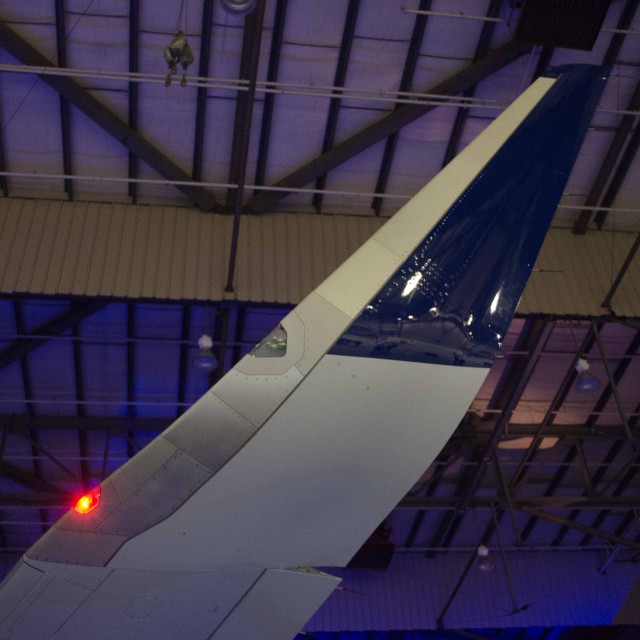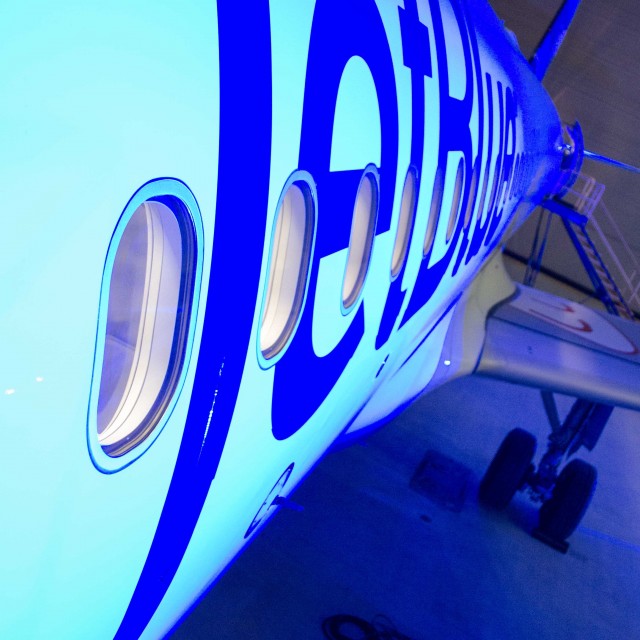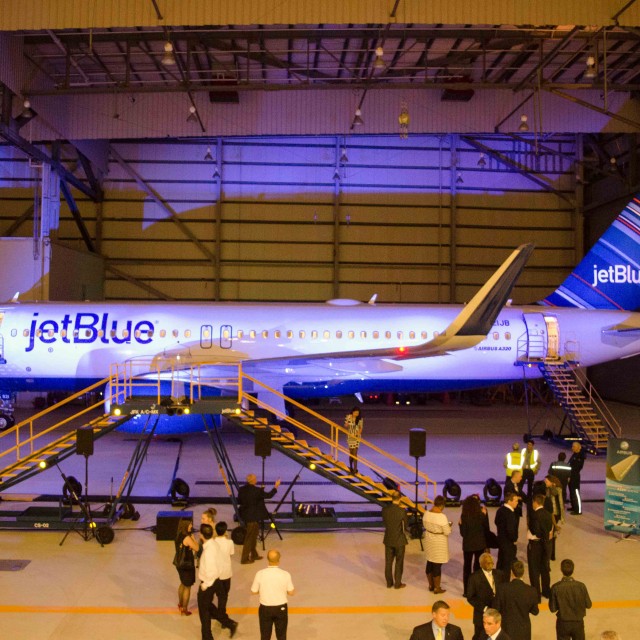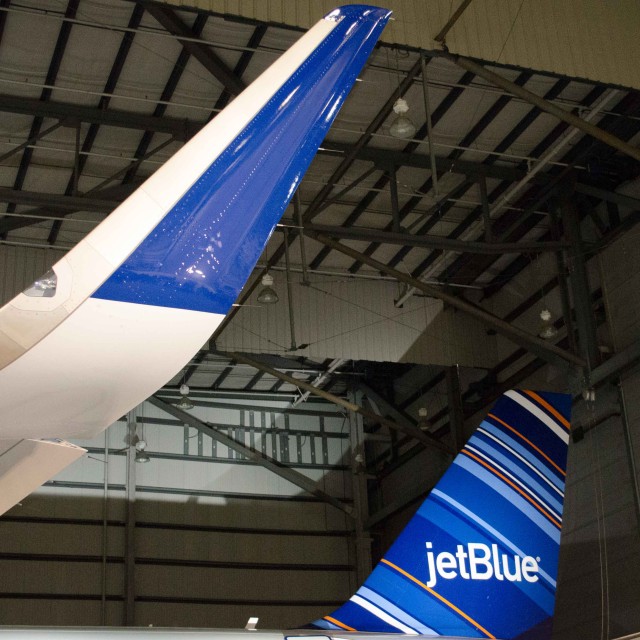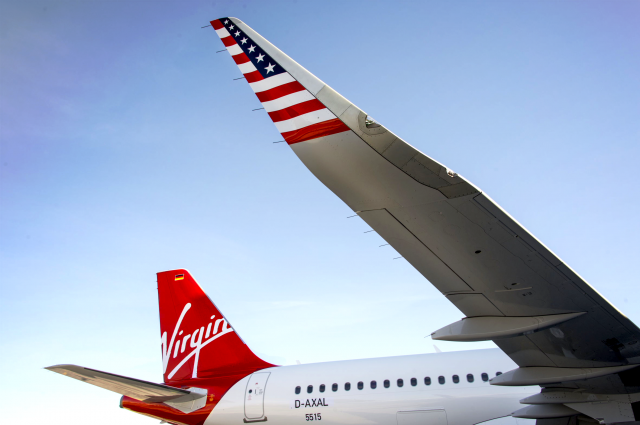
The First Virgin America A320 With Sharklets
At Virgin America’s Newark Airport inaugural celebration this week, I had the opportunity to sit down with CEO David Cush for AirlineReporter.com. While talking about their new Airbus A320 with Sharklets, Cush detailed his airlines future plans for flights to Hawaii.
Jason: ’œYou just took delivery of your first A320 with Sharklets, when do you expect that to enter into service?
Cush: ’œIt should be in about two weeks, let’s call it around April 25th or so.’
Jason: ’œDo you have any idea which route it will be flying initially?’
Cush: ’œIt’ll be flying some of the longer routes, because of the efficiency, so probably San Francisco-Boston, San Francisco-JFK. We took delivery of that one in Hamburg, and it was a beautiful airplane on the way over. Our chief pilot flew it over, and we actually saw greater than 4 per cent efficiency from Sharklets. So they estimated 3.5, we saw a little bit over 4.
Jason: ’œHow do you estimate that will impact your operations?’
Cush: ’œWe fly these aircraft kind of at the edge of their performance. When we’re flying Boston to San Francisco, in the winter and into headwinds, that’s about all that aircraft can do. Now what we got is an airplane that can do that easily without weight restrictions. So it’s not only a fuel efficiency thing, it’s a performance thing.
Jason: ’œI know that JetBlue had taken delivery of the first production retrofit a couple of months ago, and they have been doing that exact route, and they report that they have to make fewer tech stops to refuel. Do you anticipate less stops or was that a problem initially without Sharklets?>
Cush: ’œWe don’t take tech stops. If we’ve got a long flight plan or strong winds, what we do is we basically buy passengers off the airplane. So, rather than inconveniencing everyone, what we’ll do is will find people to buy off, and they’ll wait for the next one. We take very few tech stops, usually when it’s an unplanned change. But what this will mean is that we will never have to take passengers out of the aircraft again.
Jason: ’œHow often do that [buying passengers off the flight] happen right now?’
Cush: ’œI would say during the dead of winter, with a bad jet stream, I would say maybe as much of 10 per cent of the flights out of Boston.
Jason: ’œDo you anticipate the impact of Sharklets being able to open any new routes in the future?
Cush: ’œThe main thing is that it lets you do West Coast to Hawaii, and that’s something you can’t do with the current aircraft. And so we’ll be using Sharklet equipped airplanes in 2015 when we start flying to Hawaii, and we can’t do that without the Sharklets.
Jason: ’œAre there any plans to retrofit current aircraft with Sharklets?’
Cush: ’œWe’re going to wait and see. You know, there’s a lot of work you have to do on the wing, a lot of weight you add to the aircraft, which is a little bit of a challenge for us. We like the fuel efficiency, we don’t like the additional weight, so we’re not in a big hurry to do it. I know JetBlue is really blazing that trail, we’ll probably just sit back and see what their experience is, and if it’s good, we’ll probably go ahead and do the same thing.
Jason: ’œAll future deliveries of Airbus aircraft at this point, will they be Sharklet equipped?
Cush: ’œAll of ours will be. We’re not taking any more airplanes until 2015, and then we’ll take 10 from 2015 to 2016.
 |
This story written by… Jason Rabinowitz, Correspondent.
Jason is a New York City native who has grown up in the shadow of JFK International Airport. A true “avgeek”, he enjoys plane spotting and photography, as well taking any opportunity he can get to fly on an aircraft.
@AirlineFyer | FaceBook |Virgin America, Sharklets, Hawaii |
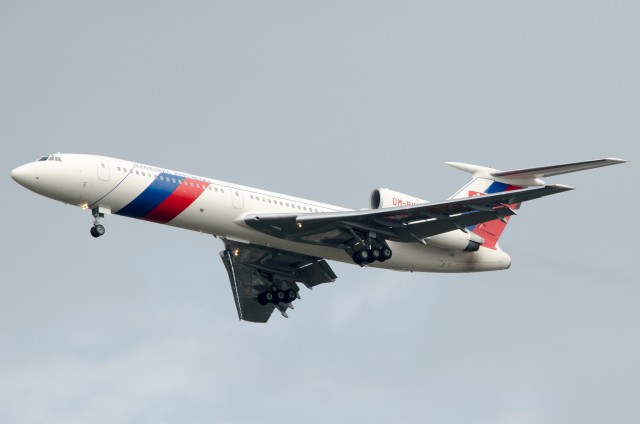
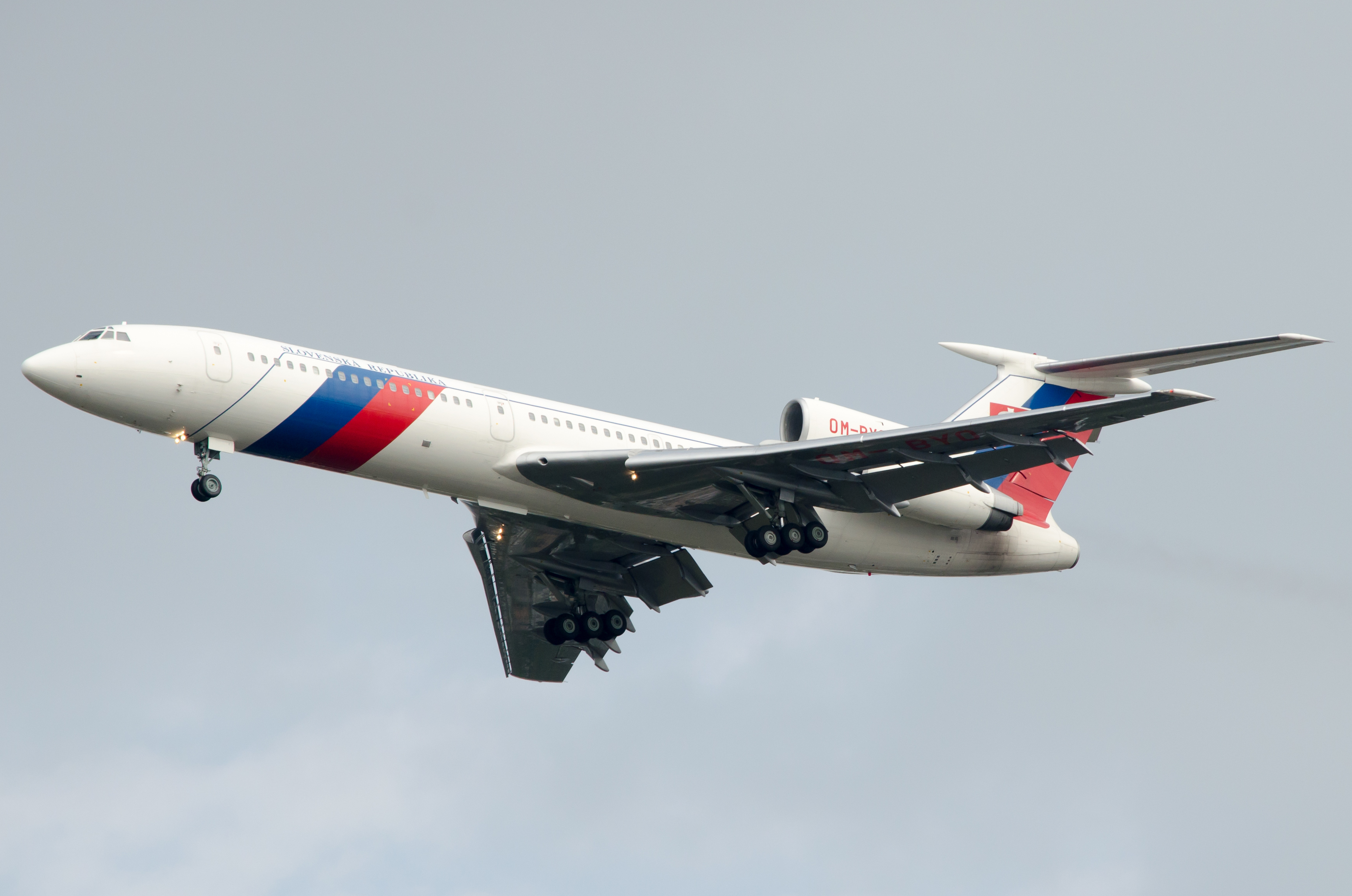
Tupolev TU-154 (OM-BYO) in Slovakian Government livery. Photo by Jason Rabinowitz.
Last week, a chapter of Soviet aviation has been closed forever. Over 40 years after its entry into service, the final Tupolev Tu-154 has been delivered to the Russian Defense Ministry, according to Russian news agency RIA Novosti. Although full production ceased back in 1997, the Tu-154 remained in limited production for quite some time, with a final total of over 1000 airframes produced. The first Tu-154 was delivered to Aeroflot on February 7, 1972.
The Tu-154 was the last of the commercial ’œtri-jets’ in production, outlasting popular aircraft such as Lockheed L-1011 Tristar and Boeing 727 by several decades, both of which saw ther last deliveries in 1984.
Designed to be the workhorse of the Soviet aviation industry, flying into some of the harshest airfields in the world, the Tu-154 went places other jet powered aircraft of its size could not. With its oversized landing gear, the Tu-154 was even able to land on unpaved runways.
Contrary to popular belief, the Tu-154 was not an unsafe aircraft. According to the the Aviation Safety Network, the Soviet built aircraft has been involved in 110 serious incidents, 68 of which resulted in a hull loss, 30 of which saw no deaths. Several incidents were the direct result of terrorism or military action, poor weather and runway conditions, as well as pilot error and poor maintenance. Comparatively, the Boeing 737 has been involved in 159 hull-loss accidents, though over 7,000 737s have been produced.
A string of recent high profile accidents accelerated the withdrawal of the Tu-154 from passenger service. Most notably, on April 10, 2010, a Polish Air Force Tu-154 carrying many high level government officials, including the President of Poland, crashed near the city of Smolensk, Russia, killing all 96 on board. That accident was blamed not on the aircraft, but on pilot error. These accidents prompted the Russian Federal Bureau of Aviation in March 2011 to recommend the withdrawal remaining Tu-154s from passenger service.
As of early 2012, 104 Tu-154s remained in service with various airlines throughout the world, as well as several military operators. The Russian aerospace industry has yet to produce a strong competitor for Boeing and Airbus. The Sukhoi Superjet 100 is Russia’s latest attempt at competing, but only 223 have been ordered thus far, and competition from countries such as China and Japan is heating up.
The Tu-154 will forever has a place in aviation history as a tank of an aircraft, going where other aircraft wouldn’t even dream of. Although it had its fair share of black eyes along the way, this Soviet designed aircraft stood the test of time.
|
This story written by… Jason Rabinowitz, Correspondent.
Jason is a New York City native who has grown up in the shadow of JFK International Airport. A true “avgeek”, he enjoys plane spotting and photography, as well taking any opportunity he can get to fly on an aircraft.
@AirlineFyer | FaceBook | |
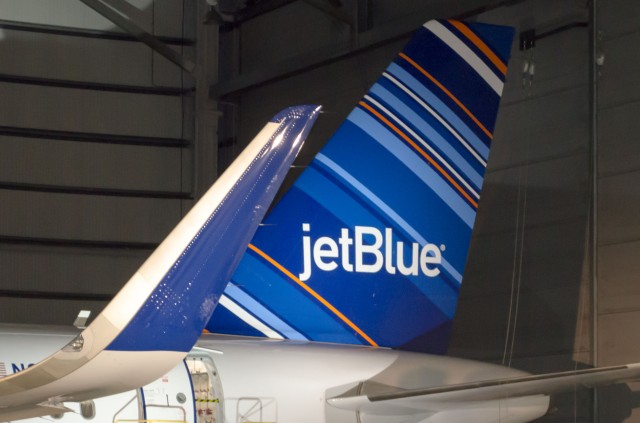
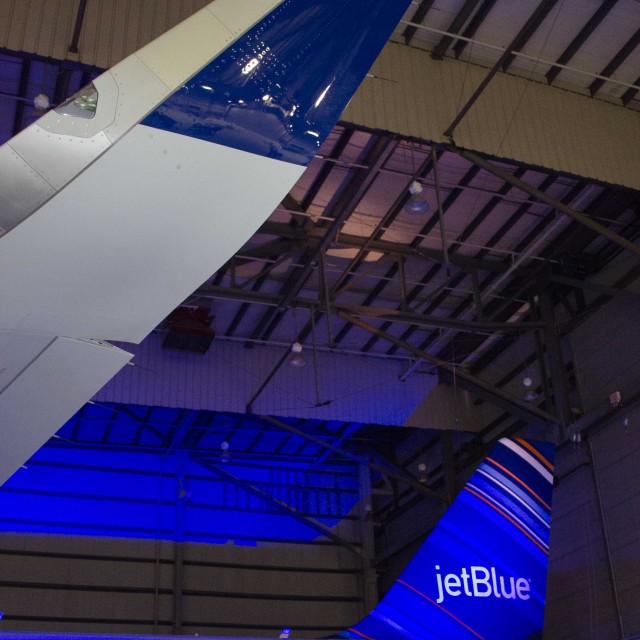
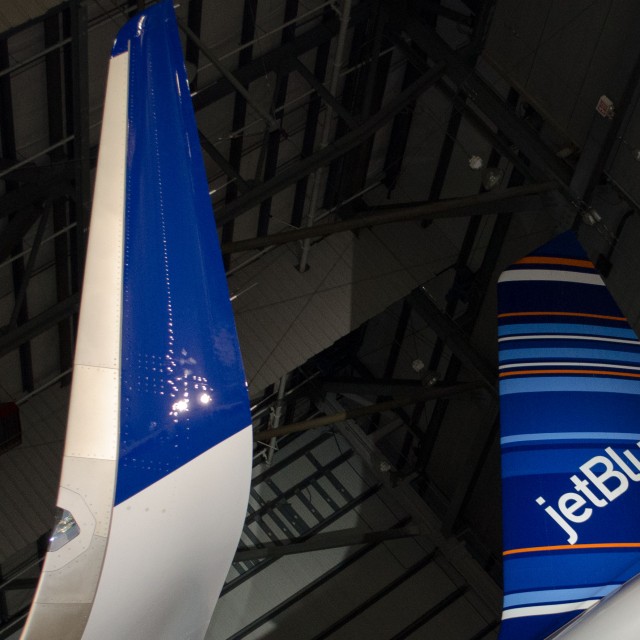
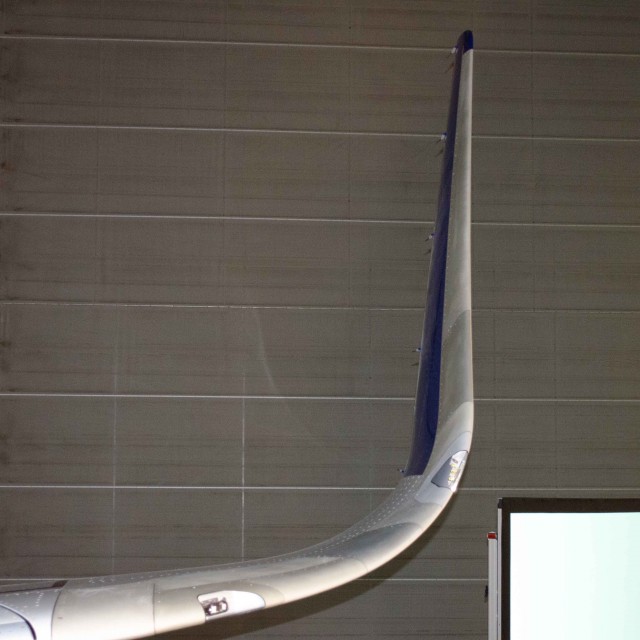
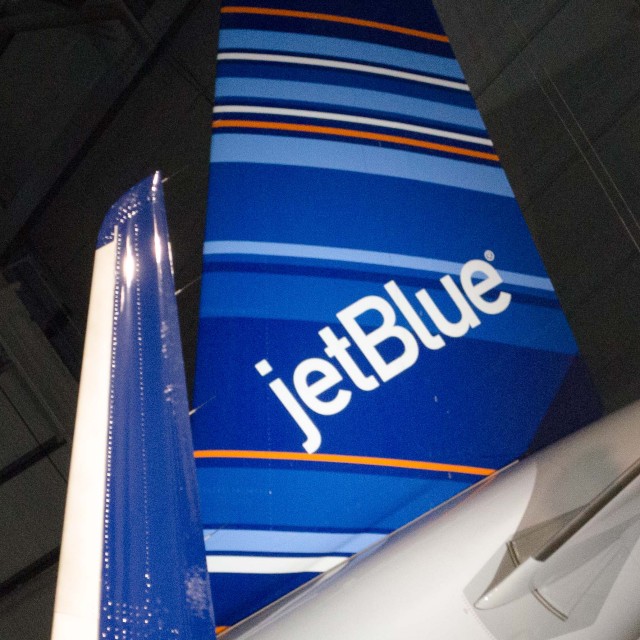
The new sharklet on a JetBlue Airbus A320. Photo by Jason Rabinowitz.
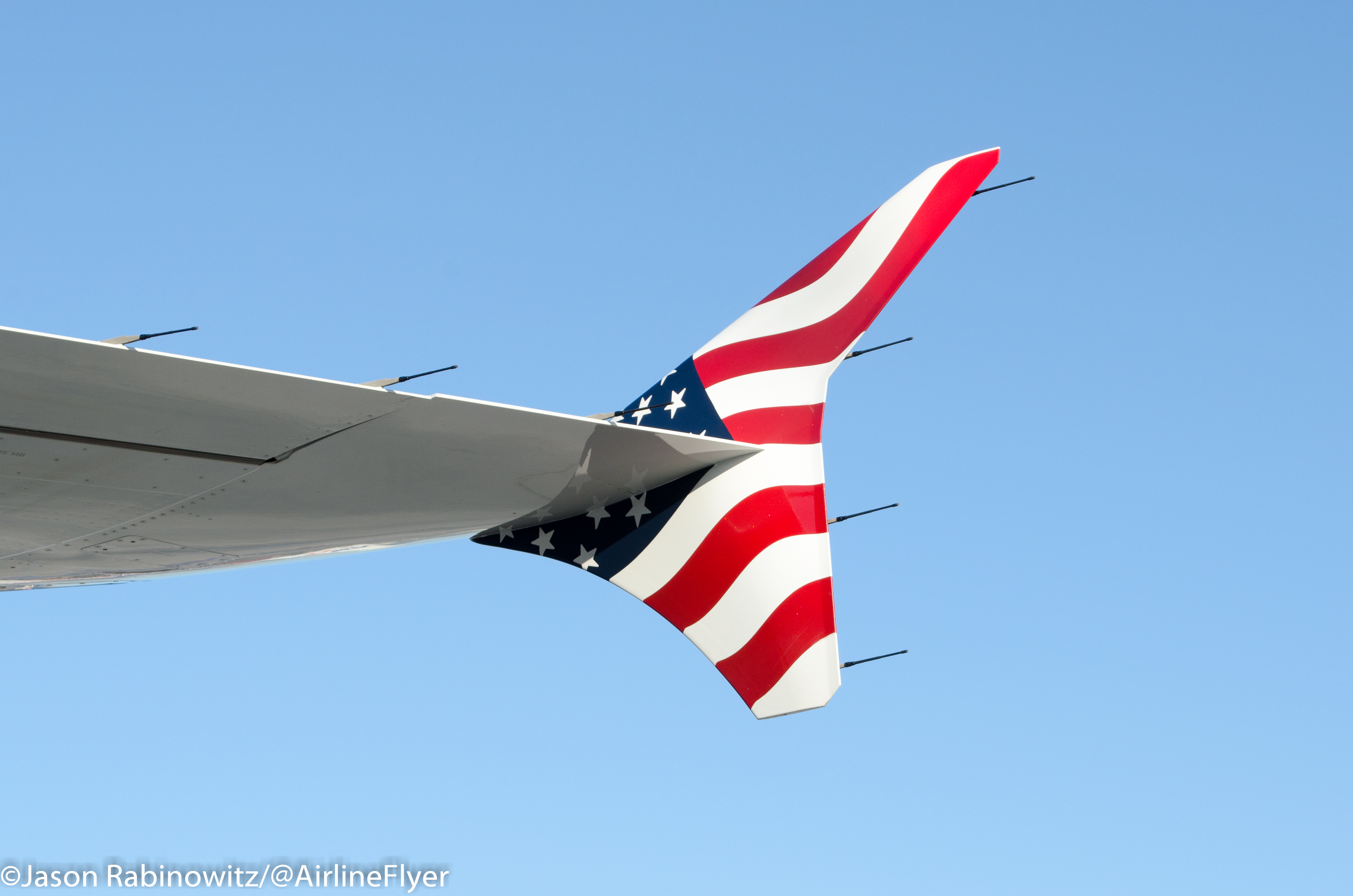
How does an airline burn less fuel, and make their aircraft look cooler in the process? The answer is simple: Winglets. Actually, in this case, sharklets. In late 2012, Airbus finally delivered their first A320 with blended winglets to AirAsia, which they have affectionately named a sharklet. Sharklets promise a reduced fuel burn of up to 3.5 percent, which leads to less CO2 emissions and greater profits air airlines.
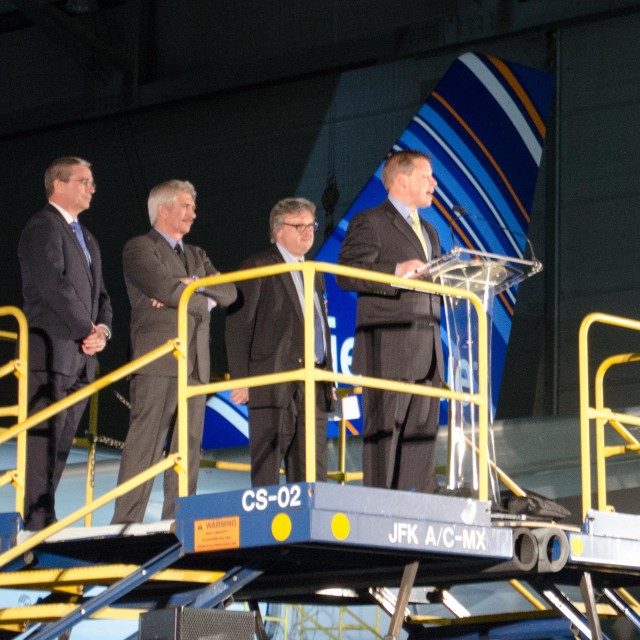
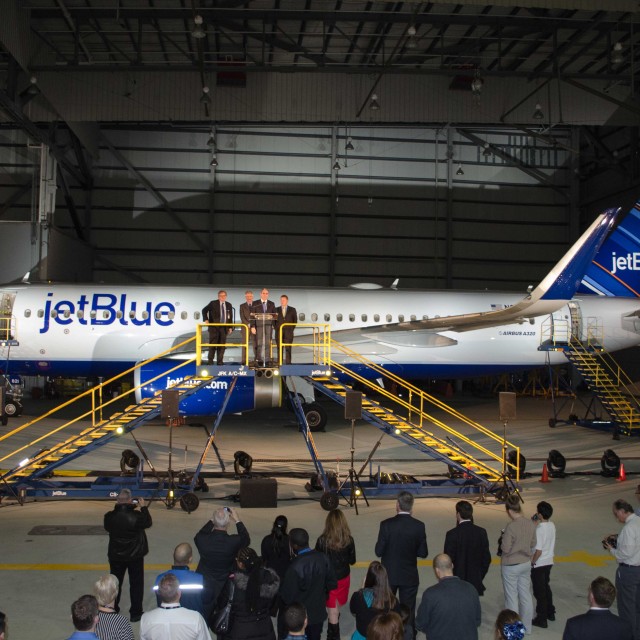
New York based JetBlue is the first North American airline to sport sharklets, and is also the first airline worldwide to retrofit a production A320 with sharklets. The retrofit was completed by in-house technicians at the airlines John F. Kennedy Airport maintenance hanger. At an event Wednesday, JetBlue and Airbus were proud to show it off.
“I’m excited,” said Mark Powers, JetBlue Chief Financial Officer. “But I’m not excited that when the plane flies to San Francisco, its going to save us $568.75. No, no, I’m not excited about that. Nor am I excited about the fact that this airplane will save, conservatively, $350,000 a year. Nah, that doesn’t excite me either. And actually, once the whole fleet is retro fitted, were going to save $45 million a year, but that doesn’t excite me either. What really excites me, this airplane looks really cool. Winglets complete this aircraft.”
The first retrofit was completed quicker than expected, returning the aircraft to revenue service early. JetBlue plans to retrofit several A320s this year, but the entire fleet is not expected to be converted for several years. Older airframes will takes up to three weeks to be retrofitted, due to the wings requiring strengthening. Newer airframes will only require a few days to complete the process. All new A320 and A321 deliveries will include sharklets.
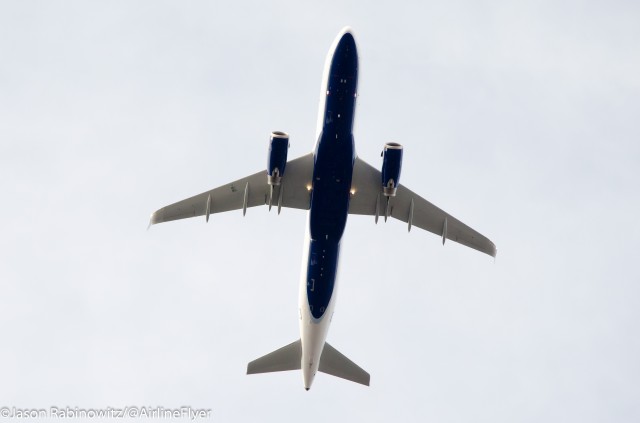
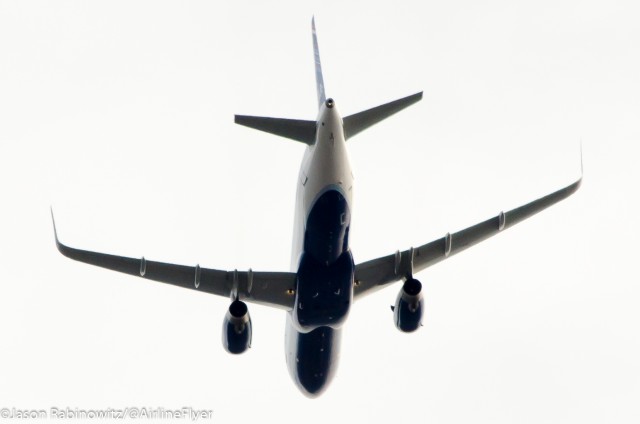
UPDATE: First Flight
Although no test flight was announced, N821JB did indeed take to the skies on Friday for a test flight. Here are some pictures at it departs JFK over my house.
|
This story written by… Jason Rabinowitz, Correspondent.Jason is a New York City native who has grown up in the shadow of JFK International Airport. A true “avgeek”, he enjoys plane spotting and photography, as well taking any opportunity he can get to fly on an aircraft.@AirlineFyer | FaceBook | |
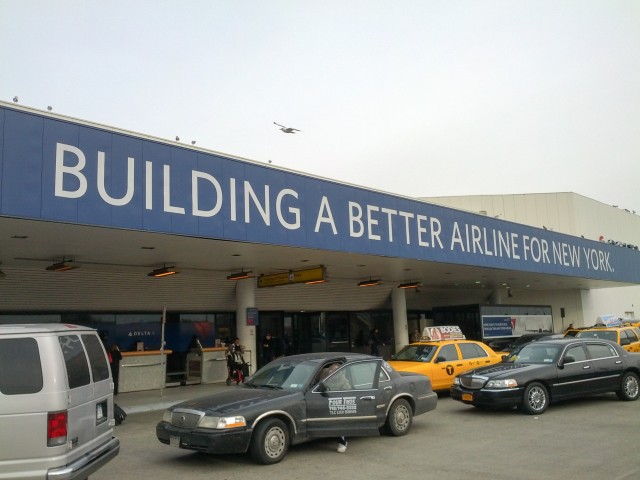
Delta Air Lines is “Building A Better Airline For New York.”
While attending school in Michigan from 2008 to 2012, I flew home to New York City on Delta Air Lines quite often. The schedule from Detroit Metro (DTW) to John F. Kennedy (JFK) was quite lite, with only a small handful of flights per day, while most flights went to LaGuardia (LGA). I did everything within my power to avoid flying into LGA. Even if it meant paying slightly more, I did not want anything to do with LGA.
Deltas terminal at LGA was cramped, overcrowded, and lacked any food options of a higher quality than Burger King. LGA was a downright unpleasant experience. Flash forward to 2012 and Delta began their ’œWin New York’ program, involving expanded flight schedules and spending massive amounts of money to revamp the passenger experience.
In the summer of 2012, Delta purchased a majority of US Airways landing slots at LGA, becoming the dominant carrier at the airport and expanding into terminal C. While construction in terminal C is still on-going and not expected to be complete for quite some time, the transformation of terminal D is astounding. I was invited by Delta recently to check out the new improvements.
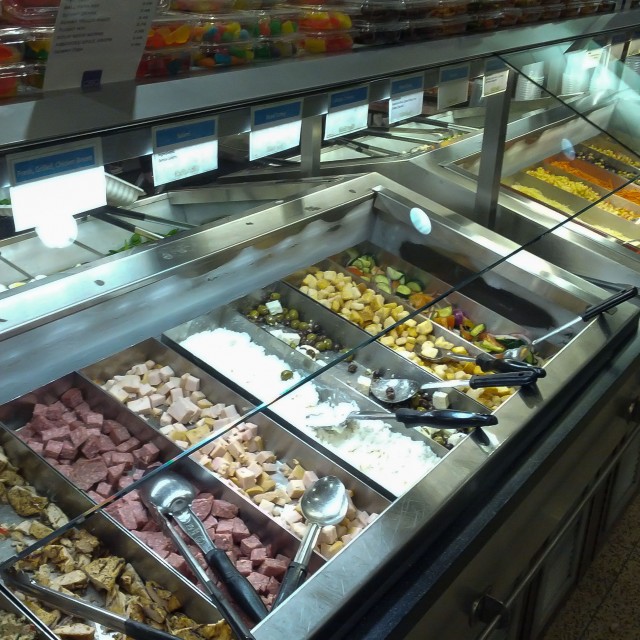
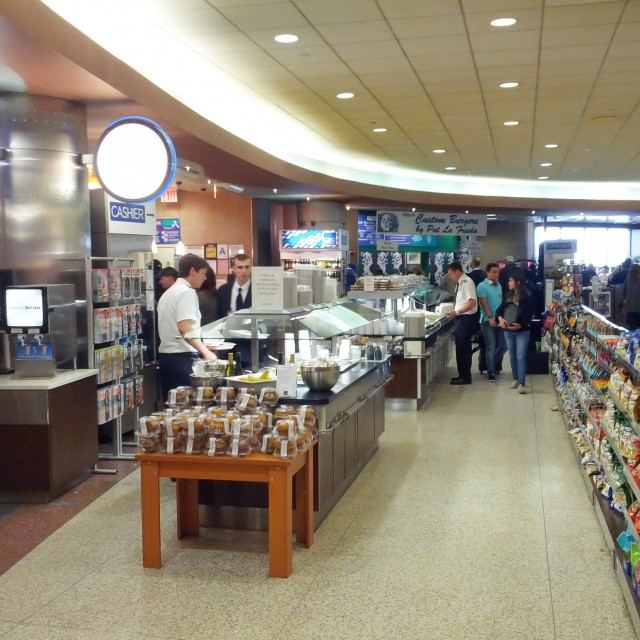
For the time being, the check in and security areas remain unchanged. Once you move beyond the entry way, however, changes are immediately visible. The first thing passengers will see after moving through security is a brand new food court and shopping area. I am happy to report that Burger King is gone, replaced by Taste of Custom Burgers by Pat La Frieda.
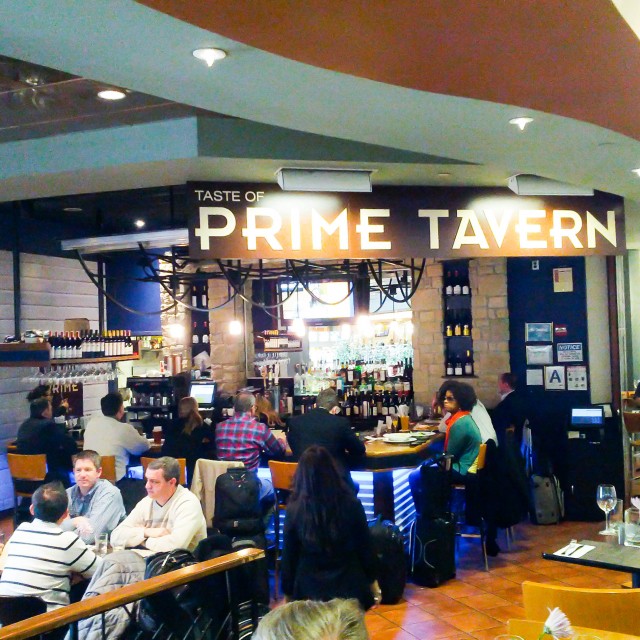
Feel like having a glass of wine and a full service meal? Take a seat at Taste of Prime Tavern. Maybe you just want a cup of coffee, or a bag of chips? It’s all available in the new food court. These restaurants are referred to as a “taste of” because once the check in area is expanded, these restaurants will be expanding as well.
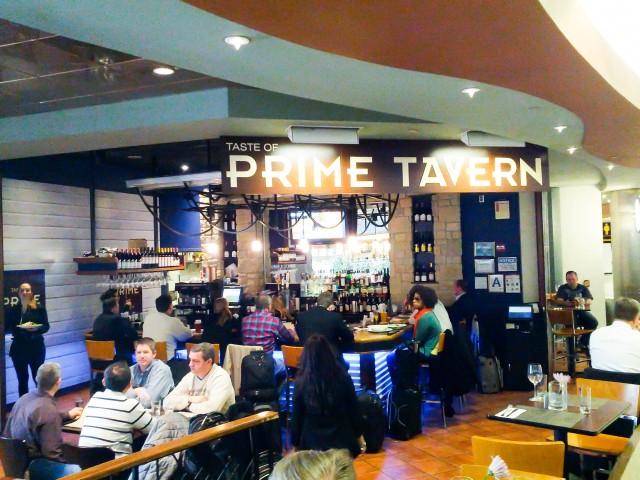
Taste Of Prime Tavern at LGA Terminal D
Flyers of competing New York airline jetBlue may find this food court familiar, and they should. The company behind the redevelopment of terminal D at LGA is OTG, the same company that operates the food shops at JFK terminal 5. Many design elements of the food court are similar to that at JFK.
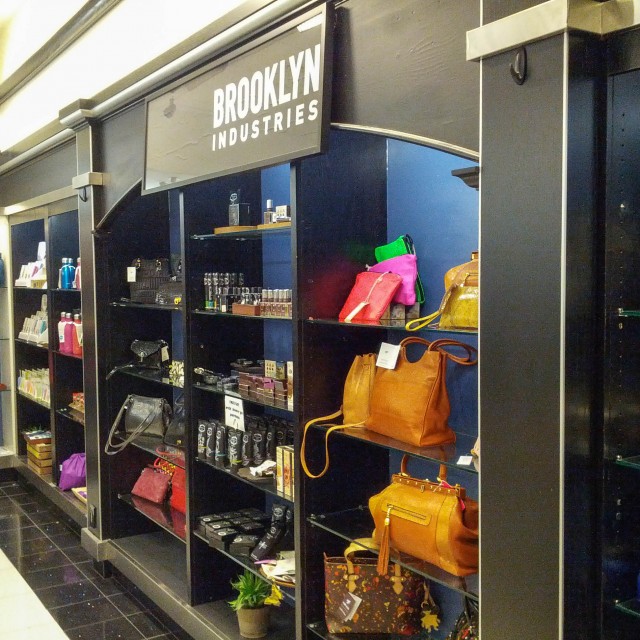
Adjacent to the food court are a few small shops, but they aren’t your typical magazine and soda shops. One store features high end products from Brooklyn Industries, a bit different that the usual ’œI <3 NY’ shirts you typically find.
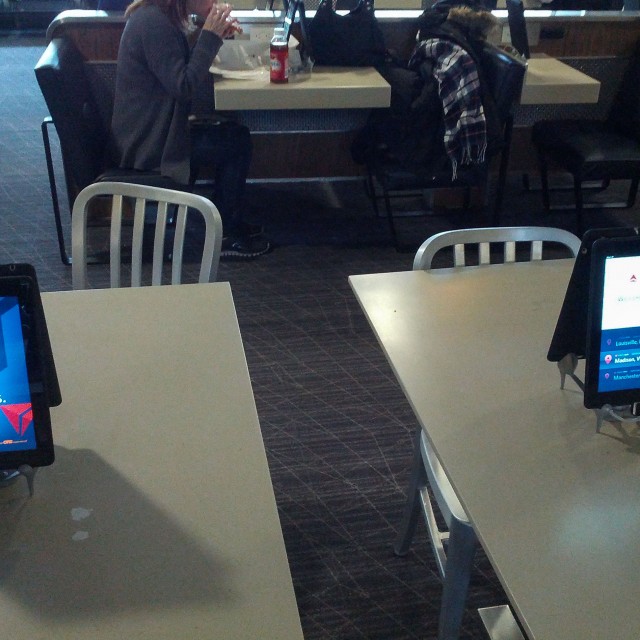
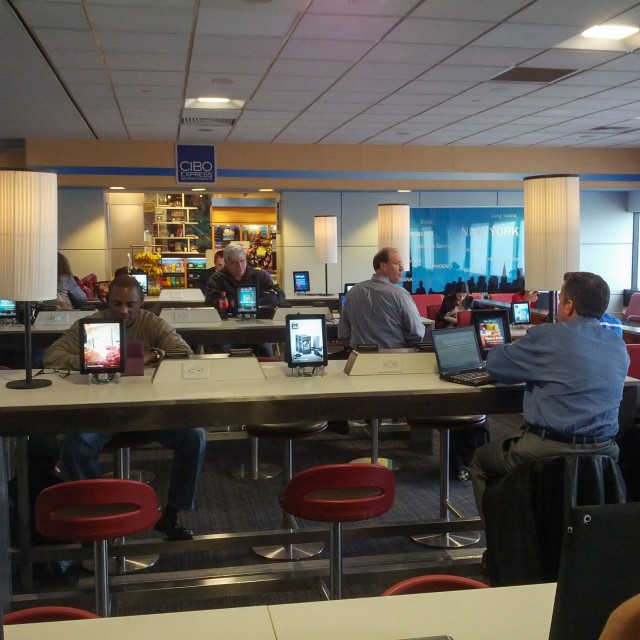
Beyond the food court, terminal D has had every detail upgraded. Expanding on a pilot program at JFK, Delta and OTG has placed iPads everywhere. Nearly every seat and table has an iPad propped up, waiting for passengers to interact.
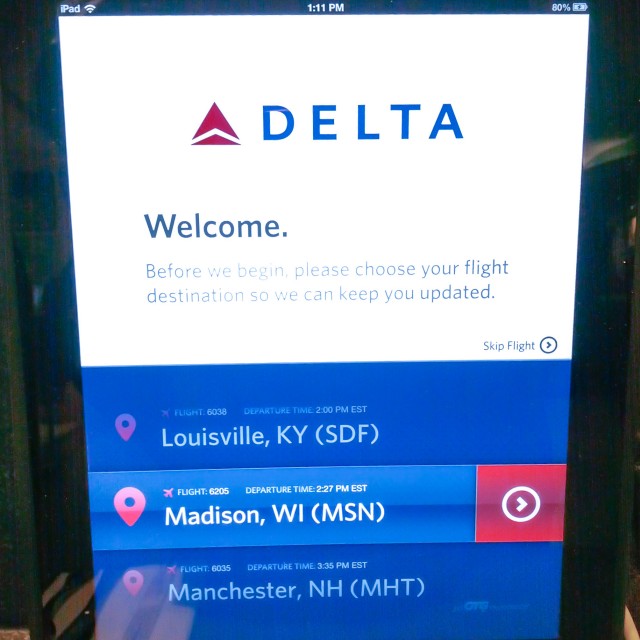
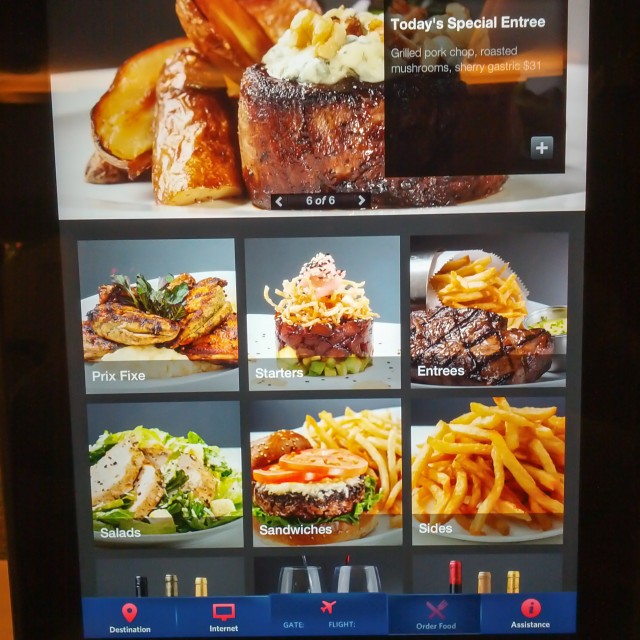
When first touched, the iPad prompts the passenger to select their flight, so that any status updates about their can be sent to them. After that, highly visual menus appear, inviting the passenger to order up some food, or even purchase some souvenirs before their flight. After paying with the attached credit card reader, orders are delivered to the passenger’s seat in about 10 minutes.
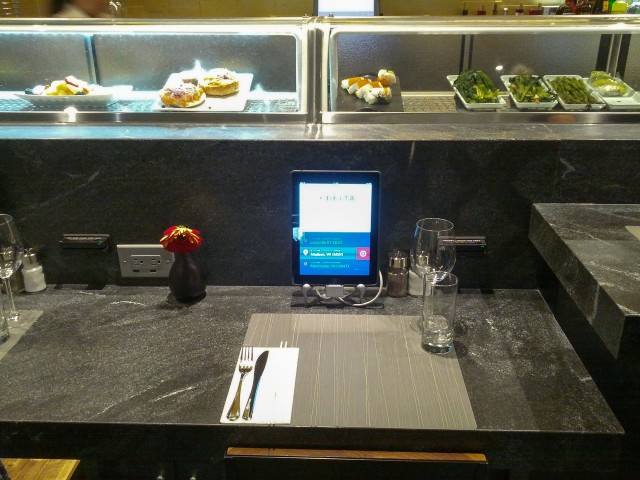
Keep an eye on your flight status while at the sushi bar
I came across a passenger using an iPad while waiting for her flight, and asked her what she was using it for. She explained that she was actually accessing her bank account, and that she much preferred using the iPads rather than her own phone. Access to the internet is free with the iPads, but wifi for personal devices is not, which may explain why some passengers would chose to use the iPad. Whatever the motivation for use, this amenity seems to be a hit.
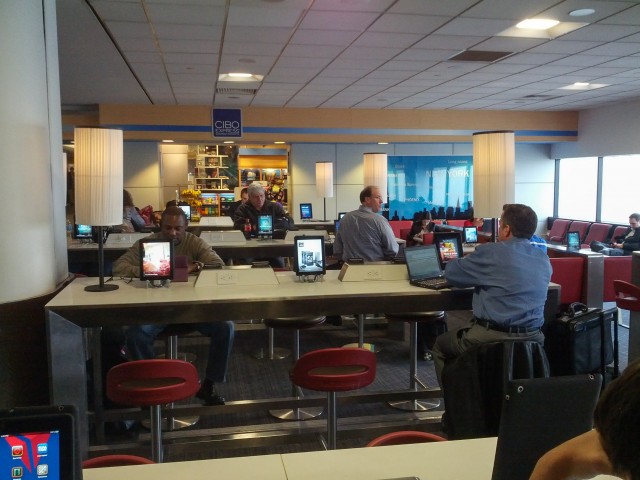
iPads everywhere!
The real highlight of the renovated terminal are the restaurant options. Marcelo Surerus, Manager of OTG at Delta’s Terminal D at LGA, showed off the wonderful restaurant options his team has worked to bring passengers.
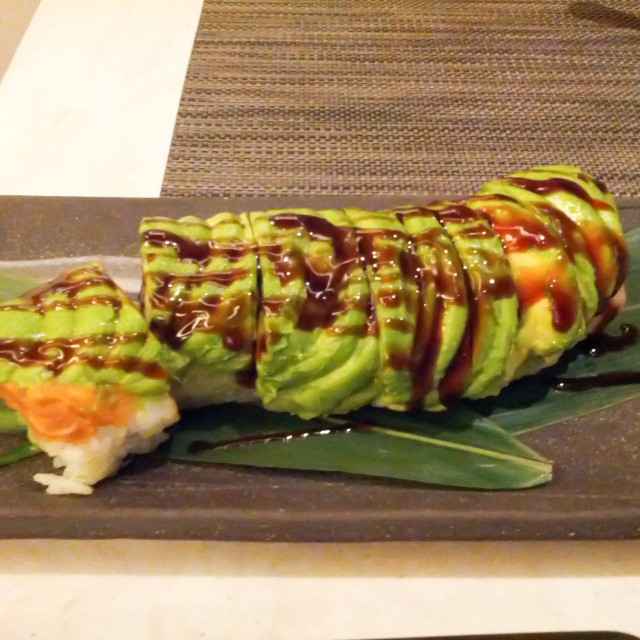
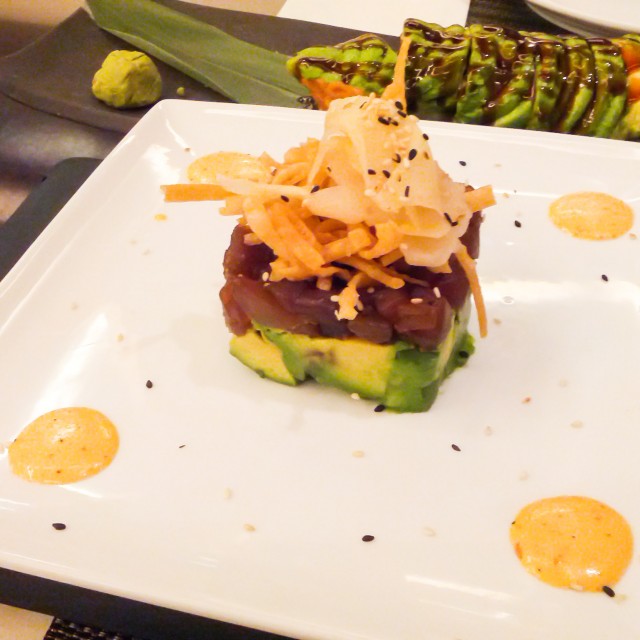
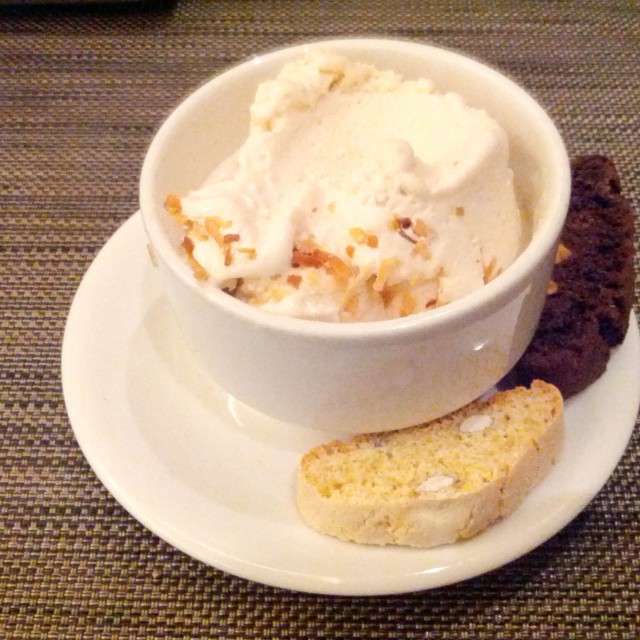
I was able to taste generous portions of pizza, sushi, seafood, steak and fries, even chocolate and vanilla gelato for dessert. All of the food was seriously tasty and competition for some of the best restaurants in New York City.
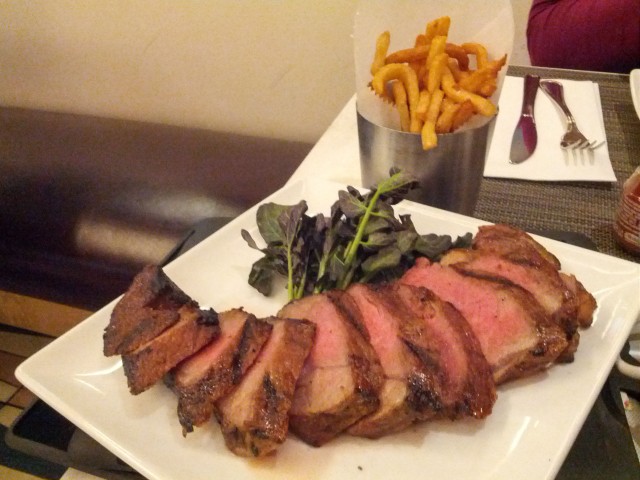
Steak and fries at LGA terminal D. So good, I had to ask how it was prepared.
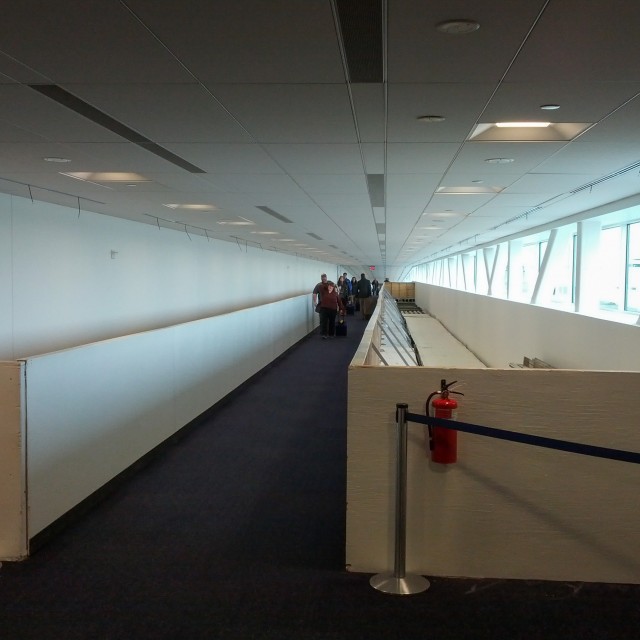
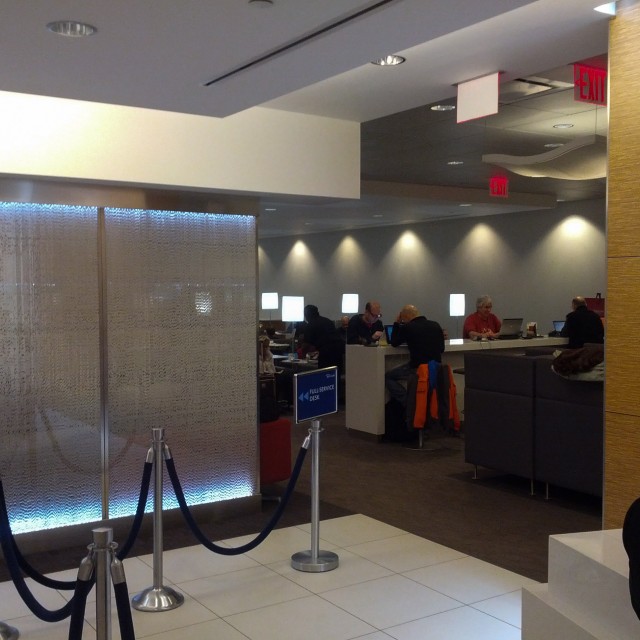
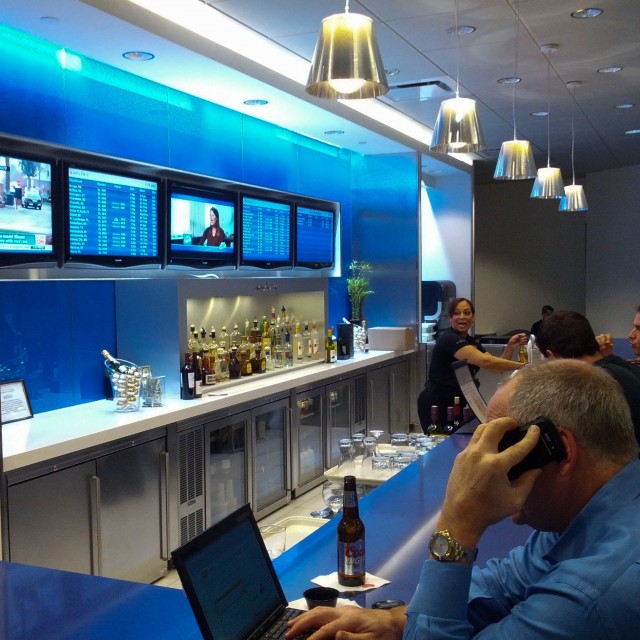
After Delta took over terminal C from US Airways, they quickly built a connecting bridge to terminal D. Terminal C is not up to the same level as D quite yet; there is still quite a bit of work left to be done. Some restaurants are still under construction; however, the SkyClub is open for business. If you find yourself with enough time before your flight, it is worth the walk over to terminal D for a better food selection.
It is clear that Delta is taking its “Win New York” program seriously. The airline’s LGA terminals have seen a complete overhaul and expansion, while a brand new terminal is being built at JFK. After a short period of time, I no longer avoid LGA- I prefer it. The experience at JFK for Delta is currently far below that of LGA, a change I am sure most people did not see coming. Next time you find yourself at LGA with a few hours before your flight, try the steak- medium rare.
ADDITIONAL DELTA LAGUARDIA PHOTOS:
-
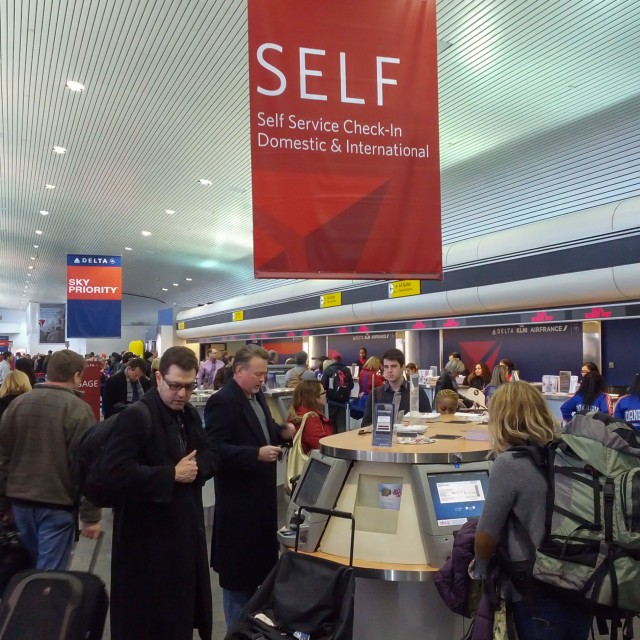
-
Check in
-
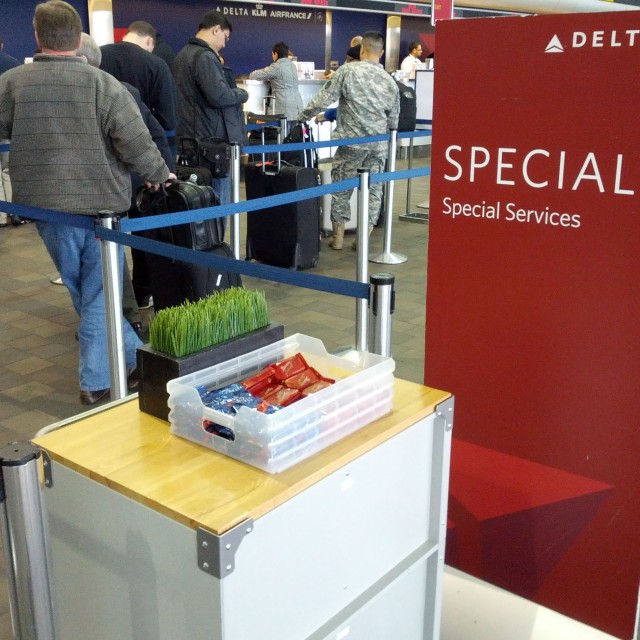
-
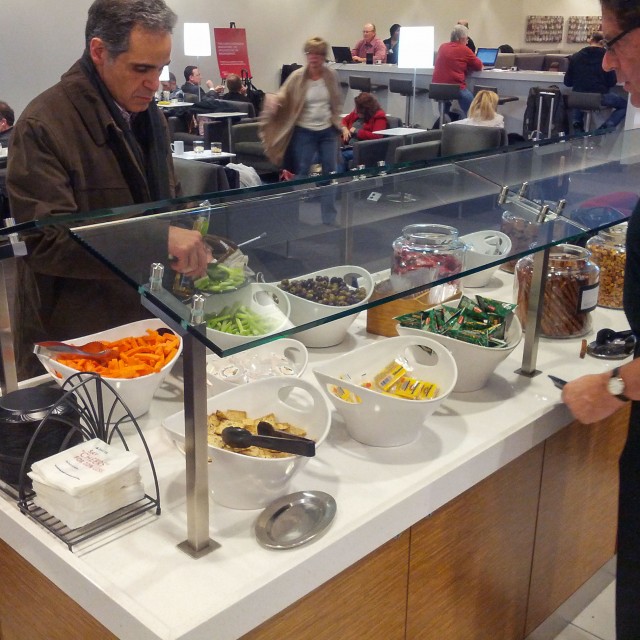
Delta offers free snacks and bottled water throughout the terminal
-
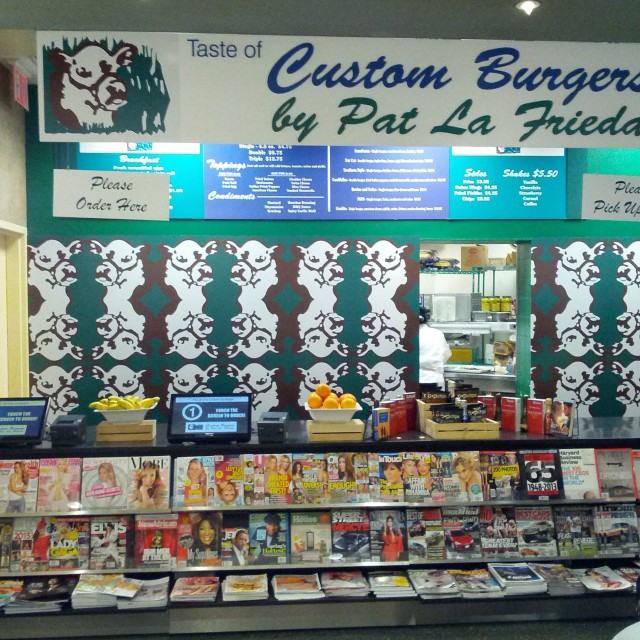
-
Terminal D food court
-
-
Terminal D food court
-
-
Terminal D food court
-
-
Shopping
-
-
Keep an eye on your flight status.
-
-
Terminal C/D connecting bridge. Moving walkways coming this summer.
-
-
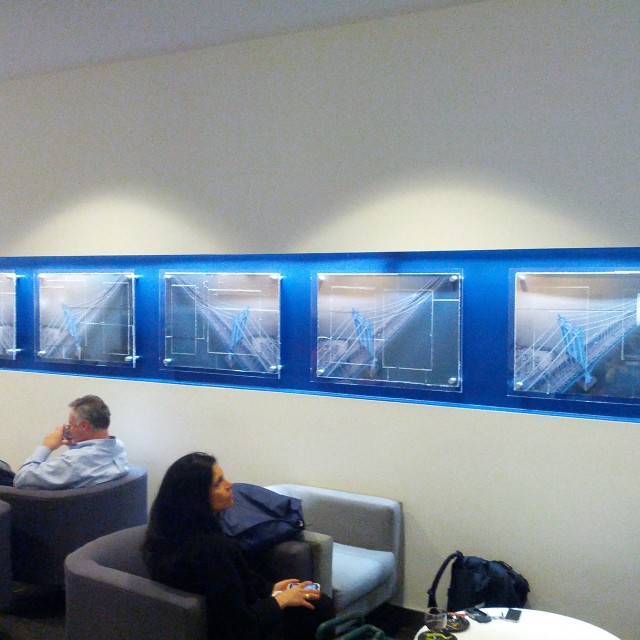
Terminal D SkyClub
-
-
Terminal D SkyClub
-
-
Terminal D SkyClub
-
-
Terminal D SkyClub
-
-
-
The highly graphical iPad menu
-
-
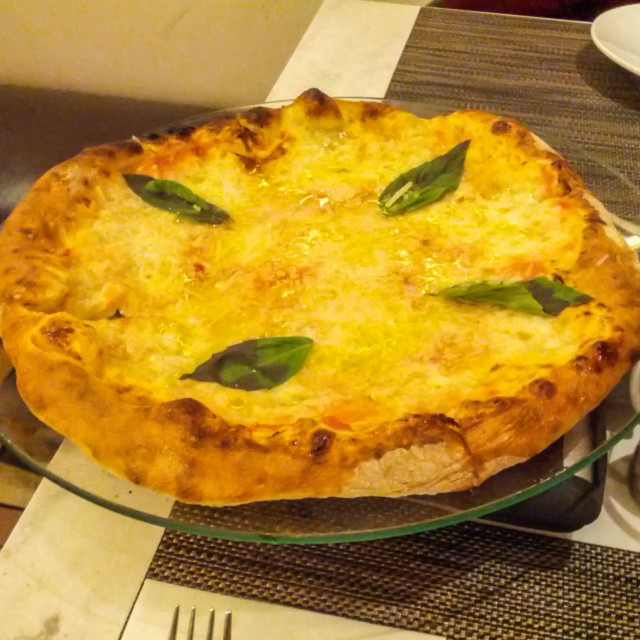
Cheese pizza
-
-
Sushi roll
-
-
Tuna Tar Tar
-
-
Delicious vanilla gelato
-
-
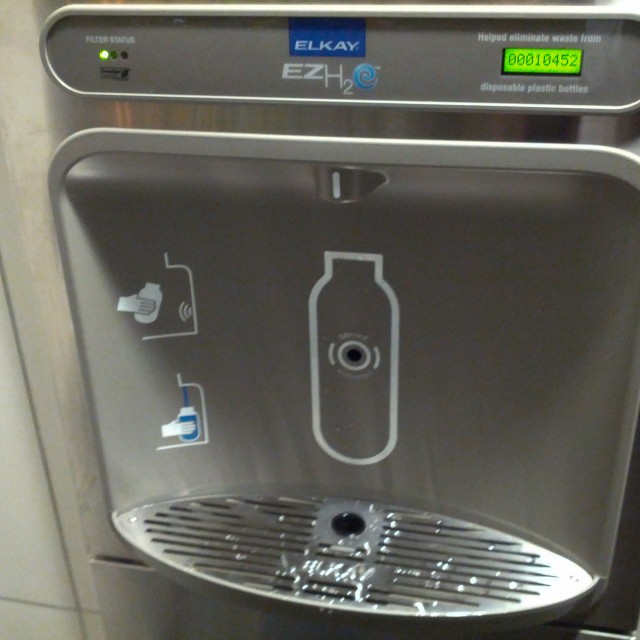
Fill up your water bottle here!
-
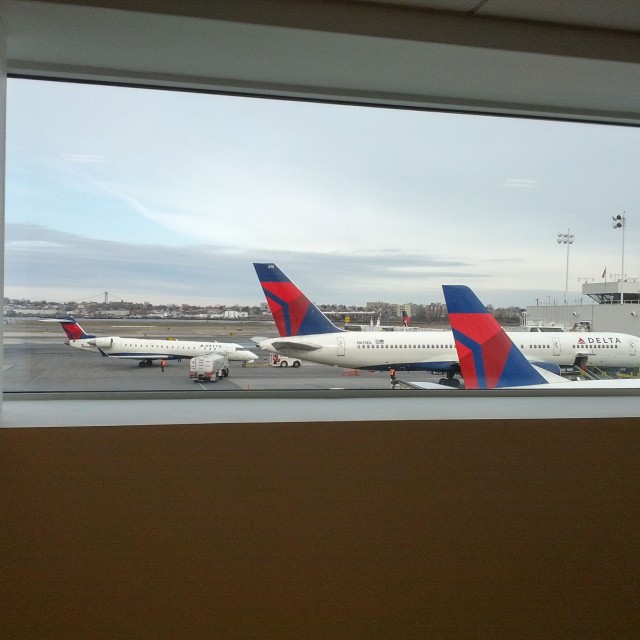
-
View of the ramp from the terminal C/D connecting bridge
-
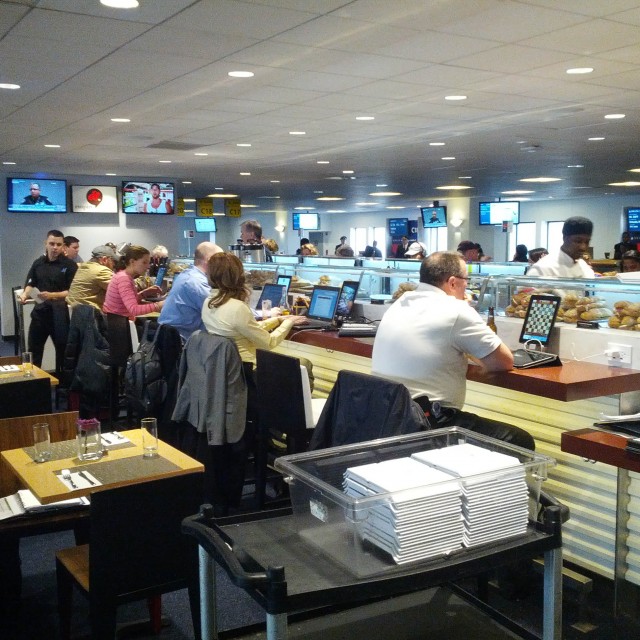
-
Terminal C
-
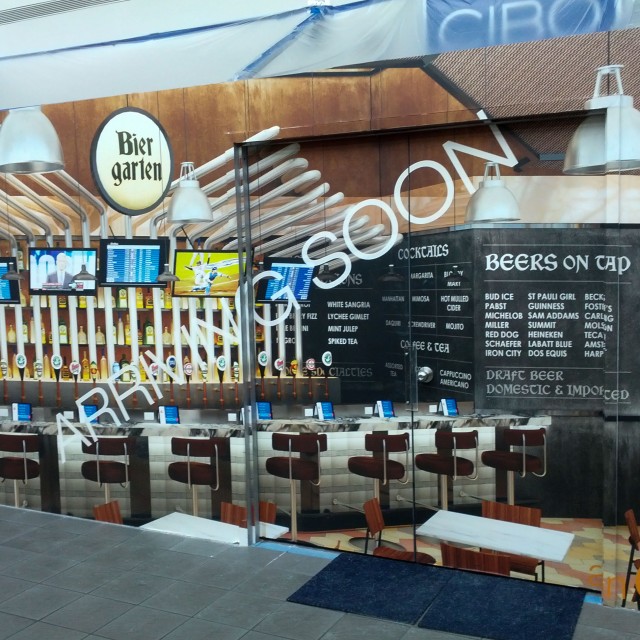
-
Coming soon to Terminal C
-
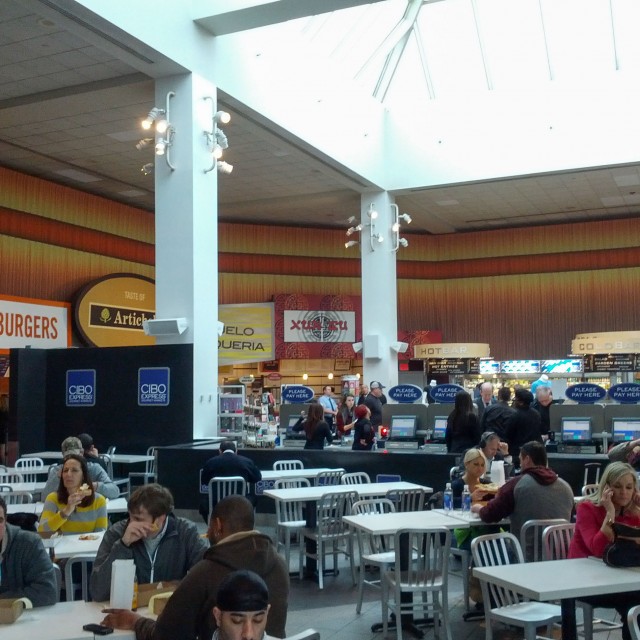
-
Terminal C food court
-
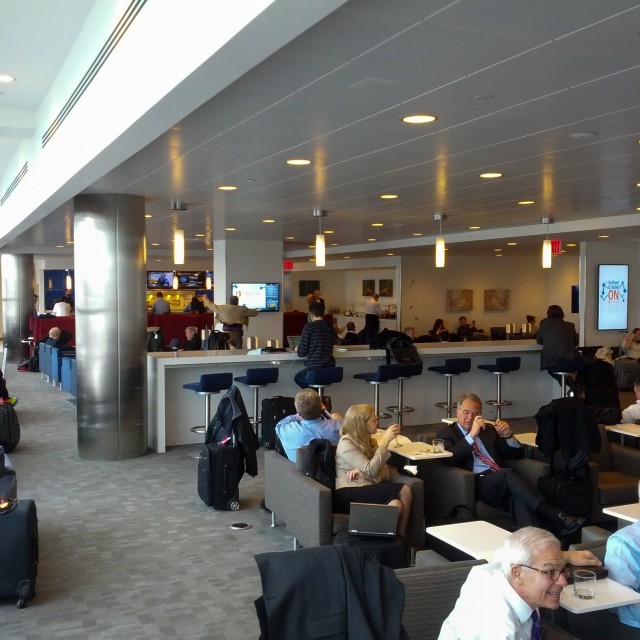
-
Terminal C
-
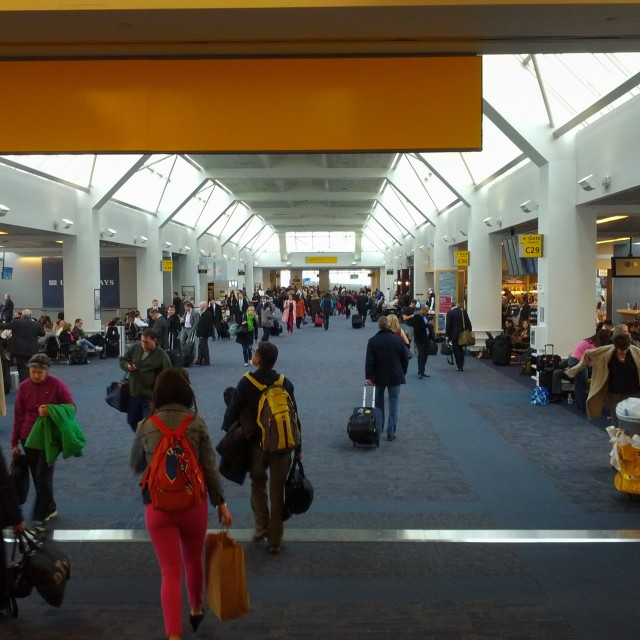
-
Terminal C
-
-
iPads everywhere!
-
-
Taste Of Prime Tavern at LGA Terminal D
|
This story written by… Jason Rabinowitz, Correspondent.
Jason is a New York City native who has grown up in the shadow of JFK International Airport. A true “avgeek”, he enjoys plane spotting and photography, as well taking any opportunity he can get to fly on an aircraft.
@AirlineFyer | FaceBook | |
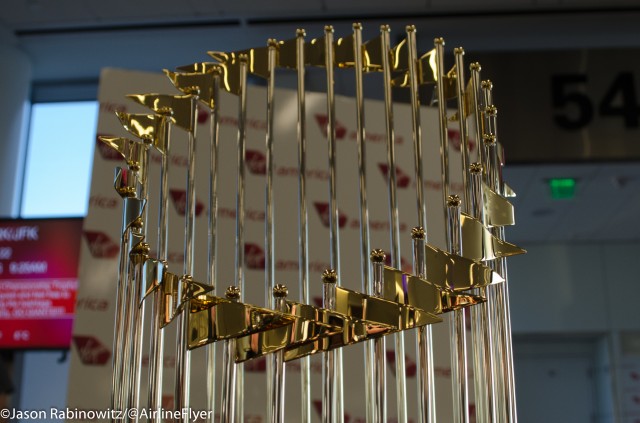
The World Series’ Trophy in all its glory.
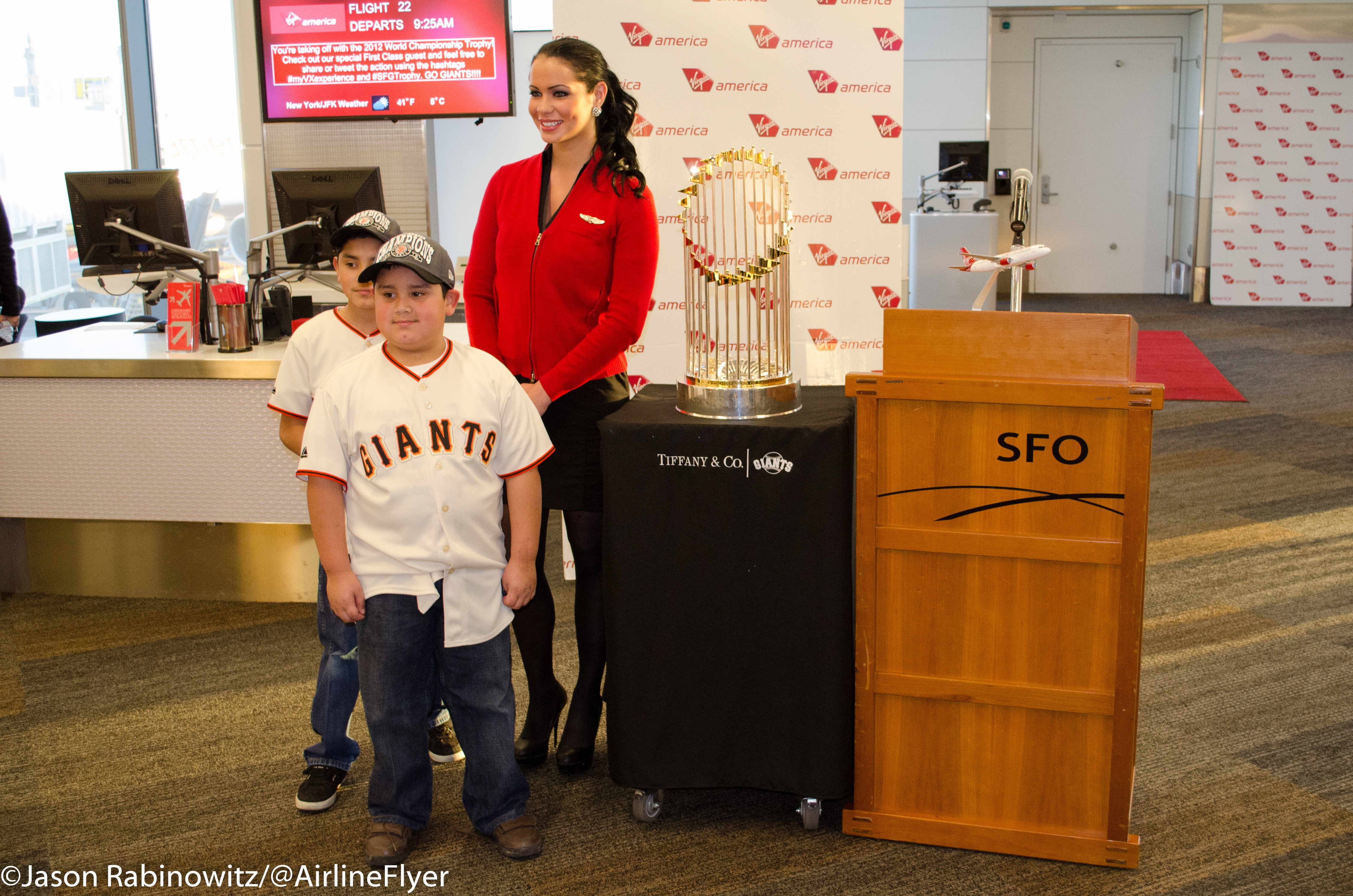
For the second time in three years, the San Francisco Giants are World Series champions. To celebrate their victory, the Giants and Virgin America (the team’s official airline) teamed up to bring the World Series trophy back to the their roots in New York and I was invited to tag along. It was perfect for me since I both love aviation and baseball.
The team’s history dates back to 1883, when they were known as the New York Gothams, playing at the Polo Grounds in Manhattan. Even though the Giants moved to the west coast in 1958, there is still a considerable fan base in New York.
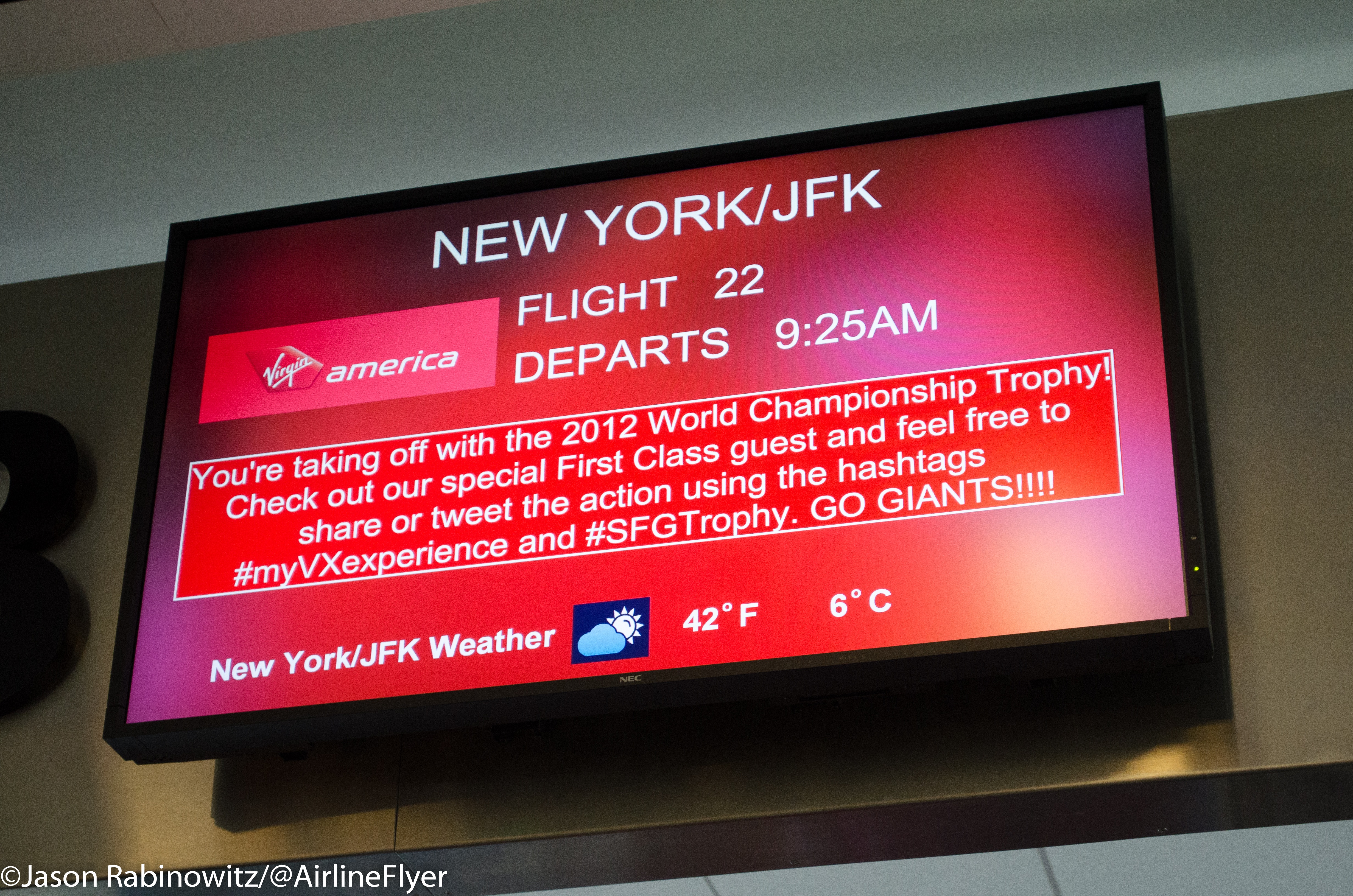
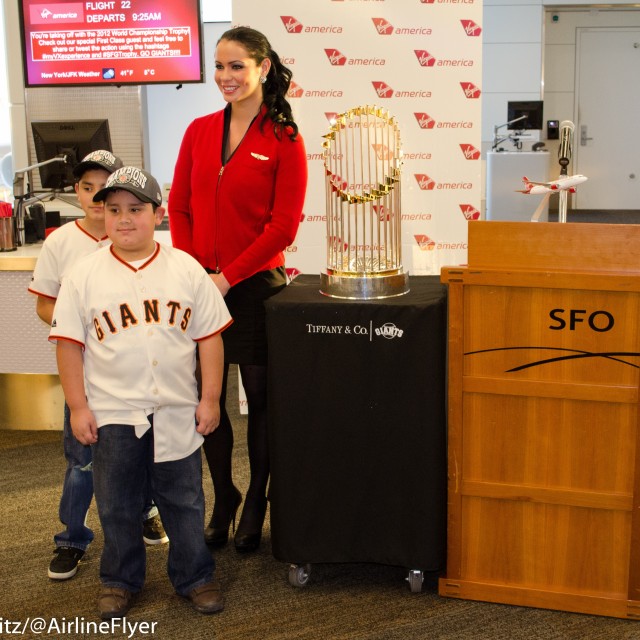
With the sun rising over the runways at San Francisco International Airport, I approached the gate for the 9:25AM flight to find the World Series trophy already on display, hours before departure. Glistening in the morning sunlight, passengers, airline employees, and even police dogs inside the terminal were drawn to the trophy, posing for pictures at this unexpected event.
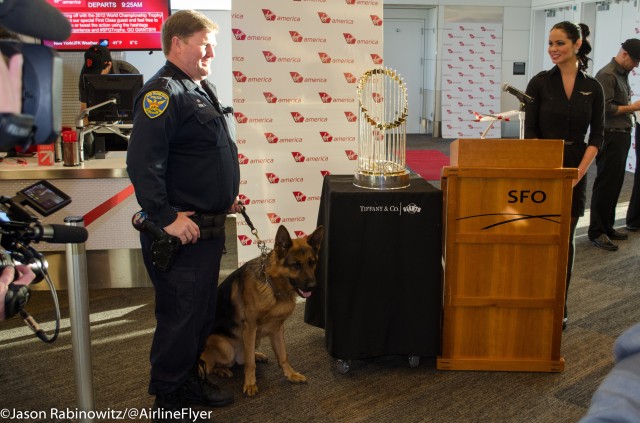
San Francisco Police K-9 officer Xaro poses with the World Series Trophy
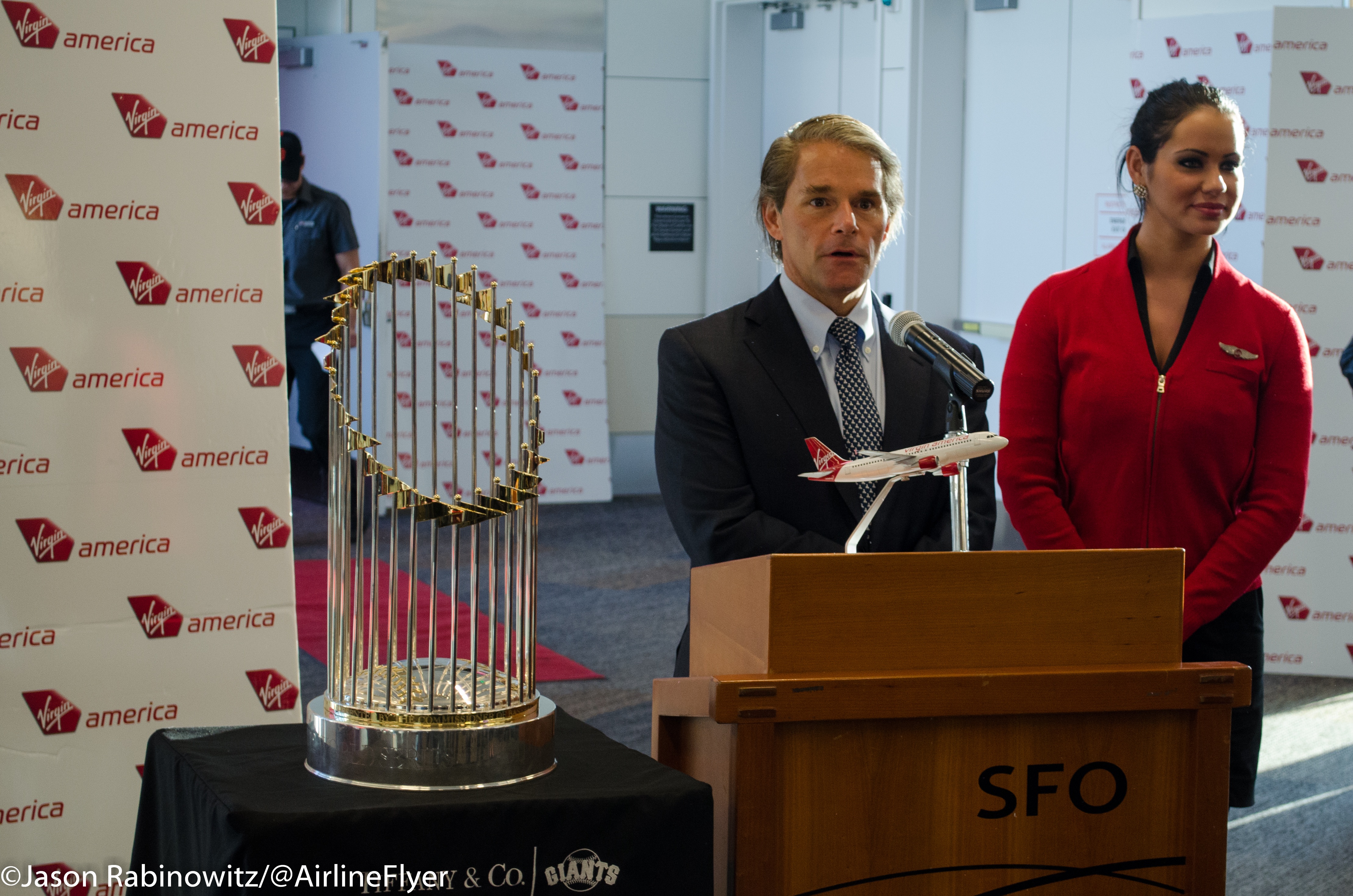
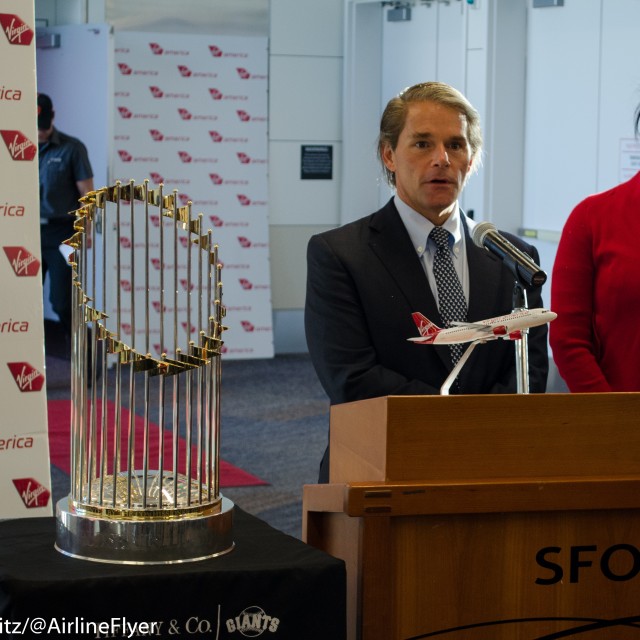
A little less than an hour before departure time, a flood of local media approached the gate area to set up video cameras, as the Giants President and CEO Larry Baer along with David Cush, Virgin Americas President and CEO, were about to give a press conference. The press conference only lasted a few short moments, and it quickly became photo-op time in front of the aircraft.
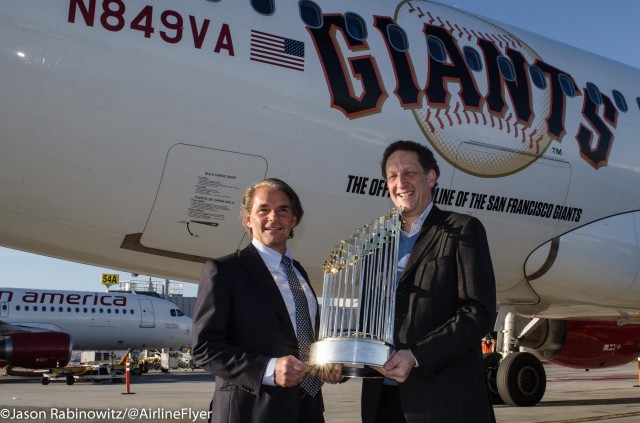
Virgin America President/CEO David Cush (left) and Giants President/CEO Larry Baer with the World Series Trophy in front of “The Beard”
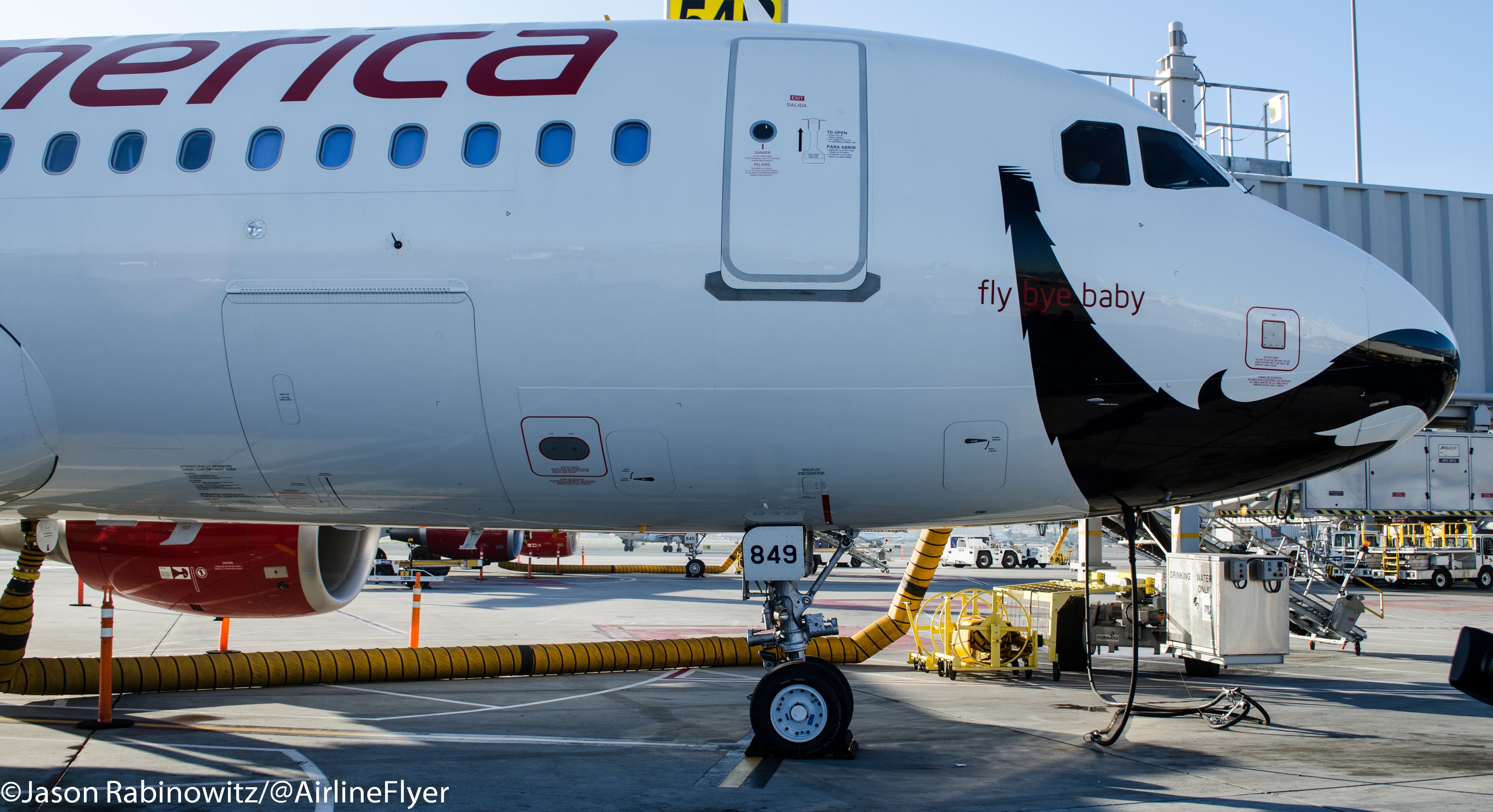
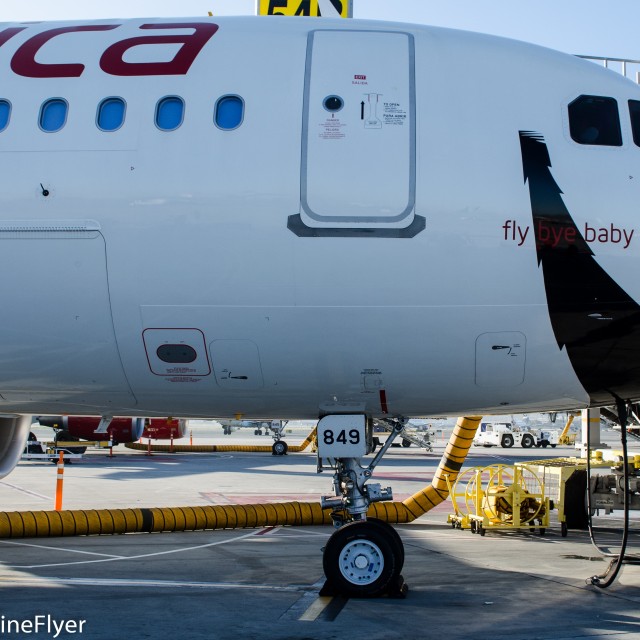
The ride from San Francisco to New York was no ordinary Virgin America aircraft, of course. The flight was operated on the Airbus A320 officially named ’œFly Bye Baby,’ or as it is more commonly known, ’œThe Beard.’
This particular A320 (N849VA) has a large San Francisco Giants logo on either side, as well as a painted on beard on the nose. Originally inspired by Giants closing pitcher Brian Wilson, who is no longer with the team, ’œThe Beard’ definitely stands out from the rest of the Virgin fleet.
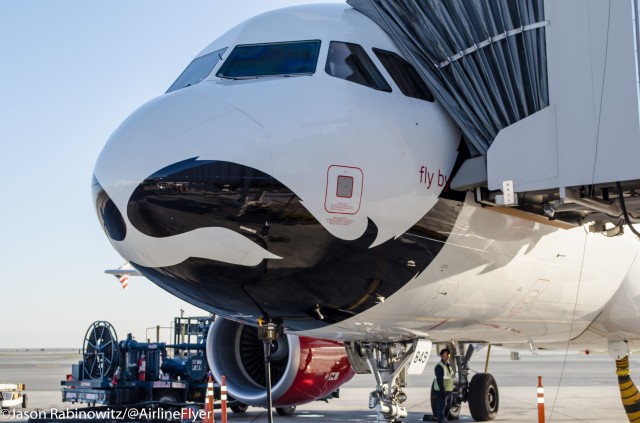
Nice beard man. Virgin America (N849VA) Airbus A320 with facial hair.
Once the photo-op was over, the trophy was finally brought onto the plane, where its first seat was arguably the best seat on board, the pilot’s seat. Thankfully for the passengers (which were mostly “normal” fare-paying folks and then a few media and invited folks), the trophy was soon moved to a first class seat after a few pictures, and the pilot was able to take his rightful position.
After takeoff, members of the media were brought up to the front of the cabin to interview Larry Baer of the Giants. I had never interviewed the CEO of a company before, but what better place to put me at ease than the first class cabin next to the World Series trophy. In the five minutes I was allotted, Mr. Baer and I talked about everything from the team’s loyal following in New York, to the partnership with Virgin America.
When asked about the Giants partnership with Virgin America, Mr. Baer had nothing but great things to say. ’œI can’t imagine a better airline partner than Virgin America,’ said Baer. Interestingly, he told me that before partnering with Virgin, the team was in talks to become partners with United, who has a very heavy presence in San Francisco. During talks with United, Virgin approached the Giants, and the rest is history.
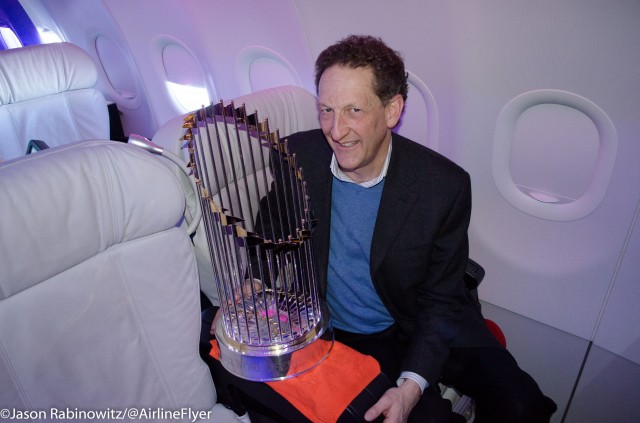
Along the transcontinental journey, a few more events were held to celebrate the trophy’s journey. Mr. Baer and the Giants social media team held a ’œTwitter chat,’ utilizing the aircraft’s Gogo wifi system. Shortly after, the flight crew held a Giants trivia contest over the PA, but with an interesting twist. Instead of raising their hand, or simply shouting out answers, passengers had to use the in-flight entertainment system to answer. Using the tethered remote, passengers logged into the systems chat room, and whoever answered first was the winner. Those who won were brought up to the first class cabin to take pictures with the trophy.
Towards the end of the flight, the crew got on the PA system once more, and encouraged all passengers to wave the orange Giants towel they found at their seat at the beginning of the fight. Before landing at JFK, Mr. Baer walked to the back of the aircraft with the trophy so that every passenger had a chance to see it up close.
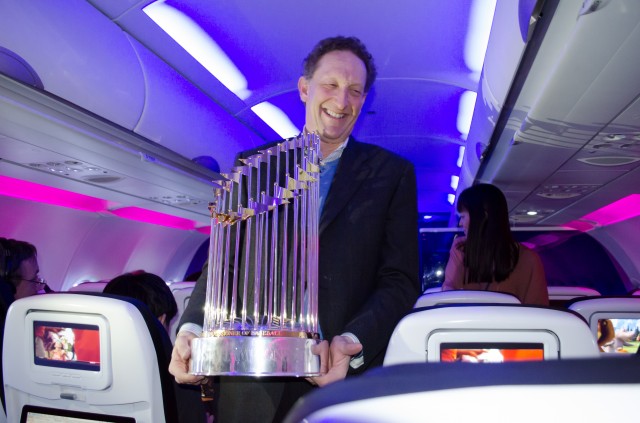
Giants President/CEO Larry Baer walks down the aisle with the World Series Trophy
Most major airlines in the United States sponsor multiple sports franchises, and sometimes it feels as if the sponsorship is nothing more than a few billboards at the stadium. In the case of the Giants and Virgin America, the relationship feels deeper than that, and it is refreshing. The event flight was a lot of fun, and it is something those passengers will not forget any time soon. As a big sports fan and aviation enthusiast, I couldn’t have asked for a better combination.
-
-
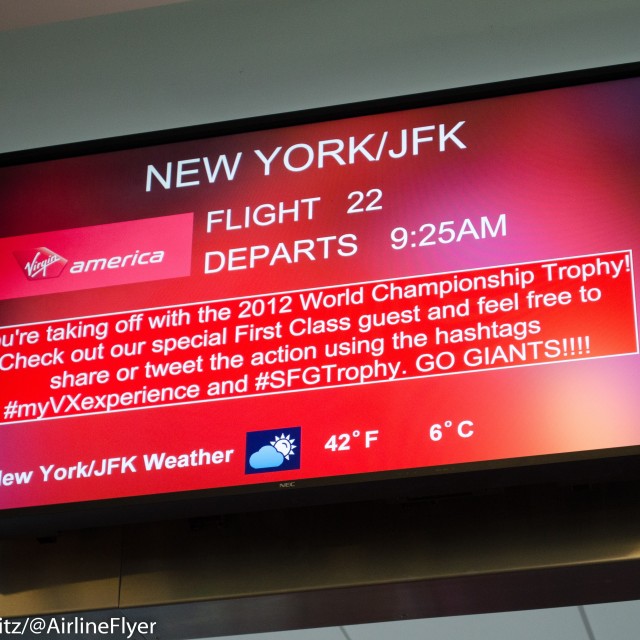
Gate sign informing passengers of the event
-
-
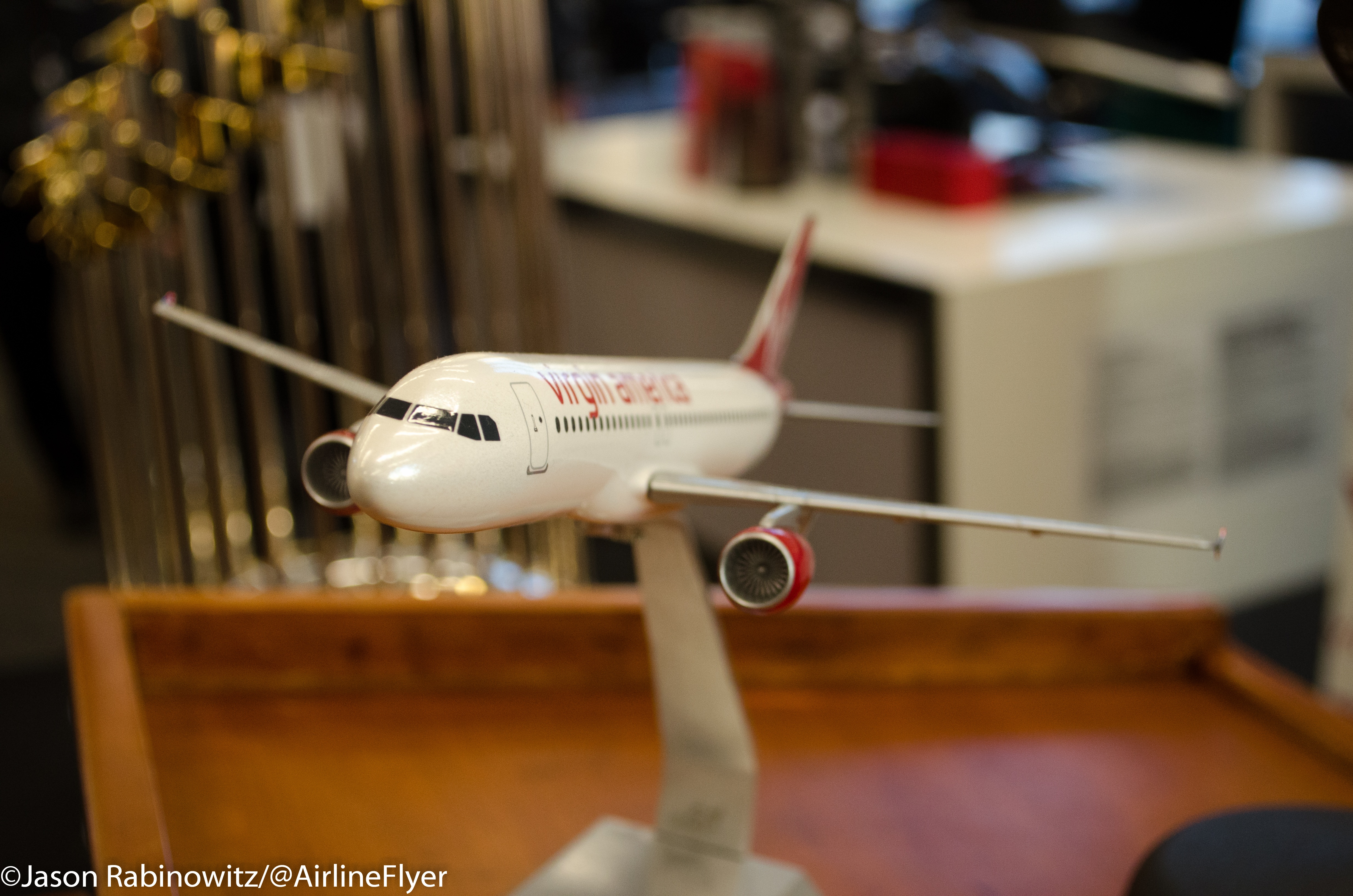
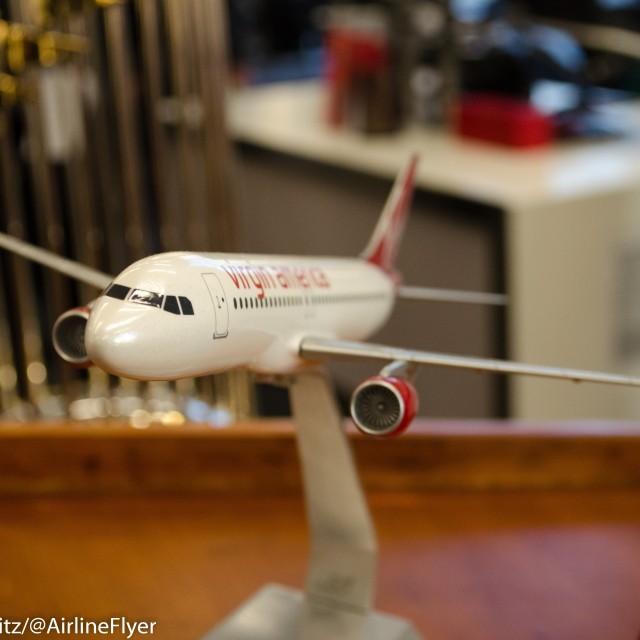
Virgin America A320 Model
-
-
Posing with the trophy
-
-
-
Fly Bye Baby, aka The Beard
-
-
-
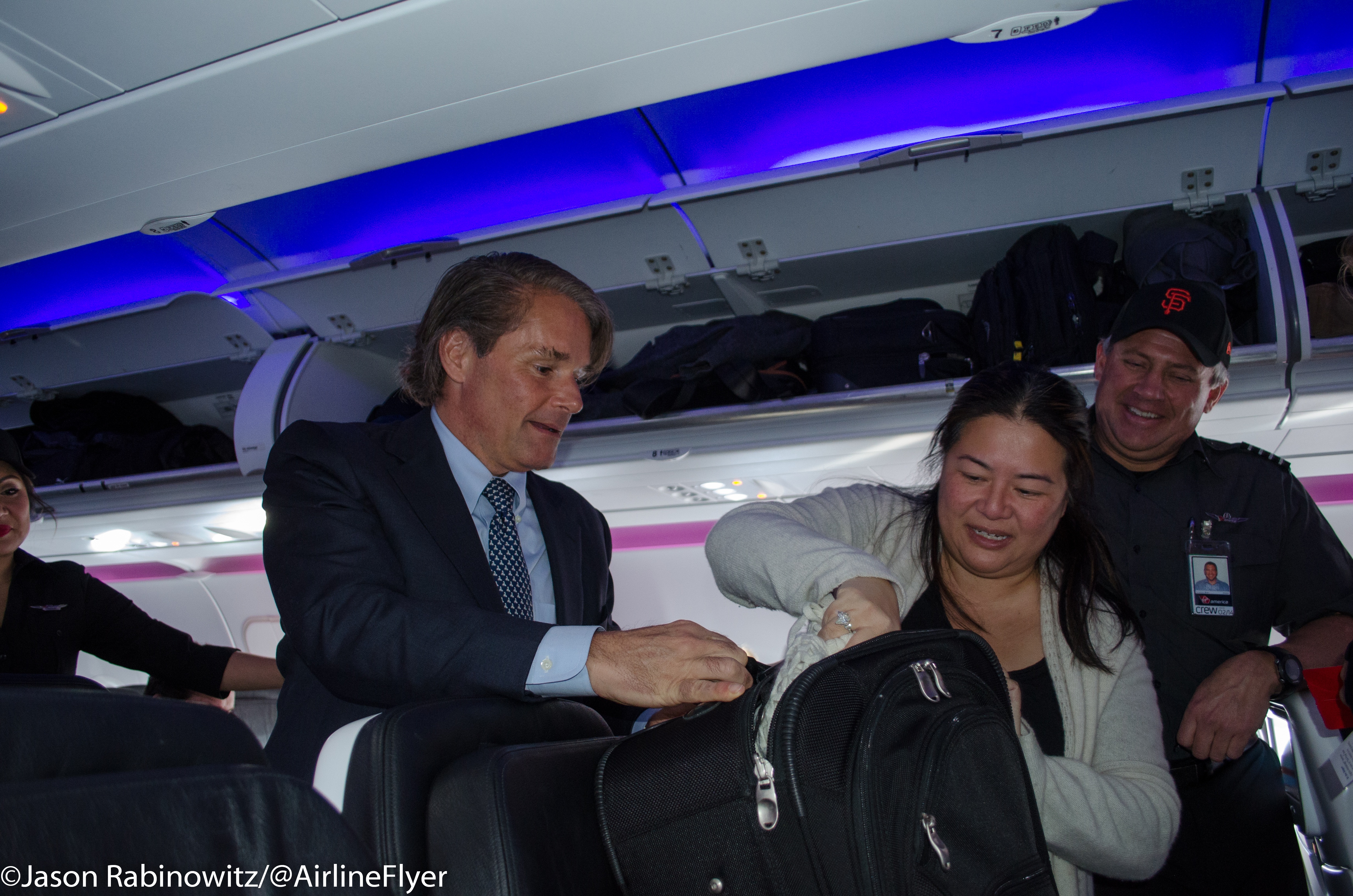
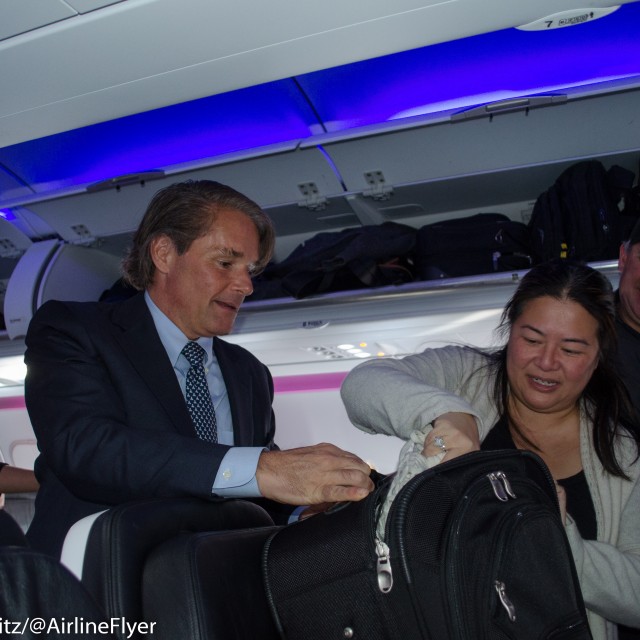
Virgin America President/CEO helps load a passengers bag into the overhead bins at SFO
-
-
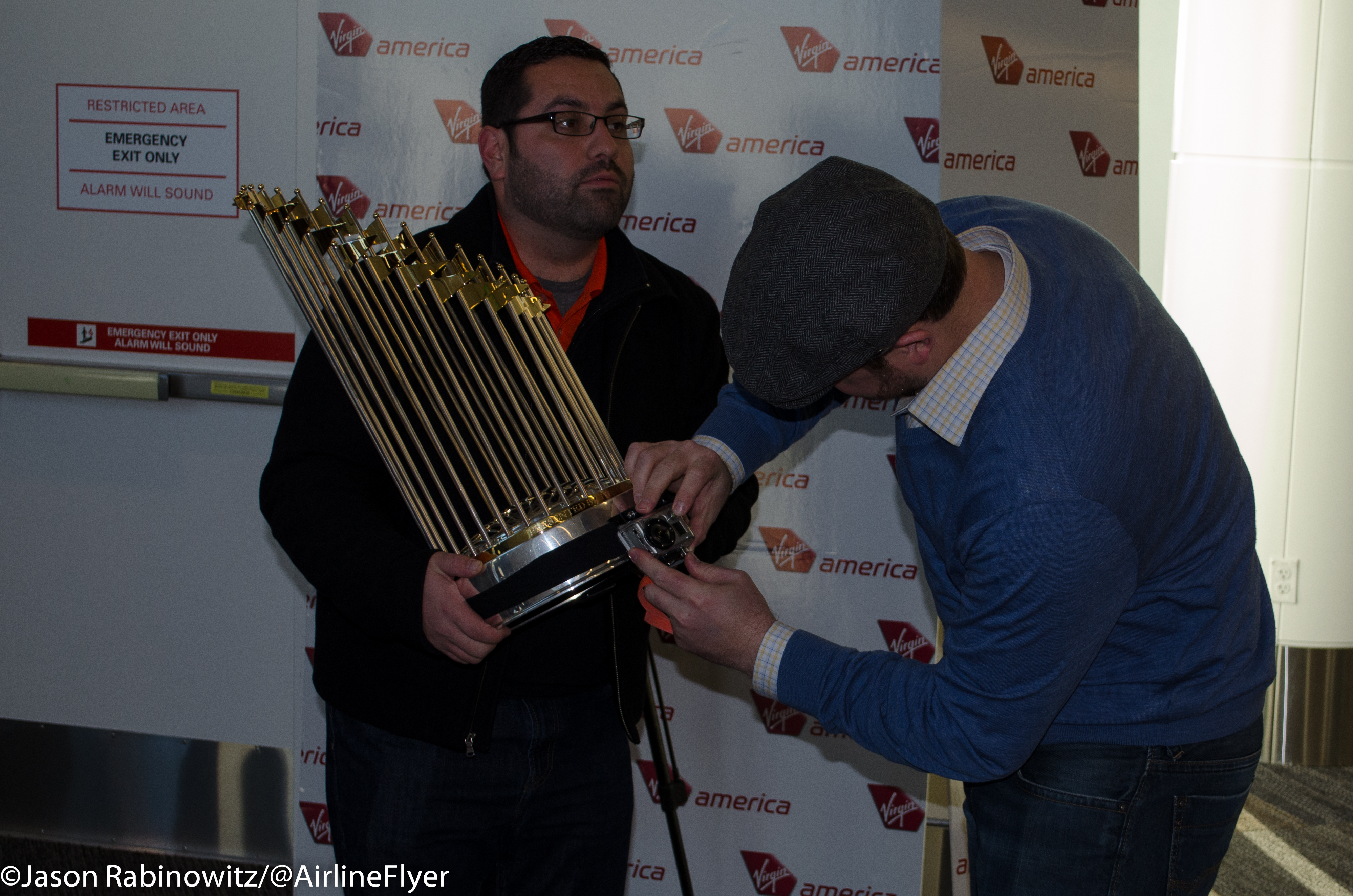
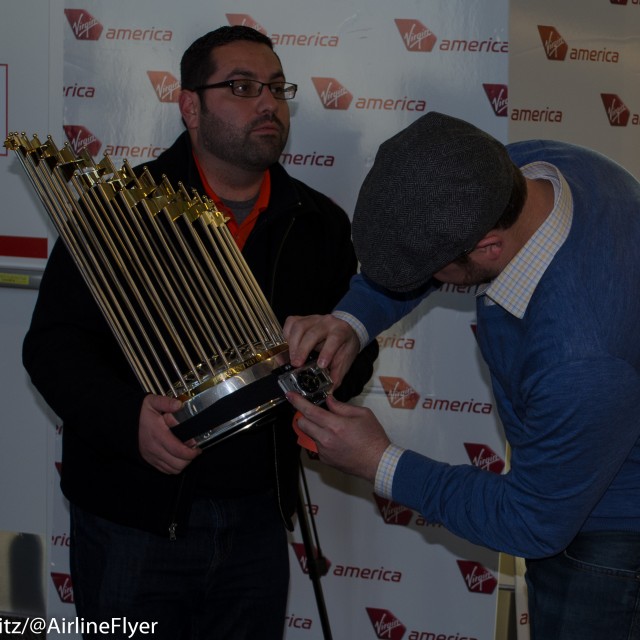
What better way to document the journey of the trophy than to strap a GoPro camera to it?
|
This story written by… Jason Rabinowitz, Correspondent.
Jason is a New York City native who has grown up in the shadow of JFK International Airport. A true “avgeek”, he enjoys plane spotting and photography, as well taking any opportunity he can get to fly on an aircraft.
@AirlineFyer | FaceBook | |