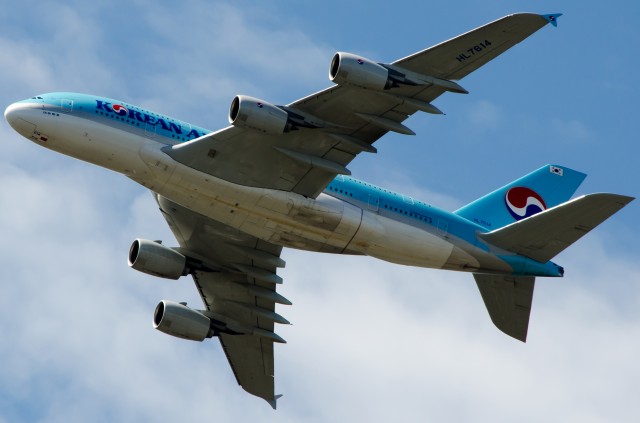
A Korean Air Airbus A380 visits me at home
For nearly my entire life, I have lived in the shadow of one of the busiest airports in the country. Draw a straight line from my house and you end up on JFKs runway 22L in almost 2 miles. Arrivals glide across the sky mere seconds from landing, while departures roar directly overhead. When people ask me “why are you so into aviation?” my answer should be “the real question is what took me so long?”
JFK and airplanes are a daily fact of life in this area. Most people are so used to A380s at 500 feet over their backyard, they don’t even look up. For many years of my life, I was one of these people. DC8s, 727s, 707s, Concorde, all the classics you might now find in a museum were all right over my head, but I just never looked up.
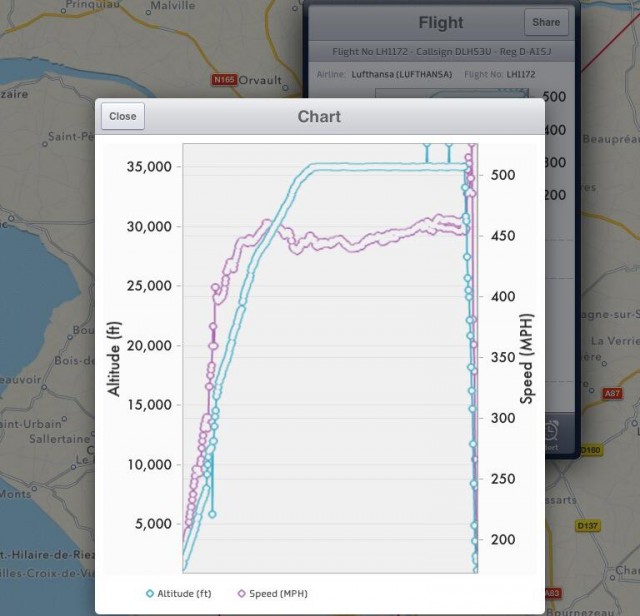
Image from PlaneFinder.net via NYCAviation.com.
Watching airline activity live via social media can have interesting consequences. Last week, I happened to see the #7700 tweet [which are tweets that are auto generated that go out any time an aircraft in coverage squawks 7700] from Planefinder.net as soon as it was posted and went to check out what was happening. Normally when you catch these emergencies, not much happens immediately, and the aircraft either continues on to its destination, or diverts to another airport.
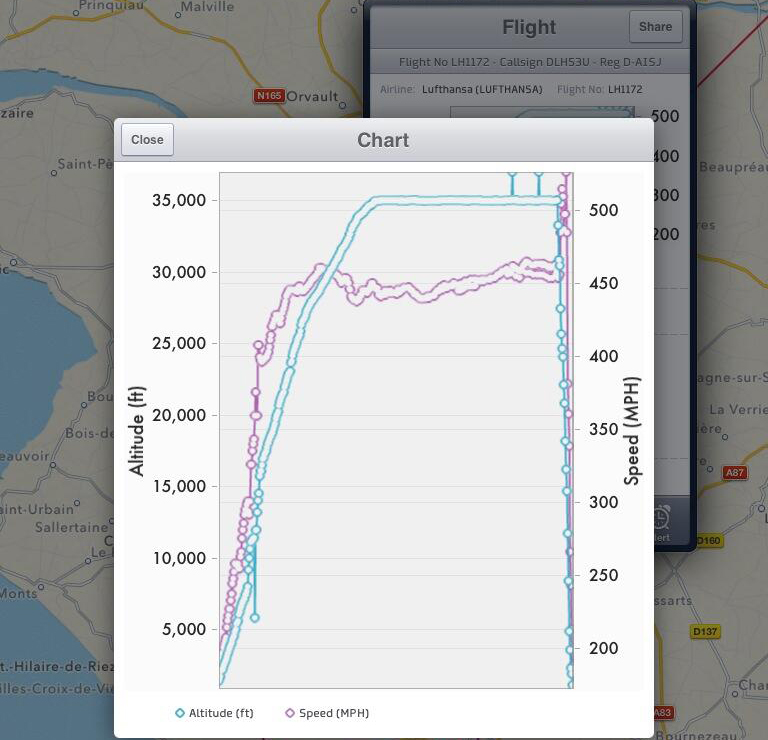
This time I noticed that the aircraft immediately entered a very rapid descent [see an image of normal descent]. In my experience, something like that is usually caused by a loss of cabin pressure, where the pilots level off at 10,000 feet to asses the situation. However, this aircraft passed 10,000 and continued to rapidly descent, which was worrying. Was this a huge emergency, website error or just standard procedure for some issue on the flight?
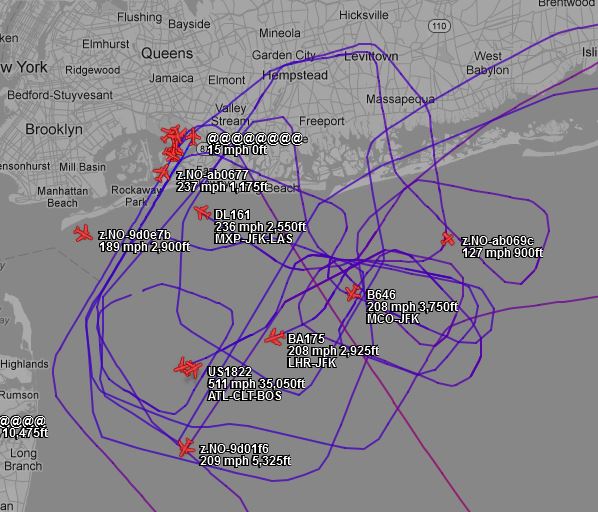
A whole bunch of go-arounds turned the JFK airspace into a tangled web of flight paths
Shortly after noon today at New York’s JFK airport, a powerful thunderstorm cell with cloud tops of 40,000 feet passed over the field and subsequently turned the NY airspace into a tangled mess.
Lightning struck the field a first time, taking down the airport’s runway visual range (RVR) equipment, which is used to measure exactly how far a pilot in the center of the runway is able to see the center line markings. Lightning strikes happen and equipment failures occur all the time, butmoments later, lightning struck yet again, this time taking out the ILS glide slope for runway 4R, the active runway. At that moment, several international heavies were on final approach, forcing missed approaches and go-arounds.
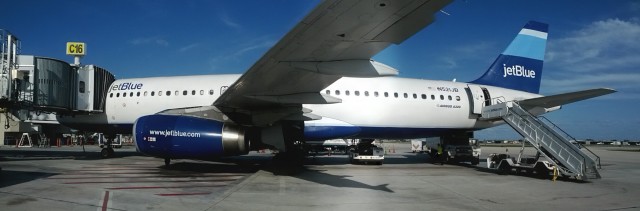
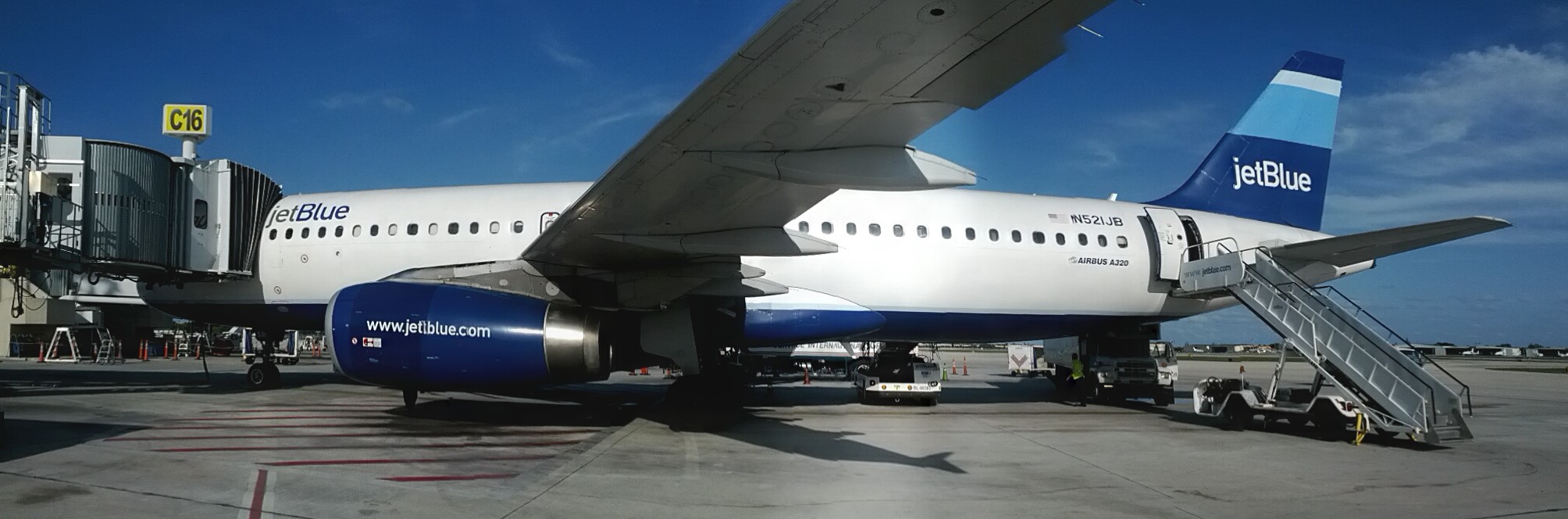
Stop on the ramp while to take a panoramic photo of your aircraft? Sure! Photo by Jason Rabinowitz.
When you think of airports that appeal to AvGeek, a certain few will always come to mind: St. Maarten, Los Angeles, or maybe Paine Field. Some airports that probably don’t come to mind might be West Palm Beach, Burbank, and Ft. Lauderdale, but maybe they should.
In most major American airports, passengers flow directly from the terminal to the aircraft by the use of a jet bridge, never truly getting a good view of the aircraft they are about to board. At some airports, however, if you play your cards right, you are able to board the plane from the ramp, getting an epic view of your soon to be aircraft as you enter through the door. At some locations there passengers can both board from a jetway in the front and via the ramp in the back.
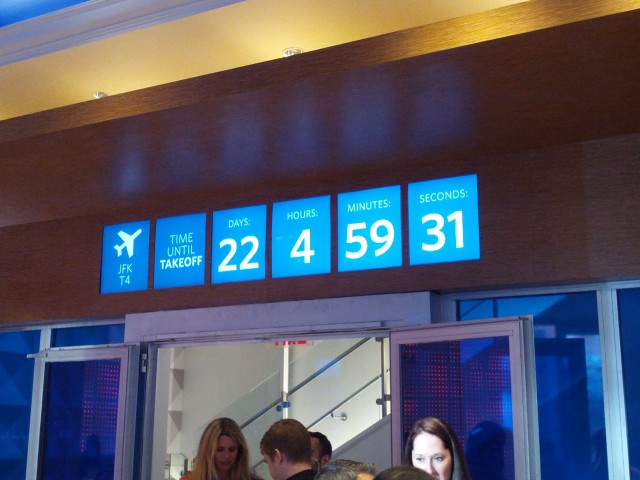
Only 22 days, 4 hours, 59 minutes, 31 seconds until JFK T4 opens…. but who’s counting.
How does an airline spread the word about their new terminal opening soon? If you guessed “rent space in lower Manhattan, recreate the best features of the new terminal, and sell cheap lunches,” you are correct! If that isn’t what you guessed, let me tell you a little bit about how Delta is preparing New York for the new JFK Terminal 4.
On May 24th, Delta opens an expansion to terminal 4 at JFK, moving their operations out of terminal 3. For those of you who many not have flown Delta through JFK recently, terminal 3 has fallen on hard times, and is slated for total demolition in the near future. The experience there is anything but world class, and passengers actively avoid it. Terminal 4, on the other hand, is a 1.4 billion dollar investment at JFK, bringing high tech features, new dining and shopping options, and an overall better experience to New York.