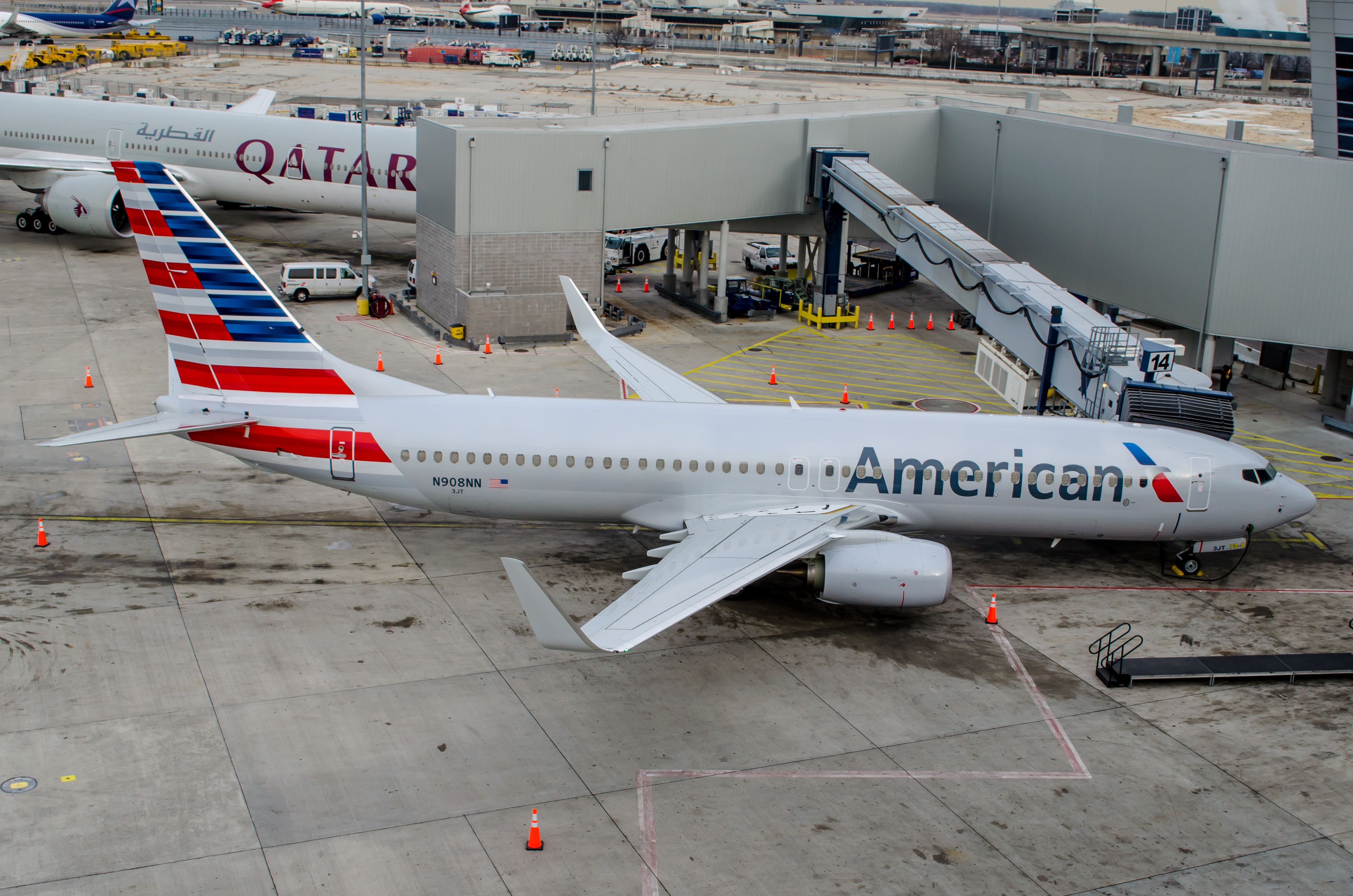
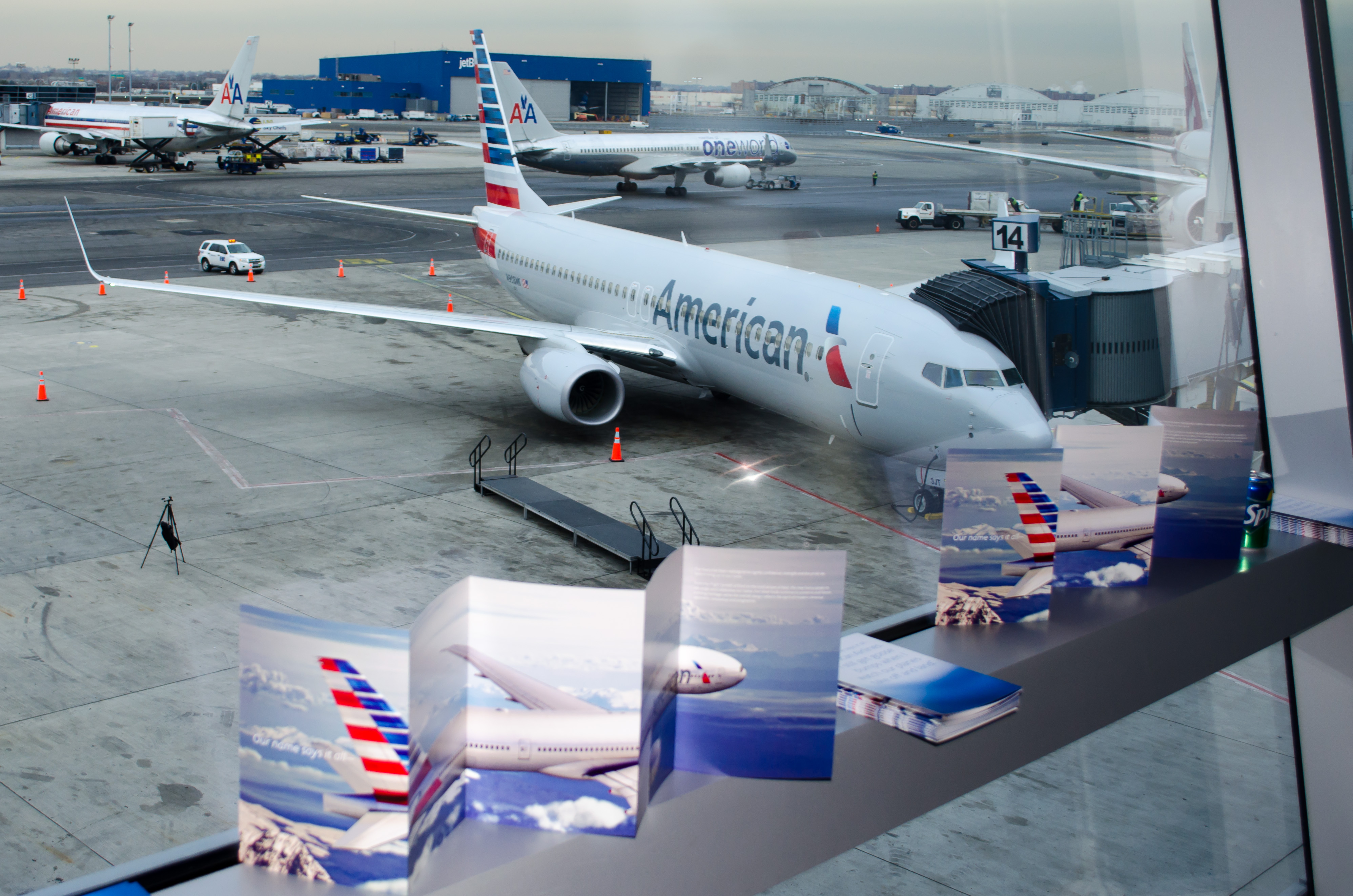
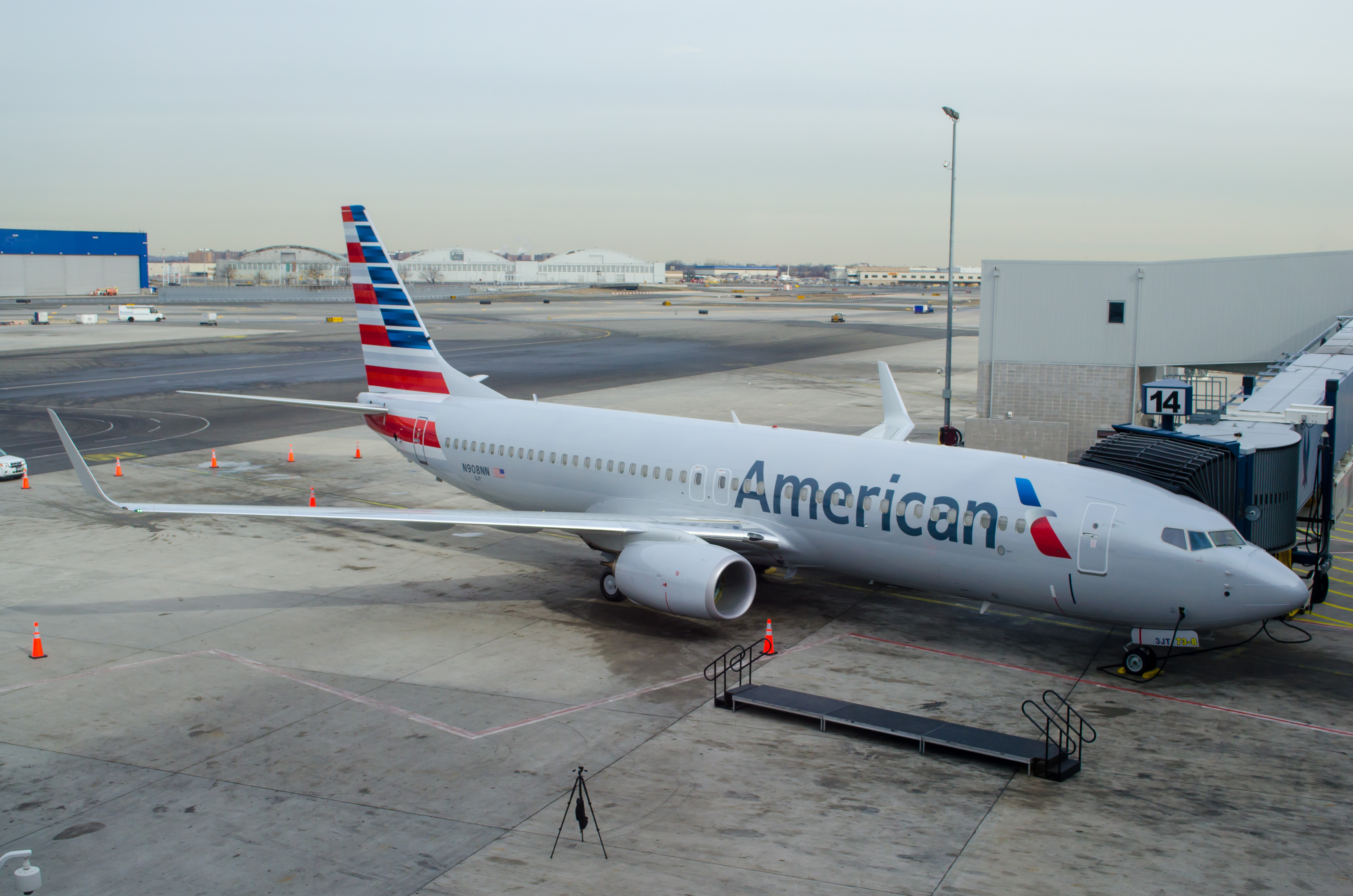
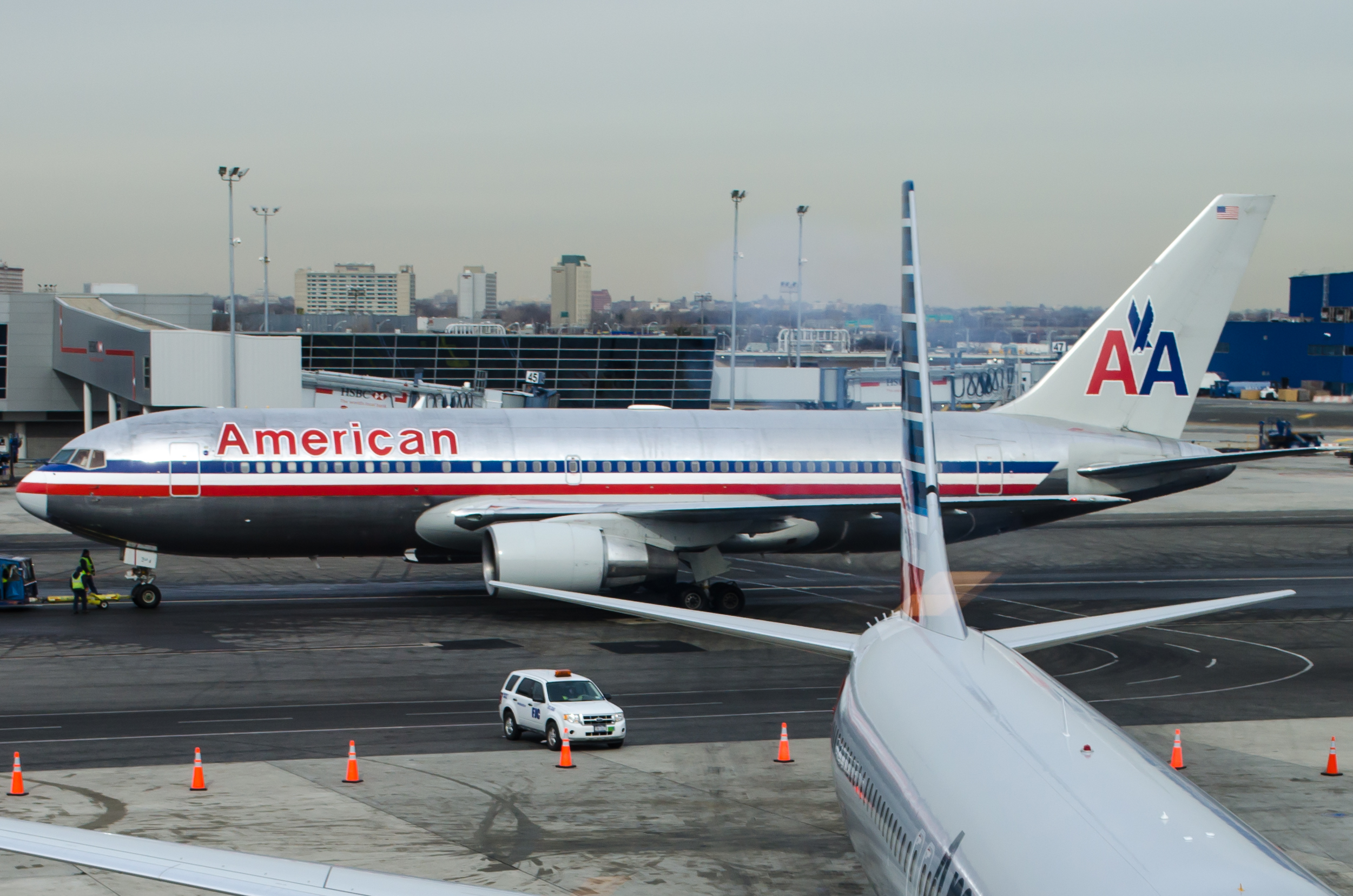
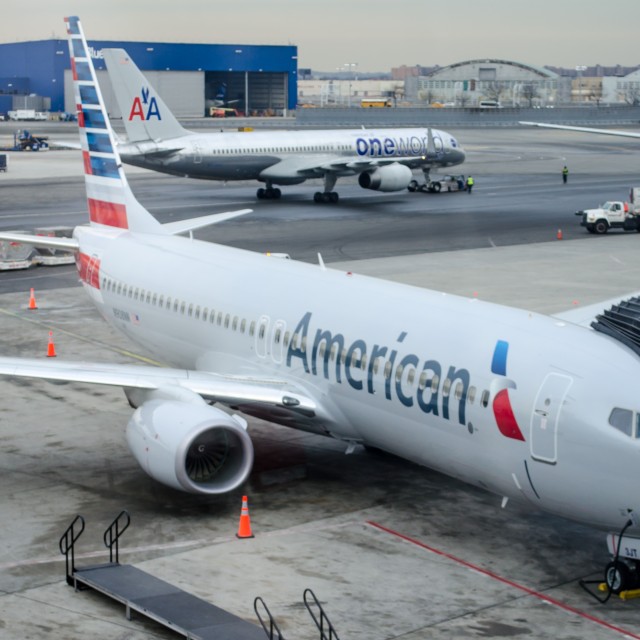
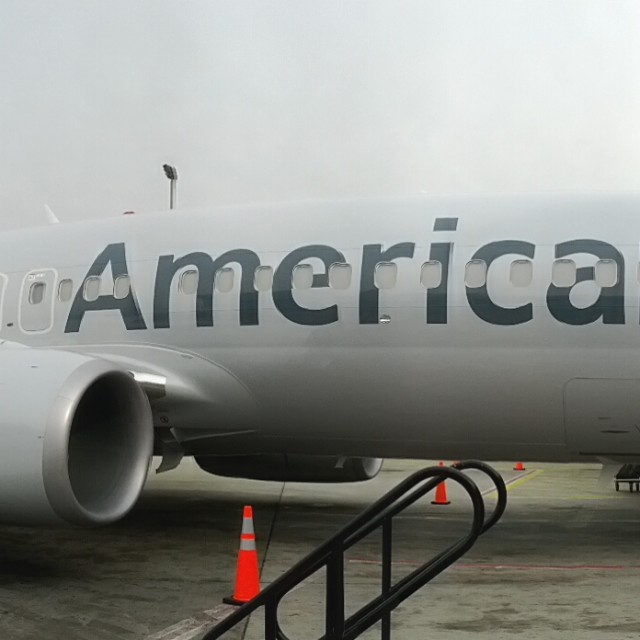
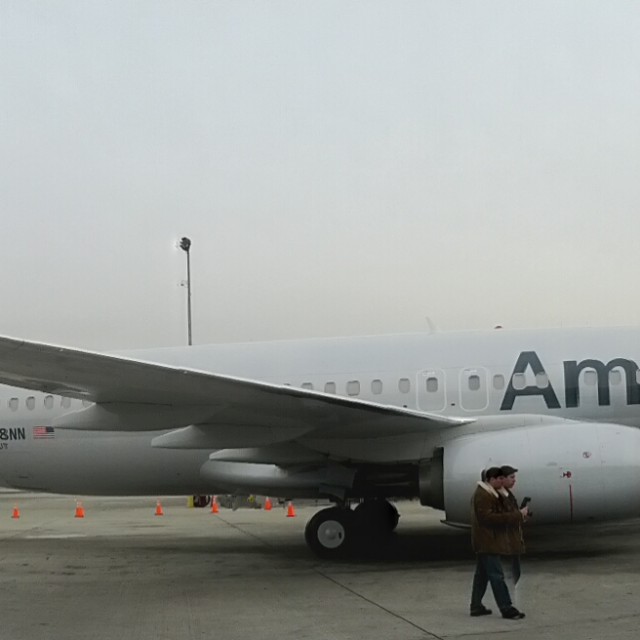
Terminal 8 at John F. Kennedy Airport in New York yesterday hosted a special event: the first American Airlines plane with the company’s new livery was in town. The 737-800 is the first American aircraft with the new livery, but a Boeing 777-300 ER, the carriers new flagship aircraft, is being painted right now and we should see it before its maiden flight to Sao Paulo on January 31st.
With members of the media invited, American Airlines talked about the change to their iconic livery, and what it means for the brands future. In general, most people I spoke with like the change, though some were a bit reluctant to accept the new tail design.
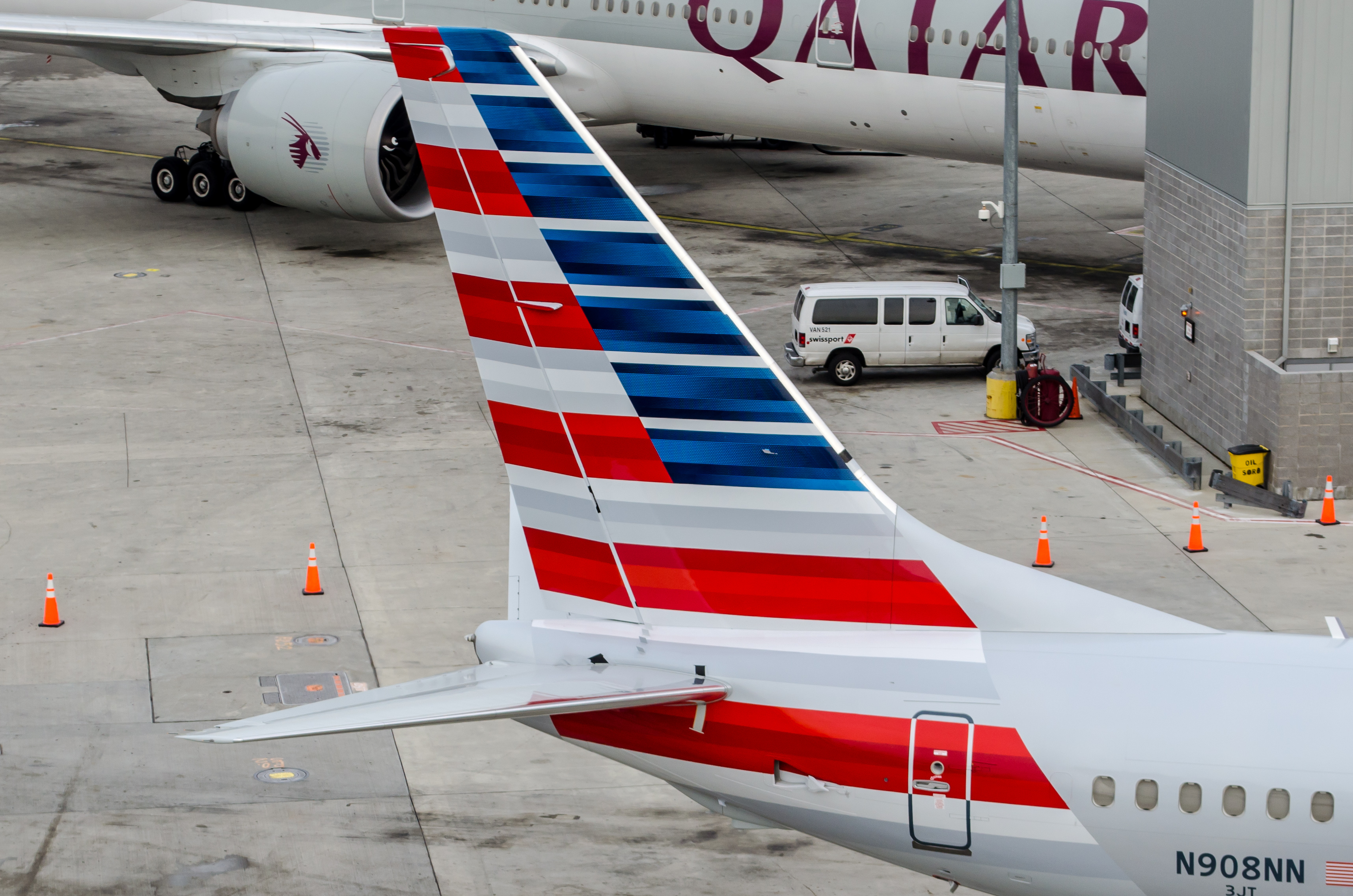
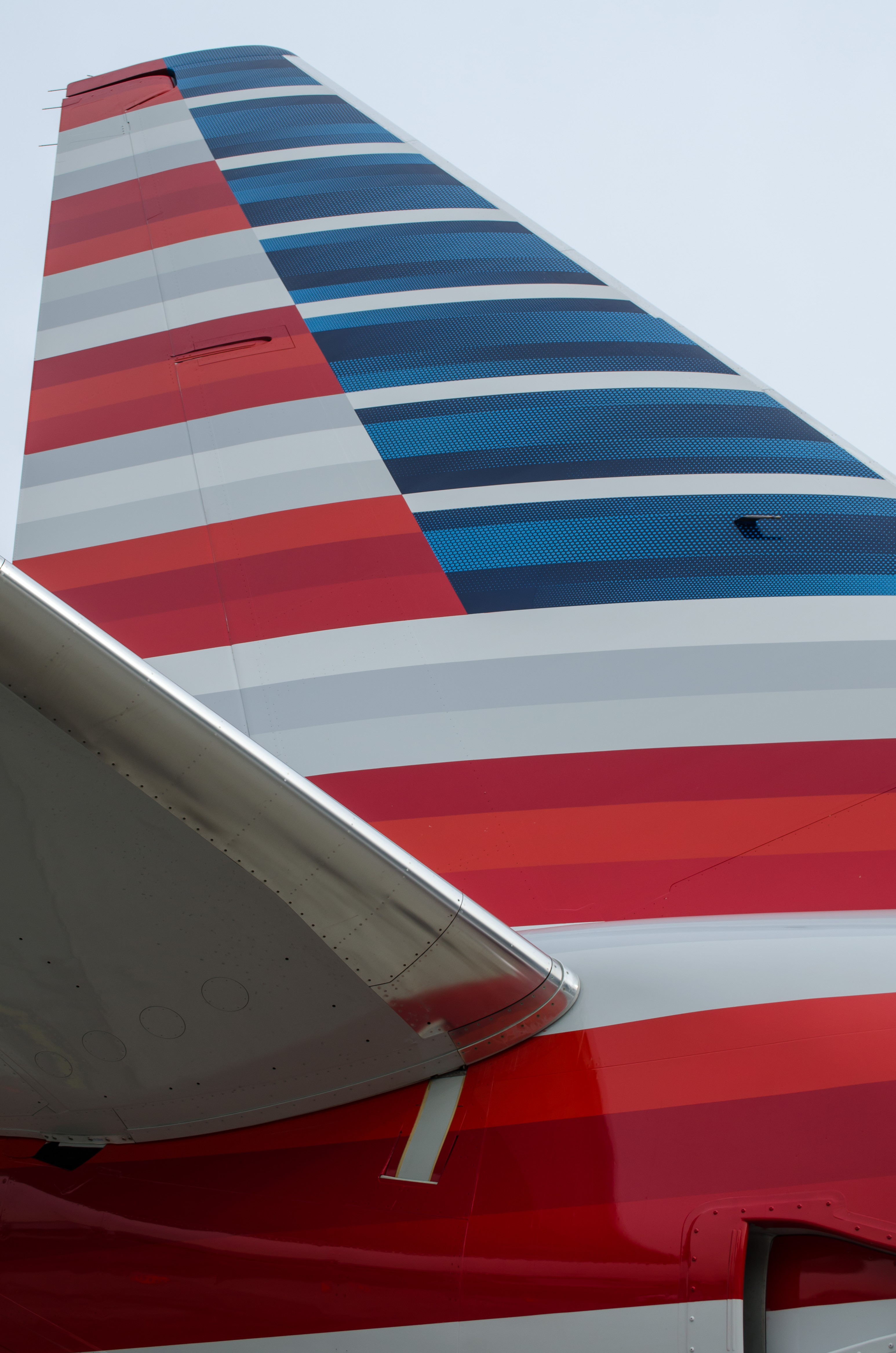
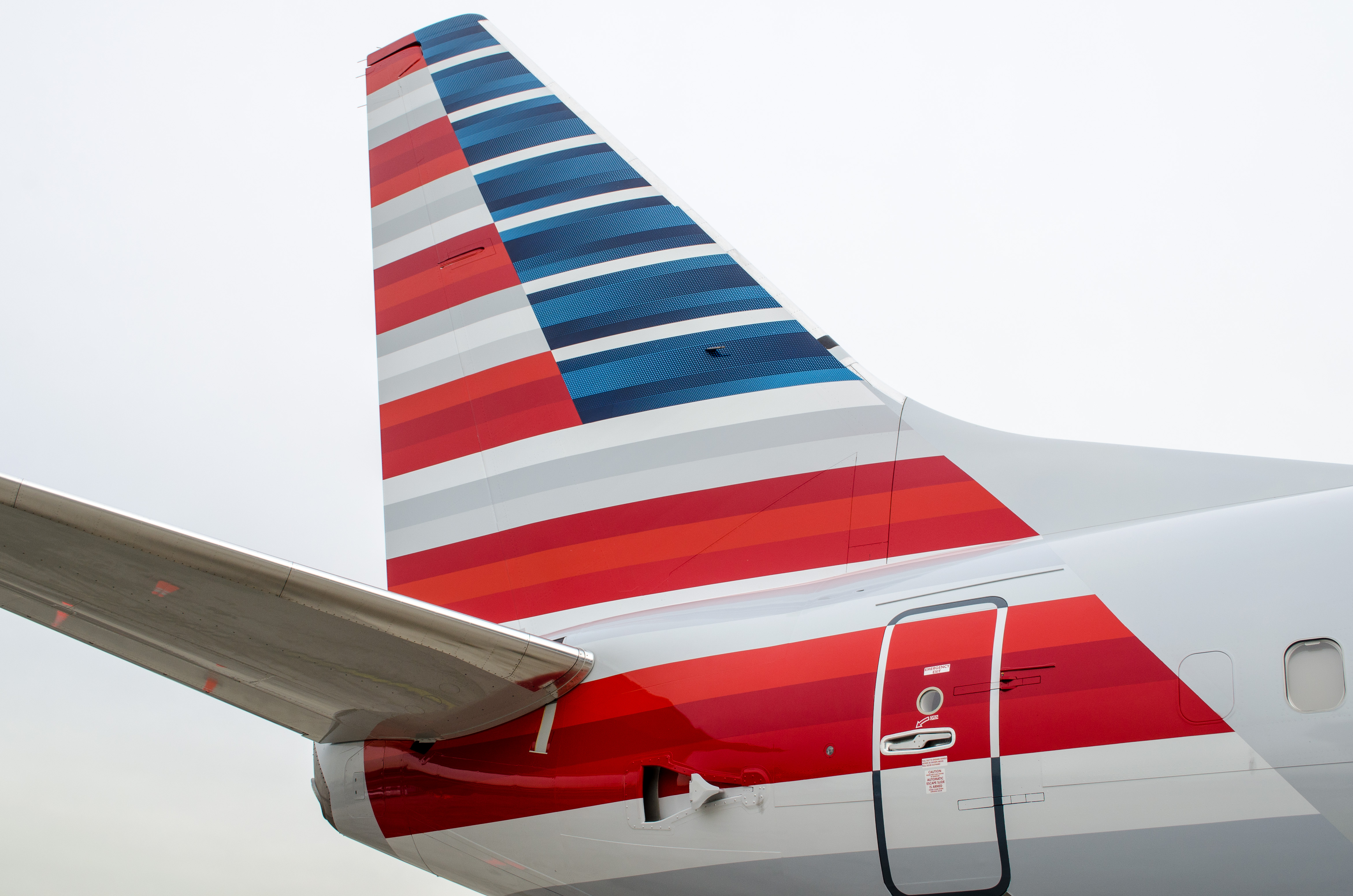
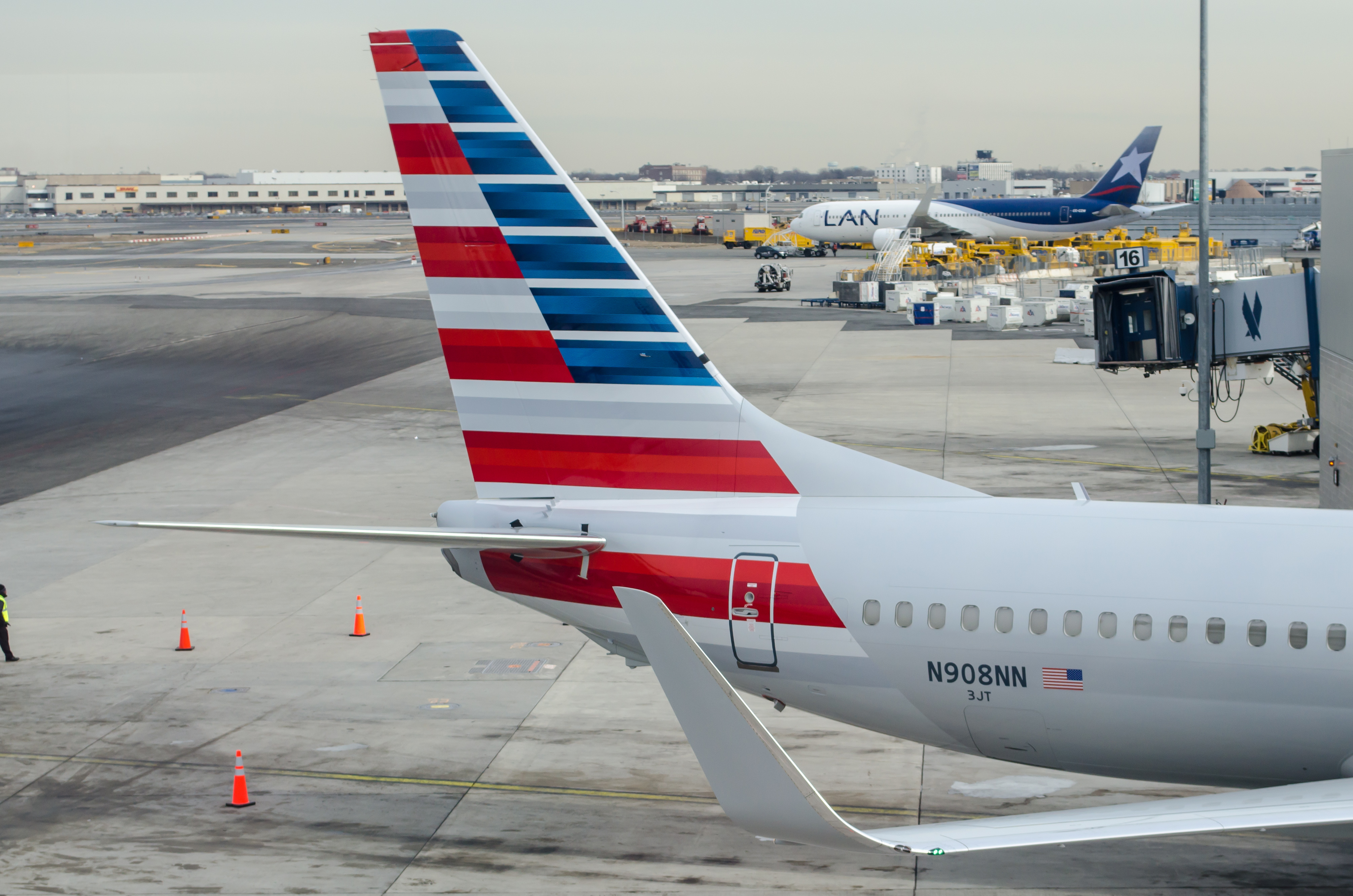
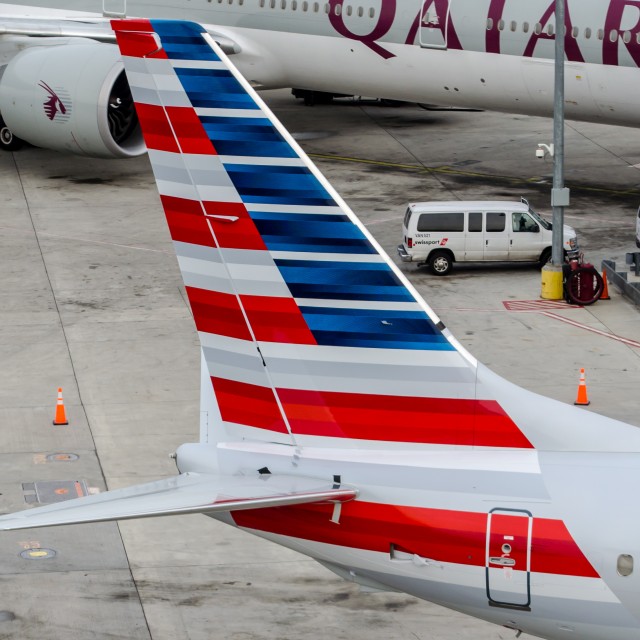
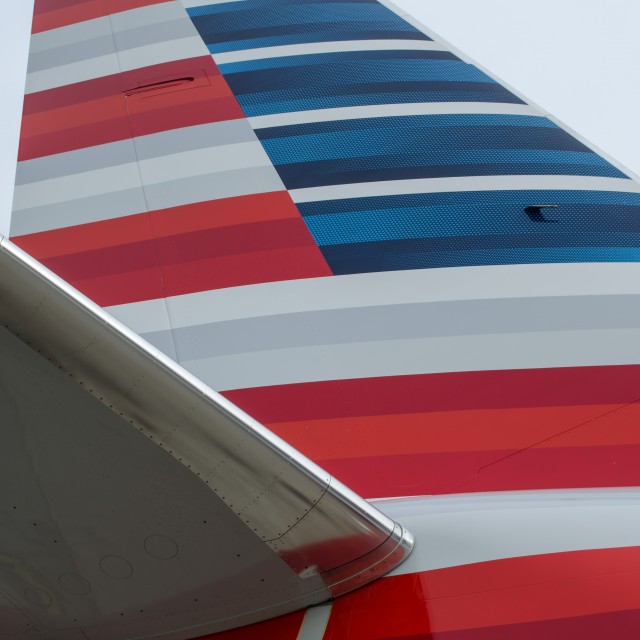
After seeing it in person, I am torn over this new livery. I like a the look of the body of the aircraft, but the tail leaves a bit to be desired. There is a lot of detail in the paint on the tail, but most of it is lost at a distance. The engines and winglets also need something to tie it all together.
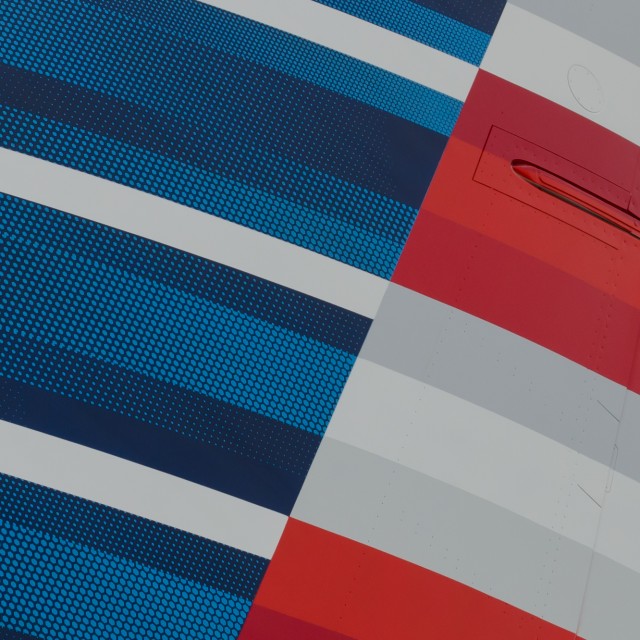
Check out some close up shots of the new paint below, you might just see some details you didn’t notice before. With a bit more time to process; what do you think about the new livery?
Read some more about this event and AA’s reaction to criticism of the design over at APEX.com.
-
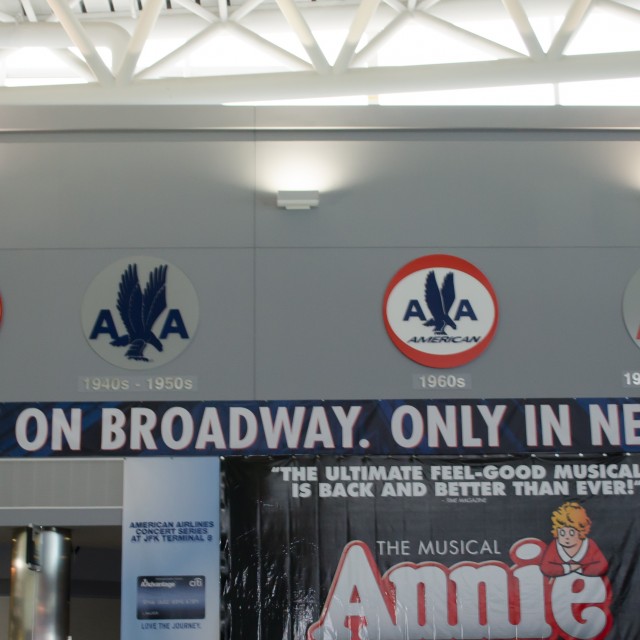
-
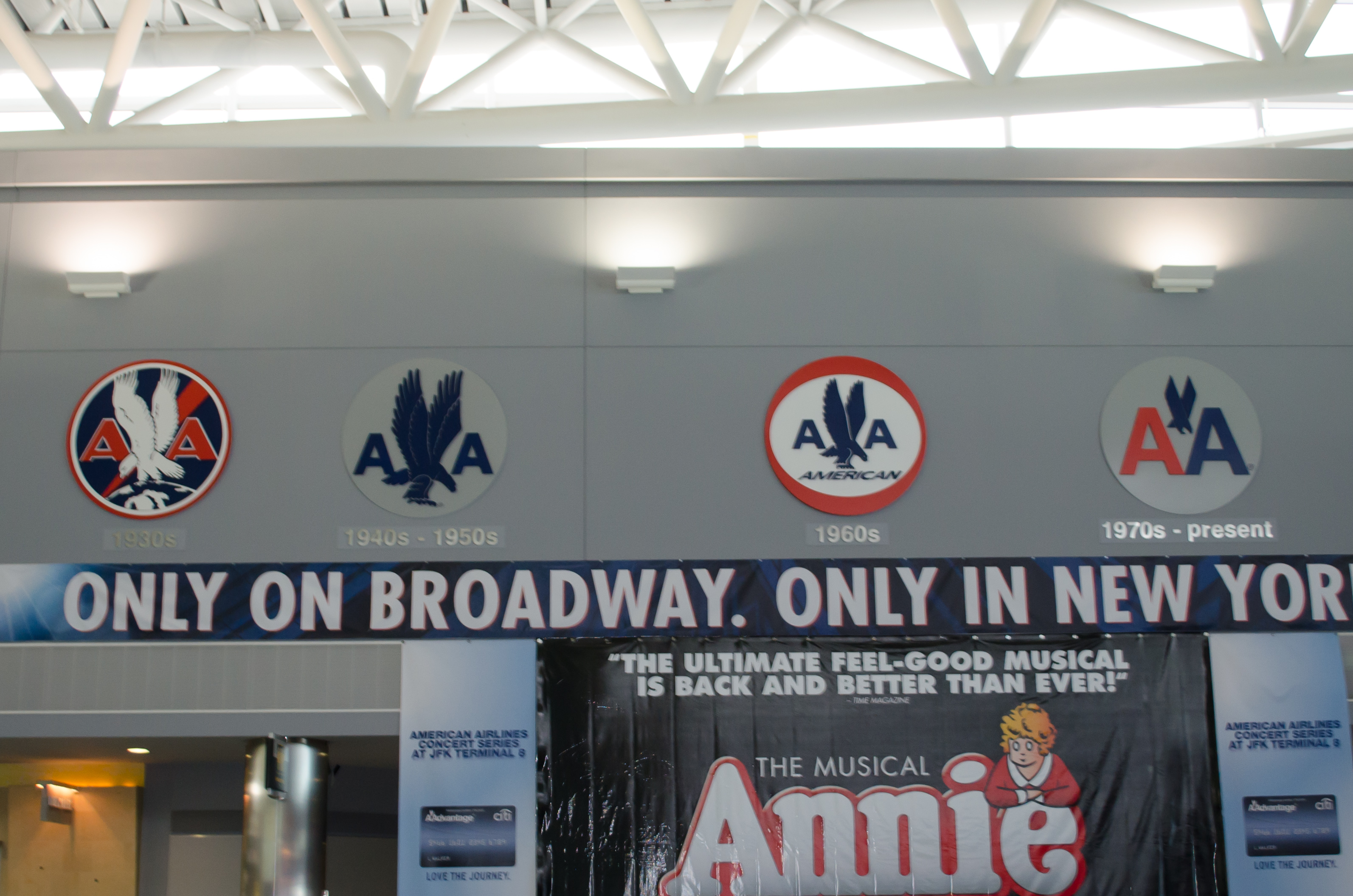
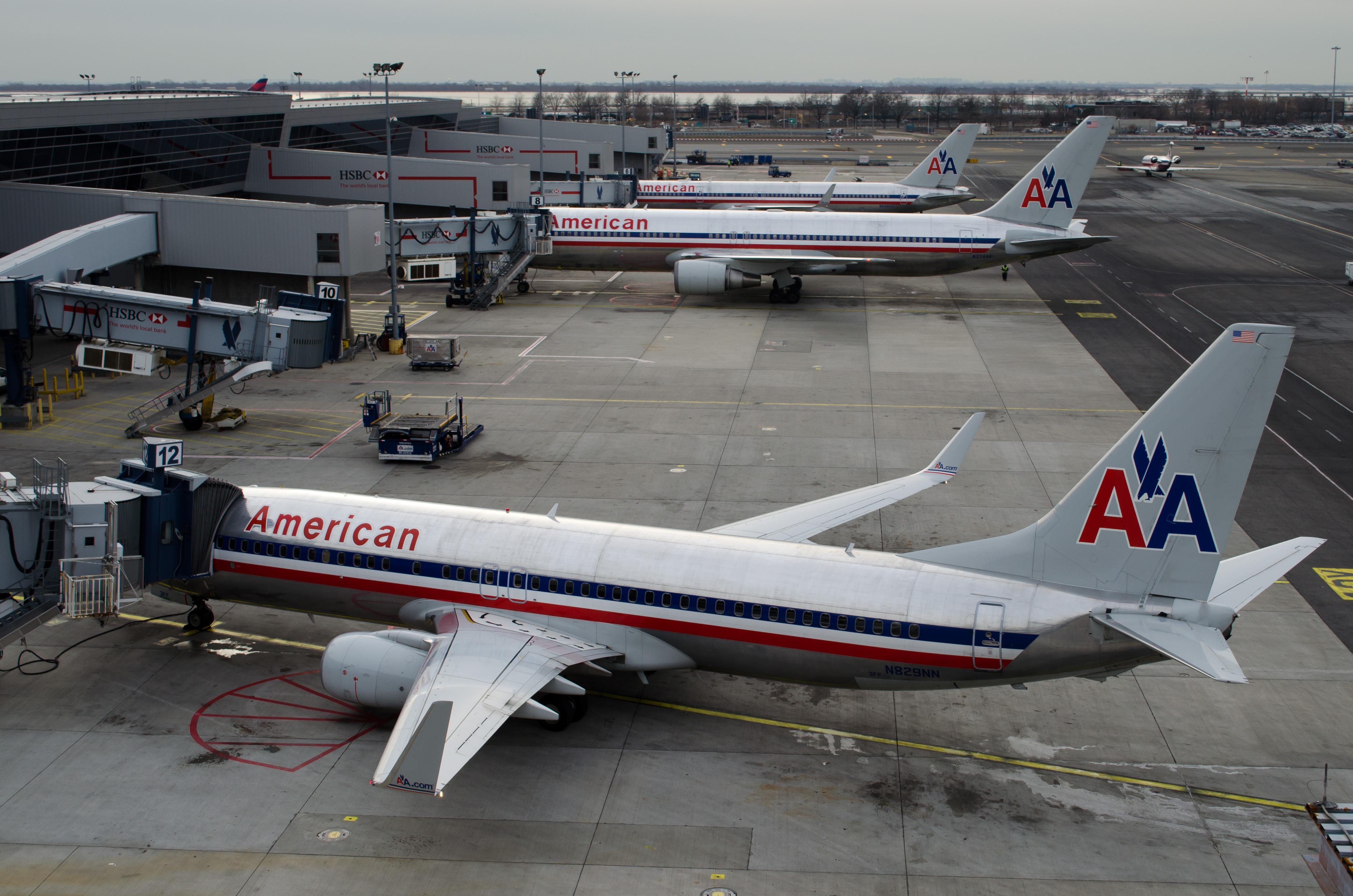
Time to update the AA logo history in T8, JFK.
-
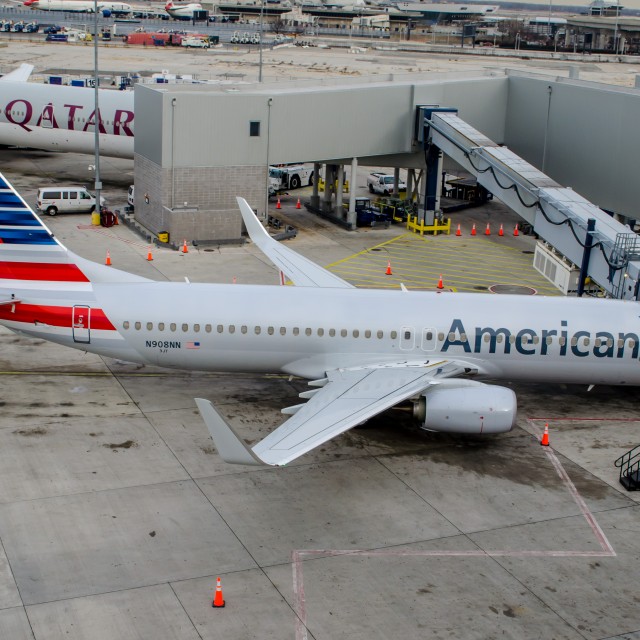
-
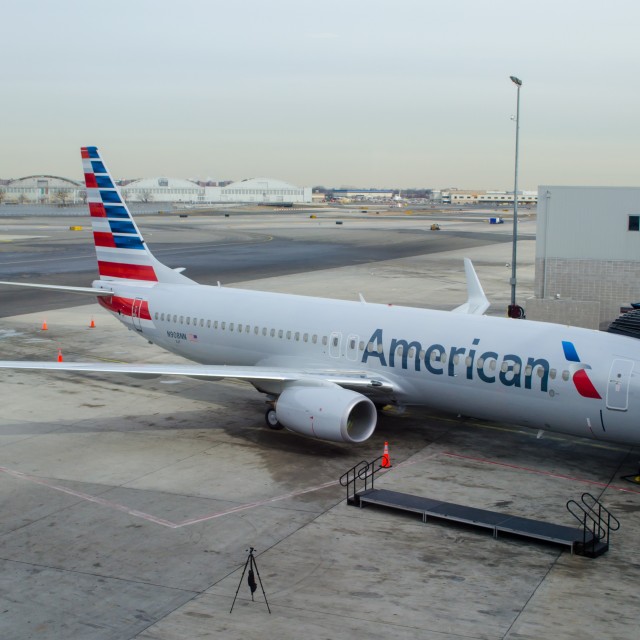
American Airlines 737 featuring the new livery, as seen from above in the operations tower.
-
-
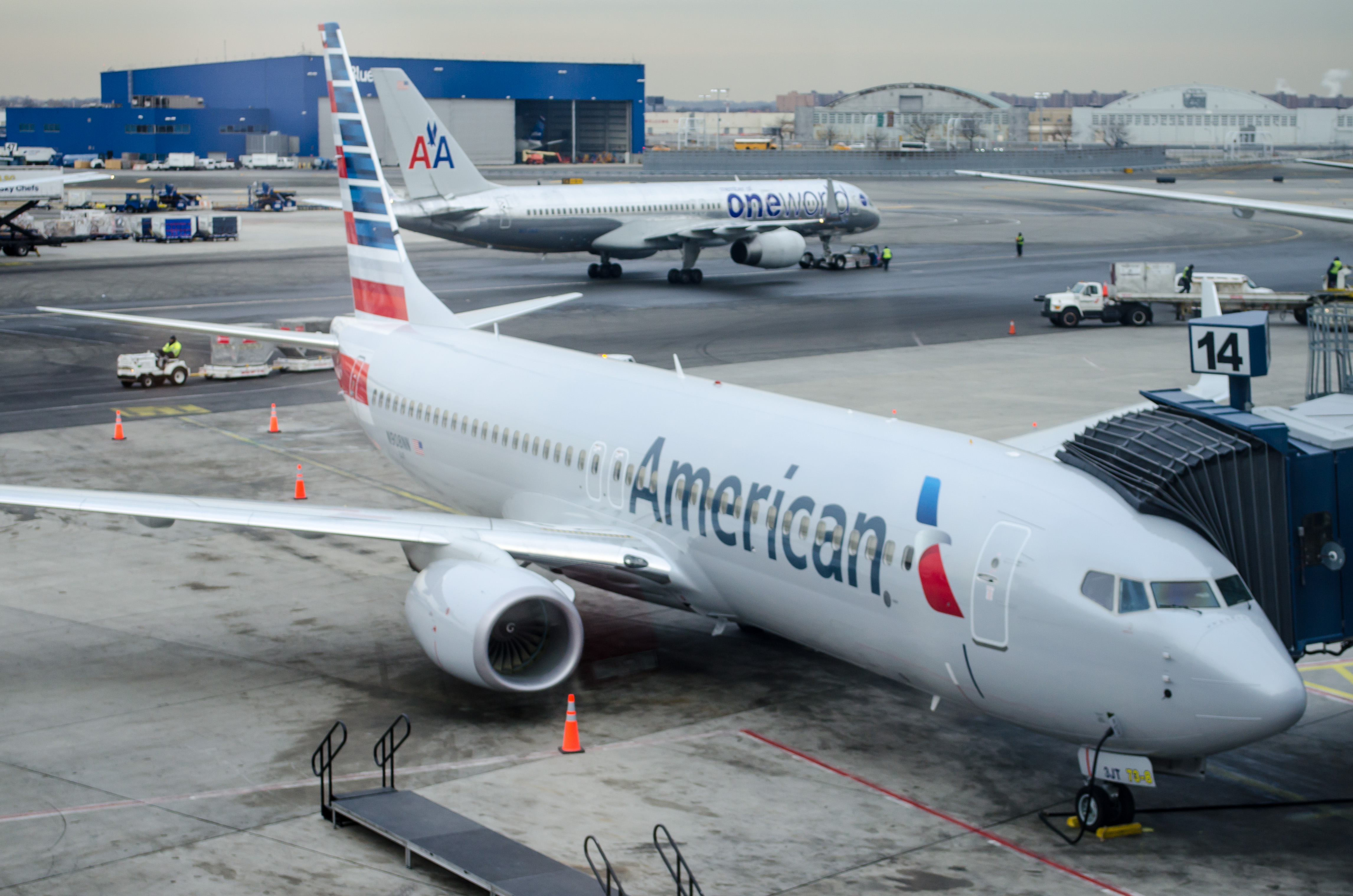
I wonder what the One World livery will look like when it is updated?
-
-
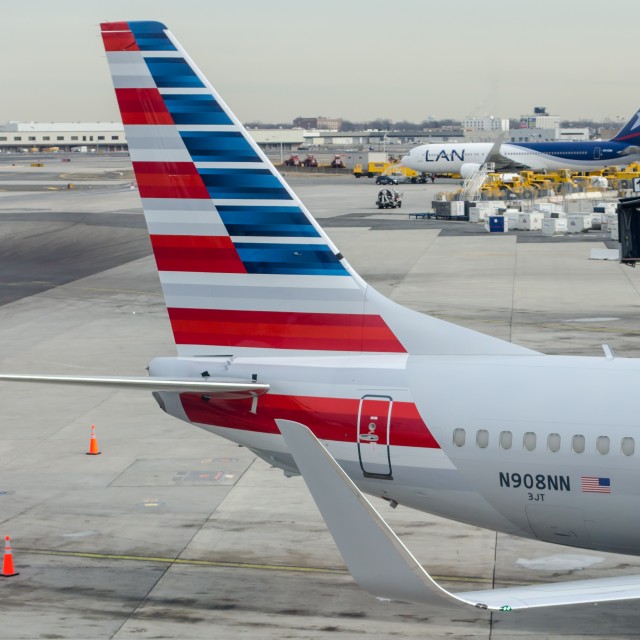
American Airlines 737 tail featuring the new livery, as seen from above in the operations tower.
-
-
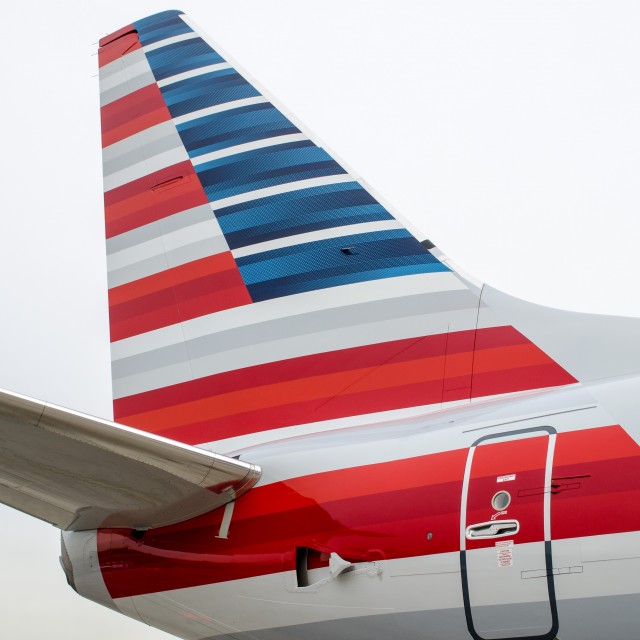
The new American Airlines tail design, close up. Much more detail here than you see from a distance.
-
-
The new American Airlines tail design
-
-
The new American Airlines tail design
-
-
-
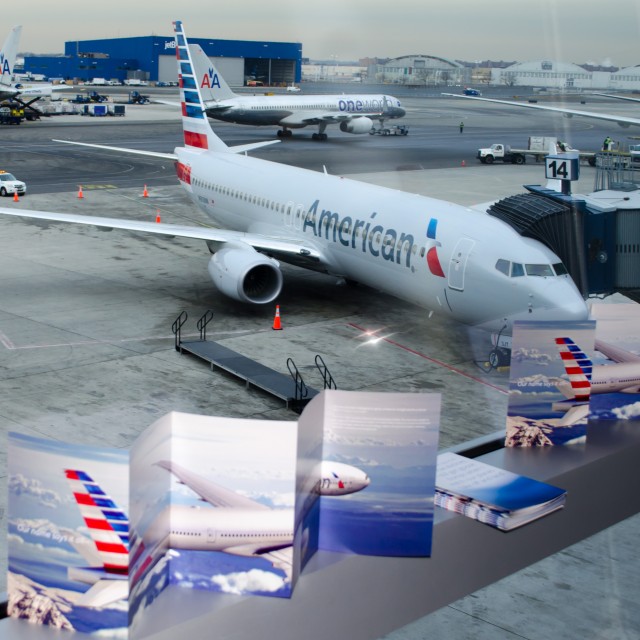
American 737 with the new livery, and a promo poster for the upcoming Boeing 777-300ER
-
-
-
Panorama
-
-
-
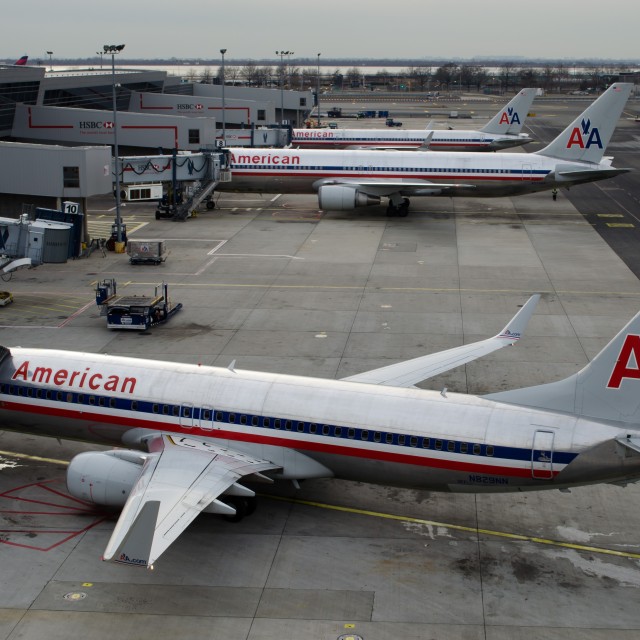
Say goodbye, old livery!
-
-
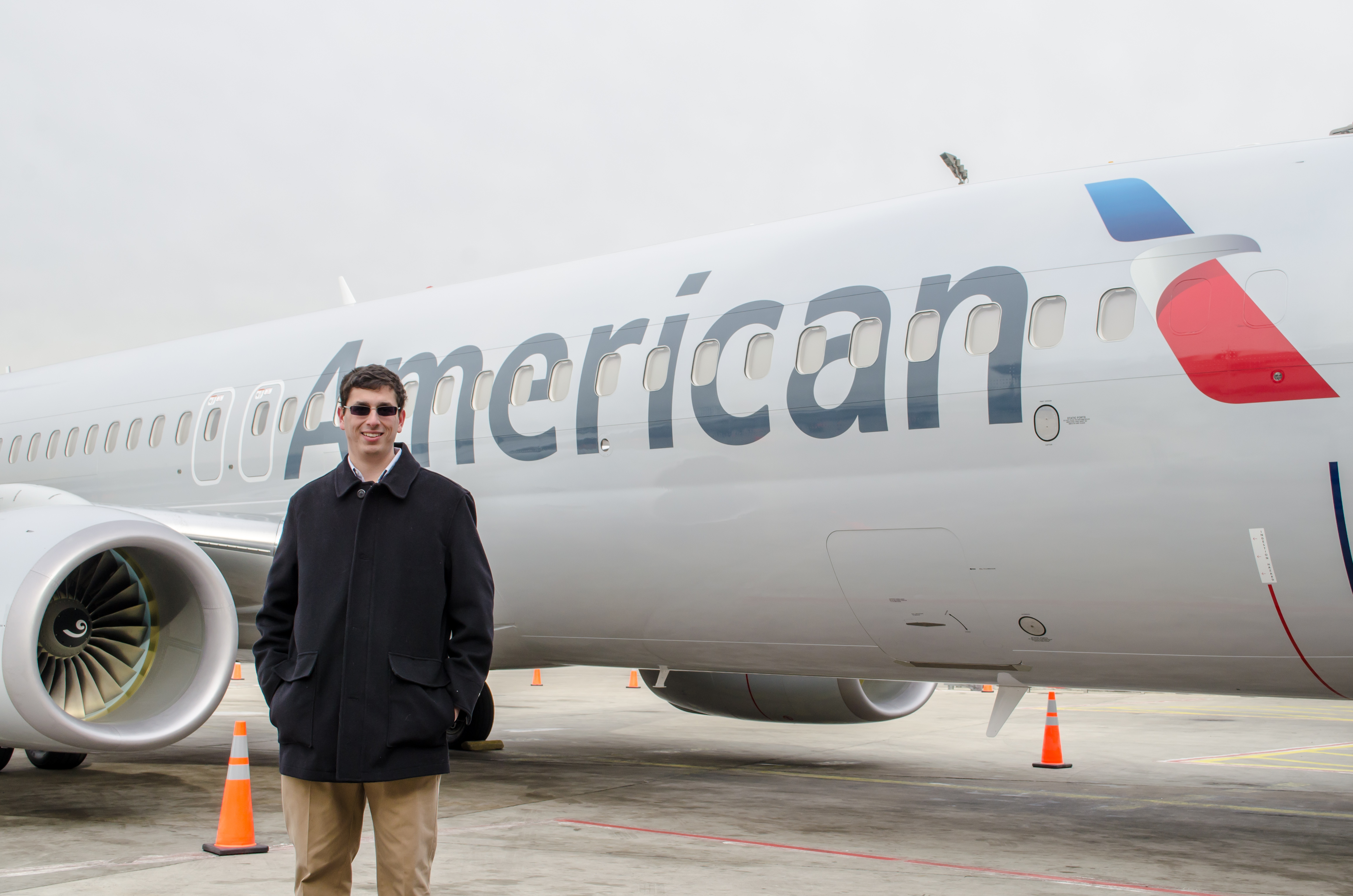
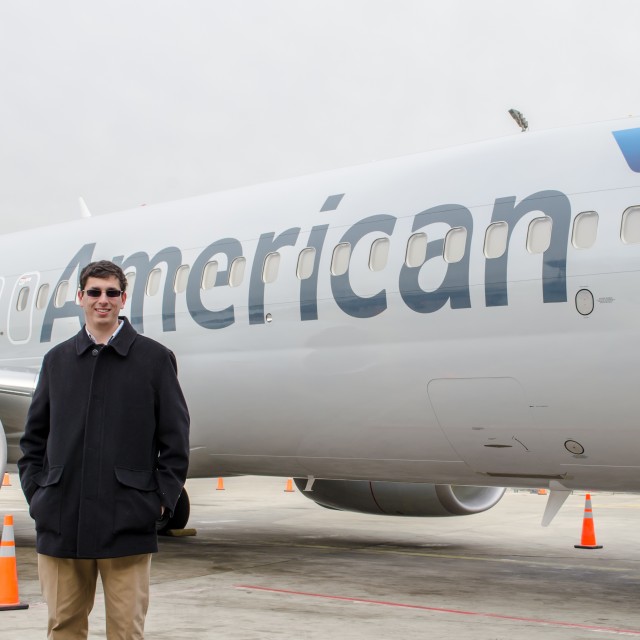
That’s me!
-
-
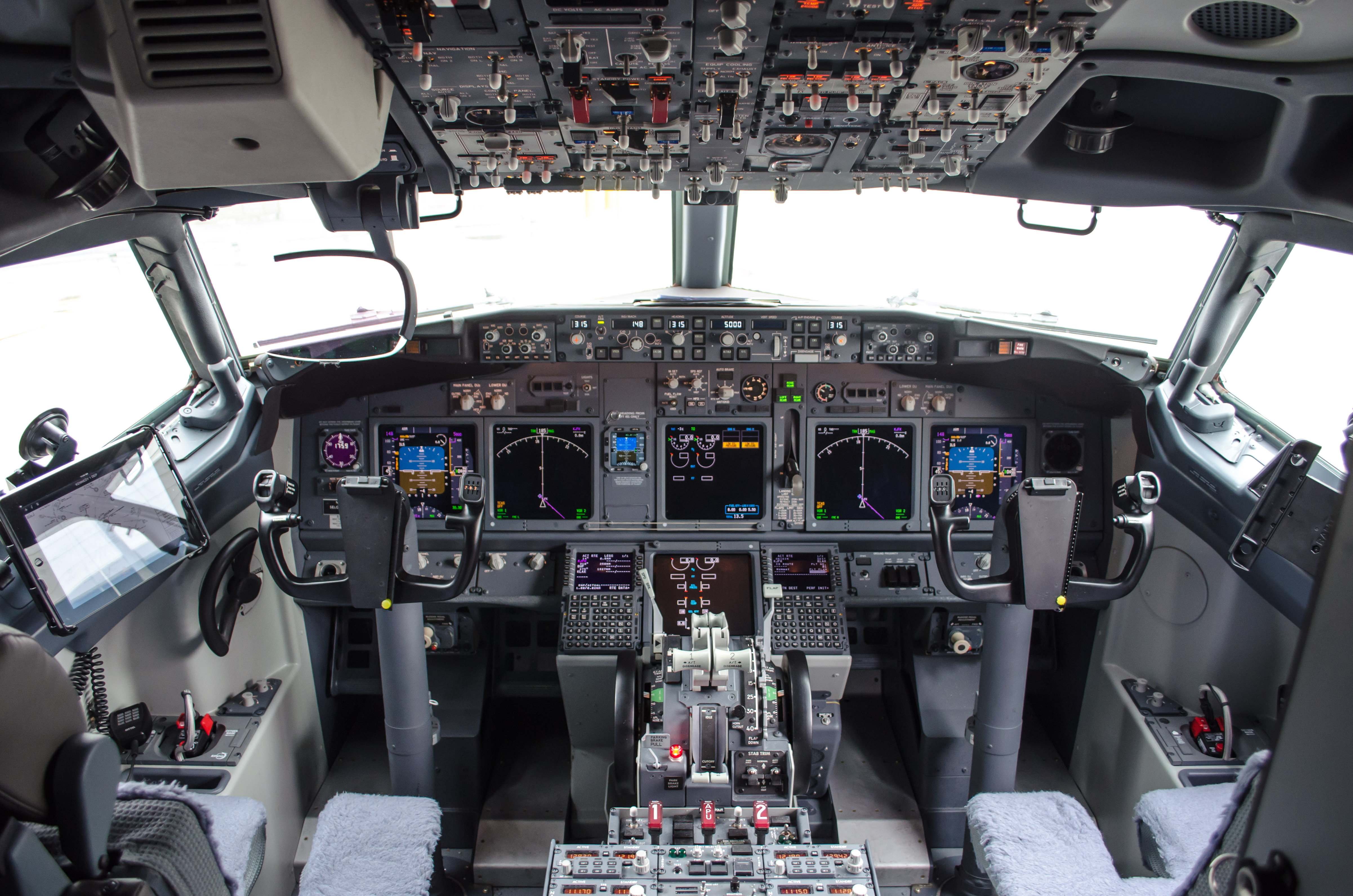
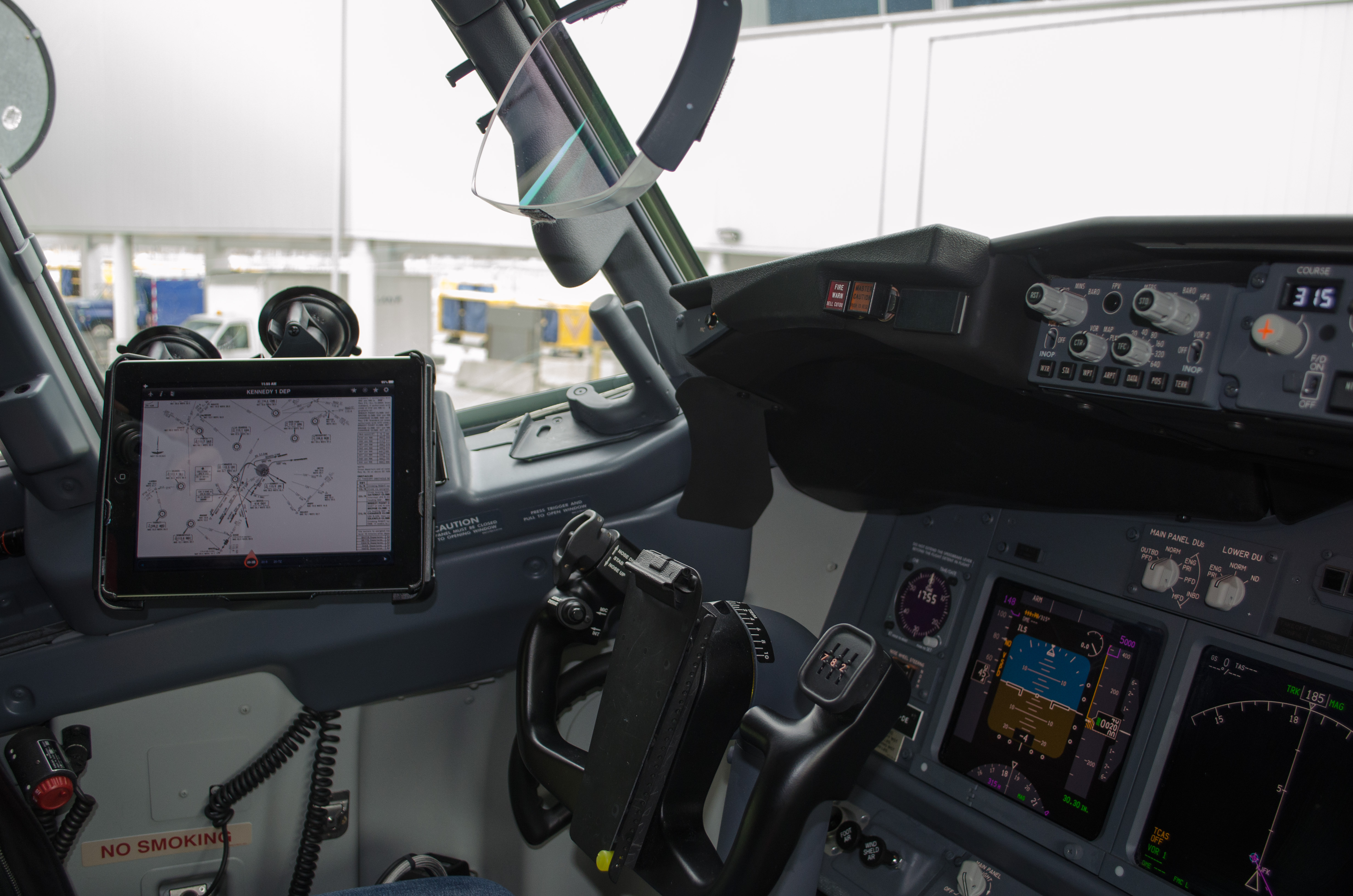
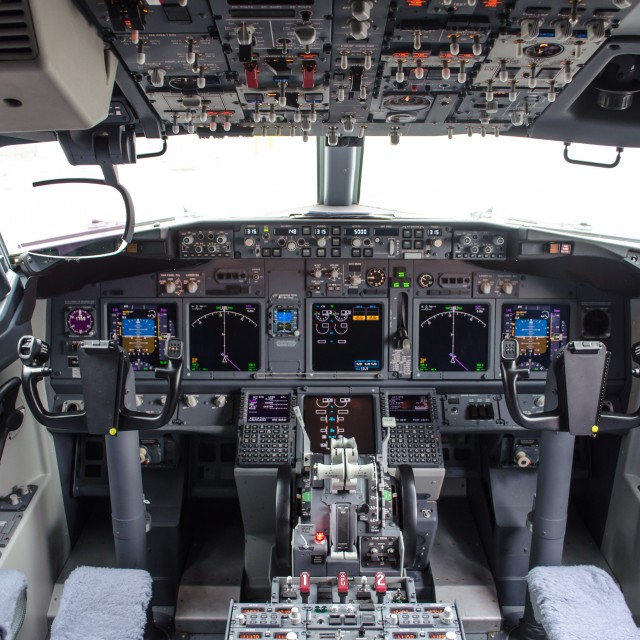
Flight deck of the Boeing 737
-
-
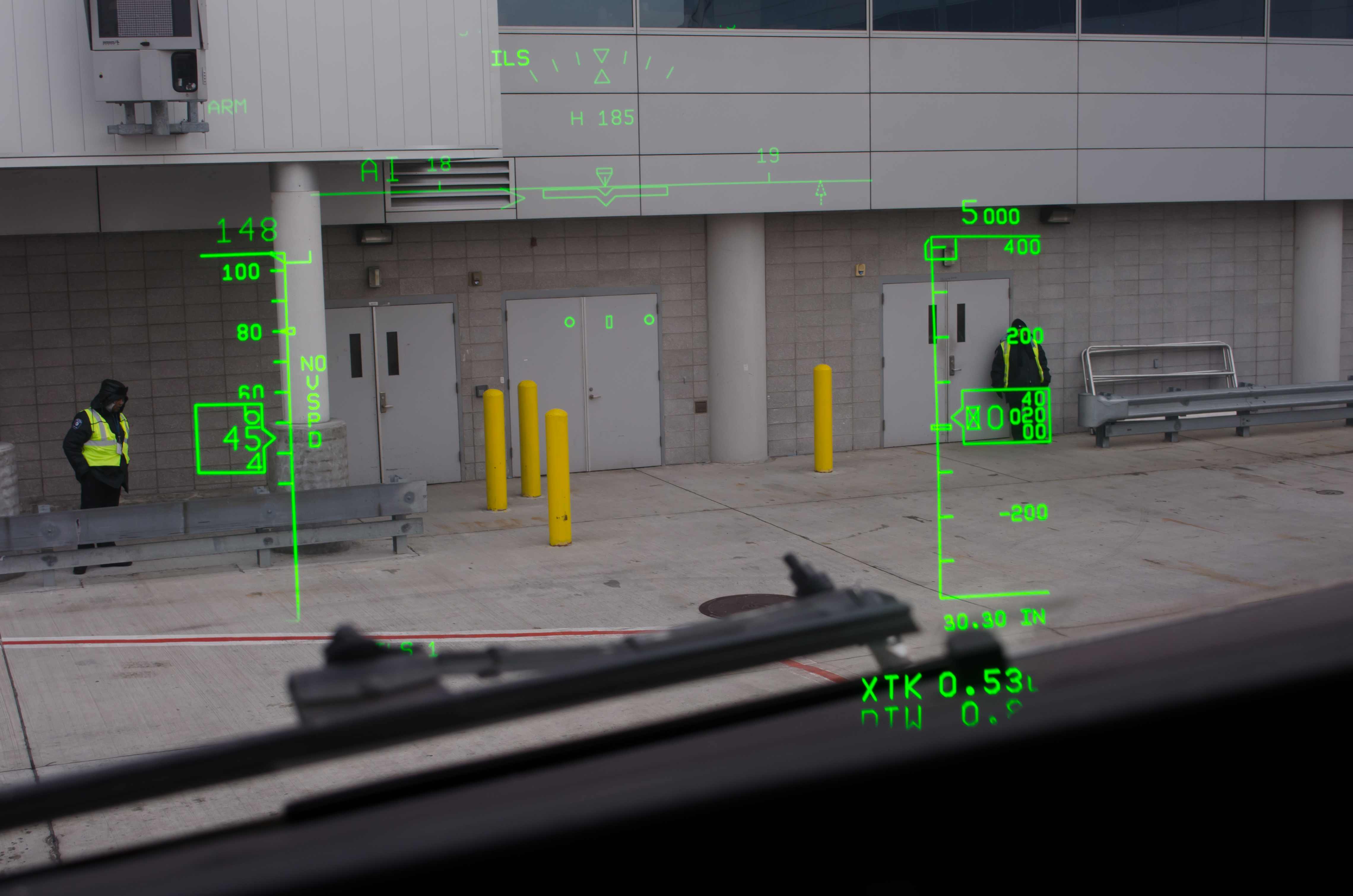
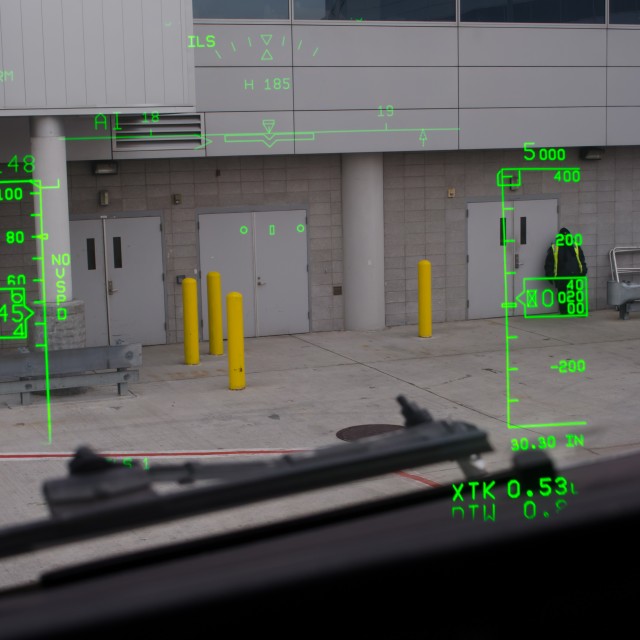
Heads up display on the Boeing 737
-
-
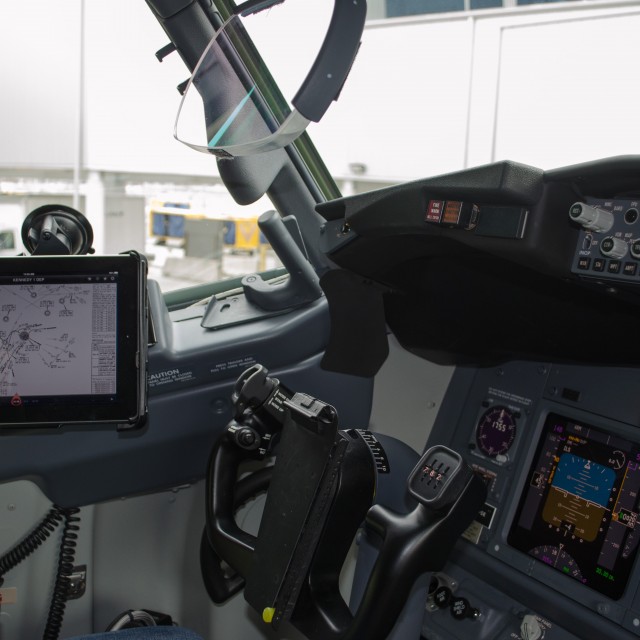
Left seat of the 737, fully stocked with an iPad for the electronic flight bag
-
-
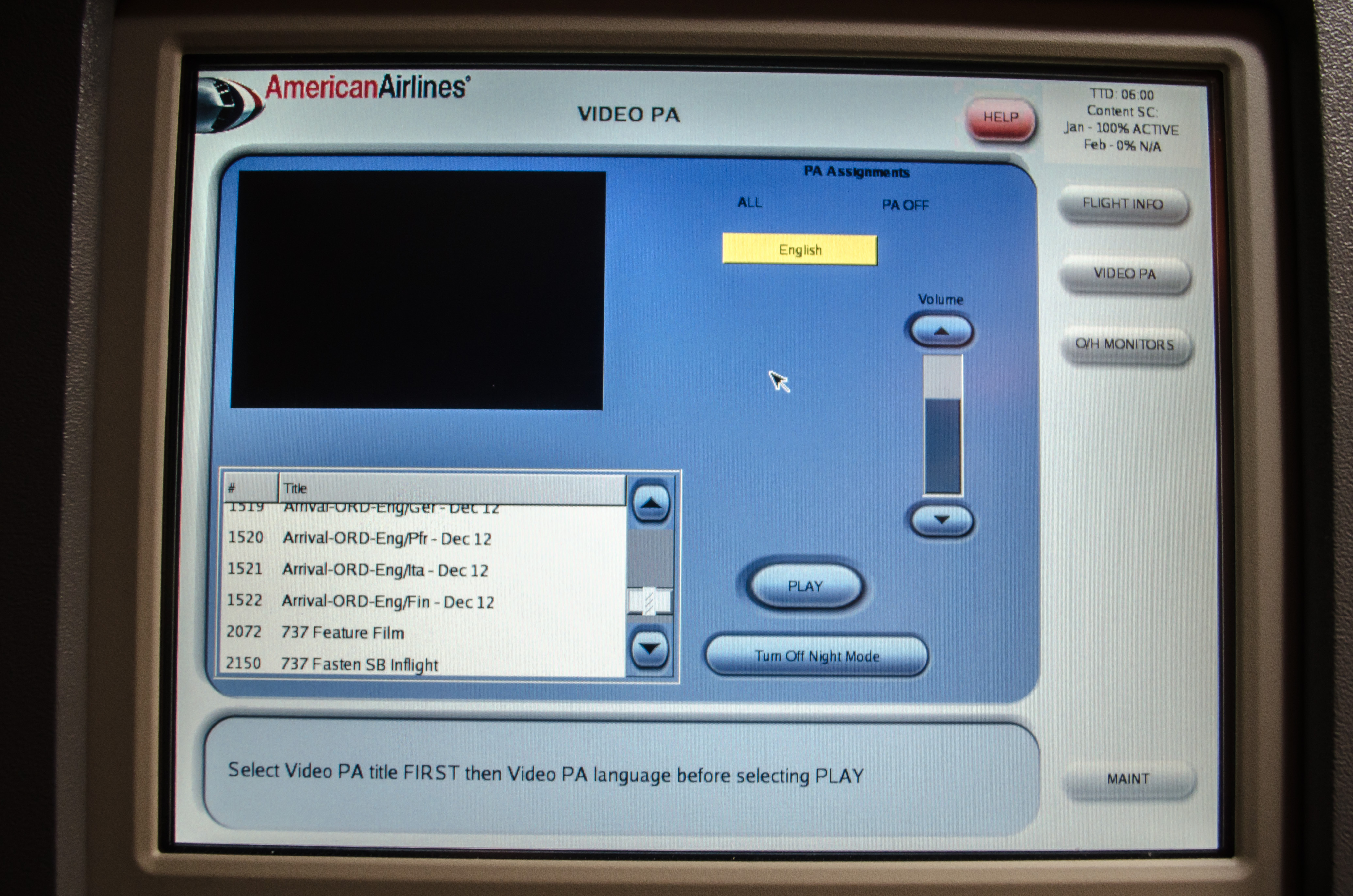
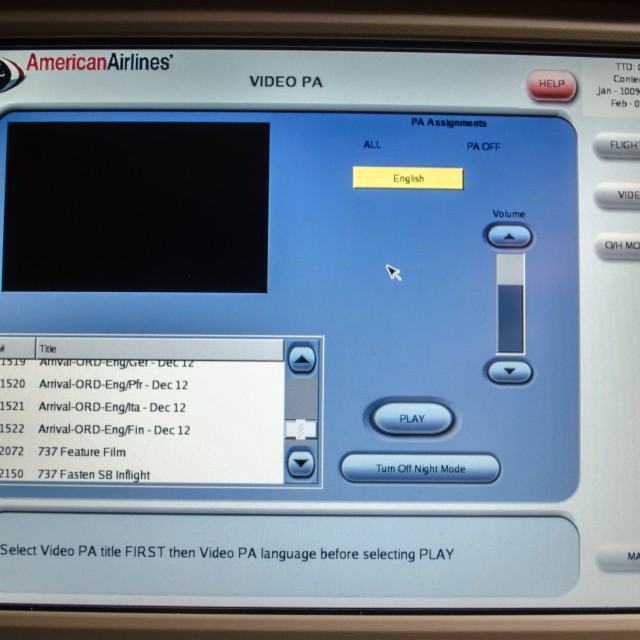
PA system controls
-
-
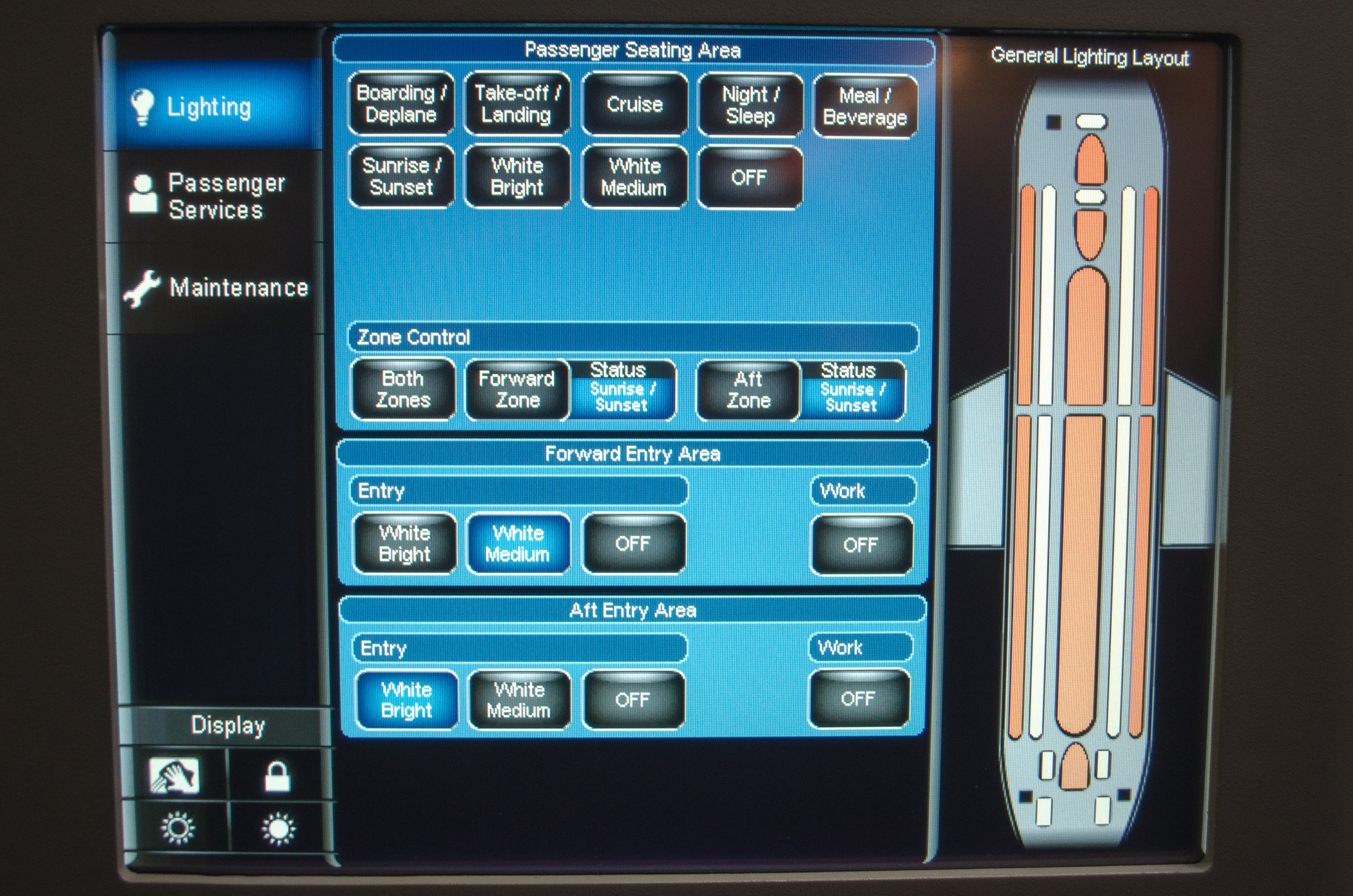
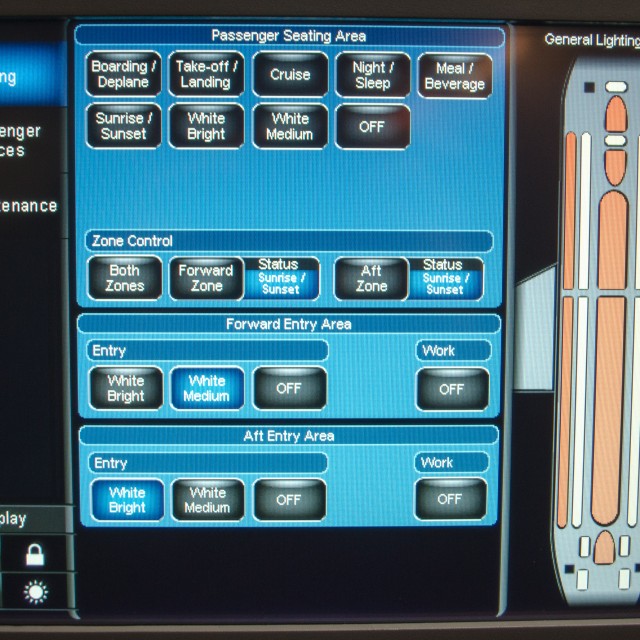
Boeing Sky Interior controls
-
-
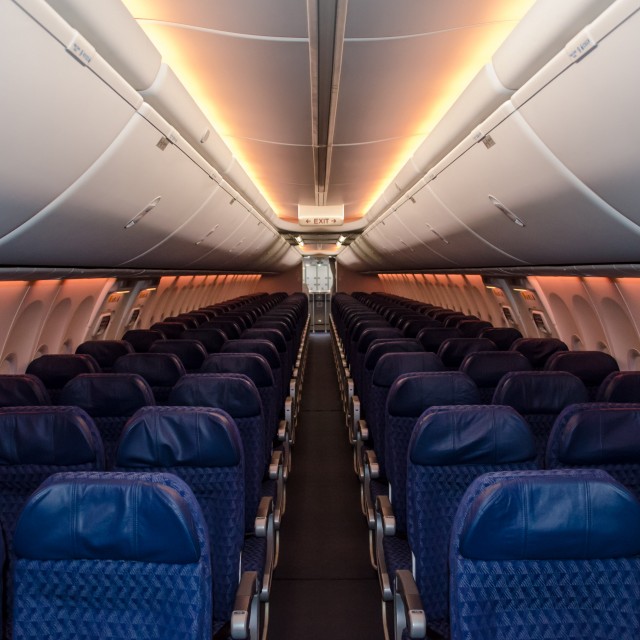
Boeing Sky Interior
-
-
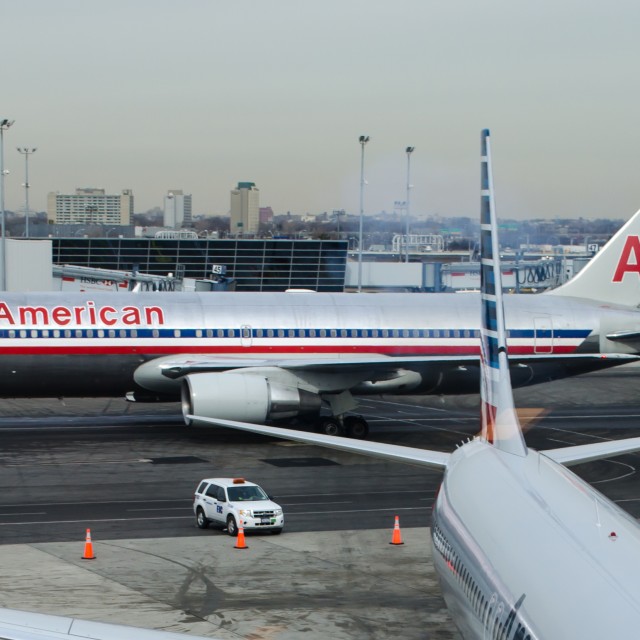
Old and New
-
-
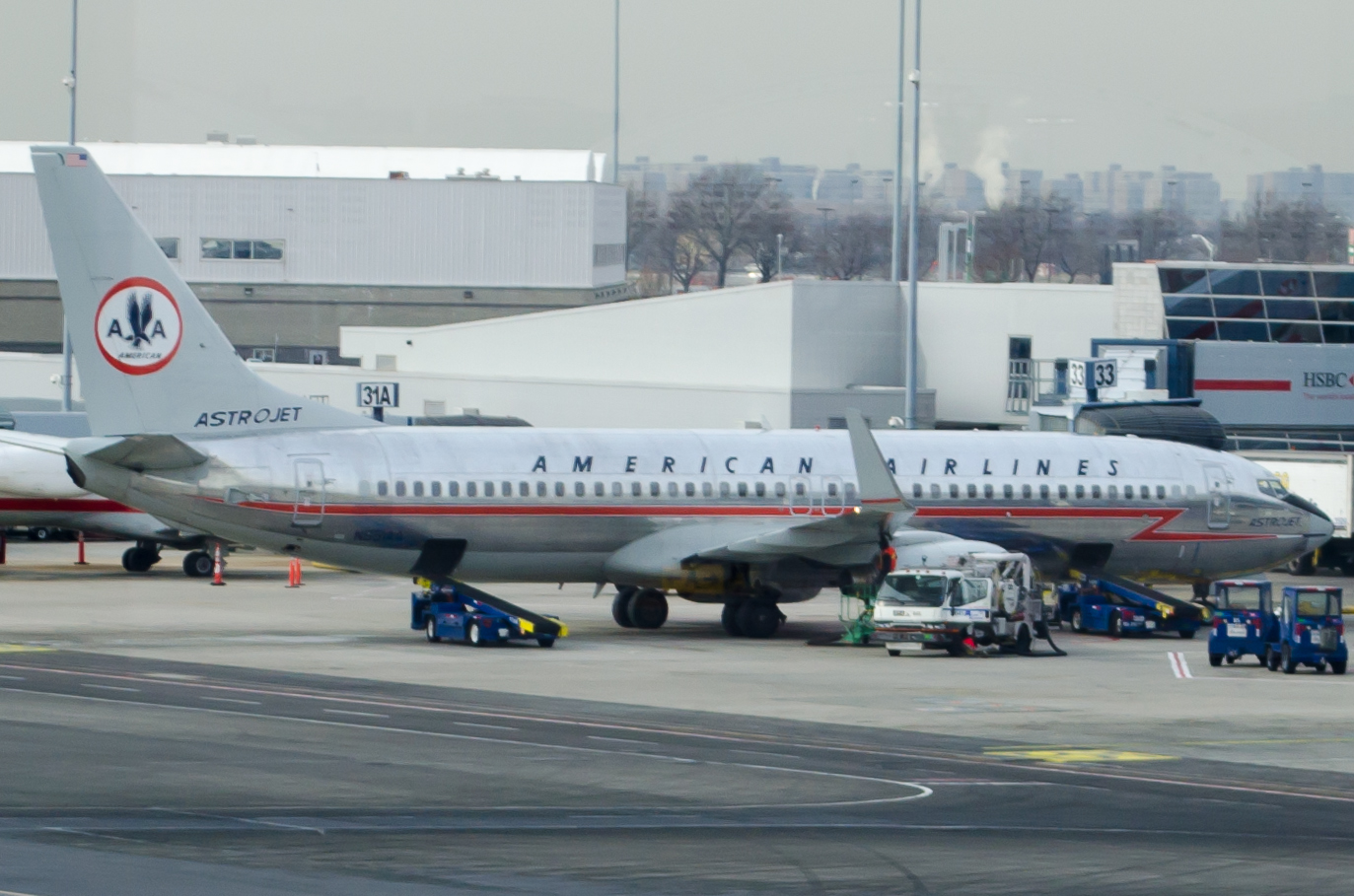
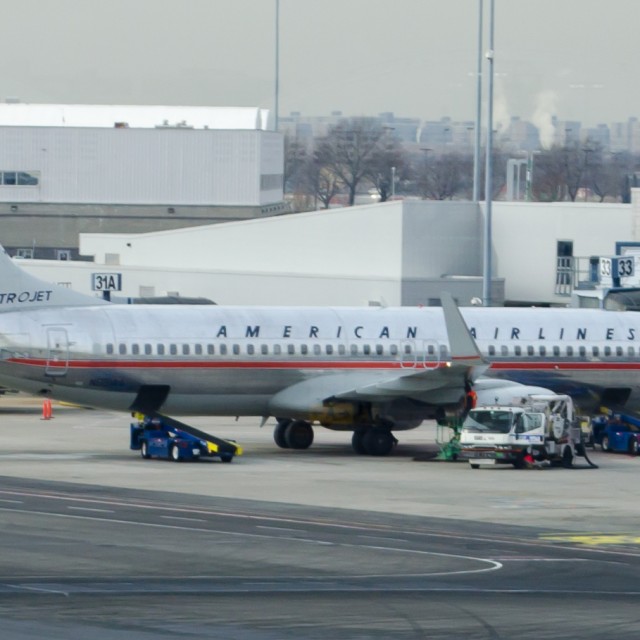
The American Astro Jet showed up!
 |
This story written by… Jason Rabinowitz, Correspondent.
Jason is a New York City native who has grown up in the shadow of JFK International Airport. A true “avgeek”, he enjoys plane spotting and photography, as well taking any opportunity he can get to fly on an aircraft.
@AirlineFyer | FaceBook | |
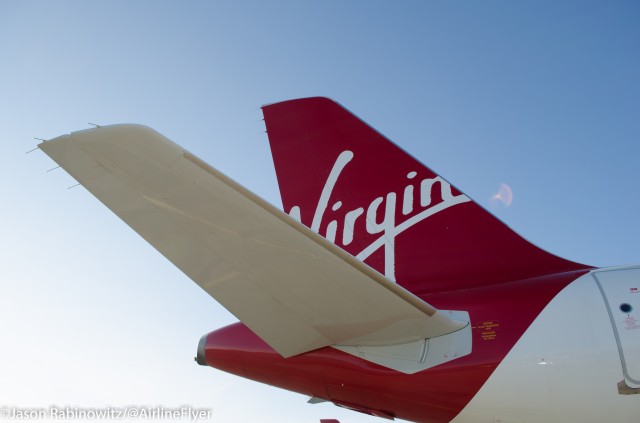
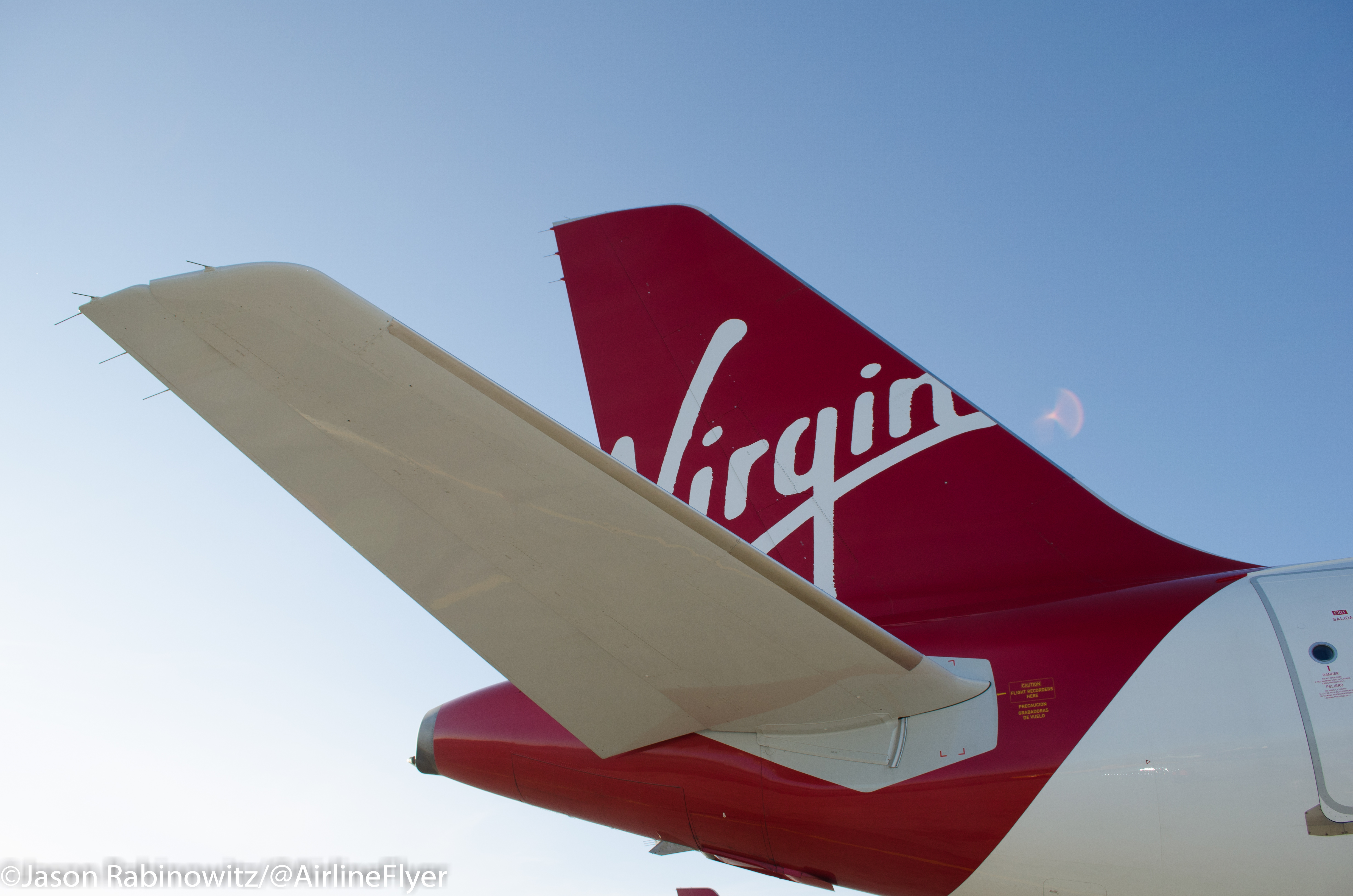
I talk about airlines and airplanes a lot; it’s a part of who I am. Fairly often, my conversations about such topics end up on Virgin America. At this point, I am forced to divulge the fact that I had never been on Virgin America, a statement which is often met with a blank stare followed by the response, ’œreally?’
Most of my domestic flights are on JetBlue and Delta, simply because of their much larger route network out of New York, where I am based. When I finally had the opportunity to give Virgin America a try, I immediately jumped at the chance. I flew from New York’s John F. Kennedy International (JFK) to San Francisco (SFO) and back in 12 hours as part of a media event, so travel was paid for by the airline (note: the airline paid for my trip, but all opinions are my own).
At JFK, Virgin America is based out of Terminal 4, which mainly houses international carriers. Virgins gates are in the A concourse, which is simply not where you want to be. With extremely limited restaurant and shopping options there, you will want to spend as little time as possible at the gate. Thankfully, Terminal 4 is undergoing a massive renovation which will remedy this issue. The terminal is in the process of unifying the two security checkpoints, and when complete, passengers will have access to a markedly wider selection of restaurants and shopping.
Virgin Americas gate at JFK T4 does not stand out in any way over any other domestic airline. There is no fancy seating, no nice lighting, and not so much as power outlet in sight. However, the instant you board the aircraft, things immediately start to change.
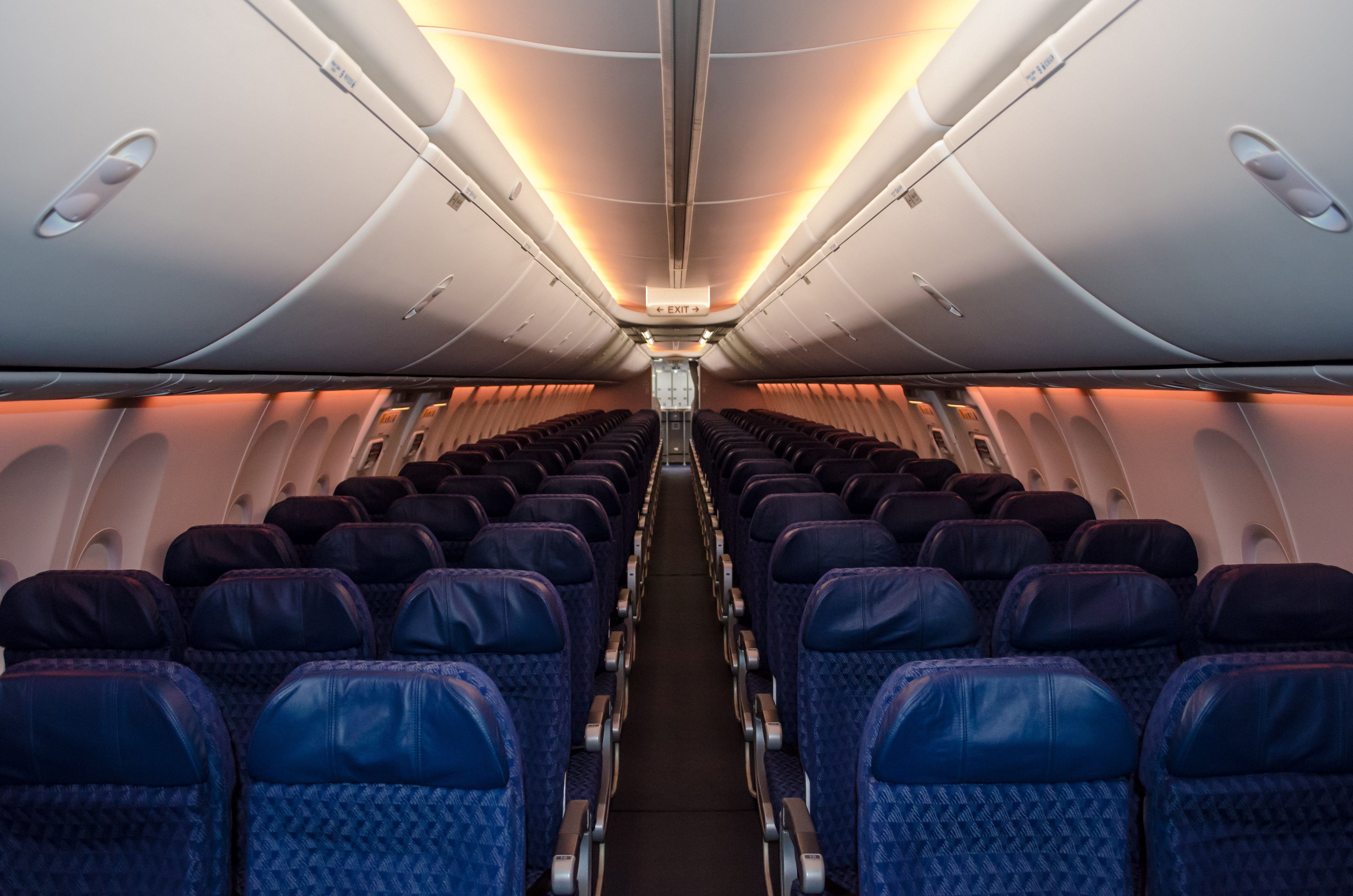
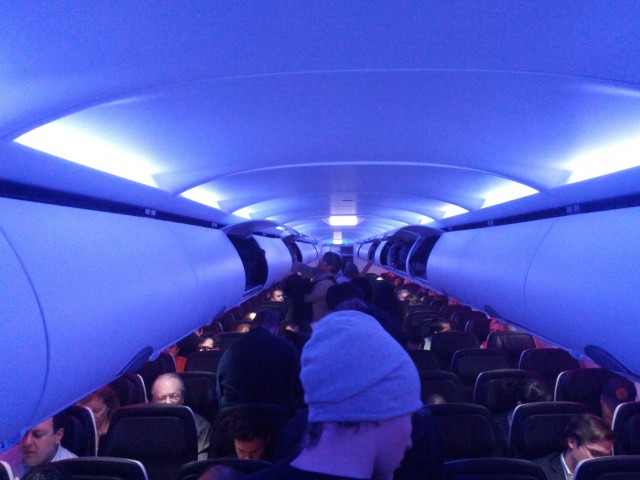
Most passengers will quickly notice the colorful mood lighting, which is a great upgrade from the typical dim white fluorescent tube lighting. At first it might appear the lighting is all LED, like we are seeing in new Boeing interiors, but it is actually a combination of fluorescent tubes and white LEDs with a color gel on them.
It’s warm, inviting, and just overall pleasant. Once settled, I found the seat to be quite comfy. The adjustable head rest is a great addition to the black leather seat. At 6’2’’, legroom was not an issue, as I had room to stretch, something becoming increasingly rare in economy.
Virgin America features one of the most advanced in-flight entertainment systems I have ever used, and I took this opportunity to put it to the test. The system, called RED, features movies and TV shows on demand, live satellite TV, food and drink ordering, and other information features. What I liked most about the system was how responsive it was. I never encountered any lag in the system, which makes the user experience quite enjoyable. I was thankful that the live TV was free, as I found the other selections a bit too expensive for my taste. The satellite TV selection is limited to 18 channels compared to 36 on JetBlue, and certain channels did not work, but I was always able to find something to watch.
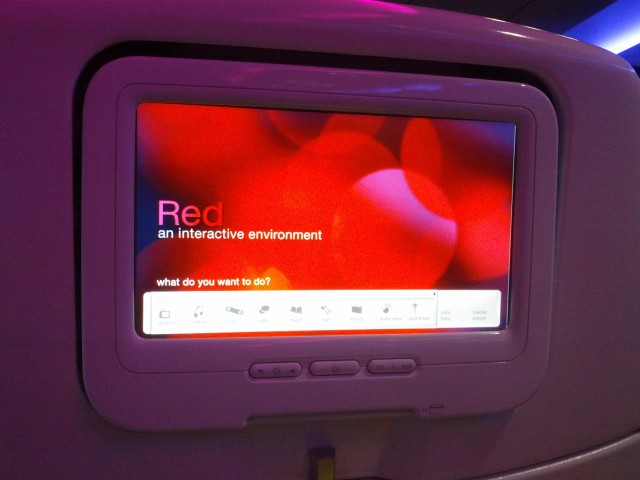
One thing that did irk me about the entertainment system was that there seemed be a lot of features that either didn’t work, or weren’t yet available. For instance, on the main menu there is a button labeled ’œread,’ but when clicked, a message told me that the feature is not yet available. A feature that is not yet activated should not be displayed as an option to the passenger.
I was able to follow up with Virgin American and they explained to AirlineReporter.com that they are, replacing the Read section with an Info Section, “that includes static content that will be updated every six weeks, but that relates to travel, destination and other info that is more ‘evergreen’ and that fits better with what guests want to engage with in-flight.”
Similarly, I had some issues with the program guide for the live TV. I would click on it and an error message would appear. That must have just been an isolated instance. Additionally, I would like if some on-screen reference was made to the tethered remote in the armrest. Had the passenger next to me not removed it first, I probably would never had known it could be moved.
My favorite part of the Virgin America experience was probably the in-flight ordering process. Virgin has done away with the traditional cart down the aisle system, and instead passengers order what they want through their screen and a flight attendant delivers it. I was extremely impressed at how simple the ordering process was, and how quickly items were delivered. If I could change one thing, it would be the inclusion of any free food option, even if just a small bag of chips. All food is purchase only in economy, no freebies except for drinks.
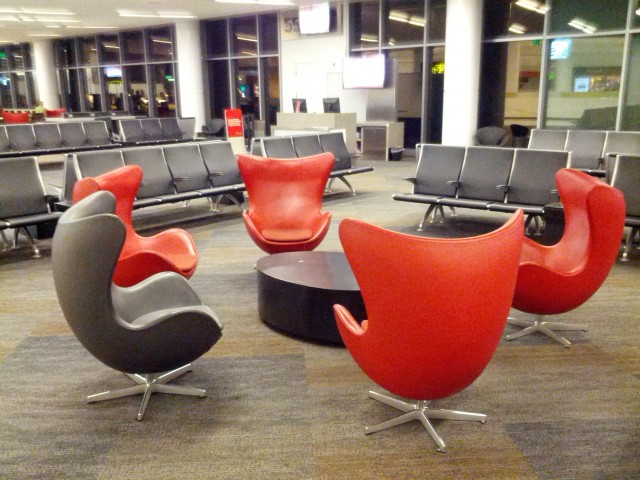
Once arriving to SFO, I made my way to my hotel and did not really check out the terminal. The following day, I made an effort to arrive at SFO early in the morning and was relieved to discover how beautiful Virgin America’s terminal was. Wide open spaces, bright, restaurant choices to satisfy even the most picky of eaters. This terminal clearly reflected Virgin’s attitude.
Unlike the terminal at JFK, SFO features lovely seating areas, classy furniture, free wifi and power outlets everywhere. These upgrades go a long way when it comes to unwinding after passing through security, and I wish any of these features were present at JFK.
Now that I have finally flown Virgin America, I can give an honest opinion of this high-tech, feature packed airline. While the airline did not disappoint, I’m not sure I would pay a premium over other airlines such as JetBlue for the privilege. The entertainment system may be more advanced and the mood lighting may create a brighter atmosphere, but overall, I felt the overall experience was different, but comparable. However, when compared to some legacy carriers that fly the route, I would absolutely consider upgrading to Virgin America.
The flight from SFO to JFK was a special media flight to fly the San Fransisco Giants World Championship Trophy to New York… stay tuned.
|
This story written by… Jason Rabinowitz, Correspondent.
Jason is a New York City native who has grown up in the shadow of JFK International Airport. A true “avgeek”, he enjoys plane spotting and photography, as well taking any opportunity he can get to fly on an aircraft.
@AirlineFyer | FaceBook | |
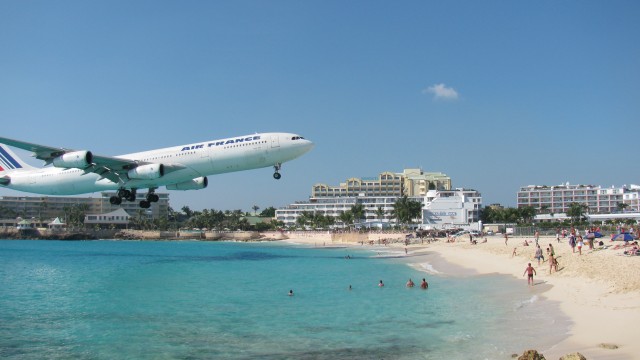
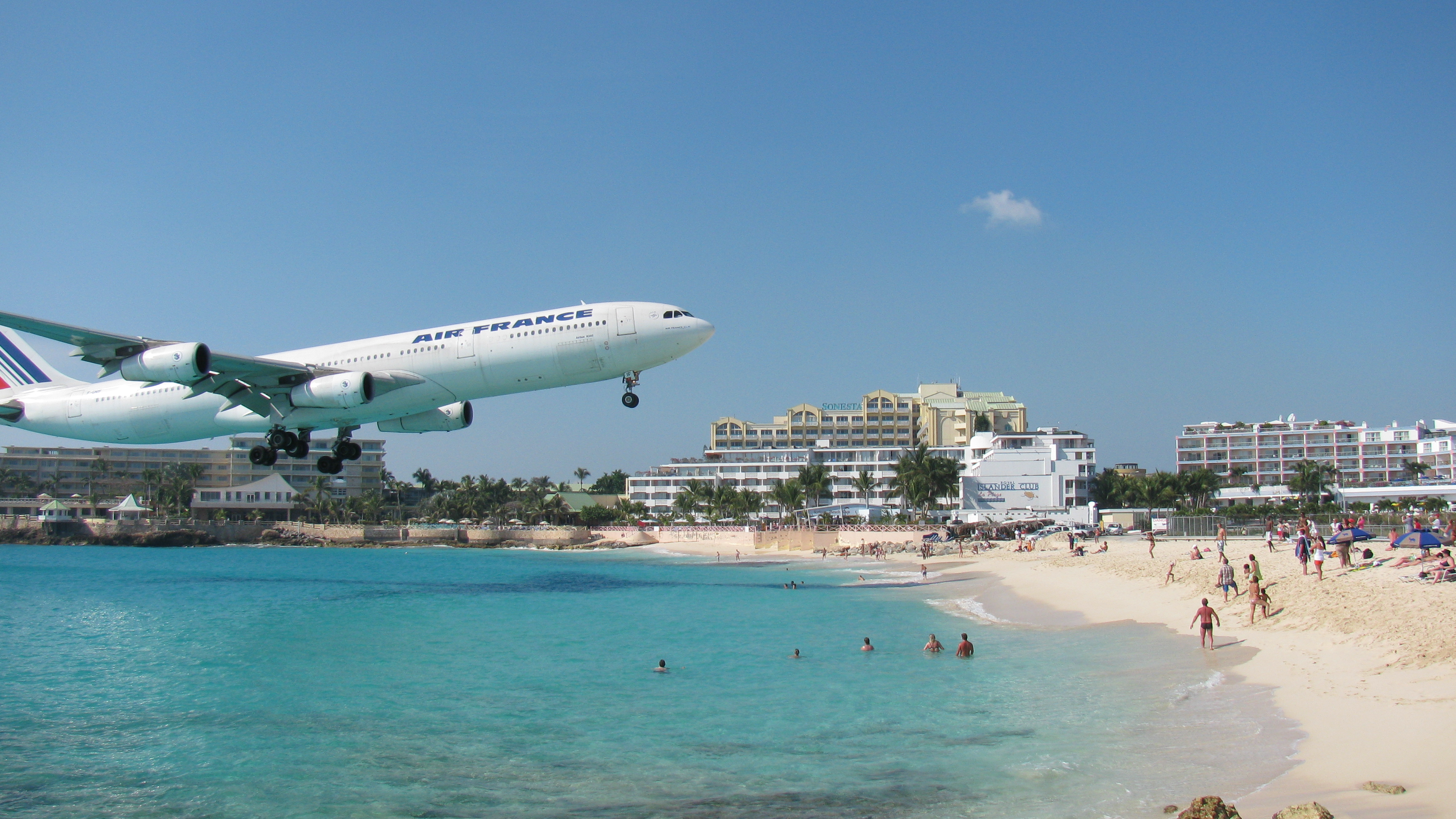
Terry Kraabel took this photo of an Air France jet landing at the Saint Marteen airport in the Caribbean.
I grew up reading Airways Magazine (and still do today) and it probably helped to inspire me to start my blog. This January they are doing something pretty epic and you should join them.
From January 12-19th, 2013, Airways will be hosting a Caribbean Cruise for AvGeeks. The trip includes a full day stop in St. Maarten, which is probably one of the world’s best plane spotting locations.
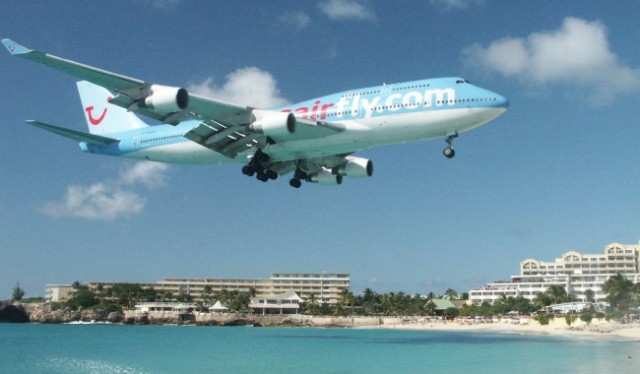
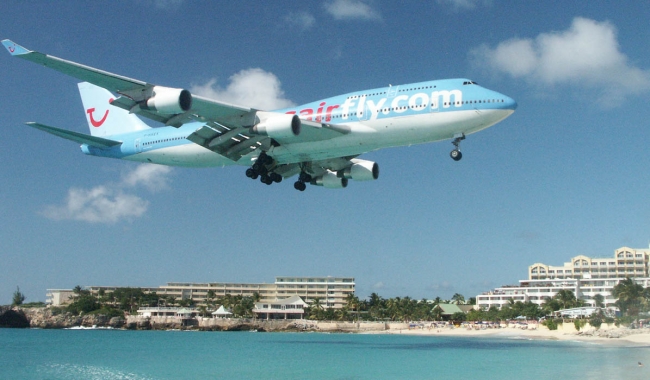
A Corsair Boeing 747-400 lands at St. Maarten. Image by Chris Sloan / Airchive.com.
The cruise will leave from San Juan and travel to Puerto Rico, Barbados, St. Lucia, Antigua, St. Thomas and of course Saint Maarten. With tickets starting at $749 (per person), it is hard to pass up.
I am not fully sure what if my schedule will allow me to attend at this point, but you better believe I will be trying my best to make the journey. If you decided to make the trip, be sure to tell them that AirlineReporter.com sent you. Hope to see you there.
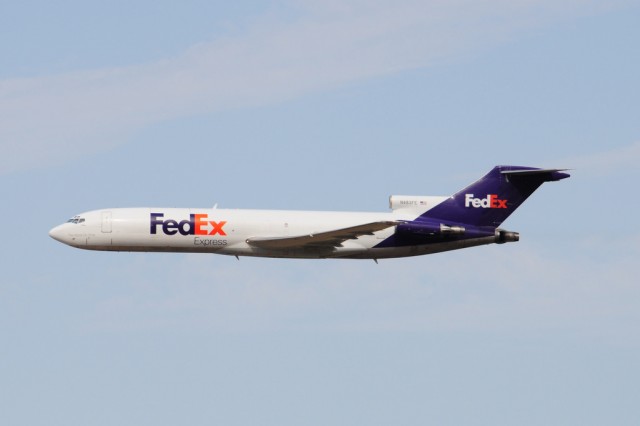
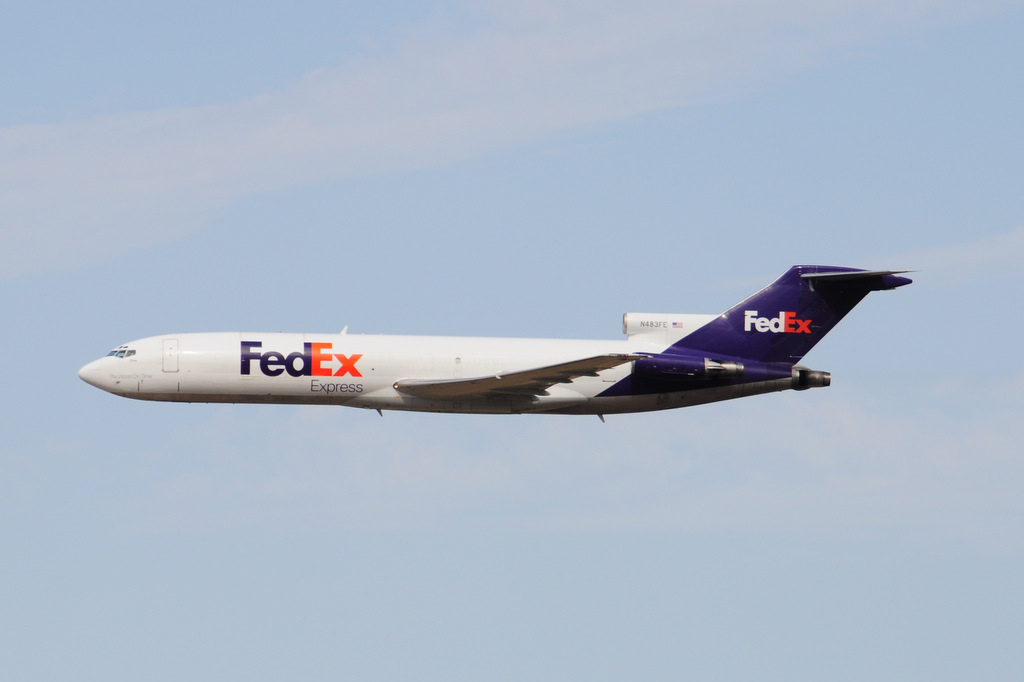
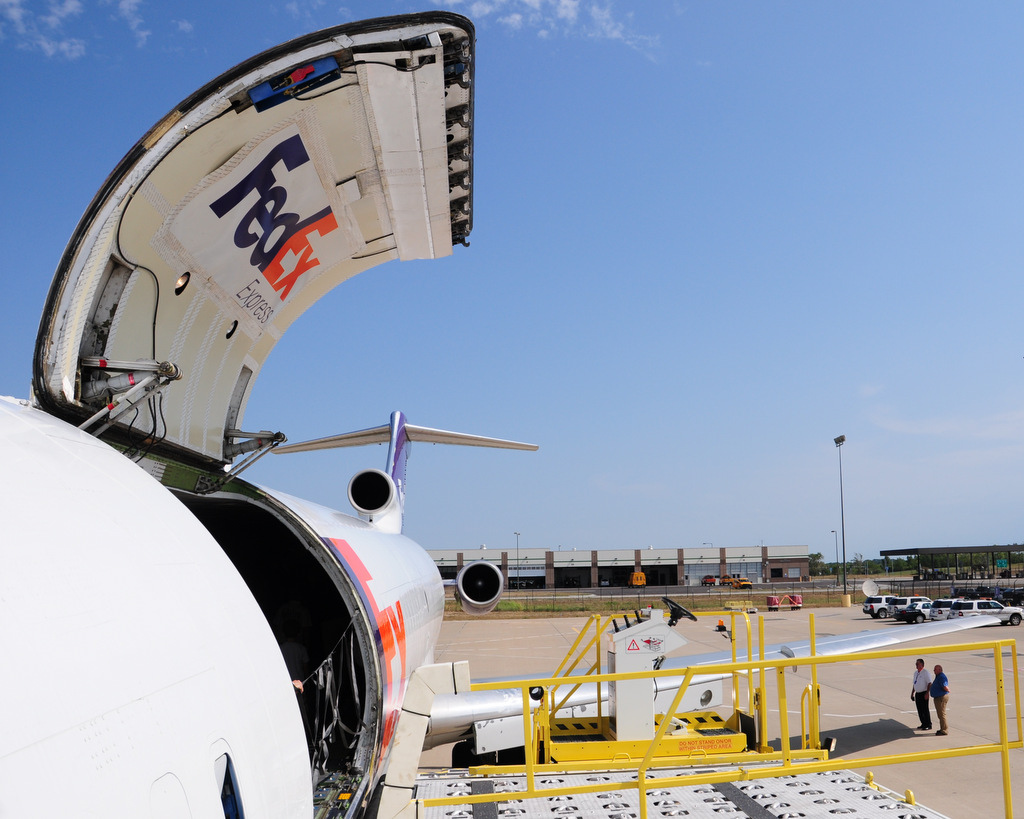
FedEx Boeing 727, named Colin, arrives to Kansas City. Image by JL Johnson.
A blog reader and aviation fan, JL Johnson (@user47), was recently able to witness the last flight and donation of a FedEx Boeing 727. He agreed to share his story and photos with the blog. Here is his story in his own words:
I suspect it’s no news to readers of
AirlineReporter.com, but we aviation enthusiasts are a unique group of folks. Of all the peer-groups I belong to, aviation geeks, that is, avgeeks, are the most loyal, diverse, and enthusiastic I have encountered. One thing I’ve noticed about avgeeks is they always want to deepen their bonds and connections to the industry. Whether it’s catching the newest livery while plane spotting and sharing it on social media, hopping on an inaugural flight, or social networking our ways into typically non-public areas with great aerodome views, we’re always curious. And, with this, I’ve noticed a trend.
It seems the vast majority of folks are focused on what’s new: New planes, new routes, new airlines, etc. And while this is great, it seems I’m more interested in what’s old. Maybe it’s my obsession with history, but I want to be a part of, or at least witness history. Recently, I got that opportunity.
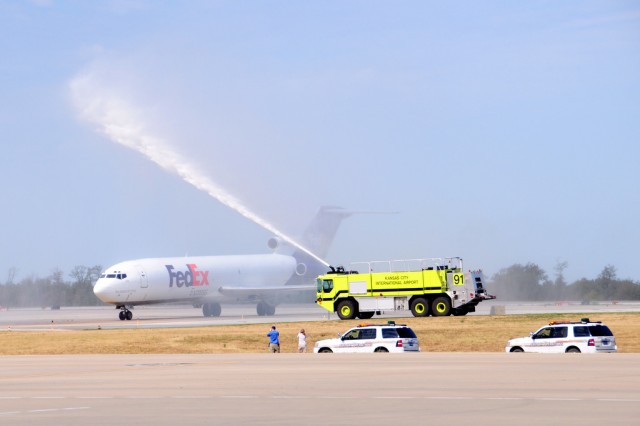
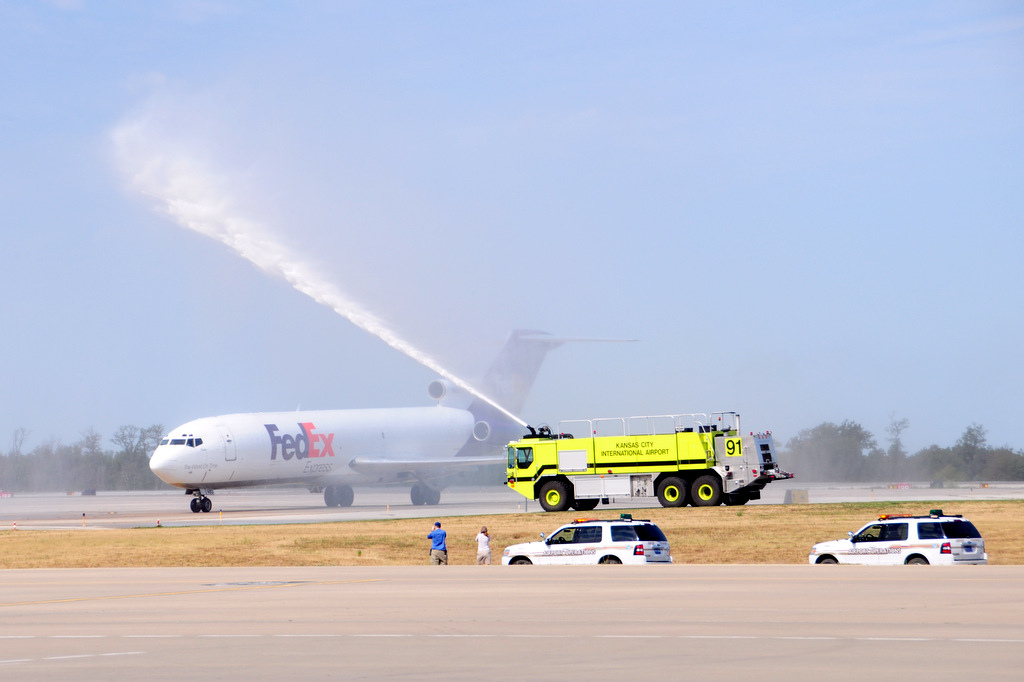
A proper airport welcome at KCI. Image by JL Johnson.
On Wednesday, August 1st at 10:14 AM CDT, a 34-year old Boeing 727 with registry N483FE touched down on Kansas City International Airport’s (KCI) runway 19R marking the end of its life with 34,671 flight hours.
The plane, named Colin, after the child of a FedEx courier, was originally delivered to Braniff Airways in 1978 as a passenger liner. In May of 1990 FedEx Express took ownership of the plane and oversaw its passenger to freighter (P2F) conversion. Shortly after, it entered the FedEx Express fleet where it served alongside dozens of other 727s for 22 years.
While the termination of FedEx Express flight 9044 from Memphis, TN marked the end of the sky for a plane, it highlights a quickening retirement plan for this and other tri-jets in fleets across the world. With higher maintenance costs for older planes and drastically more fuel-efficient alternatives on the market, planes like Colin have quickly fallen out of favor.
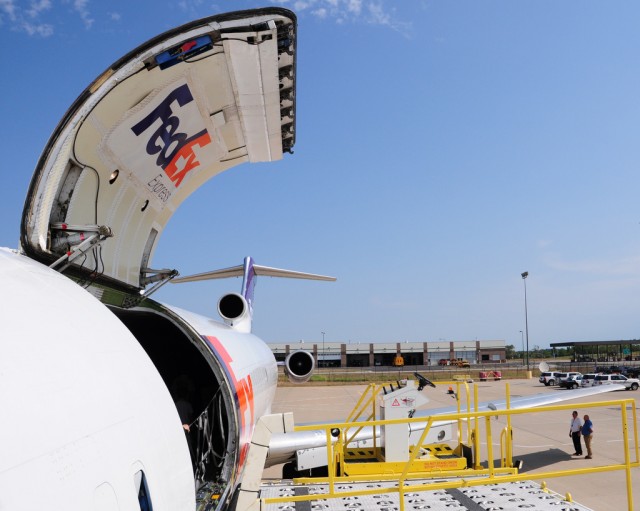
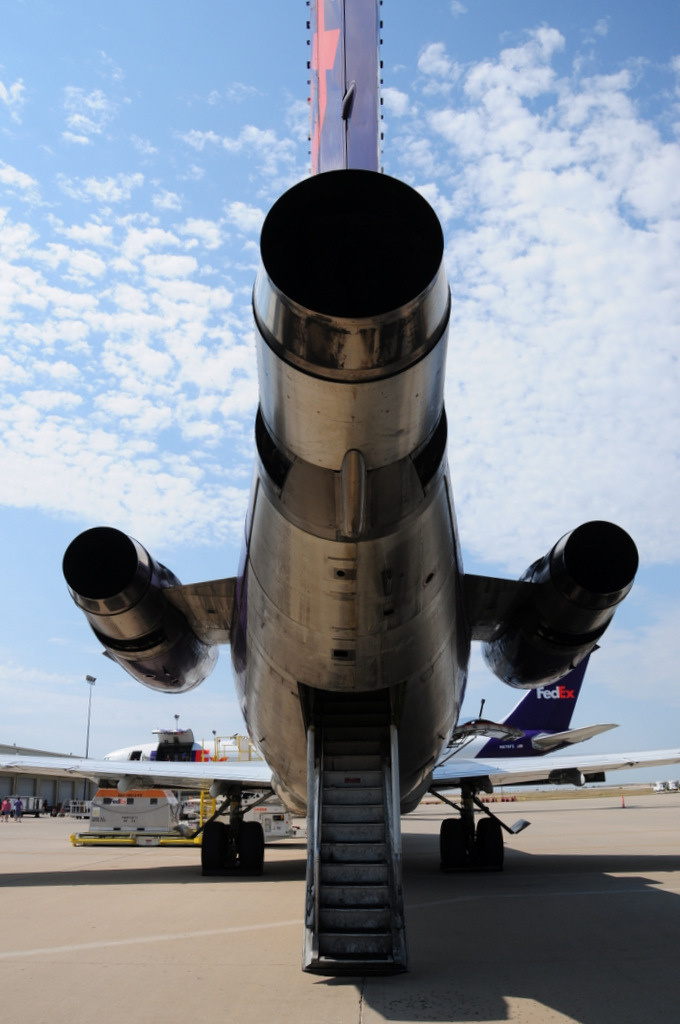
Those Boeing 727s that were converted to freighters increased their lifespan, but for Colin, he is about to start a new chapter. Image by JL Johnson.
So, what’s one of the world’s largest airlines to do with all of these old fuel inefficient planes? According to David Sutton, managing director of Aircraft Acquisition and Sales for FedEx, the solution was simple: Donate the planes to the communities they serve to support educational endeavors.
In 1995 FedEx Express launched their aircraft donation program with the donation of a plane to the FAA who at the time was interested in studying the effects of corrosion and fatigue on aging aircraft. Since then FedEx has donated over 50 airplanes to charities, museums, and airports.
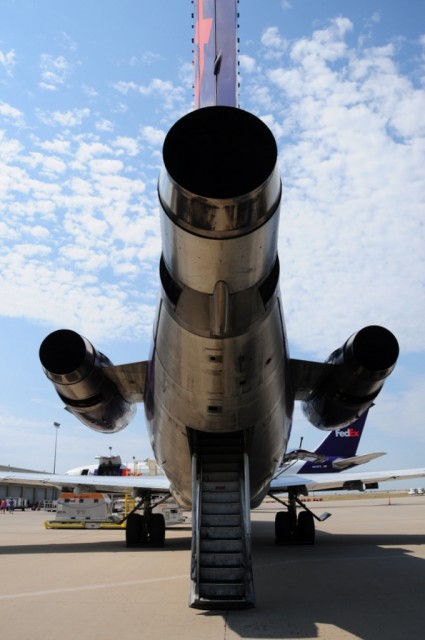
You are not a true avgeek if you don’t love a tri-holer. Image by JL Johnson.
Kansas City Aviation Director Mark VanLoh gladly accepted FedEx’s donation which the airport intends to use for emergency response training. Mr. VanLoh shared with the audience that with this plane, the airport and its crucial emergency responders will no longer be reliant on the generosity of its constituent airlines to loan their planes for training exercises.
In the coming days Colin will be relocated to the southeast side of the airport near an on-site overhaul base where it will lose its engines. While two of the engines will in some fashion make their way back into service, via parts or spares, one will be preserved and donated to the National Airline History Museum where patrons can visit and learn about the low-bypass jet engines that helped usher in the modern era of aviation.
37 PHOTOS FROM THE FEDEX EVENT
About the author: I’m a Kansas City, Missouri based Senior Business analyst with a ridiculous obsession for all things aviation. As an avid plane spotter, I can often be found on or near airport property with a telephoto lens. Let’s get social! I’m on twitter and most other social media as @user47 and occasionally blog over at http://jlsblog.com
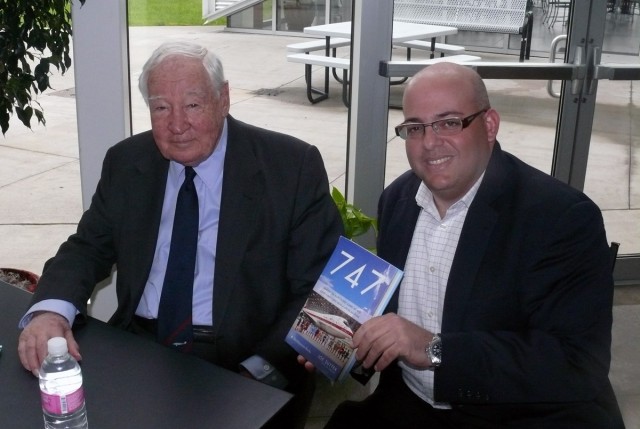
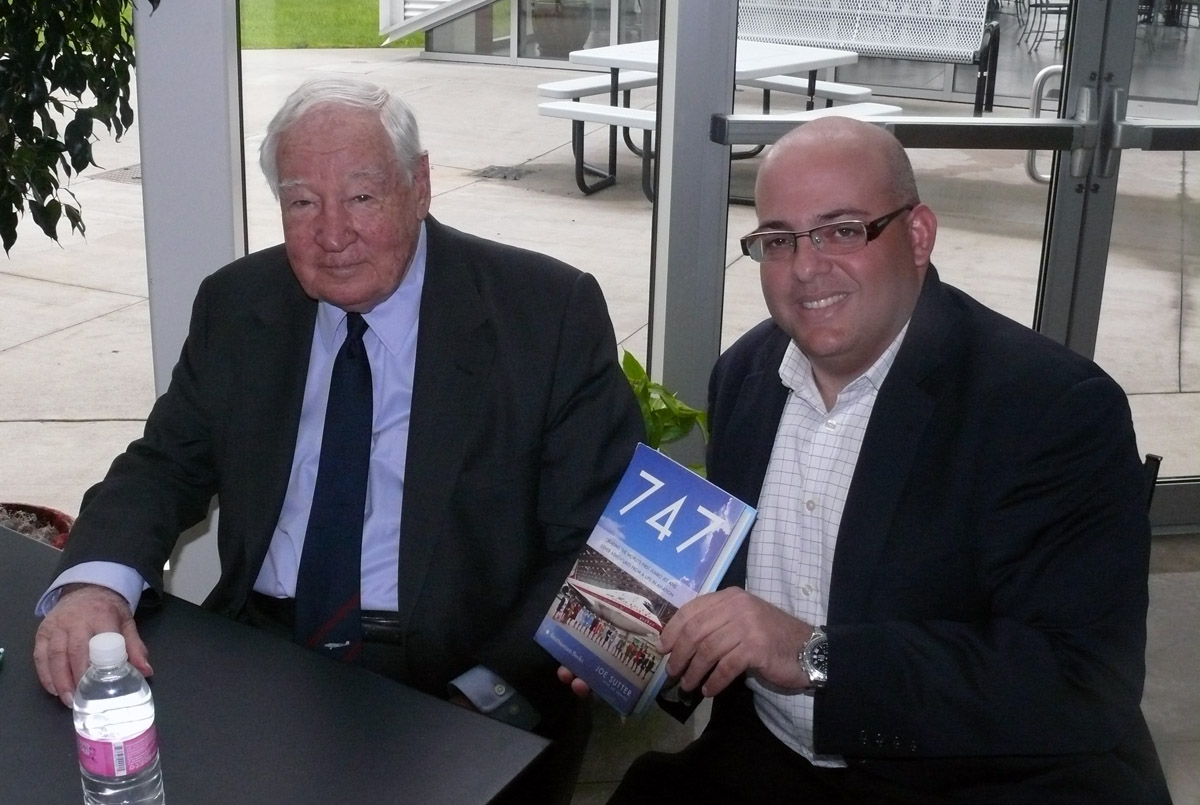
Chris Sloan (on the right) gets his Boeing 747 book signed by Joe Sutter (father of the 747) during the recent Lufthansa 747-8I Delivery.
I first met Chris Sloan during ANA’s delivery celebration of their first 787 Dreamliner. However, I already knew his name. I had previously seen his work in Airways Magazine and I knew of his site Airchive.com, although I didn’t realize he was the man behind it. We have quickly bonded over airlines and enjoy sharing our unique stories with each other.
When it comes to airline collections, there is no question that Chris has me beat. He has so many airline collectables it blows the mind. Luckily he has spent a great deal of effort to share his collection with the rest of the world. I wanted to learn a bit more about him and his website. Here is our interview:
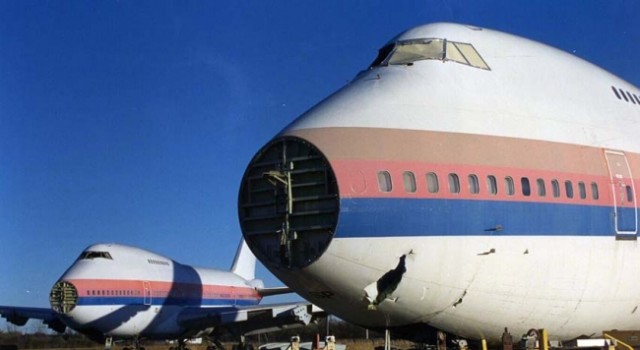
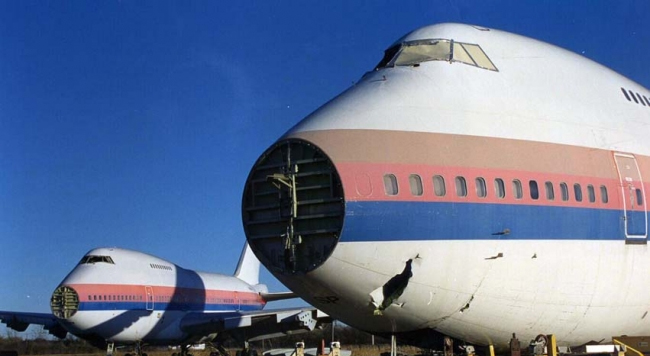
An old United Airlines Boeing 747-100 and 747SP at Ardmore Graveyard. Photo by Chris Sloan / Airchive.com.
AirlineReporter.com (AR): What is Airchive.com?
Chris Sloan (CS): Airchive.com is what I call an online ’œwebseum of commercial aviation’. I strive to be different from other sites out there that do pure plane-spotting, breaking news, and travel reviews so well. We are basically an online museum of commercial aviation with some contemporary twists:
We curate timetable, route maps, airline and manufacturer memorabilia of 1000s of airlines going back to the 1920s to the present. We really try to write a historic perspective of the history of an airline or aircraft model through it’s memorabilia and route maps.
Another thing that sets us apart is our focus on airports. Lots of attention, and rightly so, is directed to plane spotting which Airchive.com does but we feature virtual in-depth photographic tours and background info on airports around the world. We are as interested in the terminals as we are what’s on the ramp. Likewise, these virtual tours extend to aviation museums with slide-shows that transport the user there virtually. One of our most popular sections are rare photographic behind the scenes tours of airplane manufacturers such as Boeing and Airbus
Other unique features include detailed galleries on airliner cabins, scrapped airliners, airline models (including cutaways), and aviation firsts such as trip accounts of the inaugurals of the Airbus A380, Boeing 787 Dreamliner, and the upcoming Lufthansa Boeing 747-8 Intercontinental Inaugural.

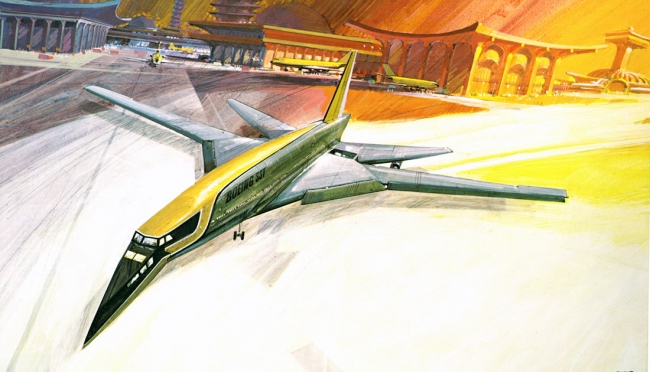
An image from the Boeing SST 2707 brochure from 1966. Chris Sloan / Airchive.com
AR: Why did you start it?
CS: I started the site back in 2003 as a way to give back to the commercial aviation community and share my massive collection as others had done online in person. It has turned into a passion project which has allowed me to meet many other folks of similar passion and undertake unique experiences. Also, at this time, the airline industry was engaged in the nadir of it’s turmoil following 9/11 and running up to the Gulf War II, so I wanted to remind the flying public and airline staff just what an incredible industry they have. I now try to tweet @airchive relevant items everyday to provide a historical or different take on what is in the airline zeitgeist.
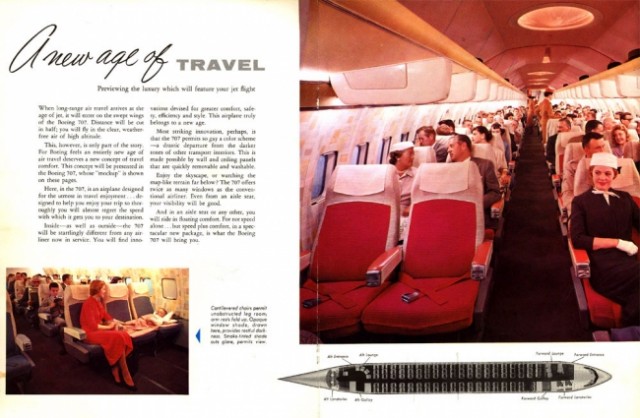
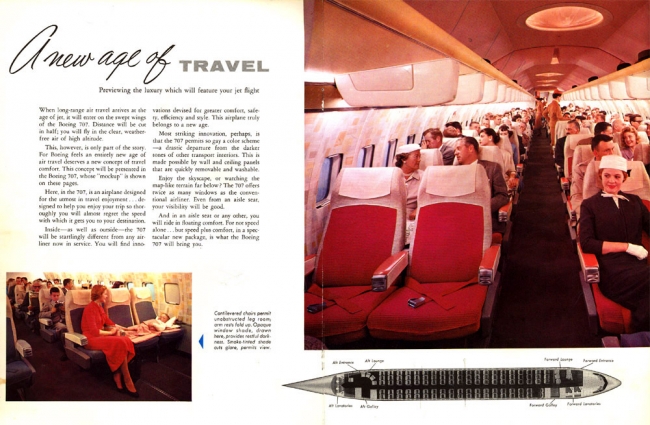
1955 Boeing 707 Intro Brochure. Image from Chris Sloan / Airchive.com.
AR: When did you get into collecting airline memorabilia?
CS: I began collecting at the age of 6 years old. I would visit airports and city ticket office’s back then when those existed, and pester airline reservation agents to mail me timetables, route maps, safety cards, whatever. I’d also inhabit my favorite airports snapping off photos. It’s a life-long passion but I frustrated that I didn’t have anyone to share it with. At this point, my model collection numbers over 300 including gigantic 747, DC-10, and Concorde cutaways; 10,000 timetables, brochures, airline seats, service items, even a desk made from the wing of the Lockheed L1011 prototype. I am not in this for the money. In fact, to borrow an old stock market adage ’œI buy and hold.’ I have never sold anything, though have donated and loaned items to other museums.
As I have grown older running my own TV production company which leads to extensive travel ’“ this only increases my enthusiasm for this fascinating industry. One cool thing is I have combined some business with pleasure such as overseeing the John Travolta hosted documentary on the building of the Airbus A380, back when I ran production at TLC, and now creating and executive producing a reality series called ’œAirport 24/7: Miami’ which is an unprecedented behind the scenes look at all the goings on at Miami International Airport. It’s a compelling, eye opening show for enthusiasts and non-enthusiasts alike. It will premiere later in the Summer on Travel Channel.
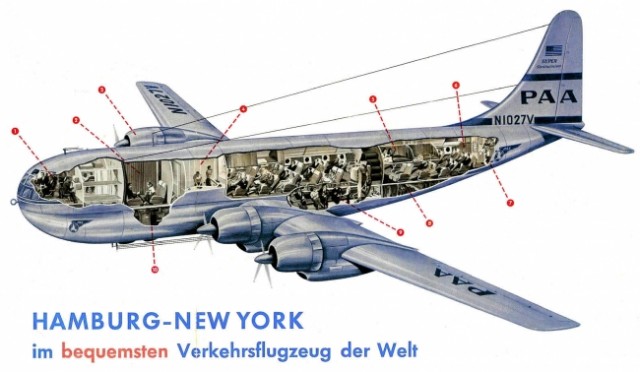
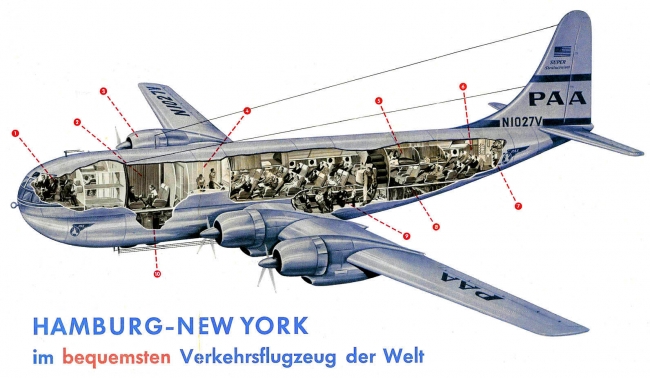
Cutaway of a Pan Am Boeing 377 Stratocruiser. Image from Chris Sloan / Airchive.com.
AR: Have you ever thought of starting some in-person museum?
CS: This is a long-term goal, or if I win the lottery a short-term goal, to either start my own or collaborate with others of like-minded interest. My ’œdreamseum’ would be a cross between LAX’s Flightpath Museum and the Delta Airlines Heritage Center and American’s C.R. Smith Museum. It would cover a broad swath of airlines like Flightpath but with the depth and actual aircraft of C.R. Smith and Delta Heritage. As a passionate Miamian, I would like it to have a South Florida focus on Pan Am, National, and Eastern.
I have taken part in public displays where I loaned materials out. There was a Museum of Modern Art (MOMA) Exhibit at the former TWA Terminal T5 @ JFK a few years back, but unfortunately about $5000 of my collection was stolen and never recovered so I am much more careful these days. Who would’ve thought MOMA didn’t carry insurance.
AR: What is your favorite piece you have on the site?
CS: Hard to say, so I will list some of my favorites:
* Boeing brochure for the 2707 SST
* The original US Air Force presentation for Air Force One
* Anything and everything involving my favorite airlines: Delta, Pan Am, Continental, Braniff, and National
* Complete timetable collections for major U.S. airlines going back to their histories
* My young son has come now has the bug. In fact, he is named after artist Alexander Calder who designed the Flying Colors Boeing 727 for Braniff. I have an autographed poster from Calder.
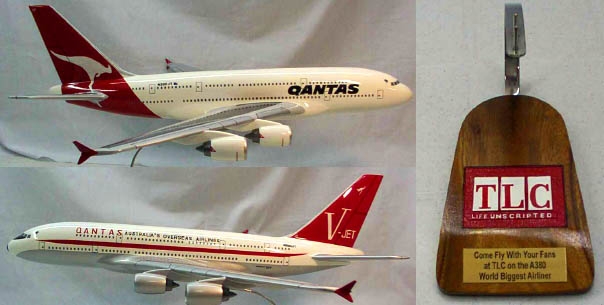
A special Qantas Airbus A380 model given to Jon Travolta. Photo by Chris Sloan / Airchive.com.
AR: What has been your favorite airline related experiences?
CS: Shooting with John Travolta the A380 doc was incredible. Such a gracious man and an enthusiast extraordinaire. As a reward, we all went up in an Airbus A-320 chartered for the shoot, and he took the controls. It has also been exciting being a part of three inaugurals and deliveries including the Airbus A380, Boeing 787 Dreamliner and the Lufthansa Boeing 747-8 Intercontinental.
Meeting the Father of the Boeing 747, Mr. Joe Sutter at the Lufthansa Boeing 747-8 Intercontinental Delivery. Spunky, Pugnacious, and Outspoken’¦
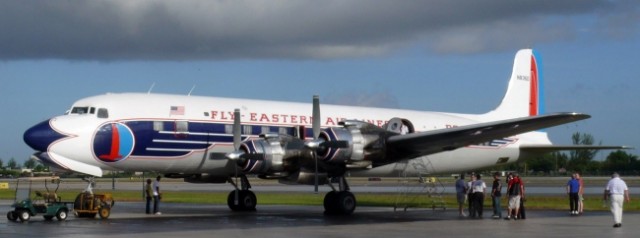
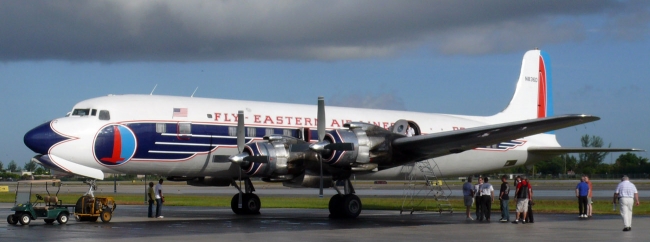
Eastern Air Lines Douglas DC-7B at Opa Locka - August, 2010. Chris Sloan / Airchive.com.
Chartering the world’s only flying passenger DC-7 for a company party high over Miami. We buzzed the beach at 1,000 feet. Travolta and his daughter came on one of our flights from Miami to Key West where Pan Am was founded. Countless private ramp tours of LAX, Miami, and Mojave. These are hard to get and very gratifying, especially when friends and family have joined in awe as an A380 lands 100 feet away.
Flying the jump-seat from LAX to Hong Kong on a Boeing 747-400 back in 1999. Visiting the not open to the public Boeing Archives. The Airline Reporter has been there too, so you know how awesome it is.
Photographing the Boeing and Airbus Factories and Customer Delivery Centers and flying a CRJ-200 sim through moderate to serve turbulence, with the radar painting read, and trying not to throw up!
Being on the inaugural of the Virgin America service to Florida with my idol, Richard Branson.
Producing our Travel Channel Series about the Miami International Airport. We actually created an airborne parade of a DC-7 and DC-3 which proceeded the Lufthansa A380 landing in Miami for the first time. And of course, all the international travel such as flying into Hong Kong Kai-Tak during its last days.
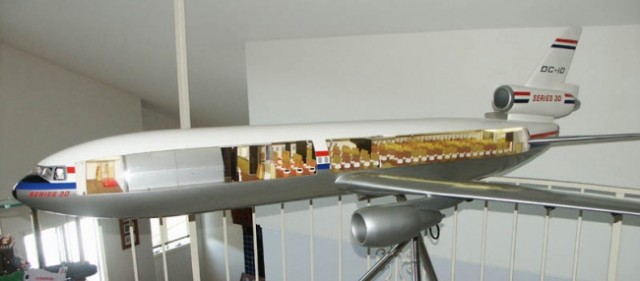
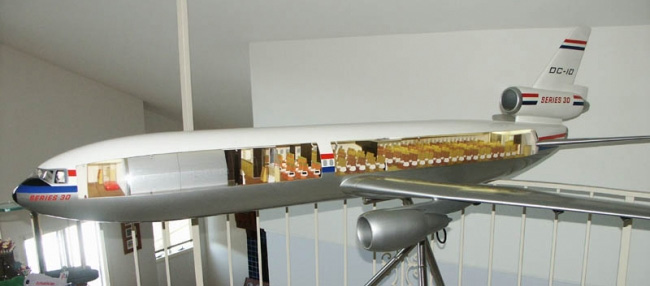
A very rare 1973 vintage factory DC-10 cutaway. Image from Chris Sloan / Airchive.com.
AR: How many airline models do you have?
CS: 100’s literally but the pride and joy are 3 restored cutaways: 1 of 3 Douglas DC-10 Prototypes made for the factory back in the 1960s to demo the airplane. Also a Concorde cutaway that used to apparently be in the lobby at the Bristol Fulton Factory. It was in found in the attic of the interior designer of the Concorde, after 20 years.
I also have a 7 foot long 1974 circa TWA Boeing 747 restored over 3 years to its original condition and an original Boeing 747 prototype cutaway circa 1969
AR: What is Airchive.com’s relationship with Airways?
CS: I have been an avid reader of ’œAirways’ since it began publishing. In fact, I deserted commercial aviation for many years until 1994 when I picked up one of their first issues in an airport newsstand. I was immediately infected again by the bug. I still eagerly await my issue each month like every other enthusiastic subscriber. We have a strong cross-promotion and content-sharing relationship. As well, I am a frequent contributor to this excellent publication as it really speaks to my passion.
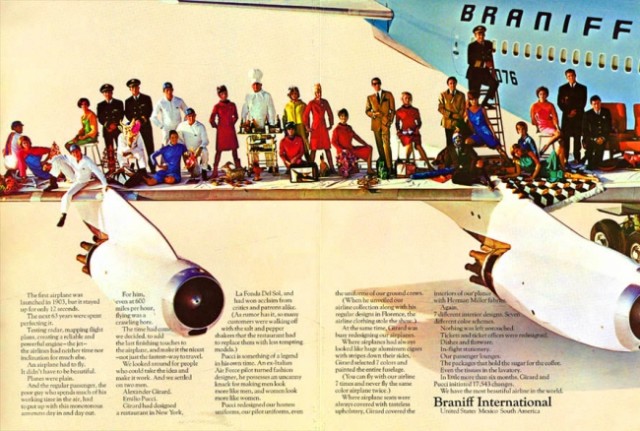
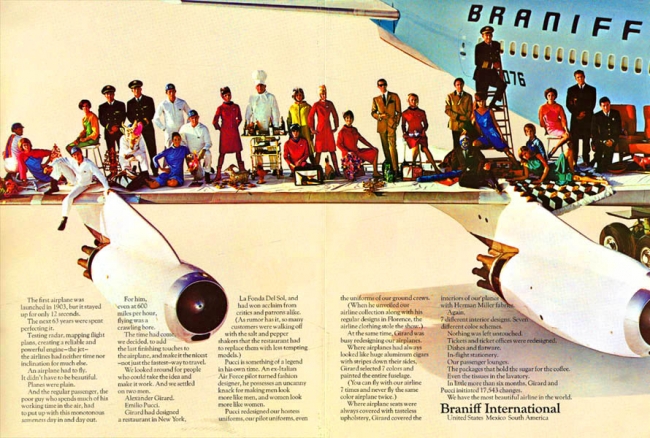
1965 "End of the Plain Plane" ad campaign for Braniff. Image from Chris Sloan / Airchive.com.
AR: What do you want to add?
CS: I view Airchive.com as pure passion. It takes a lot of time and money, frankly but it is a passion. It has been so much fun, particularly getting my sons interested in this field and meeting so many interesting, like-minded people. I get a lot of gratitude when people write from around the world how much the site inspires them or takes them back to memories they had in the business. When someone says ’œI got lost for hours on Airchive’, that is the greatest compliment. I am adding features to allow more contributors as many wonderful folks send me items and photographs. As my children get older and business obligations grow, it gets harder to do this on your own. So I welcome anyone who wants to get involved and collaborate. We’re all stronger together then apart.