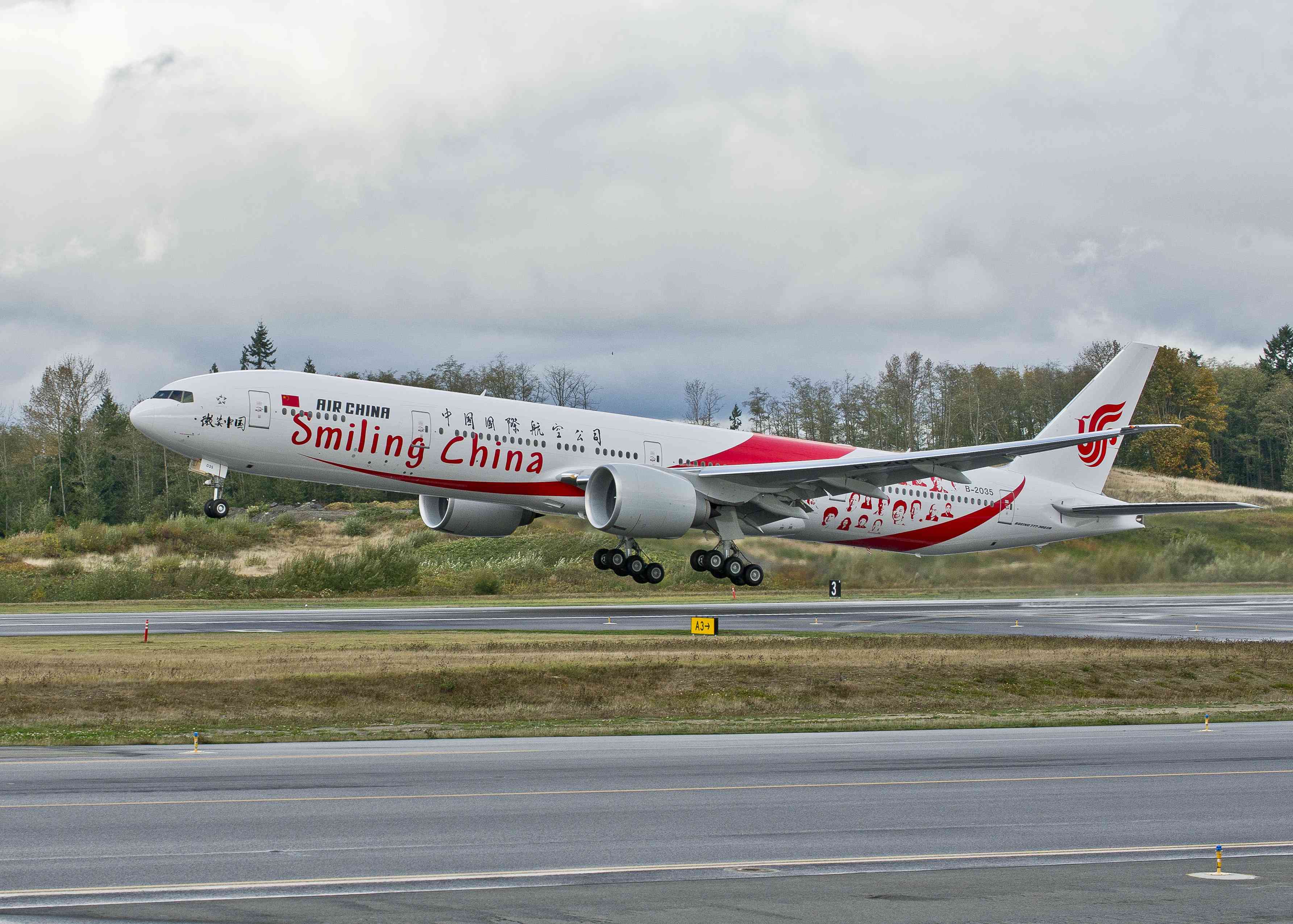
HI RES IMAGE (click for larger). Air China’s new 777-300ER (B-2035)adorned with the distinctive ’˜Smiling Faces’ livery takes-off from Paine Field Airport in Everett, Washington on October 30. Image from Boeing.
When I was visiting Paine Field recently, I caught a glimpse of a special livery from Air China. Yesterday the Boeing 777-300ER was delivered to the airline and Boeing shared some background information on the unique design.
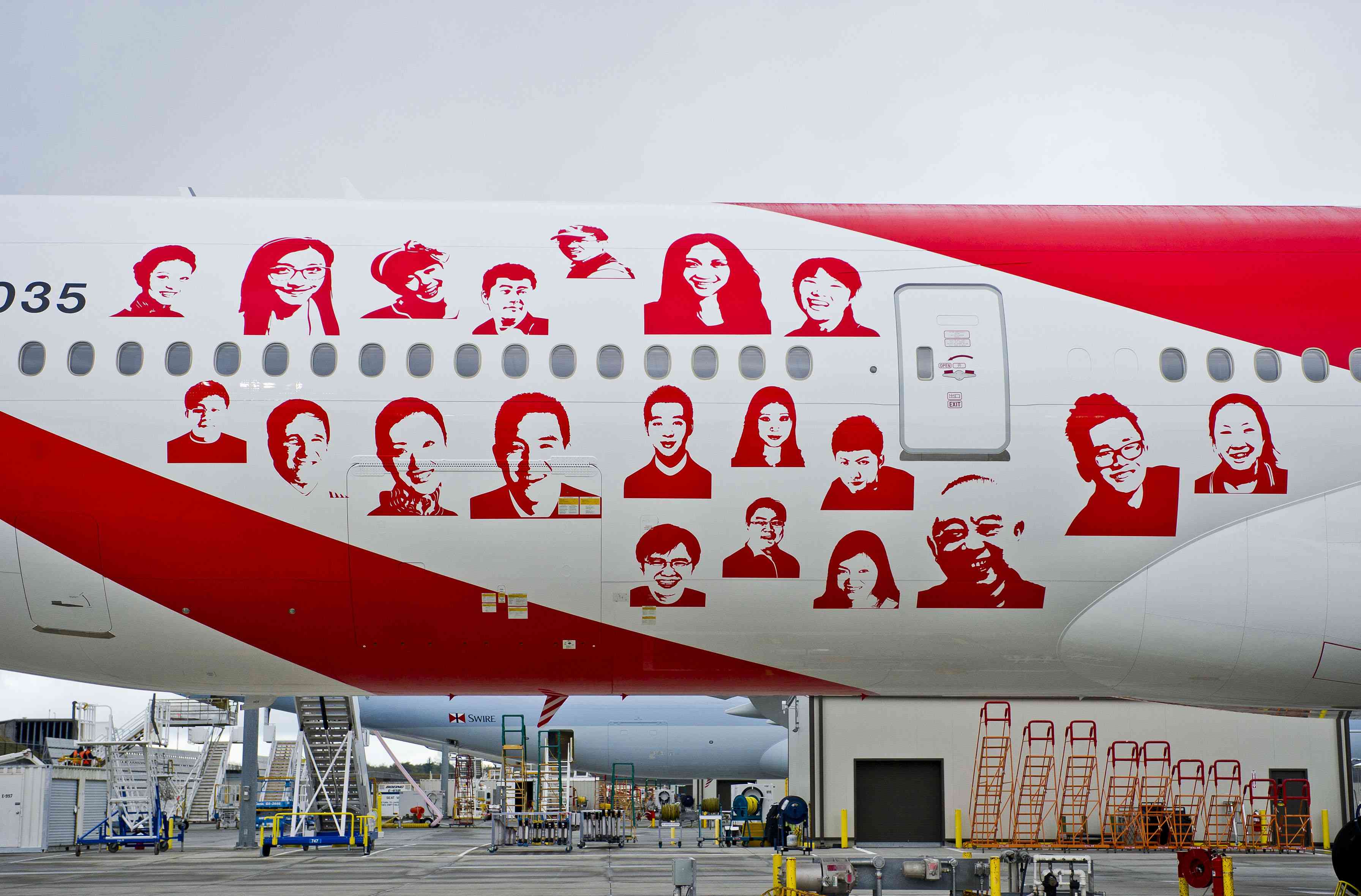
The aircraft displays 40 different smiling Chinese faces to represent the role that Chinese aviation has played in bringing China to the world.
“We hope this special-livery airplane will bridge the connection to bring a smiling, confident and friendly China to the world,” said Feng Run E, vice president of Air China. “With the airplane flying around the world, we hope more business travelers will experience the super flight comfort offered by Air China’s 777-300ER.”
HI-RES IMAGE (click for larger): Air China’s newest 777-300ER features the faces of people who were selected from a social media campaign co-organized by Air China and Boeing in July 2012. Image from Boeing.
The 40 people were chosen via a social media campaign created by Air China and Boeing earlier this year.
“Boeing is celebrating its 40th anniversary in China. Over the past four decades, we have witnessed the rapid development of China’s aviation industry and we’re honored to be part of its success by providing our best products and services,” said Ihssane Mounir, senior vice president of Sales for Greater China, Japan and Korea, Boeing Commercial Airplanes. “We look forward to carrying on this great tradition of growth and development over the next 40 years.”
This is the 10th of 19 777-300ERs on order by Air China.
It is time to start planning for Aviation Geek Fest 2013. No details are even close to share, but please add yourself to the Aviation Geek Fest 2013 e-mail list to be on top of any developments.
NOTE: If you were on the list for 2012, you should have received an email from me with a link to confirm you want to be on the list for 2013. You are not able to add yourself from the link above — yes, I know that is very annoying, but what my host provider is doing to cut down on spam. If you have trouble still, email me: da***@*************er.com.
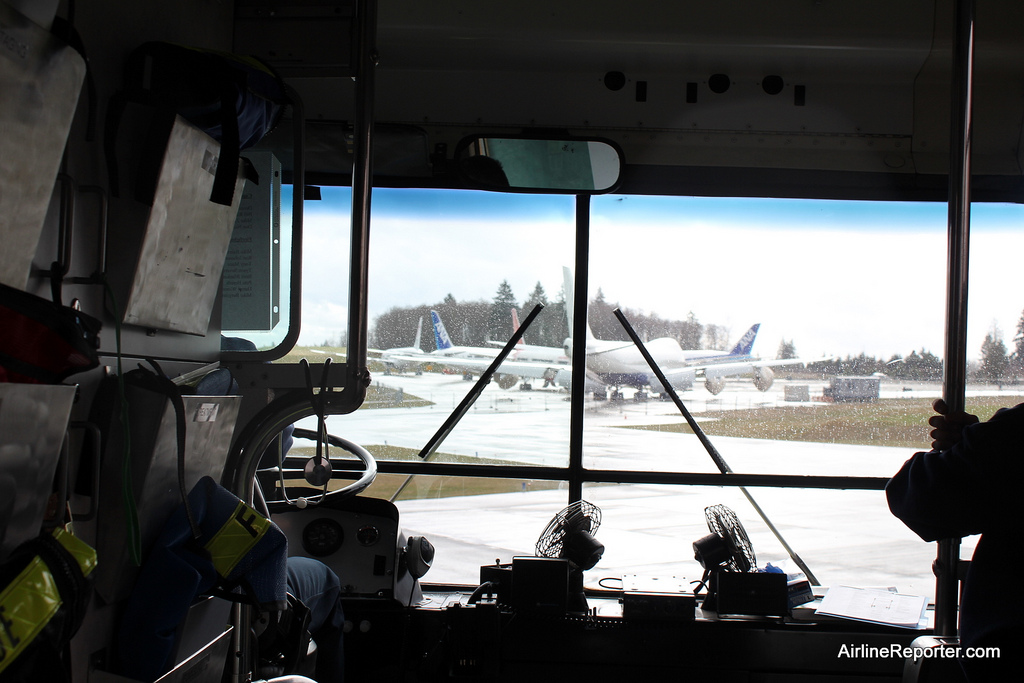
I got to drive around Paine Field an a fire bus. Others went on the factory floor, the Dreamliner Gallery and more. What will #AGF13 hold? I am not sure.
Not sure what Aviation Geek Fest is all about? I can tell you that if you have any remote interest in aviation — you will love it. Check out what went down in previous years:
I plan to speak with some AvGeeks at the DorkFest at LAX this weekend to get ideas, but also feel free to post in the comments on any ideas you might have for #AGF13. The sky is the limit (literally, because I doubt we could get on Virgin Galactic).
We are looking to hold it before summer in 2013, but other than that, there are no other details — stay tuned.
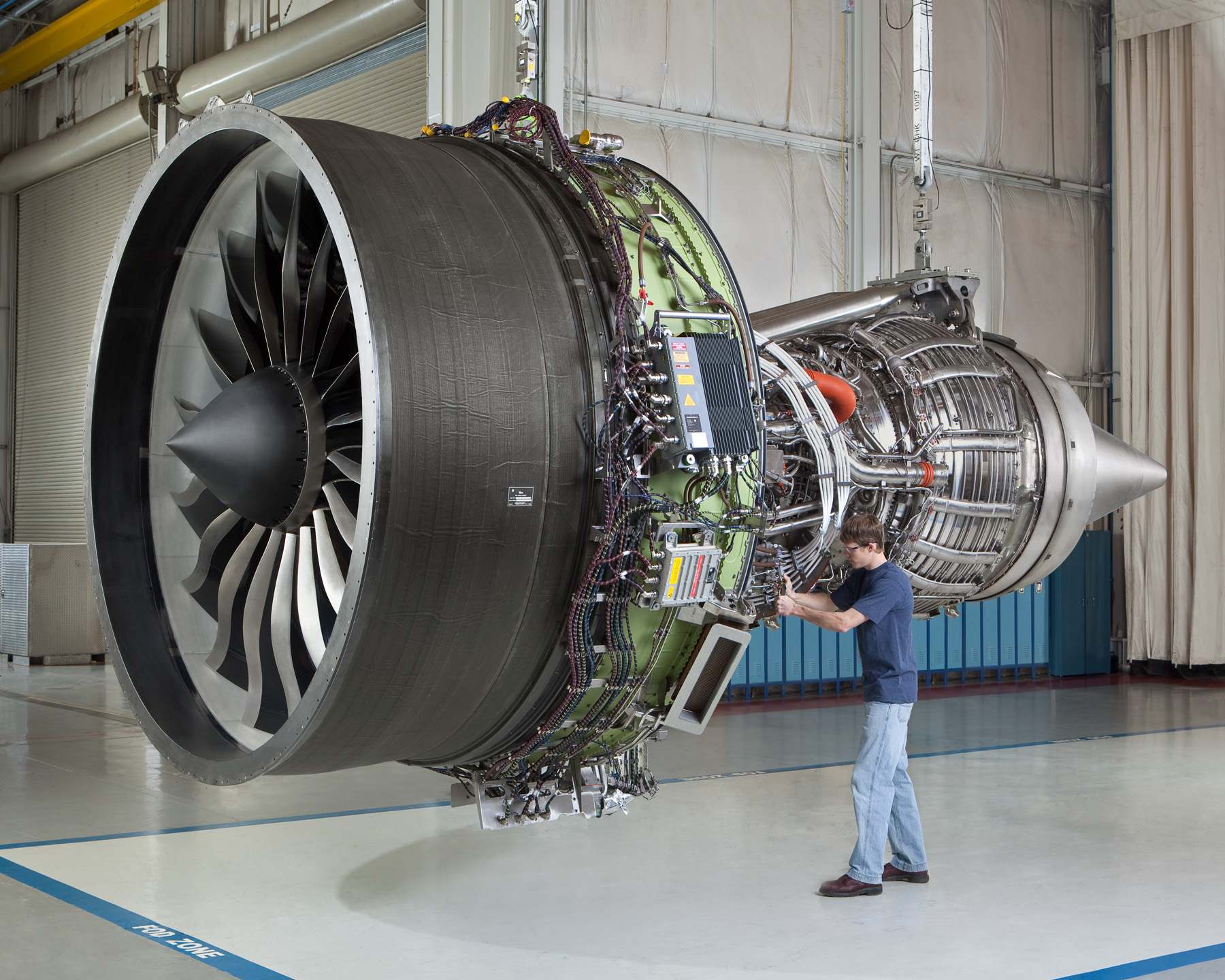
The GEnx-1B engine, that is used on the Boeing 787 Dreamliner. Image from GE.
This story was written by Steve Csonka, Director Environmental Strategy & ecomagination, GE Aviation for AirlineReporter.com.
As you may have inferred from Dale Carlson’s comments in an earlier blog post, many of us at GE Aviation are excited about our roles. I have been passionate about aviation since my teenage years when I took up general aviation flying ’“ learning my ’œstick and rudder’ skills in a Cessna 172 while living in the panhandle of West Virginia. I’˜ve spent 27 years in the commercial aviation industry with airlines and with GE Aviation, and in my current role, I am focused on improving the sustainability of aviation so future generations can experience the same passion.
The value of the aviation enterprise is interwoven into the fabric of our worldwide society ’“ providing fast, safe, and dependable transportation of people and goods. In fact, it is estimated that aviation is currently responsible for more than $2.2 trillion in global economic impact, or 3.5% of total worldwide gross domestic product.
However, we recognize that with our successes come additional challenges ’“noise around airports, local air quality emissions, greenhouse gases, and inflation of customer operating costs with rising fuel costs. The good news is that we continue to make progress in tackling these challenges using advanced technology. At GE, we call these efforts ecomagination ’“ striving to deliver operating and environmental performance with technology. At GE Aviation, our sustainability efforts align with industry goals and focus on three pillars of improvement: operations, infrastructure, and technology.
For operational improvement, GE Aviation offers services that help customers make flight routes more efficient, schedule engine maintenance and ’œClearCore’ engine washing, and decide how much fuel to load on planes for peak operating performance. Every one of these procedures is critical for saving fuel and, in turn, costs and emissions.
On the infrastructure side, GE Aviation is looking beyond making efficient engines and is working with customers and regulatory authorities to make efficient flight paths. Stay tuned for more on this from GE Aviation’s Steve Fulton!
For the technology pillar, my colleague Dale explained in his guest post how GE Aviation researches and develops new, efficient technology. Whether it is the GEnx on the 787 and 747-8 (which just entered service), or CFM’s LEAP engine for the next generation single aisle transcontinental aircraft, GE’s technology enables our customers to burn less fuel, shrink the noise footprint around airports, and dramatically lower NOx emissions.
One innovation I’m excited to talk about is drop-in, renewable Jet fuel that, once commercialized, will enable the industry to achieve up to 80% reductions in net carbon emissions versus petroleum based fuel. The industry is also looking for alternative fuel sources that use a range of raw or waste materials that do not need to compete with food production or land use. So far, the industry has identified two pathways for the production of renewable Jet fuels, and is in the process of evaluating and validating at least five more.
Can you imagine a world where fuel comes from the waste stream and other biomass? I can. GE Aviation was one of the first companies, along with CFM, to test a biofuel-powered engine in flight. At last year’s Paris Air Show, GE Aviation showed an engine that was powered by 15 percent biofuel, and we will continue to discuss our biofuel-powered engines at this year’s Farnborough Air Show. Watch a video about our most recent renewable Jet fueled demonstration flights below, which, along with several other commercial flights, flew into Rio de Janeiro during the recent Rio+20 activities in June:
Renewable fuel development is occurring around the world, and we expect commercial production to commence over the next 2 years.
With all these innovations in operations, infrastructure and aircraft technology (including biofuels), I believe we have ample opportunity and reason to be passionate about the future of aviation. Stop by GE Aviation’s exhibit at the Farnborough Air Show this week to explore more of our sustainable tech: Booth #7, Hall 4.
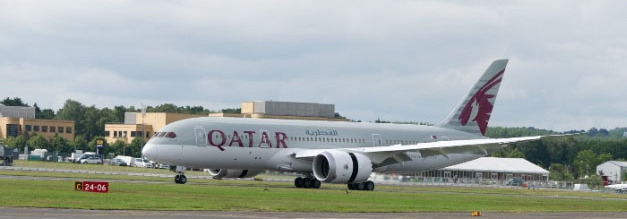
A Boeing 787 Dreamliner, in Qatar Airways livery, arrives to London this week. Image from Boeing.
I am very excited, because I will be heading to London this weekend to attend the Farnborough Airshow for the first time. Each year, Paris and Farnborough take turns hosting this amazing airshow and I hope to share the experience with you folks.
It is normally during this airshow that Boeing and Airbus announce orders for additional aircraft. Although the A320neo and 737 MAX will be popular, I am really hoping for some 747-8 Intercontinental and Airbus A350 order announcements.
You better believe, I will be sharing what is going down via my Twitter and Facebook accounts. I also hope to get a few blogs up next week as well. And yes, I actually plan to take a day to check out London (oddly, I have never been), although it might be difficult to get me away from the airplanes.
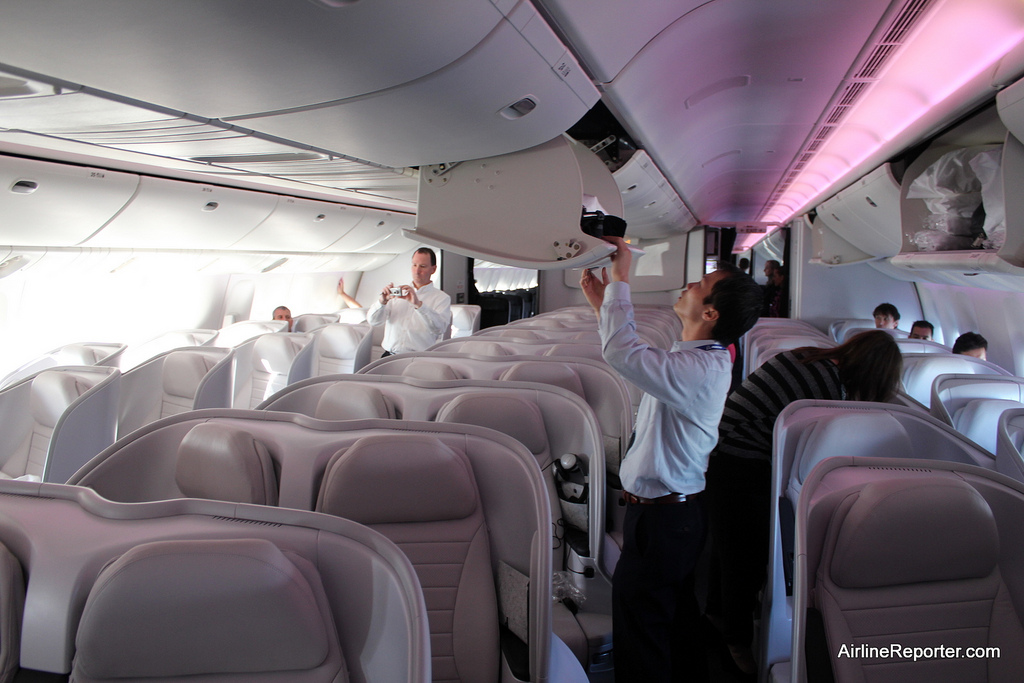
Air New Zealand’s Premium Economy.
Per usual, getting there will be half of the fun. I will be taking Air New Zealand’s flight from Los Angeles (LAX) to London (LHR). I will be reviewing their premium products and flying over there in Premium Economy and on the way back flying in Business Premier.
Right now, they are one of their 777-300s scheduled to do the route tomorrow, which offers the newest product. I hope it stays that way because the 777-200 still has the older Premium Economy, which is not bad, but I much more prefer the 2-2-2 layout to the new product versus the 3-3-3 on the -200.
Previously, I had the opportunity to fly from Paine Field to Los Angeles on Air New Zealand’s first Boeing 777-300ER in Business Premier, but since it was a special media flight, I wasn’t able to get the whole experience — plus the flight was very short. I am looking forward to trying both products on the long haul and check out their new safety video in person.
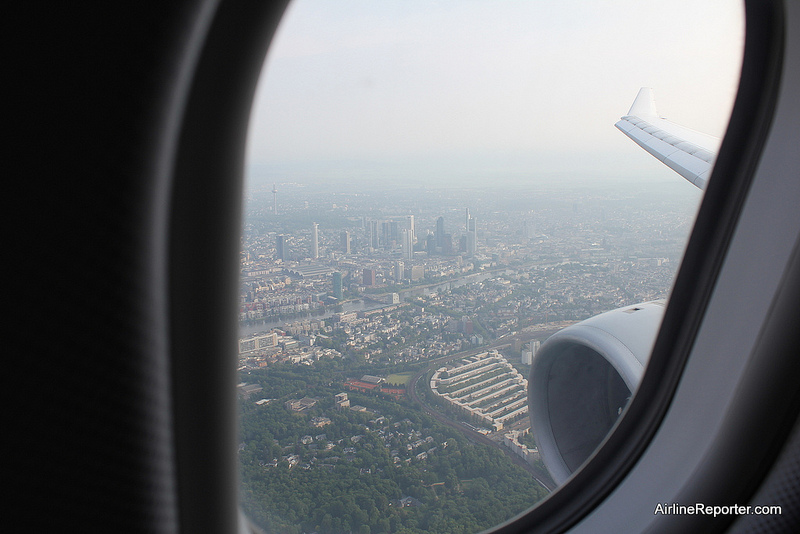
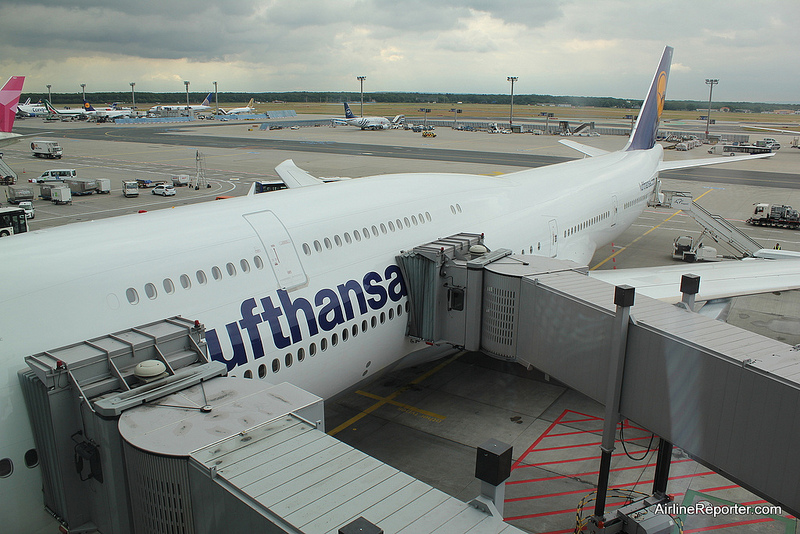
What does an AvGeek do with only 24 hours in Frankfurt with some great aviation connections? It is all still a blur, but I think I can remember most of it.
First of all, the non-stop Lufthansa flight from Seattle to Frankfurt is a challenge. It leaves at around 1pm PST and then arrives at midnight PST, which is 8am local time in Germany. This means, I need to get sleep during the flight or I go a whole day without any. It was unfortunate that I was only able to get two hours of sleep on the flight over — mostly from being excited about the trip.
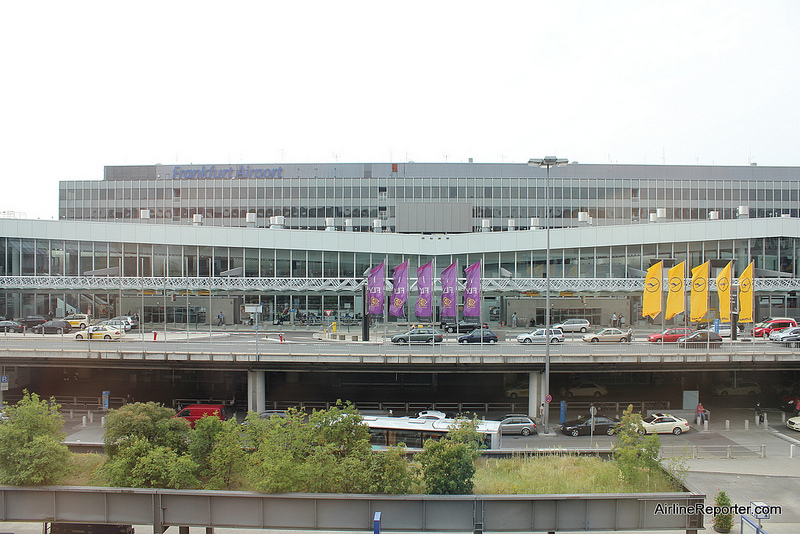
The Frankfurt Airport as seen from the Sheraton Hotel.
After landing and having some issues with my bag (took 45minutes to get, but at least I got it), I was off to find the Sheraton at the airport. Once arriving at the hotel a bit after 9am, I had about an hour to get showered and changed before starting an airport tour that Chris Sloan, with Airchive.com, nicely set up for us.
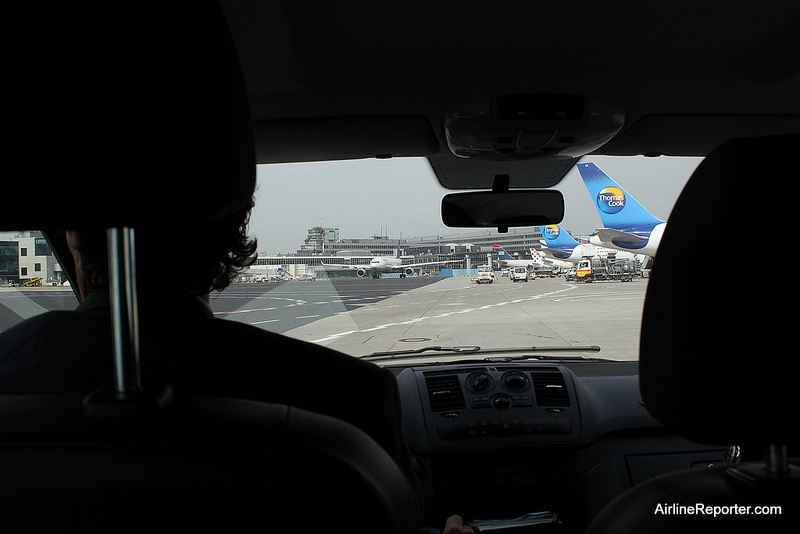
On the tarmac -- a place I always love to be at.
Chris and I met up with Robert Payne and Roy Watson who are not only both spokesmen for the airport, but also all around awesome guys. Much like the rest of the trip, we had a whirlwind tour, since we only had two hours, but it was well worth it.
We quickly took a look at the airport’s classic, yet still impressive baggage system before heading out to the tarmac. If you ever need an adrenalin shot to counter lack of sleep, a trip to an airport tarmac is always a nice cure.
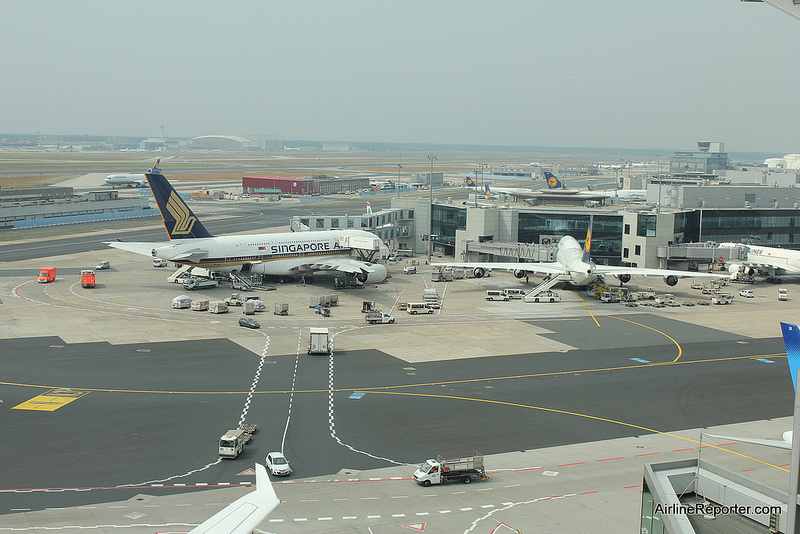
A Singapore Airlines Airbus A380 and Lufthansa Boeing 747-400.
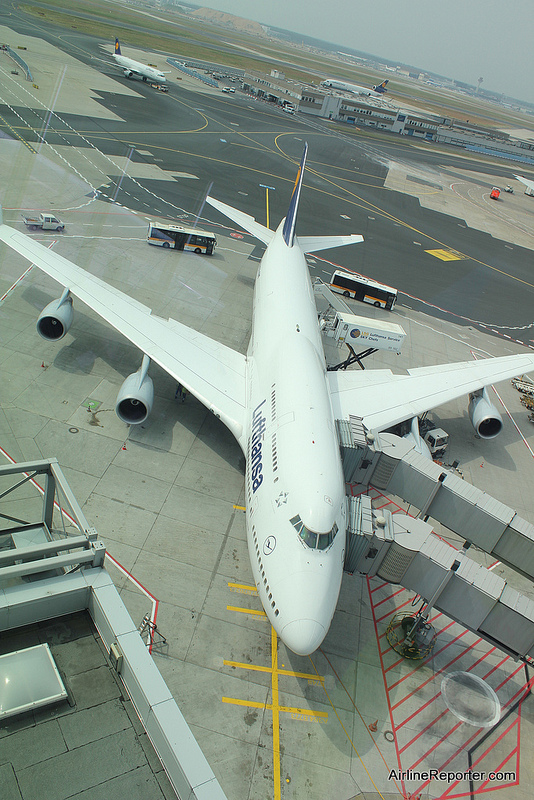
Getting off the tarmac for a few minutes, we took a tour of one of the tarmac towers that guides airliners around the gates. It provided amazing views.
By noon, we were back at the hotel to meet with our media group, who was led by Martin Riecken, Director Corporate Communications The Americas, Lufthansa Airlines. Events like these are a home coming for aviation journalists. You can imagine there is always non-stop, great conversation going on with a group of folks who write on aviation and travel.
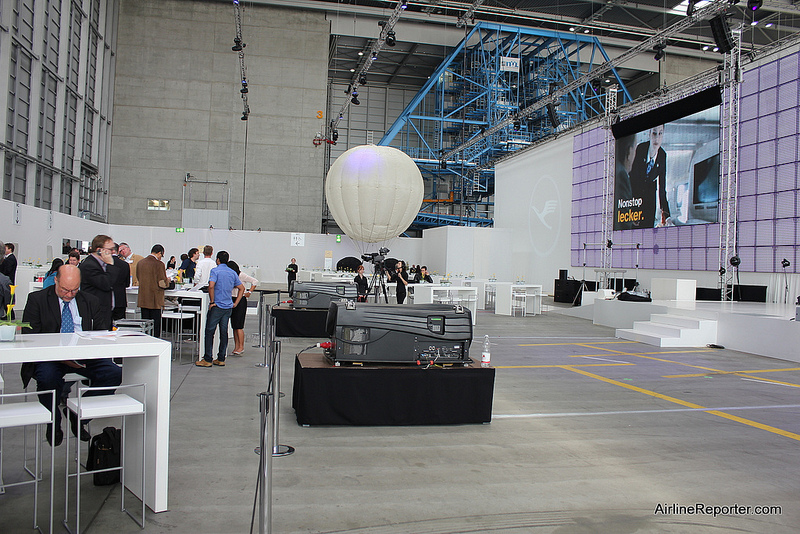
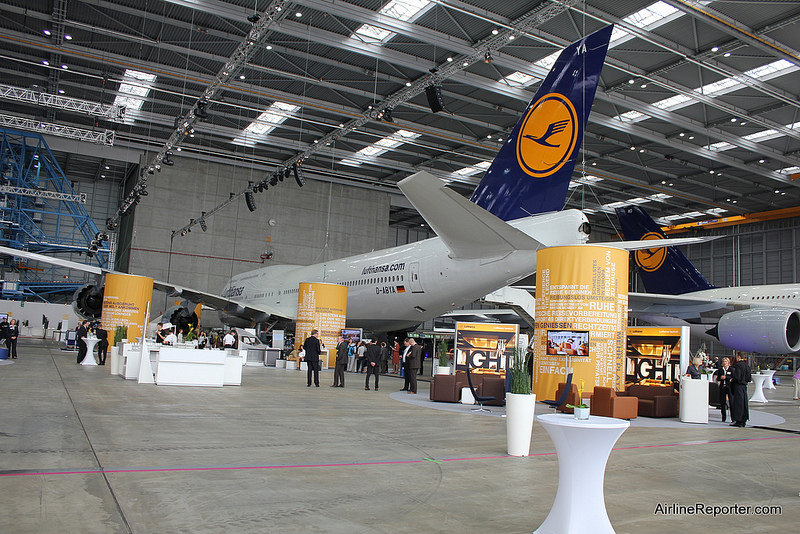
The Technik hangar was set up for a show!
After meeting up in the hotel lobby, we loaded onto a bus and were taken to Lufthansa Technik Hangar 7, which was very different from last time I saw it. Instead of the vast open spaces that a normal maintenance hangar might have, it was set up for a party. With a bunch of tables, a large stage and a curtain made of up thousands of LEDs, which I assumed was hiding the 747-8I (spoiler: it was).
There was a Boeing 747-8I, an Airbus A380 and different things set up to teach us about Lufthansa.
Some speeches were given and some videos were shown before the curtain was raised not only to unveil the Intercontinental, but also different stations where we would be able to learn about different aspects of Lufthansa, the 747-8I interior and the future. For a little bit of fun, there was also a Lufthansa Airbus A380 in the background as well.
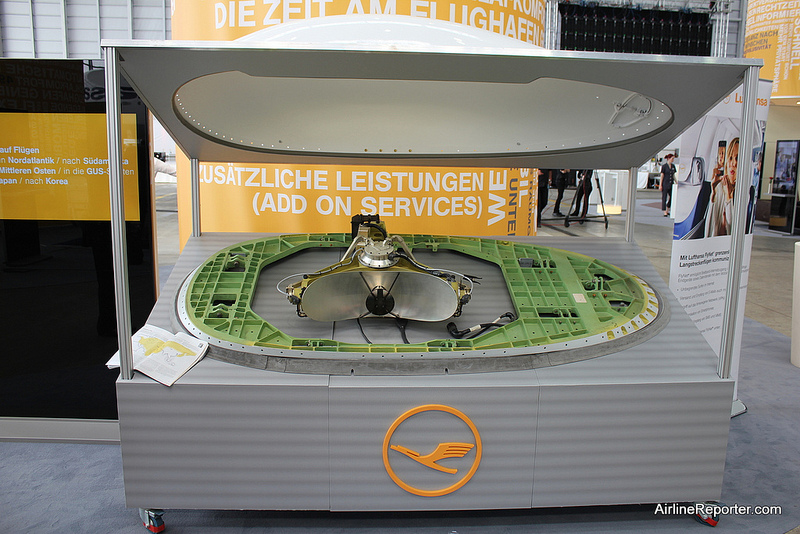
The antennae that provides Wi-Fi on airliners is much larger than I thought it would be.
After our hangar and aircraft tour, it was time to head back to the hotel. I had a two and a half hour break before we would head out to dinner and the big question was: to nap or not to nap? Well, at this point I had been awake about 24 hours and I decided to go for the nap.
Waking up was a bit difficult, but I was excited to get to downtown Frankfurt. You know, when I visit a foreign land, it is nice to try to get out of the airport at least once — but I am old fashion in that way.
Meat, meat and uh... oh yea, more meat.
Our media group went to dinner at Apfelweinwirtschaft Wagner, where I got to have my first apple wine. It tasted like apple cider, without the bubbles and hefferveisen — it might be a bit of an acquired taste. I was hungry, but no worries. A platter with a farm-load of animals on it was delivered to our table. Probably not the best call for any vegetarians out there, but it worked great for us.
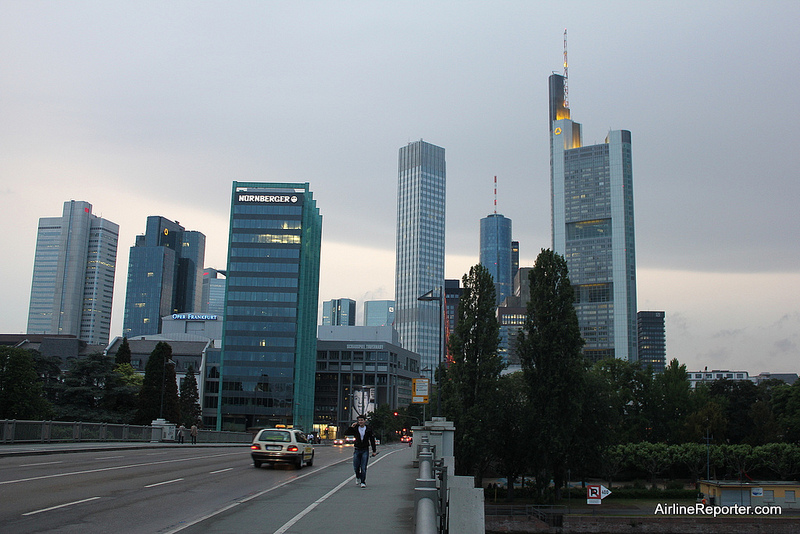
After dinner, some of us took a walk down the street to take a look at downtown Frankfurt.
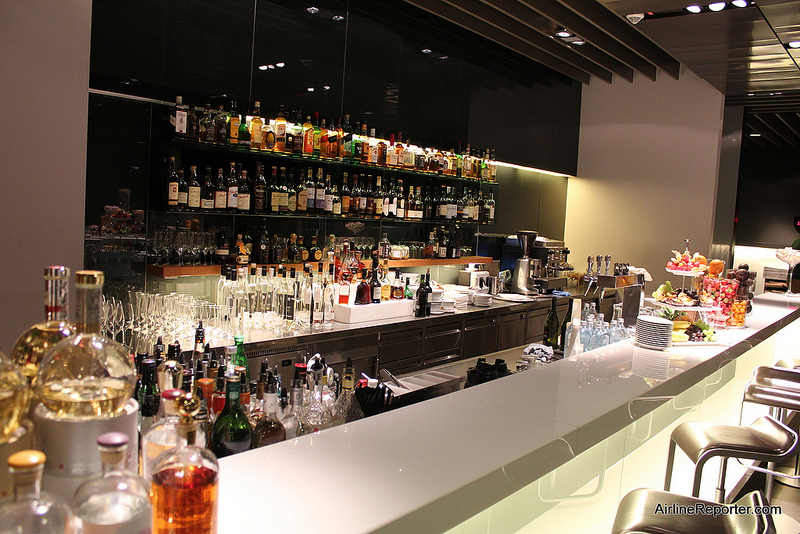
After dinner and a short walk down the street, it was about 9:30pm. Two choices were given: go back to the hotel or check out Lufthansa’s First Class Terminal at the airport. Again, the adrenalin rush of checking out the impressive lounge kept me nicely awake and I kept on rocking.
The bar inside the Lufthansa First Class Terminal.
When I finally returned to my hotel room after 11pm, I was more than ready to get some sleep. It wasn’t easy getting a good night’s rest with the excitement of my flight the next day, but it didn’t make getting up at 6am easy. We all met in the lobby at 7:45am and made our way to the lounge at the gate.
About 24 hours later, I was boarding the 747-8I to head back to the US.
Then we boarded the 747-8I and off I was heading back home. My second 24 hours in Frankfurt trip I have done and it was great, but next, I hope to hang out a bit more and get to know Frankfurt.