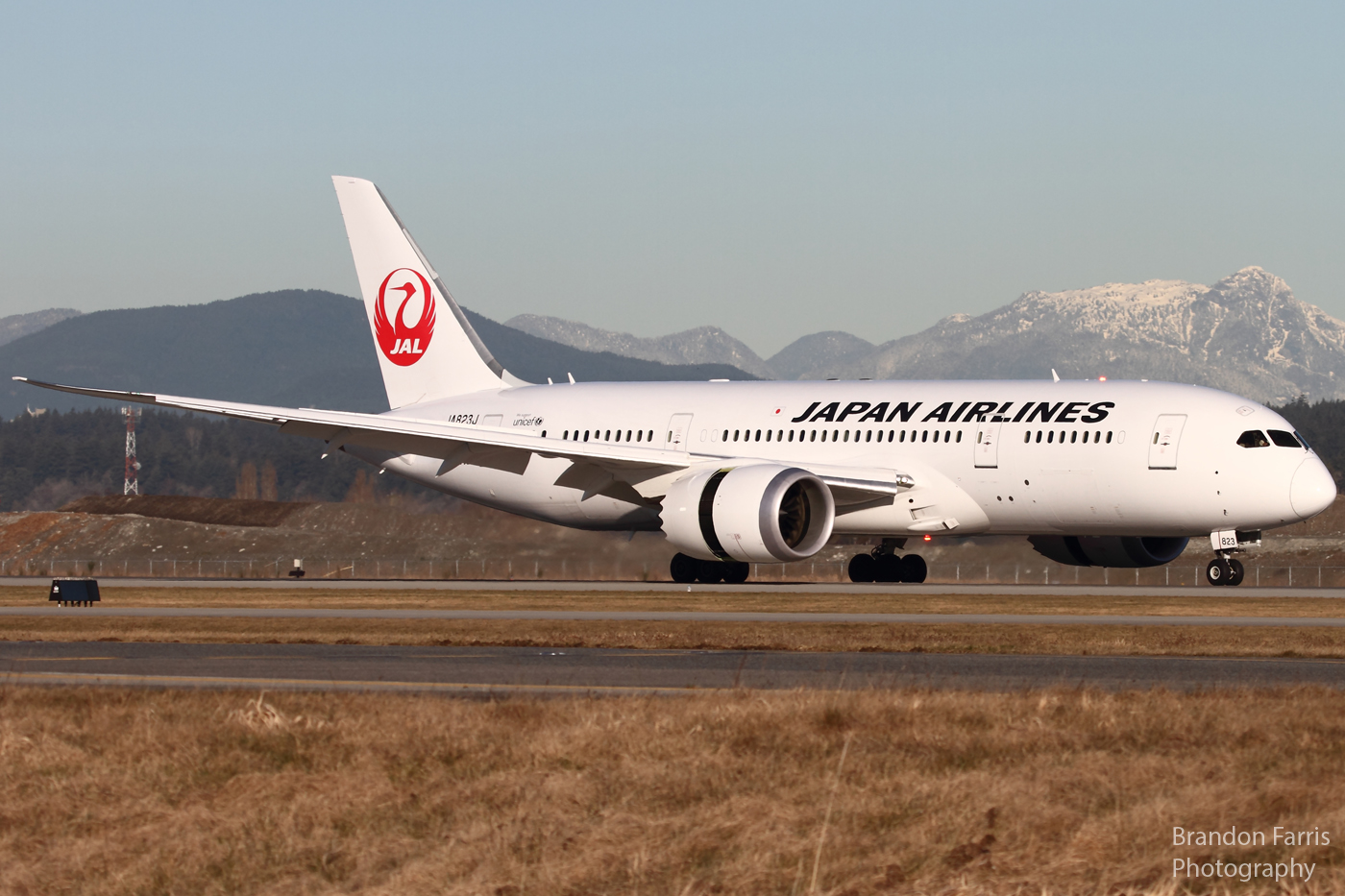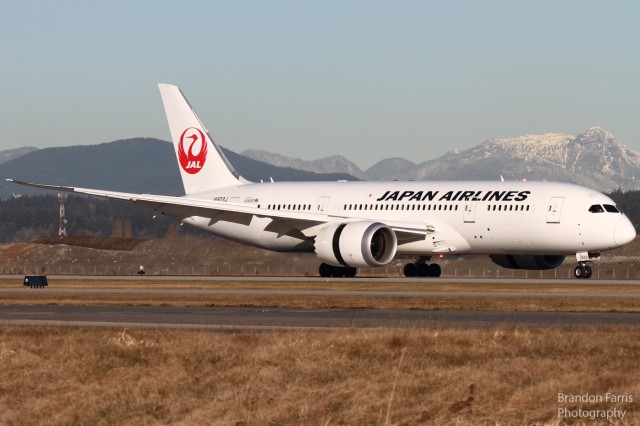
JAL 18 touches down at YVR Airport – Photo: Brandon Farris | AirlineReporter
In what turned out to be a beautiful Monday morning in Vancouver, British Columbia, reporters and the Vancouver Airport Authority greeted the airport’s first scheduled 787 service with Japan Airlines.
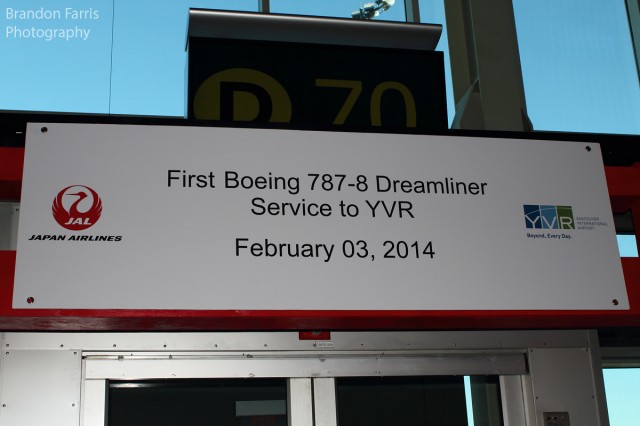
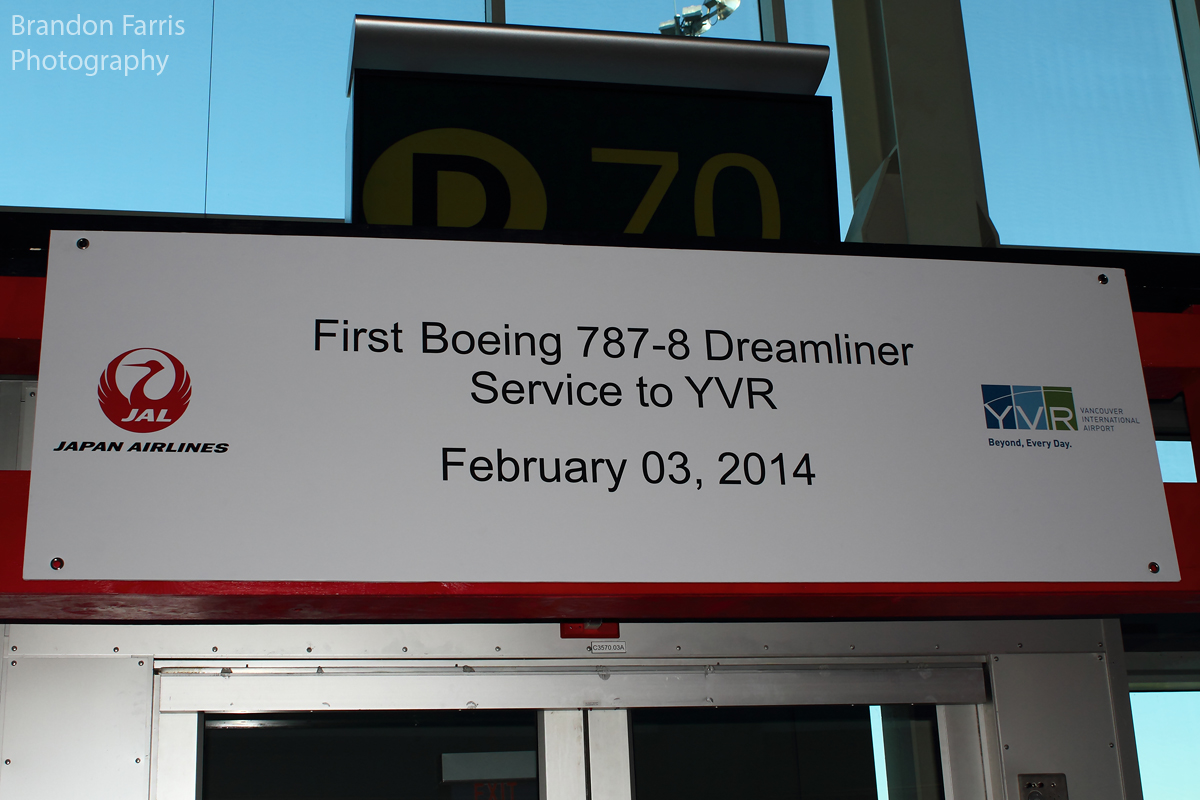
Banner welcoming passengers onboard – Photo: Brandon Farris | AirlineReporter
The conditions couldn’t have been any better for the carrier’s first arrival with the aircraft, as the skies were clear when the pilots flared the nose and gracefully put the aircraft (JA823J) on the ground 15 minutes ahead of schedule, to the delight of many who have been working hard on bringing the 787 to YVR.
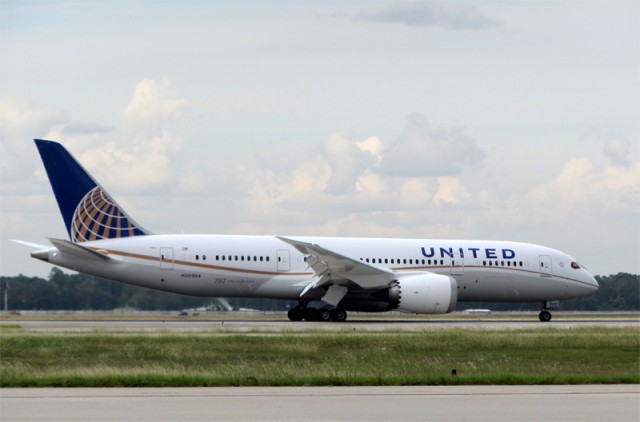
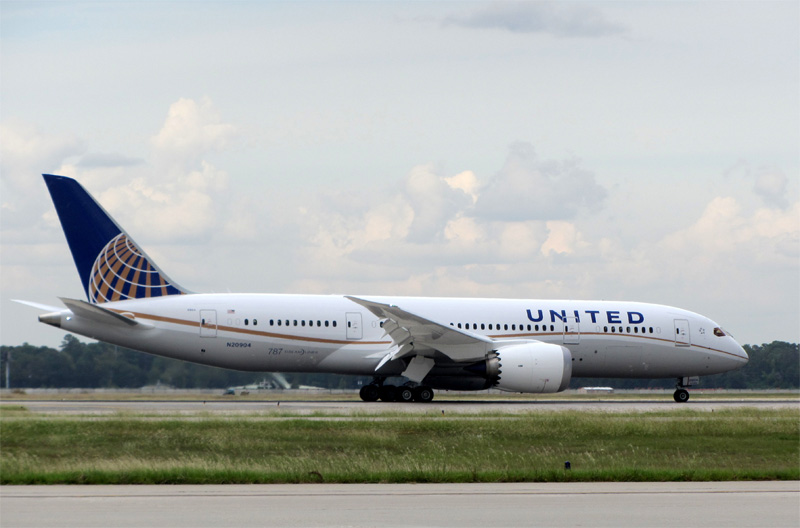
A United Boeing 787 Dreamliner. Photo by Jack Harty / Airchive.com.
An excerpt from Jack Harty’s story on Airchive.com:
More than one hundred days after the FAA grounded the 787, United Airlines flew their first post-grounding 787 flight from Houston to Chicago on May 20. More than 200 passengers, including executives from both Boeing and United, made history as they spent part of their day cruising at 41,000 feet and at a Mach speed of 0.85 on United flight 1 to mark the return of United’s Dreamliners.
On September 22, 2012, United Airlines quietly took delivery of their first Boeing 787 Dreamliner, and, six days later, they ferried it to Houston, Texas where a large crowd of employees and local journalists joined to celebrate United’s dream come true.
However, United still had to receive certification from the FAA to fly passengers. It was a long five weeks for United as they conducted safety drills, practiced aircraft servicing, and flew several proving runs to Amsterdam, Chicago, Denver, Los Angeles, Newark, San Francisco, and Tokyo. United’s second 787 was delivered on October 31 which was several days late as Boeing experienced delays. United had to scrub several 787 flights due to the delay.
Continue reading United Airlines Re-Inaugurates 787 Dreamliner Flights on Airchive.com

American’s First Boeing 777-300ER, N718AN, seen at DFW Gate D-23, the day of departure flew the inaugural flight. It signifies the birth of a new airline.
This is a continuation of Chris Sloan’s (@Airchive) report on flying on the inaugural American Airlines Boeing 777-300ER to Sao Paulo. Be sure to also check out PART 1 of the series.
The day began with a contingent of press crawling around and photographing the cabin, more on that later. The 2 Boeing 777-300ERs were at Gate D-23 (our inaugural aircraft) and another unpainted at D-24 for an employee event and to be used as backup. For an inaugural, the gate events were remarkably low-key. Missing were the obligatory ribbon cutting, cake cutting, ice sculpture, and balloon canopy.

Business in the front and party in the back! Reactions to the new livery were mixed: The updated Eagle icon, ’œbillboard’ American typography, and silver mica paint were generally well received. The flag on the tail was critiqued as being gaudy and incongruous with the elegance of the fuselage. In person, it is much more appealing and grows on you.
Downplaying the event seemed intentional because in this transition period with so much ’œup in the air’, AA had to strike the right tone in not wanting to seem extravagant or over-the-top. With this being mostly a revenue flight with very few VIPs, many in the gate weren’t even aware of the significance of the moment.

We won’t be needing ETOPS today with most of our flight over land.
There was a small snack buffet including 777 commemorative cookies, some ’œNew American’ signage, and a few words from American CEO Tom Horton and Chief Commercial Officer Virasb Vahidi with a particular shout out to the onboard products design team led by Alice Lieu. With that, the boarding began of this entirely sold out flight.

American’s First Boeing 777-300ER, N718AN, seen at DFW Gate D-23, the day of departure flew the inaugural flight. Much more than just a new aircraft joining the fleet, It signifies the re-birth of an iconic airline. Image from Chris Sloan / Airchive.com.
This is a multi-part story written by Chris Sloan (@Airchive) on the changes at American Airlines and the inaugural Boeing 777-300 flight to Sao Paulo.
On January 31, 2013 American Airlines launched their first Boeing 777-300 ER into service with attention that rivaled any airline’s launch of a new type in recent memory. On the face of it, even though American became the first operator of the 777-300 in the United States, this event would almost seem overkill if for that reason alone. After all, American began 777-200 flights back in 1999 and the first 777-300 was first delivered to an airline, Cathay Pacific back in May, 1998. The first 777-300ER entered service nearly 10 years ago with Air France. Boeing’s two stretch variants of their venerable cash cow, the 777, easily have become the type’s most popular versions with over 680 orders and deliveries between them out of the entire 777 program’s 1,380 orders and deliveries. (as of December, 2012). In an era of smaller airliners, American inaugurated the 777-300, the largest new airliner by a U.S. carrier since the last Boeing 747-400s entered service with U.S. airliners in the late 1990s.
This inaugural, flight 963, from Dallas/Ft. Worth to São Paulo, Brazil in the author’s view is one of the most significant in the airline industry in years because it is about something much bigger than just the launch of a new airliner, it’s about the re-birth of a proud American institution that happens to bear the name of our country ’“ American Airlines.
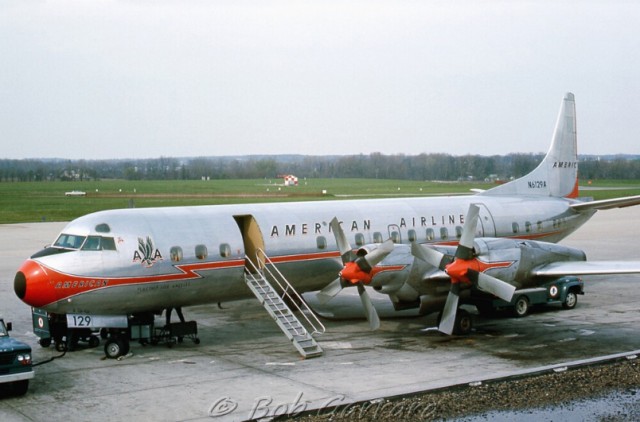
American Airlines Electra at Port Columbus International Airport (CMH) in 1967. Image by Bob Garrard.
American Airlines problems are well known. After becoming the world’s largest airline with its 2000 acquisition of TWA, the 2000s were not kind at all to the Silver Bird. TWA and American merged during an economic downturn and by most accounts, the merger was anything but an unqualified success.
American shed most of TWA’s assets, routes, staff, and many of its aircraft. On September 11th, 2 of American’s airliners, their crew, and passengers were forever lost in the atrocities of this horrible day. As if things couldn’t get any worse, the world’s airline industry hemorrhaged with the U.S. legacy carriers losing more money during this time then they had profited in their entire history. All of them declared Chapter 11, with the exception of American. Under the category of ’œno good deed goes unpunished’, this decision would come back to haunt American for years.
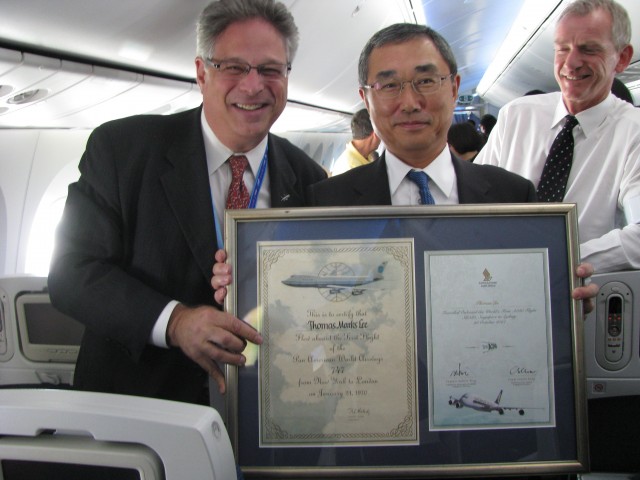
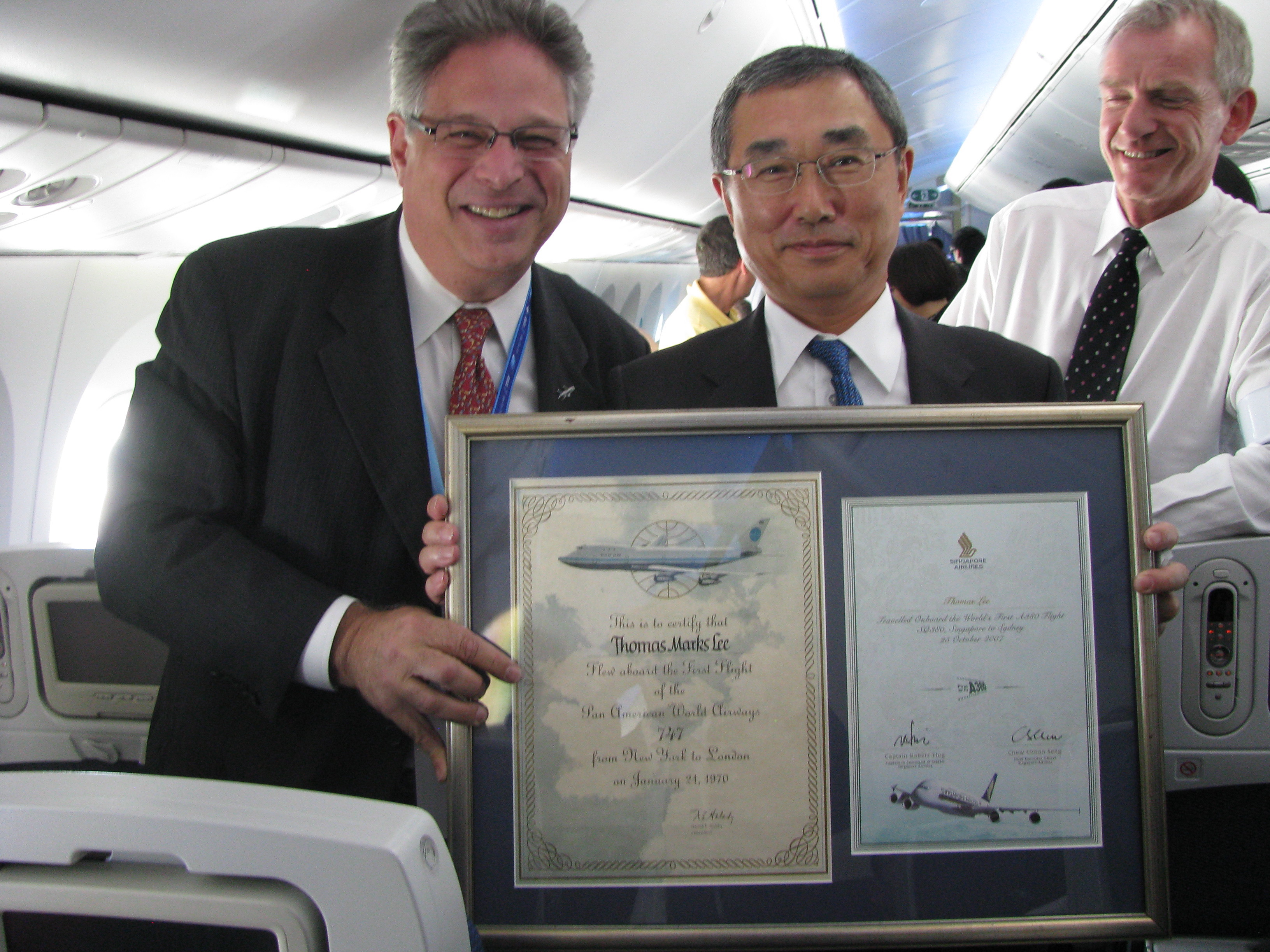
Thomas Lee with Mr. Shinichiro Ito, the CEO of All Nippon Airways, while flying the inaugural 787 flight. Photo from Thomas Lee.
AirlineReporter.com (AR): Who is Thomas Lee?
Thomas Lee (TL): I am a 60 year old businessman, originally from New York, who earned my Engineering degree from Tulane University and now reside in Orange County, California. I am married to Sally Glenn-Lee, who was President of the first class of flight attendants at Southwest Airlines and has worked her entire career in the airline industry, currently with jetBlue. I am father to Briana Lee, a 28 year old nurse and grandfather of Tatiana, an adorable 3 year old. I am Director of Marketing and Innovation in the Galleys and Equipment Segment of Zodiac Aerospace, a $4B entity with 26,000 employees globally. Every day, I work on developing the aircraft passenger cabin of the future and proudly have dozens of patents.
AR: What inaugural flights have you been on?
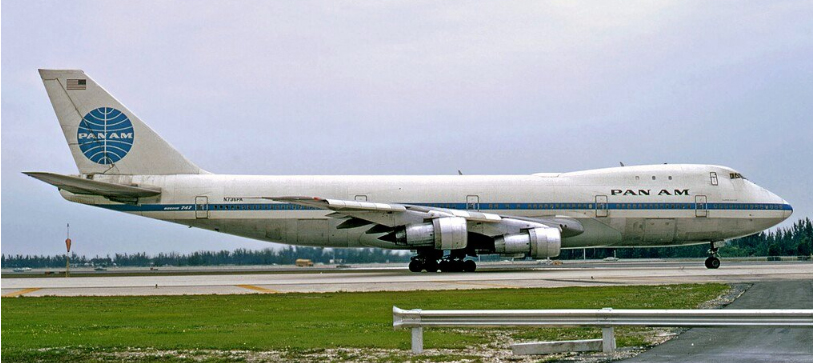
TL: I flew on the inaugural flight of the B747 in January 1970, a Pan Am flight from New York to London; the inaugural flight of the A380 in October 2007, a Singapore Airlines flight from Singapore to Sydney, Australia; the inaugural flight of the B787 in October 2011, an All Nippon Airways flight from Tokyo to Hong Kong and the inaugural US domestic B787 flight in November 2012, a United Airlines flight from Houston to Chicago.
AR: What is the allure of going on the inaugural flight of an aircraft?
TL: It is terribly exciting to be amongst the very first passengers to board a brand new aircraft type and experience the magic of flight in the latest aircraft technologies. One can decide for oneself whether new innovations have improved air travel. The atmosphere on these flights is electrifying. Aviation enthusiasts from around the world, airline management and the media all converge to join in the festive nature of each new aircraft launch. It is simply exhilarating.
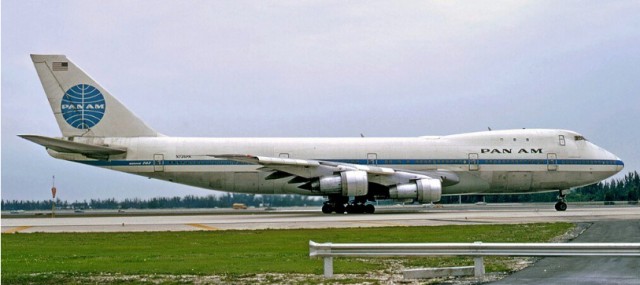
Thomas’ first inaugural flight was on this PanAm Boeing 747-100 named Victor Clipper (N736PA). Photo by Bob Garrard taken in 1973.
AR: What has been your favorite inaugural flight?
TL: My favorite would have to be the very first inaugural flight, that B747 in 1970. This was the first twin-aisle aircraft, so it was simply overwhelming boarding this behemoth when all past flight experiences had been on narrow body, single aisle planes. And it was no ordinary flight. After boarding the aircraft, every seat was filled and we taxied out for take-off. At nearly full take off speeds, there was a flame-out in engine #3 and the captain had to jam on the brakes aborting the take-off. The plane was rolled back to the gate.
Pan Am had fortunately received a second 747 just the day before from Boeing. It was parked in the hangar and was a completely green airplane with no preparation work done to get it ready for passenger service. To waste as much time as possible, Pan Am arranged for 5 extremely large Greyhound buses to pick us up at Kennedy Airport and take us to an Italian restaurant that they had completely taken over. We had a full sit-down dinner there and a long party waiting for that second aircraft to be prepped for flight.
By the time we got back to Kennedy Airport and boarded the second plane, so much time had elapsed that the first aircraft would have already landed in London. At least 30 passengers refused to board the aircraft, fearing something horrible would happen.
Another memorable part of that flight was that they didn’t have time in the rush to prepare the plane to transfer all the catering carts and equipment. So, the flight attendants laid out a buffet in the galley and we all lined up in the passenger aisles to make our way through the galley and pick up plates of food. What an amazing night.
By the way, that second plane was ’œClipper Victor’ which seven years later was involved in the worst aircraft accident in history. A KLM 747 at full take off speed, while trying to get airborne crashed into Pan Am’s Clipper Victor in Tenerife.
AR: All together, about how many miles have you flown?
TL: I would estimate that I have flown about 7.3 million miles in my life.
AR: When normally flying, what is your favorite aircraft type?
TL: I have been partial to the Boeing 777 aircraft from its inception. This was the first large commercial plane ever developed entirely on computers. The interior space feels great; the way it flies is extremely comfortable, etc. There has never been a fatal accident on a B777 which attests to its amazing design and engineering.
AR: What is your favorite airline?
TL: There are many great airlines in the world. Each creates its own brand based on that airlines ’œpersonality,’ which is driven by their culture, style of service, menus, etc. It would be impossible to pick one and say it is the best.
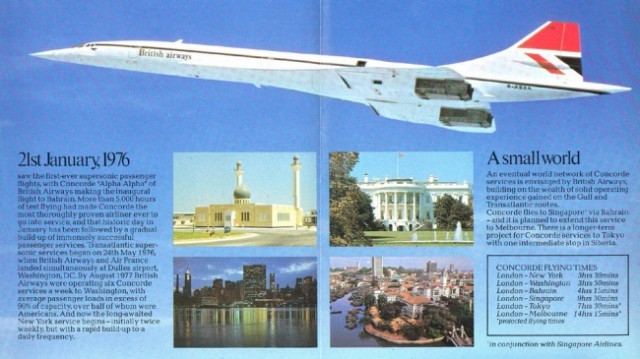
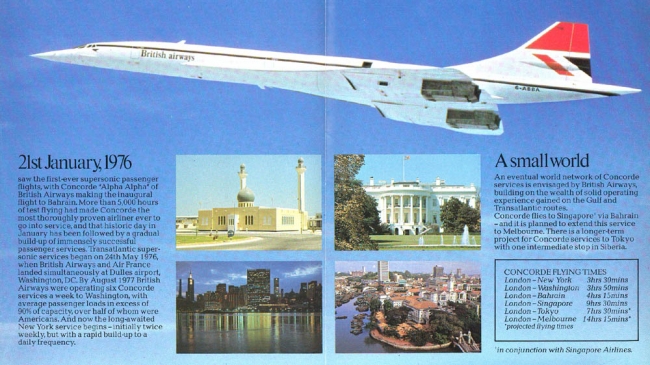
1977 – British Airways Concorde U.S. Launch Brochure. From Chris Sloan / Airchive.com.
AR: What is the inaugural flight you missed and wish you made?
TL: The Concorde as this was the first supersonic passenger aircraft. I was privileged to fly the Concorde three times and found it fantastic to look out the window at 60,000 feet and see the blackness of space above and the curvature of the earth below.
AR: Why did you not go on the Lufthansa 747-8 inaugural?
TL: I typically like to focus on ’œfirst of aircraft type’ inaugural flights. As the Lufthansa 747-8 was a ’œderivative’ aircraft, I chose not to join this journey. Of course, that doesn’t make any inaugural less exciting, but I have elected to limit my experiences to those aircraft types making their maiden voyages.
AR: What is the next inaugural flight you are planning to make?
TL: I suspect the most likely next inaugural to attempt will be the Qatar A350.
 |
This story written by…
David Parker Brown, Editor & Founder. David started AirlineReporter.com in the summer of 2008, but has had a passion for aviation since he was a kid. Born and raised in the Seattle area (where he is currently based) has surely had an influence and he couldn’t imagine living anywhere else in the world.
@AirlineReporter | Flickr | YouTube |