Advertisement Buy Wholesale products for your airline business on DHgate.com
|
By David Parker Brown, on January 31st, 2012 at 8:00 am
 Spirit is not afraid to give their opinion about the new rules on taxes and fees.
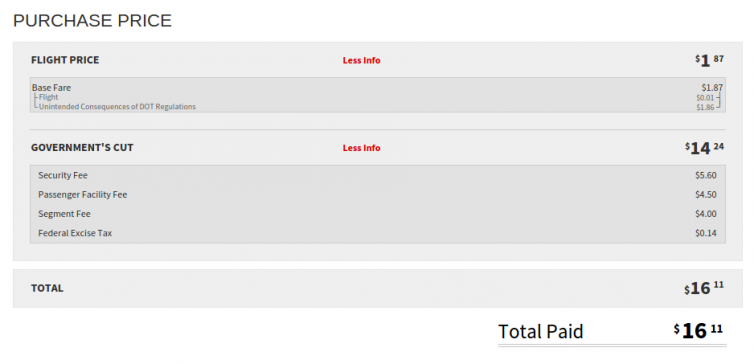
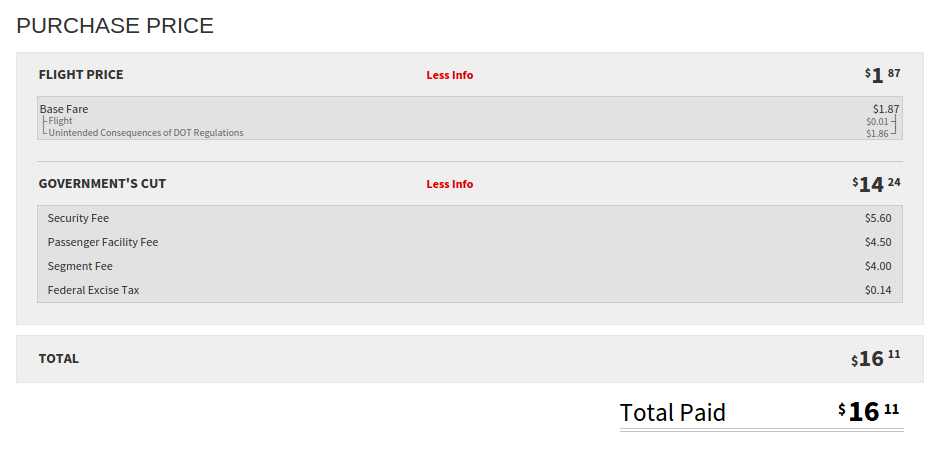
If you have been on Spirit Airline’s website recently, you might have seen a big warning taking over your screen. The warning shows Spirit’s disdain for the Department of Transportation’s new fees and tax regulation that require airlines to include fees and taxes in their advertised prices. The warning states, “New government regulations require us to HIDE taxes in your fares. This is not consumer friendly or in your best interest. It’s wrong and you shouldn’t stand for it.”
Senator Barbara Boxer, D-California, is not happy with Spirit’s actions and has asked the airline’s CEO, Ben Baldanza, to remove the warning message off the website. Spirit Airlines is disappointed by the letter and spokeswoman Misty Pinson told CNN, “We would normally expect Senators to encourage 1st Amendment protection.”
“We have always shown taxes before someone purchased. They now want them hidden. It is wrong and we will fight for consumers,” Pinson said. Spirit is concerned that the government will be able to raise taxes without customers knowing and blaming the airlines for higher overall costs.
Why is the government targeting airlines? In most places in the US, you see a list price and know you will have to pay more (ie taxes) when you check out. Let’s take buying a car for example. It might be advertised as a $19,999.00 vehicle, but after adding taxes, licenses, dealer fees, interest and others, that $20,000 car ends up costing you much more than advertised. Why does the government feel the need to regulate the airline business, but allow other areas to do business as usual?
These new rules might not be permanent. Yesterday, Representative Tom Graves, R-Georgia, introduced legislation to counter the new rules. ”If the American people can’t see these costs clearly, I fear it will be easier for these fees and taxes to be raised without their knowledge,” Graves said.
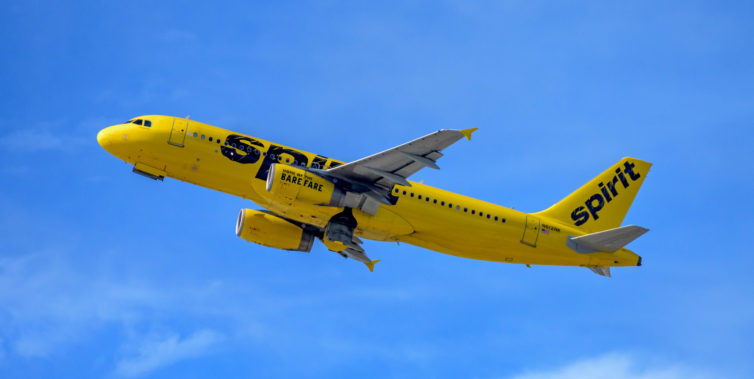
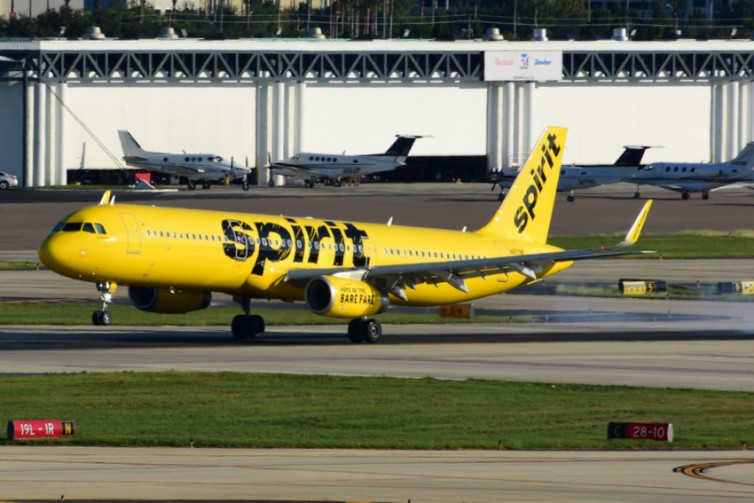
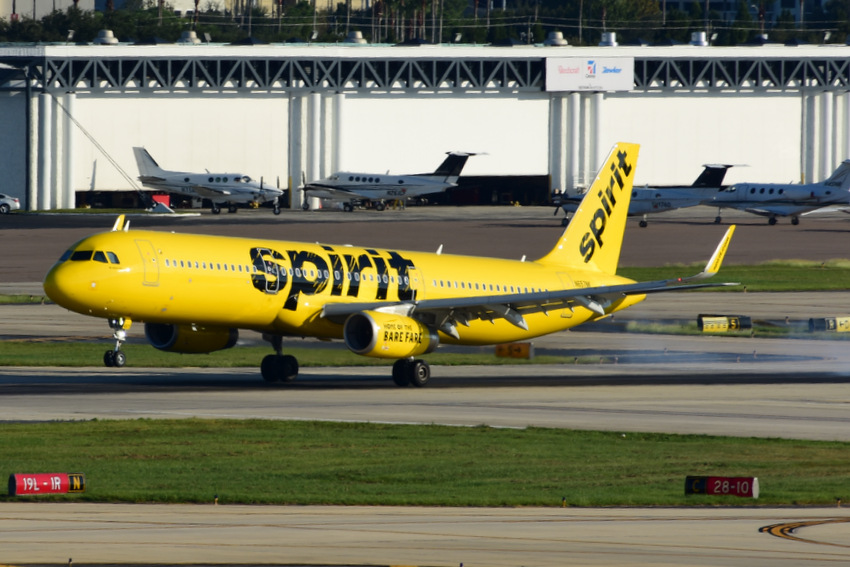
 Spirit Airlines Airbus A320.
I asked some of my Twitter followers what they thought about the new regulations and Spirit’s reaction and I want to share a few reactions:
“As if raising fees is done in secrecy. Spirit has lost my support. Final price is the way to go,” @gusnyc.
“Seeing as taxes make a bulk of tix price for flying, it should be shown,” @MichaelLacek.
“I’d love for stores to show prices with taxes included. Shopping in sales tax-free Oregon is strange yet awesome,” @quanterium.
“Two flights advertised as the same amount but which “ring up” differently is bad for consumers,” @iansltx.
“Super easy way to show it: Total Fare: $275. Fare: $200. Taxes/Fees: $75. Why is everything airlines do so damn hard?” @smtpboy.
“It’s about time! Stop whining Spirit!” @PiloTgod.
“@spiritairlines is just mad they can’t advertise $9 fares anymore,” @amolkold.
Ah, I think @amolkold might have hit the nail on the head. Spirit loves to talk about their $9 fare deals, which always end up costing more than $9 after all the fees and taxes. Having to add those fees and taxes up front wouldn’t allow the airline to advertise a flat $9 fare.
As a la carte pricing becomes more popular with airlines, it seems to cause additional anger with many passengers. Even with a growing dis-like for fees, passengers keep on paying them and flying on airlines, like Spirit, who are well known for their low prices and plenty of fees. If passengers truly hated the airline and their way of doing business, they would not be in business.
Of course, all this over-reaction could just be another publicity stunt for the airline. Spirit has been known to come up with crazy ads and stunts to get free publicity. Although I am sure that this new rule hurts the airline’s bottom line, it has also given them the opportunity to once again garner a bunch of free publicity (including from me).
No matter your thoughts on the new rule or Spirit’s actions, it is pretty interesting to see an airline that is so vocal about a law. Seems like this rule could still be over turned.
Spirit A320 Image by Justin Pistone
By David Parker Brown, on July 1st, 2011 at 10:00 am
 Delta Air Lines Boeing 767-300ER.
There is no question that Delta Air Lines made a lot of money off bag fees last year — $952 million to be exact. While many other airlines made a load of money with bag fees as well, Delta gets the majority of the attention since they made the most. Some attention has been in late night routines (okay, Conan’s bit is hilarious, if not fully accurate) and others have been negative news articles. It seems odd that so many companies are getting pats on the back for making profit out of the bad economy, but airlines end up being punished, like they are somehow earning their money illegally.
Dan Webb, on his blog Things in the Sky, shows that although Delta made more in bag fees than other airlines, that doesn’t mean it is a large percentage of their revenue. His post has a very handy chart that shows that Delta’s bag fees are only 3% of their overall operating revenue. When looking at all major US airlines, Delta is actually 9th in the percentage of bag fees to total operational revenue with ultra low cost carriers Spirit and Allegiant at the top the list with 10.5% and 8.7% respectfully.
There are a lot stories out there hating on the bag fees, but one of my favorites is from Boston’s NCEN.com titled Fuming over Bag Fees. It is a classic story talking to passengers who are up in arms for the airlines not being “honest” with them and hiding these bag fees. Even for people that do not travel often, it is pretty difficult not to know about bag fees. For those that do not, every airline I have ever flown makes it quite clear when booking your ticket, if there will be additional fees for luggage so one can plan accordingly. Passengers in NCEN’s story act like airlines are literally opening their wallets and stealing their money. The author, Peter Howe, states that airlines are “addicted” to fees like they are some nasty habit that should be kicked. Since when does a business not like a new idea that makes them money and allows them to survive? Without bag fees, you can be certain that not as many airlines would be able to survive, there would be less competition and airfares would be higher overall.
Airlines are not charities — they are businesses looking to make profit. Airlines had this idea to charge passengers for bag fees, obviously many passengers pay this fee and airlines are able to make a profit. Why would an airline get rid of these fees? Customers have the ability to vote on these fees with their pocket book. Southwest Airlines and JetBlue both don’t charge you for checking a bag (on Southwest, you can check two for free), but of course, they are not always the cheapest option, even when checking a bag.
All that being said, yes I know that they are annoying when you are checking in and you have to drop another $50.00 for two bags. I do whatever I can to avoid paying bag fees myself and cringe when I end up having to pay them.I wish airlines would do a better job explaining why they are charging the fees. It seems like most airlines are like “we are charging them, take it or leave it approach.” I do not think most customers realize that weight costs money and instead of selling it as, “if you have a checked bag, you will owe more,” sell it as, “if you do not have a checked bag, we now let you save money.”
I believe that ala cart pricing will be the future of airlines. Many other businesses operate this way and why should I have to pay for something that I don’t want to use. When I book a hotel room, I might cringe when I have to pay $25 for parking and $20 for Wi-Fi and $5 for a bottle of water, but it is understandable. Why should parking be built into my hotel price if I do not have a car?
Image: Thomas Becker
By David Parker Brown, on May 23rd, 2011 at 8:15 am
 Allegiant Air MD-83 (N865GA) at LAX
Allegiant Air has announced they are looking into the possibility of charging passengers a carry-on baggage fee. As reported by AviationWeek, Allegiant Air President Andrew Levy stated the carry-on baggage fees are “intriguing,” during a presentation at the Low-Cost Airlines World Americas conference on May 3rd.
Currently, Spirit Airlines is the only US-based airline that charges for carry-on bags. They too are an ultra low cost carrier and first received a lot of flack when they announced the new fees. However, it doesn’t seem to bother travelers enough, since the airline has continued to make additional profit on the fees. For the first quarter of 2011, Spirit doubled their bag fee revenue compared to first quarter 2010 and average non-ticket revenue per passenger increased by 37.9%.
Remember, weight costs money. The more an airplane and its contents weighs, the more fuel (and money) it takes to fly. It might anger most people thinking about paying another fee, but why should someone with no luggage pay for someone with luggage? More importantly, why would airlines turn down this revenue maker? Charging for carry-ons doesn’t cause health concerns or kill anyone, so why do passengers keep acting like it is the end of the world to charge for carry-ons?
When asked what Allegiant’s future plans are for charging a carry-on bag fee, Jordan McGee Director of Allegian Corporate Communications explained, “It’s really too premature to provide any further info on potential charges for carry-ons.” However, she confirmed that Allegiant is, “considering it.”
For me, this is not a huge surprise and I have been waiting for Allegiant to announce such a fee. Allegiant’s model of providing cheap prices, with fees for everything beyond getting you from point A to B seems to welcome a new fee like this. You better believe other airlines are watching how Spirit and Allegiant are doing with carry-on fees and it might not just be ultra low cost carriers having them in the too near distant future.
Image: Brandon Farris
By David Parker Brown, on March 31st, 2011 at 7:48 am
 Spirit Airlines Airbus A319 landing.
Spirit has announced a new fee structure and it is causing some airline-hate.
For me, Spirit is the best example of a US-based ultra low cost carrier. They have perfected the art of ala cart pricing, where they offer rock bottom fares, but then have fees for everything else. I think Ryanair holds the crown currently for world-wide uber ultra low cost carrier, but Spirit is quickly catching up. Spirit’s creative fees (ie charging for carry-on bags) causes a lot of media-drama, but it works for them. Most recently they announced a change in their fee structure. If you wait until the last 24 hours before your flight to pay the bag fees, you are going to pay more, but if you pay with more than a day’s notice, your fees stay the same.
Looking at some of the headlines related to this story, you would think Spirit just stole your first born child. For example, Jaunted titled their story, “Spirit Airlines Raises Baggage Fees Again, Screws Over Passengers.” Then, last night the The Consumerist had their story titled something like “Airline charges you a fee to pay a fee,” trying to insinuate some sort of evil double fee. However, it looks like they came to their sense, since this morning, the title has been changed to, “Spirit Airlines Adds Fee For Not Paying Your Baggage Fees Far Enough In Advance.” I have to give them credit for the change.
When first looking at the fees (early vs late, domestic vs international, early vs late), it got very confusing. Luckily Spirit simplified it for me into four tiers:
1. When reserving online more than 24 hours in advance: no price changes
2. While checking online or by telephone: $5 more
3. Waiting until at the airport check-in counter or kiosk: $10 more
4. Pay at the gate: flat $45 fee
Pretty much, if you do not do things last minute, you aren’t going to be charged more. Plus, if you are part of their $9 Fare Club, you will save $10 per fee. Why wouldn’t Spirit do this? People keep flying and paying their fees and Spirit made almost $56million in bag fees alone last year just from January to September (to compare, Delta made over $730million during the same time). This is a lot of extra revenue and very tempting for airlines not only to keep fees, but look at other creative ways to add to fees. According to Dan Webb on Things in the Sky, Spirit has been able to increase their over all bag fee per passenger from $9.59 in the fourth quarter of 2009 to $16.82 for the fourth quarter of 2010.
Some are trying to lobby the government to fight the bag fees and force airlines to include your first bag in the price of your ticket. This just seems inappropriate to me. In the long run, airlines will charge more overall for your ticket and fees and fares should be market driven, not dictated by the government.
Airlines like Southwest and JetBlue still refuse to charge passengers for their first bag, providing alternative for passengers. ”Southwest has a 40 year history of sharing the wealth of the maximum value we provide — whether it’s in the Customer Service of our People, the predictable efficiency of our operation, or the transparency of our pricing and low fares,” Brad Hawkins with Southwest Communications explains. ” Bags Fly Free and ticketing changes are the pillars of our fee-free stance in not nickel and diming our Customers.”
If you don’t want to pay the fee, then either pay more for a first class ticket or choose an airline that won’t charge you a fee. Even with fees, airline travel with-in the US is very affordable and it is a good thing many can take it for granted.
Image: Noel back in Zurich
By David Parker Brown, on June 26th, 2010 at 4:00 am
 Avianova Airbus A320-200 (EI-ELE)
If you haven’t heard about Spirit Airline’s new (and “omg shocking”) advertisements, they are causing quite a stir. They are once again stealing right out of the Ryanair hand book on how to get a load of free publicity.
What do I think about their ads? Well any airline that gets me blogging about their ads are doing something right, and I will leave it at that. If Spirit’s new ad is too saucy for you? Well maybe you shouldn’t take a look at the Avianova ad found by Matt Molnar with NYCAviation.
Sure, advertising 101 teaches you that skin sells, but come on. Anything about routes? Amenities? Costs? Nope. Does this sort of advertising work? Well the airline industry has had a history of sexy advertising. This shouldn’t come as a surprise that both Spirit and Avianova have risky advertisements, they are both partly owned by the same company, Indigo Partners.
What are your thoughts? Are the ads going too far?
|
|