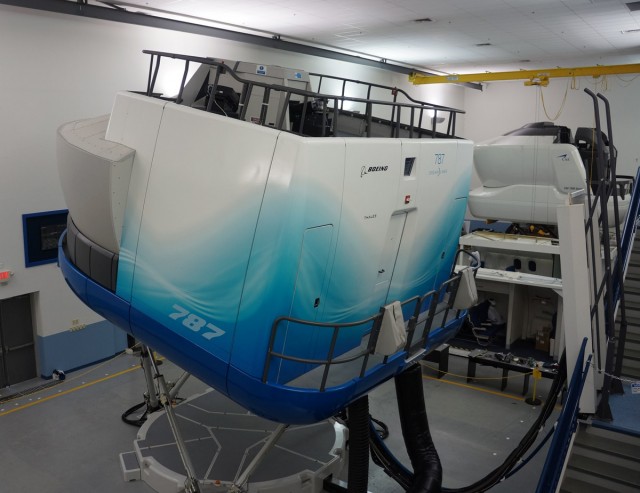
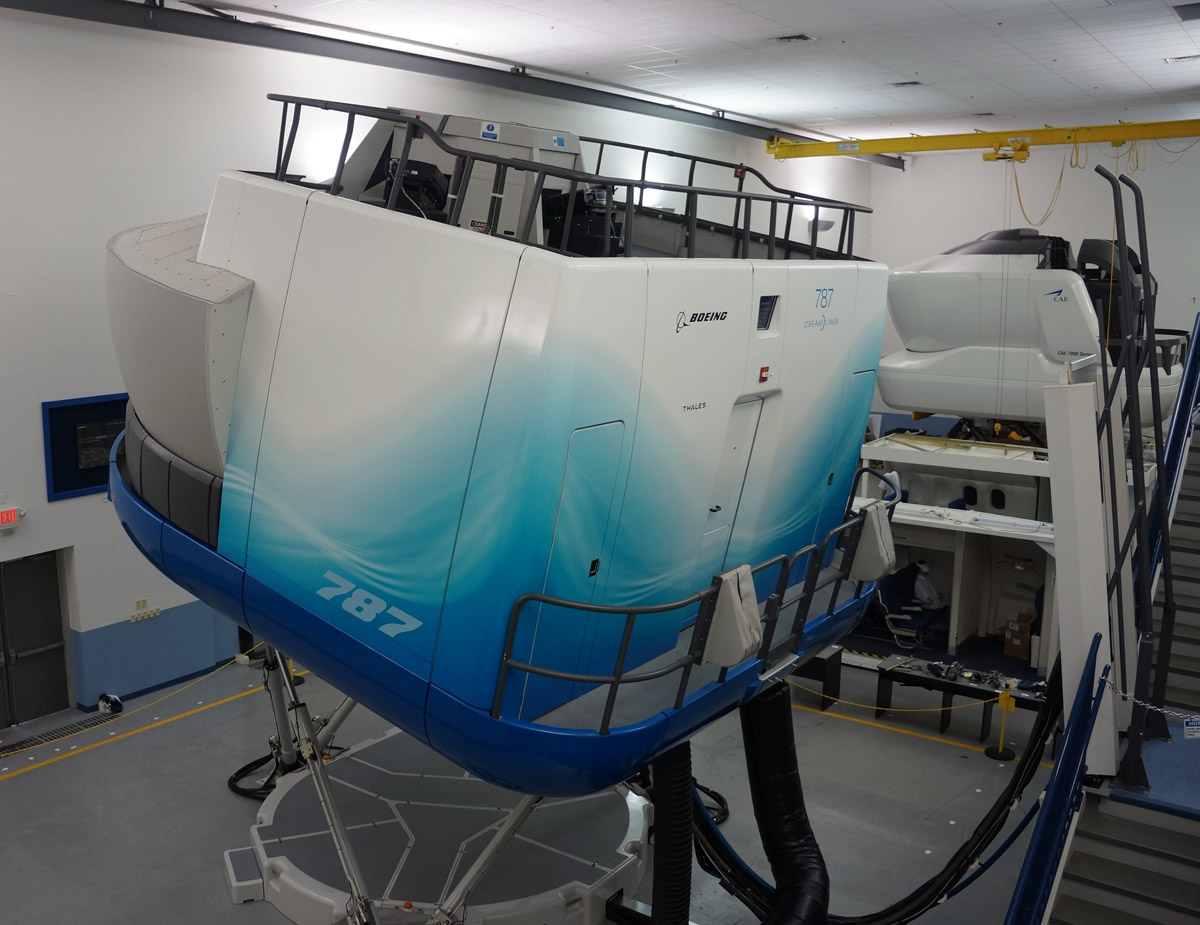
The Miami-based Thales 787 simulators are already operating around the clock, according to Boeing. Photo: Chris Sloan / Airchive.com
Reported and Photographed from Miami by: Chris Sloan, Airchive.com Editor-in-Chief
Miami is now Boeing’s ’œSim City,’ but Airchive’s home base has been an aviation hub dating back to the early days of the industry. Hallowed names like Pan Am, National, Eastern, Glenn Curtis, Rich International, and Air Florida have played pivotal roles in the world’s aviation industry from South Florida. OK, maybe that last name is a bit of a stretch.
Today, Miami boasts America’s second-busiest international airport and number one international cargo airport ’“ MIA, American Airlines’ bustling Latin American hub, and the UPS hub of the Americas. Perhaps the most iconic name in aviation, Boeing joined South Florida’s famed aviation industry in 1997 when they established a joint-venture with Flight Safety, FlightSafety Boeing Training International.
In 2002, Boeing bought out their partner. They join Airbus’ Americas Training Center and the Pan Am Flight Academy (just purchased this week by Japan’s ANA) in the little Miami suburb of Virginia Gardens, now home to one of the largest concentrations of flight simulators and commercial aviation training of any city in the world.
![This is the only Hamilton H-47 [first flown in 1928] in the world left flying. It was caught taking off from Paine Field with a Dreamlifter and 787 Dreamliner in the background.](https://www.airlinereporter.com/wp-content/uploads/2013/08/PaineField1-640x426.jpg)
This is the only Hamilton H-47 [first flown in 1928] in the world left flying (reg NC-879H). It was caught taking off from Paine Field with a Dreamlifter and 787 Dreamliner in the background.
Admission to the yearly event is only $10 and gives visitors access to the Historic Flight Foundation, the Flying Heritage Collection, lots of airplanes on the ground, and as many other awesome activities and fly-bys as one can handle.
Although there were many scheduled flights that were entertaining, as more of an airline guy, I found the standard Boeing movements just as great. Continue reading below to see some of the photos of the day, including a Boeing 747-8I, Antonov AN-124, a few Boeing 787 Dreamliners, and more.
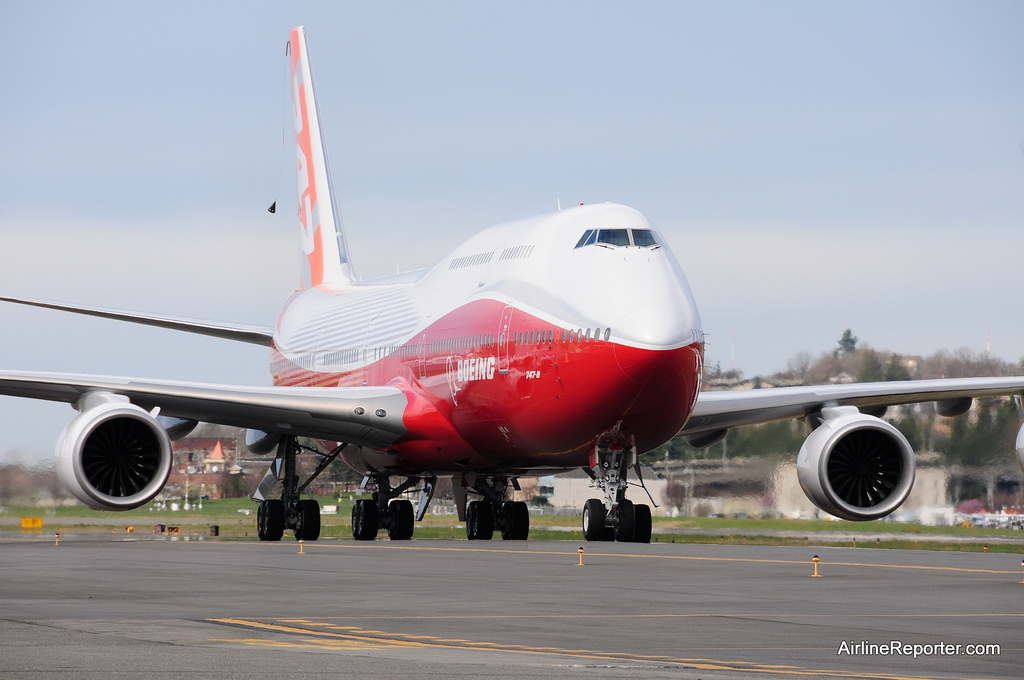
The first Boeing 747-8I. But how long will the model last?
There are few who can make a case against the Boeing 747 as the most majestic and beautiful airliner in the sky. I love the 747 (any variant) for its unique shape and instant recognition; you just won’t find folks lining up to tell you about the classic lines of the A380. Originally released in 1970, the Queen of the Skies has defined the term “jumbo jet” for multiple generations. But, despite the 747’s 40+ years as a long-haul mainstay for airlines around the world, is the future of the 747 and its latest variant, the 747-8, in jeopardy?
The Fiero Problem
The issue doesn’t seem to be that the 747 has gotten stale in its old age (in fact, Boeing’s latest version features new engines, a redesigned wing, a fuselage stretch, and advanced avionics; some might argue that Boeing spent WAY too much capital on a plane with so few orders). Rather, the problem seems to be that other planes have gotten so much better. This reminds me of that 80’s darling, the Pontiac Fiero, and its cool uncle, the Chevrolet Corvette.
GM and Pontiac built the Fiero from 1984-1988. A mid-engined, two-seater sports car with sharp (for the 80’s) looks, the Fiero did a lot of things well that the Corvette also was known for. Although not officially acknowledged by GM as a reason for ending the program, enthusiasts maintain that GM killed the Fiero because it was encroaching on the performance envelope of the ‘Vette, at lower acquisition and operating costs. Sound familiar? If you’ve ever flown on a Boeing 777, it should.
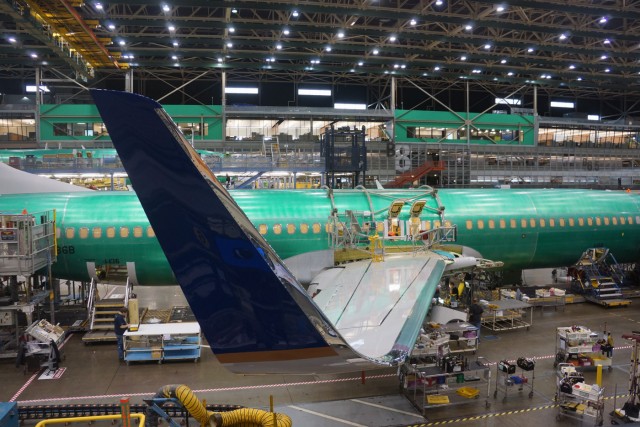
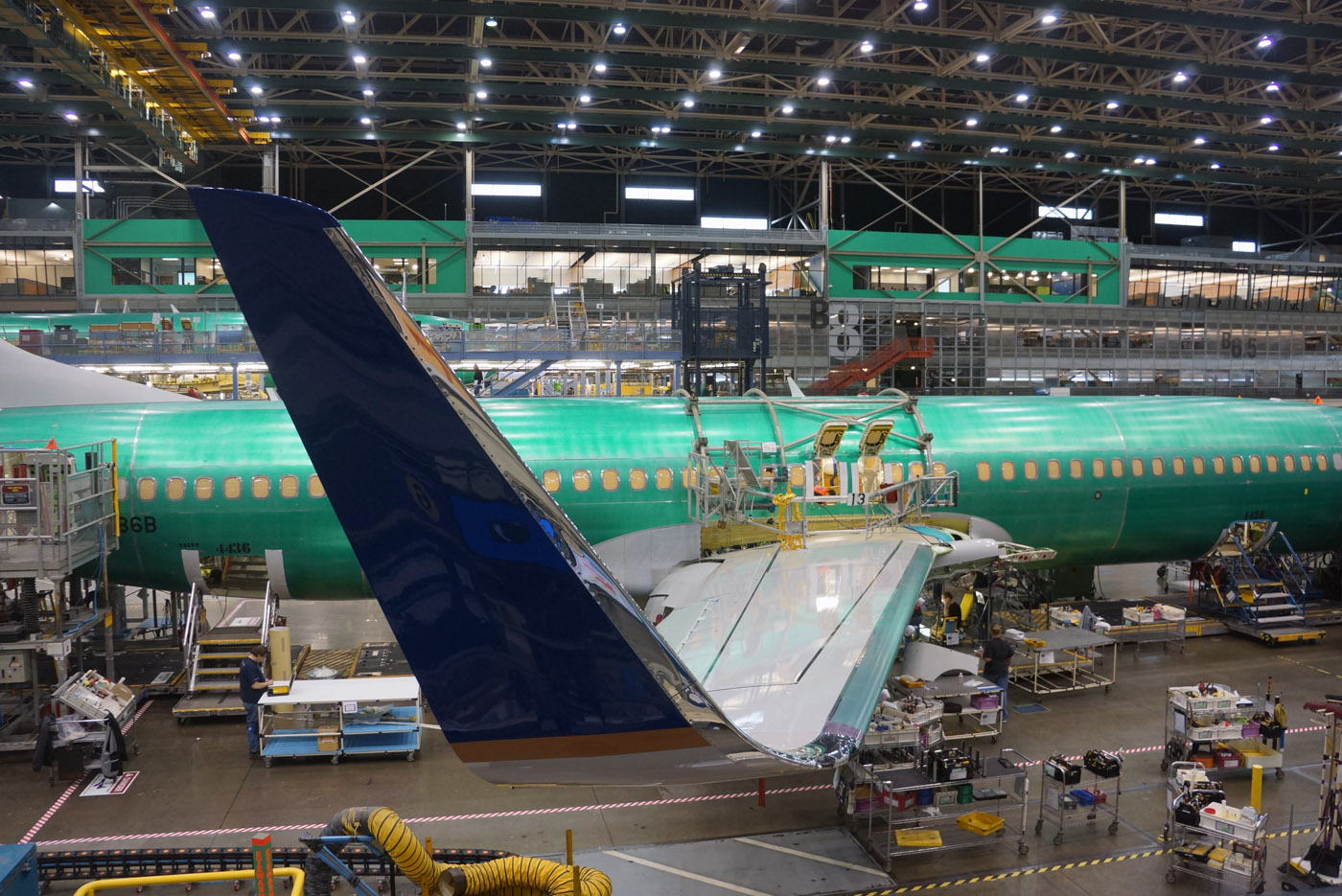
COPA Boeing 737 in the Renton Factory. Image by Chris Sloan.
This story was written by Chris Sloan and originally was published on Airchive.com. This is the next of a multi-part series talking about the Boeing 737 factory in Renton. Read the first part: A Historical Look at Boeing’s 737 Factory in Renton and second part: Inside Boeing’s 737 Renton Factory and the Successful Next Gen.
The Boeing 737 Goes Into ’œMAX’ Overdrive
The Boeing 737 NextGen order book continued to bulge, growing virtually unabated even through the deep worldwide economic slowdown / crisis of 2008-12. Ironically, this era of financial strife and sharply escalating fuel costs, as well as the growth of emerging markets, helped 737 and A320 sales go from strength to strength. Boeing however didn’t stand on it its laurels or did it?
Boeing claims with the introduction of its latest performance improvement package ’œPIP’, today’s NGs are 6-7 more efficient then when they were first introduced in the late 1990s. Boeing’s Tinseth points out that ’œThe (737) program has taken off with record sales. It’s simple. We make it better every time. We were first in its class with ETOPS 180, glass cockpits, Sky Interiors, and high bypass engines. We lower the operating costs through such new technologies as blended winglets, heads up display, carbon brakes, and more fuel-efficient engines. We enhance customer appeal with the new Sky Interior. This is an airplane that appeals to the heart of the market: emerging and developing economies and it is very successful with the LCC business model’. These new LCC airlines in emerging markets include Lion Air, Air Asia, and Gol! An unintended benefit of the weak economy, particularly in the U.S., is the poor financial results led to an elderly, fuel-in-efficient, maintenance intensive fleet which created an advantage and some say a bubble for airframe manufacturers, particularly in this sweet smart of the market. ’œThe significant driver in the US is the demand to replace older and less efficient aircraft’, said Tinseth.
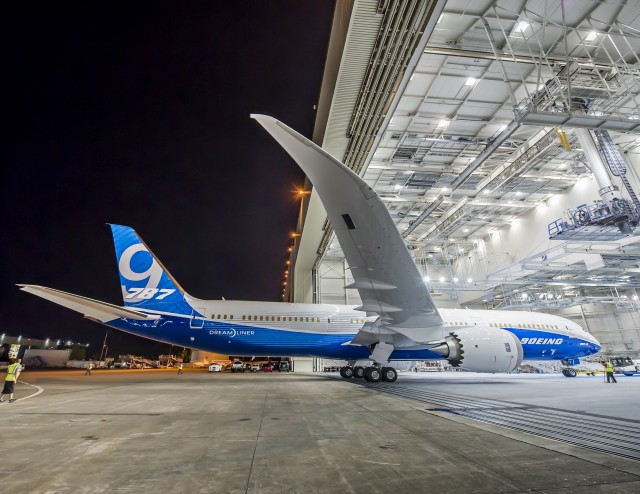
The first Boeing 787-9 Dreamliner rolls out of the paint hangar late last night. Photo from Boeing.
Last night Boeing completed the painting of the first 787-9 Dreamliner with the new Boeing Commercial Airplanes livery. According to Boeing, “This refreshed look for the Boeing family began with the 747-8 and evolved with the 737 MAX. The new livery retains many of the features of the original 787-8 livery, adding a prominent number on the tail to help distinguish among models within the same product family.”
![This is the only Hamilton H-47 [first flown in 1928] in the world left flying. It was caught taking off from Paine Field with a Dreamlifter and 787 Dreamliner in the background.](https://www.airlinereporter.com/wp-content/uploads/2013/08/PaineField1.jpg)