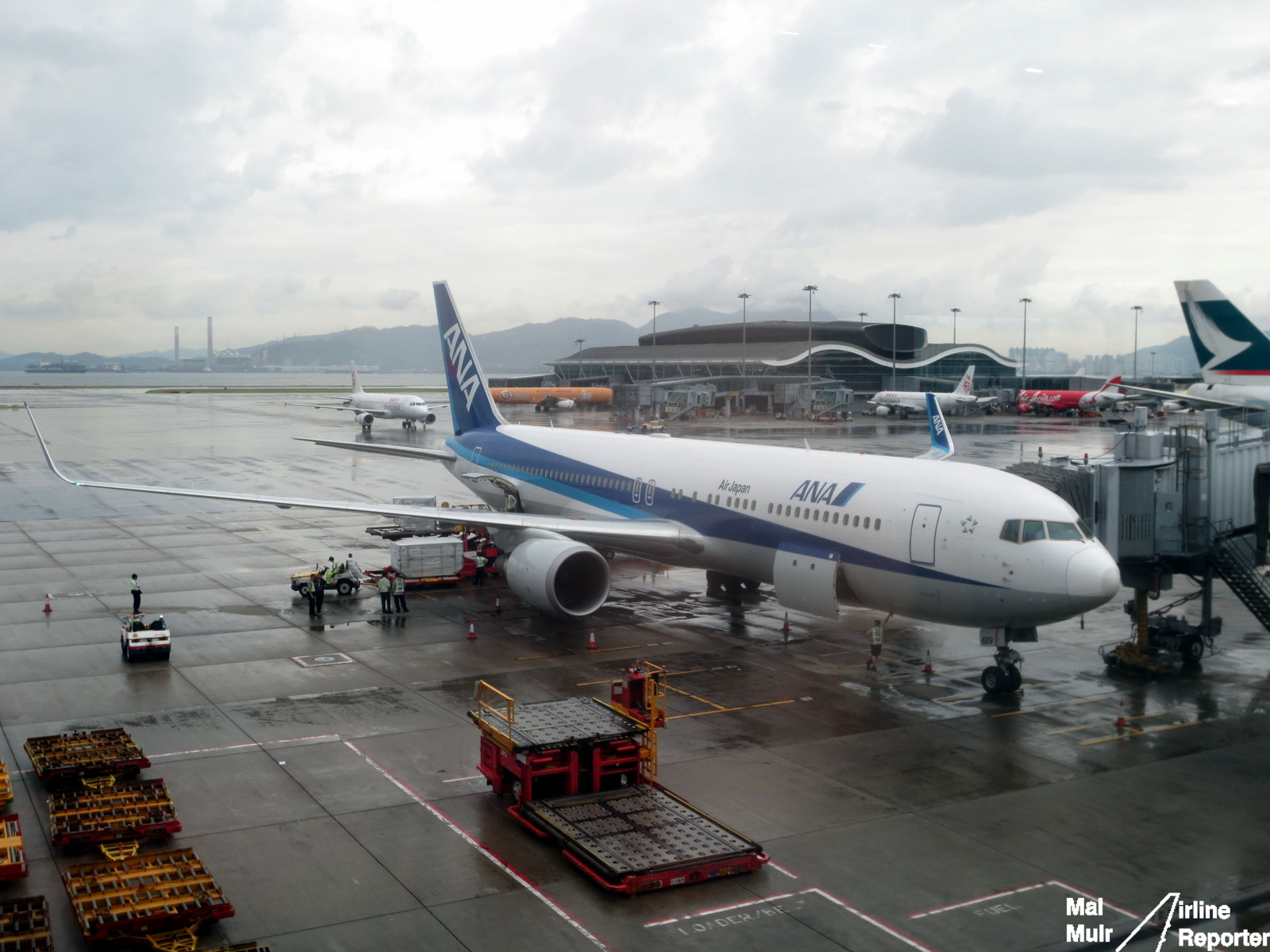
An ANA (Air Japan) Boeing 767-300ER awaiting the morning flight from Hong Kong back to Tokyo – Photo: Mal Muir | AirlineReporter.com
This is the continuation of a multi-part series covering my trip from Seattle to San Jose to Narita to Hong Kong and back as a ANA Ambassador. My flight was provided by ANA, but all opinions are my own. Part1: San Jose to Tokyo on the 787 Dreamliner – Part2: Connecting in Tokyo’s Narita Airport.
After a nice long flight over the Pacific Ocean onboard the 787 and a brief stop in the All Nippon Airways (ANA) Lounge in Narita, it was time for me to make my connecting flight to Hong Kong. The last part of my journey that ’œday’ was on-board an ANA Boeing 767-300ER. At the other end of the four hour flight lay a bed for me to finally get some rest.
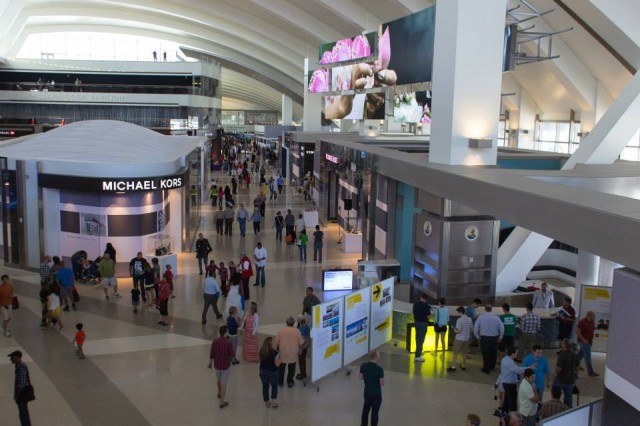
The main concourse is lined with stores. None of which were open during my visit.
This story was written by Kevin Epstein (AviationPhotographic.com \ @AvPhotographic) for AirlineReporter.com:
The new Tom Bradley Terminal may not yet be open to travelers, but it was a hive of activity this past Saturday, June 22nd. Los Angeles World Airports (LAWA) hosted an event called LAX Appreciation Day, where members of the public were invited to come and take a look at the new terminal and I went to go check it out.
The event was a major success with tickets to all 6 time slots being snapped up shortly after being made available. LAWA included free parking for all attendees, and shuttled us from parking to the terminal.
The new terminal, which costs around $1.9 billion, is part of a larger multi-year $4 billion project to revitalize not just the Bradley terminal, but other terminals around the airport too. The Bradley Terminal has been the main focus as it is the first and last thing arriving and departing international travelers will see. First impressions matter!
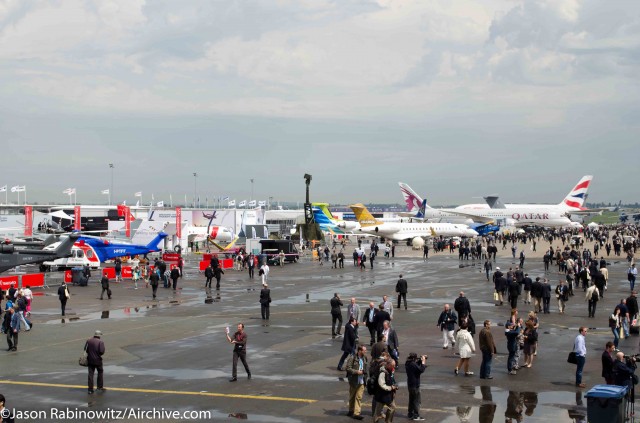
An overview shot of the Paris Air Show. Photo by Jason Rabinowitz / Airchive.com.
As expected, the Paris Air Show 2013 started off with announcements from aircraft manufacturers and airlines. Here’s just some of what happened on Monday & Tuesday:
- Embraer officially launched their next-generation E-Jets, to be called E-Jets E2, with two significant orders. US Regional SkyWest Airlines ordered 100 of the 80-seat E-175 E2 jets, and have purchase rights for another 100 planes. Mega-leasing company International Leasing Finance Company (ILFC) signed a Letter of Intent to purchase 25 each of the E-190 E2 and E-195 E2 jets. They have options to double the order. SkyWest is the launch airline, and will get their new E-175 E2s in 2020. The E-190 E2 will be delivered much earlier, starting in 2018.
- Bombardier Aerospace announced that a previously-confirmed order for 10 CS100s is held by Odyssey Airlines, which plans to operate from the 4,900 ft runway at London City Centre Airport. (LCY).
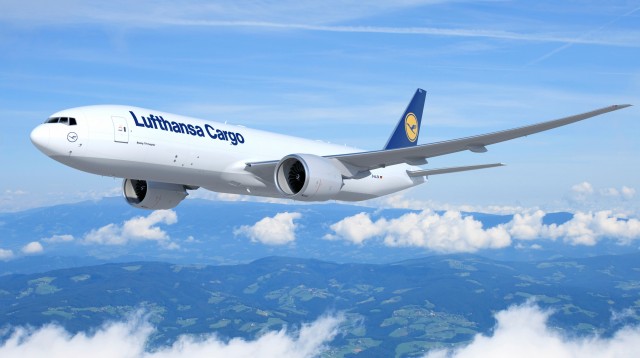
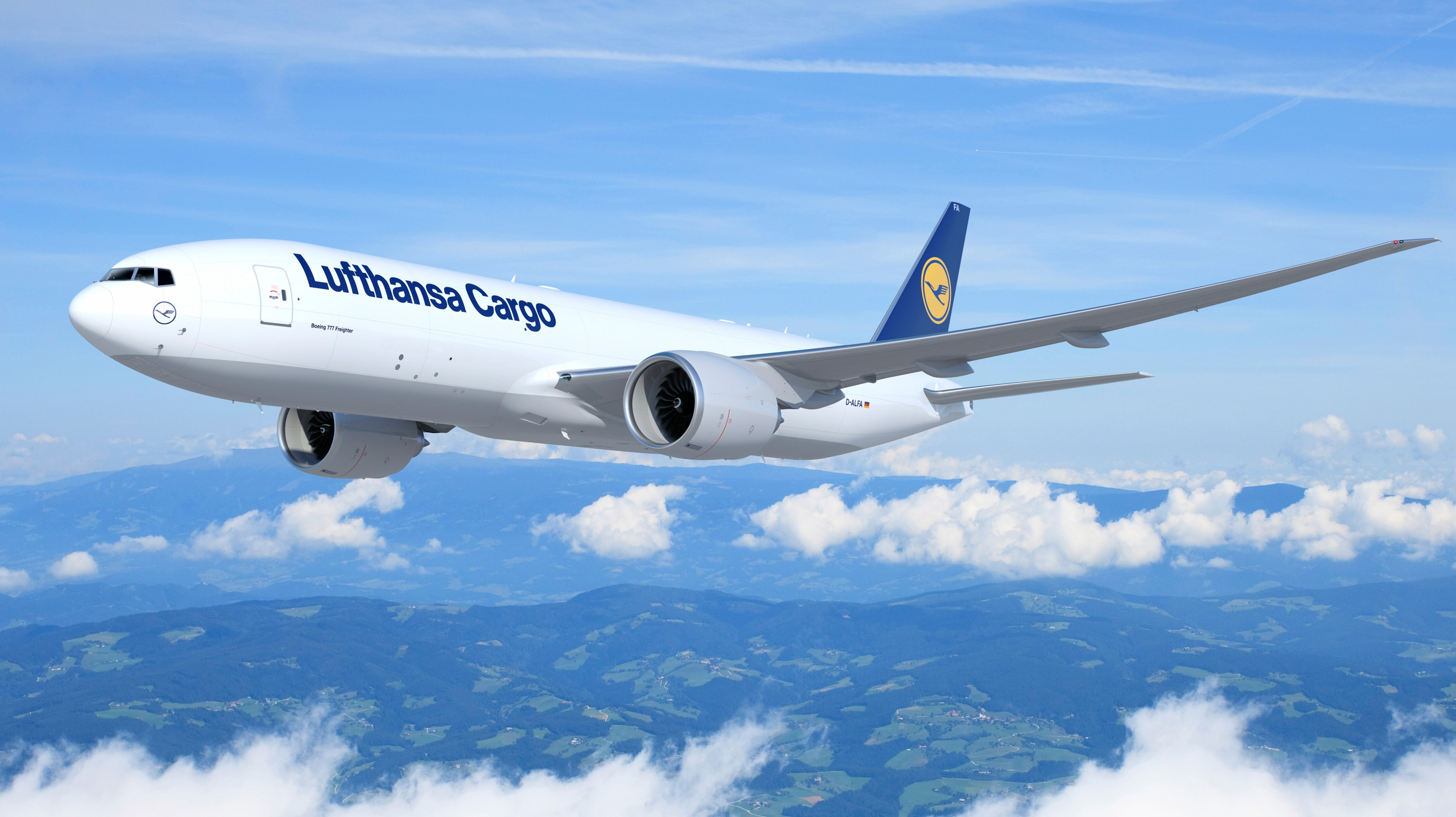
A Rendition of what a Lufthansa Cargo Boeing 777F will look like – Photo: Lufthansa Cargo
Two years ago an interesting order was placed with Boeing. One that might have slipped under the radar for most. This order didn’t really make all too many waves in the AvGeek world and to be honest, I didn’t even realize it myself till I was tipped off by a fellow AvGeek.
In March 2011 Lufthansa Cargo put in an order for five 777 freighters and this spurred a large amount of curiosity since it did not seem like the ideal choice to replace their aging fleet of 18 classic MD-11 aircraft.
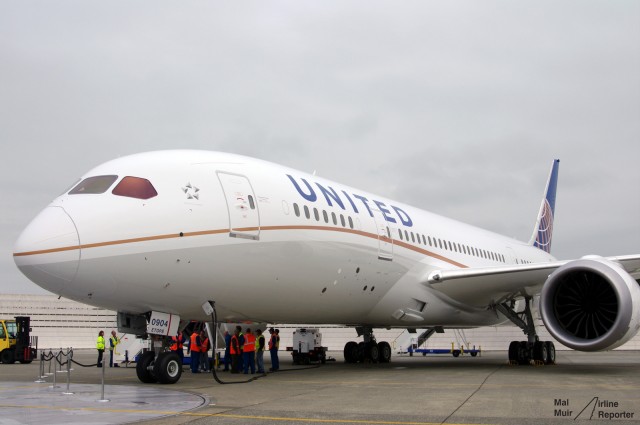
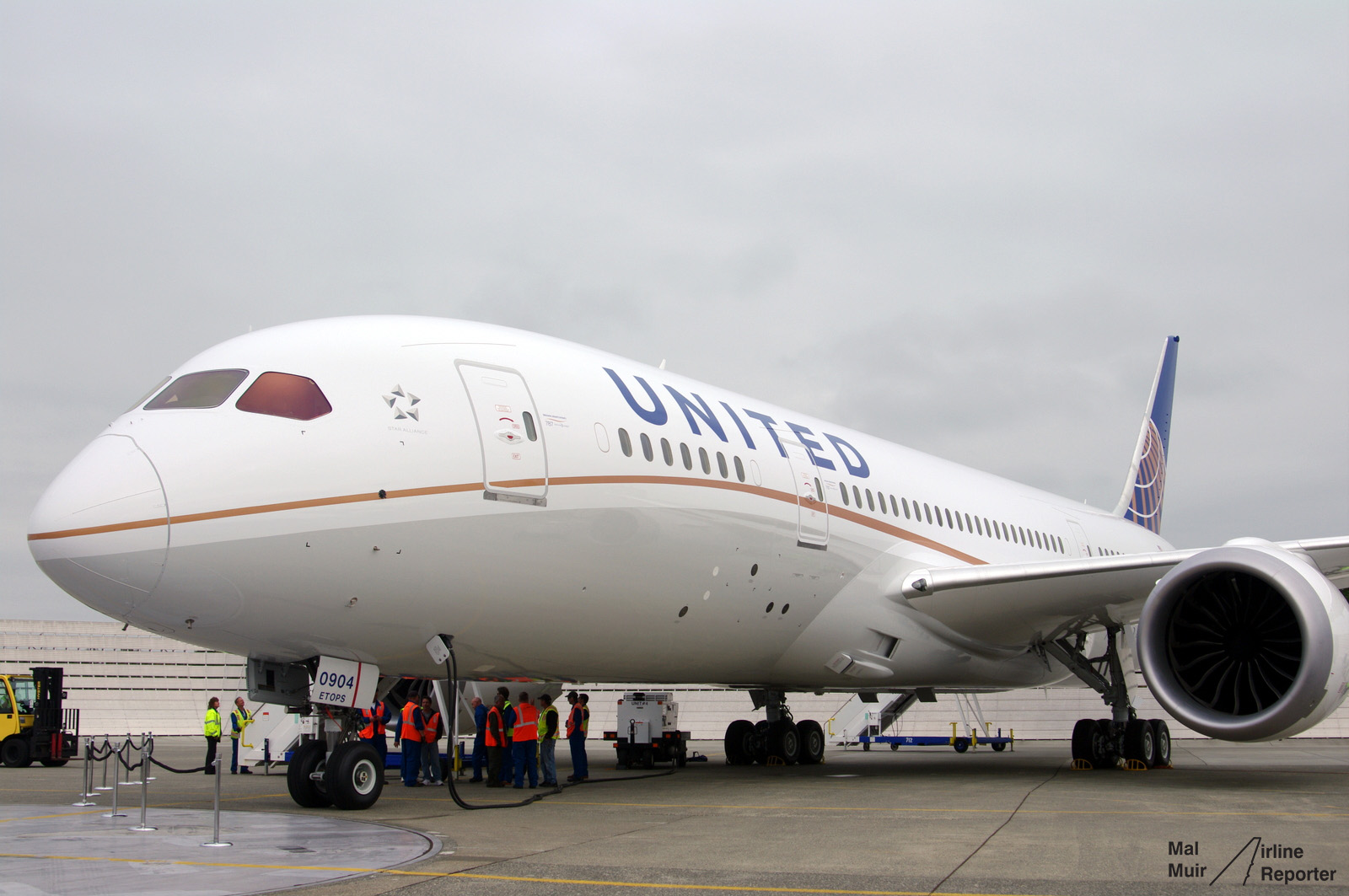
United Airlines First Boeing 787 on Launch Day at the Boeing Factory in Everett. Phone: Mal Muir airlinereporter.com
Recently United Airlines decided to increase their change fee on all domestic bookings from $150 to $200 per person. US Airways followed suit shortly after. Eventually Delta & American matched. With those change fees in mind, it got me thinking, “where is the spectrum of these fees in the US right now?”
Before we look at all the change fees each airline charges, we first need to look at what a change fee is and why airlines charge them. A ’œChange Fee’ to the airlines is a fee that is charged when you need to change the date or time on your flight booking. On heavily discounted airfares, changes are restricted so that you can be given the cheapest price possible. At least’¦ that’s the idea. In essence this is a fee charged by the airline, as a penalty to you for changing your mind.
Changing the airfare on the airline’s end probably doesn’t cost them much, if anything. In this day and age of overselling most flights, the airline has probably already sold it within seconds of your change.