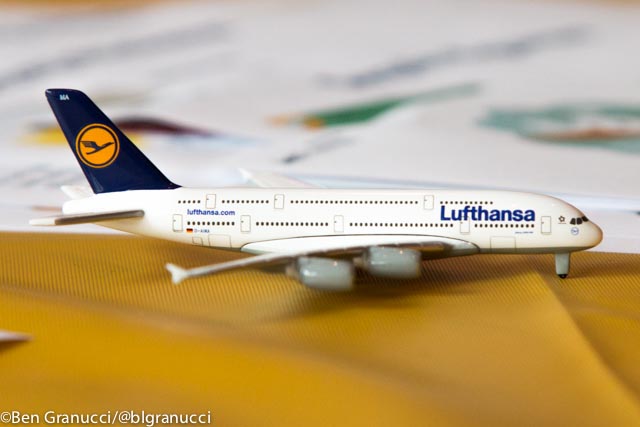
Over the past few years, few issues in the aviation industry have been more polarizing than children on commercial airplanes. The need for families to travel from place to place, or even for children to travel alone, often clashes with the desire of frequent fliers to have a peaceful flight. Some airlines have taken drastic measures, like Malaysia Airlines which has banned babies from first class and all children from the upper deck on their fleet of A380s. Other airlines have added child-free cabins as an ancillary amenity that is available for a fee.
As a newly-minted dad, I look froward to taking my son on his first flight (and many more after that). However I realize that sometimes the unfamiliar atmosphere onboard an airliner can disturb a small child. And when the child is disturbed, they may disturb those seated around them. All children could use an experience that is specially tailored to younger fliers in an industry that usually focuses more on high value (adult) frequent fliers. Unfortunately, cost cutting measures at most airlines have eliminated kid-friendly perks such as kids meals and pin-on airplane wings.
Fortunately, this is not the case at every airline, including at Lufthansa. Last year, 2.1 million children aged eleven and under flew on the German carrier, which is a number based on how many childrens’ fares they sold. Yes, Lufthansa still offers discounted fares for children, which are 75% of the adult fare.
3,123 children qualified as “elites” with the airline, having flown a minimum of 35,000 miles in a year. Some children even attain higher status levels: the youngest Senator member (having flown at least 100,000 miles in a year) is just two years old.
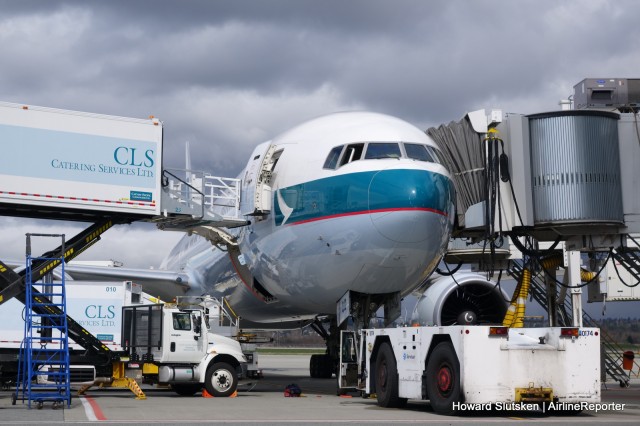
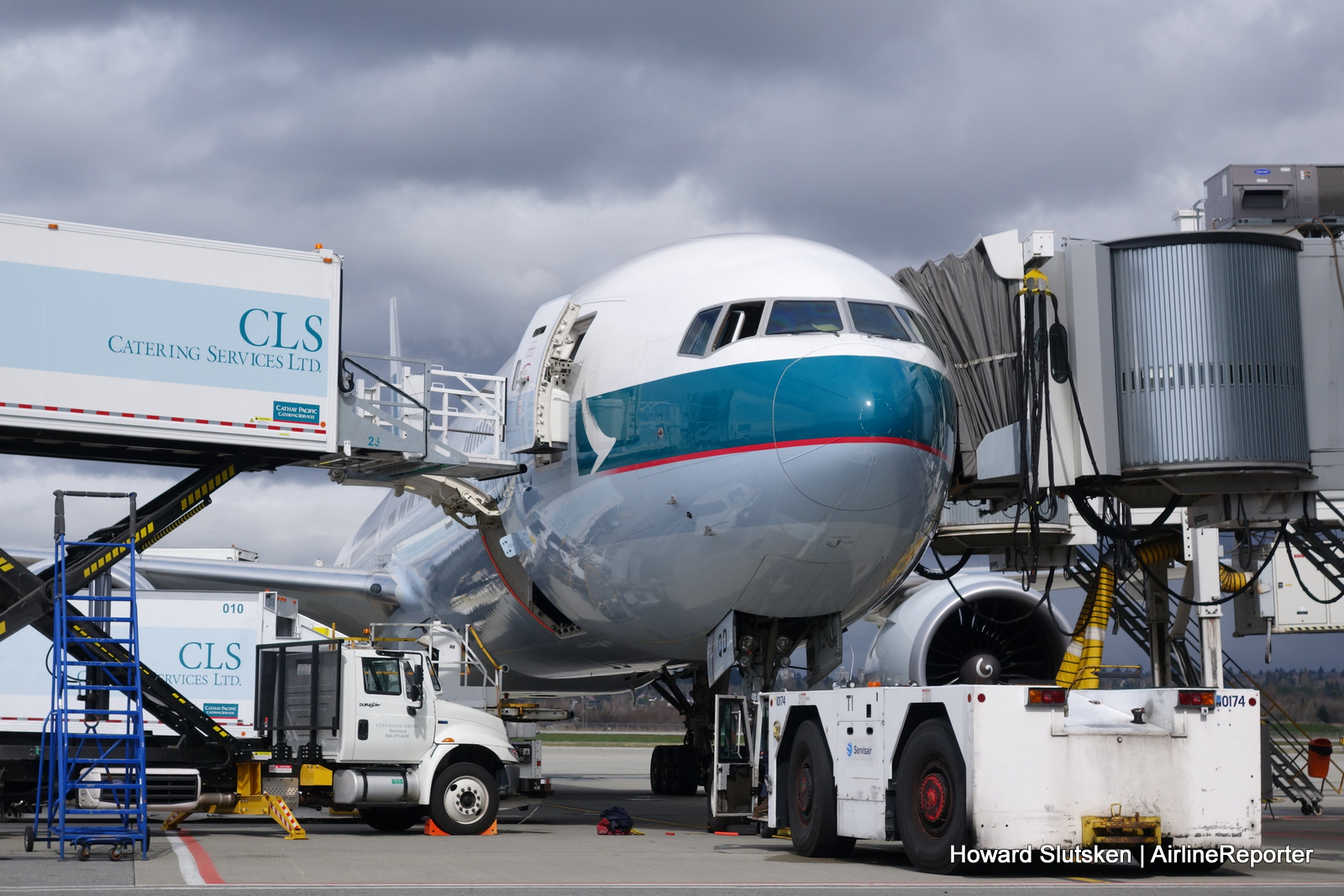
A Cathay Pacific Boeing 777-300 in the midst of a turnaround at YVR. You can see the yellow air conditioning hoses under the bridge.
Your flight has landed, and the plane is pulling up to the gate. You’re ready to spring into action as soon as you hear the “we’re stopped” chime. But instead of jumping up and waiting in the aisle, why don’t you relax in your window seat, and look outside? You do have a window seat, don’t you? There’s quite the dance of people and equipment happening, all to service the plane and get it ready for its next flight.
The turnaround actually begins long before the plane lands. Equipment is pre-positioned at the gate, supplies and catering are prepared, and ramp and terminal staff get ready for the arrival. As the flight turns onto the taxiway after landing, the crew gets their gate assignment from ground control, or in the case of a major airport, ramp control. The plane’s Auxiliary Power Unit (APU) will have been started to provide an electrical and pneumatic supply after the engines are shut down. The APU is a small jet engine, generally located in the tail cone. One of the first airliners with an APU was the tri-jet Boeing 727, and its APU was located in the wing root.
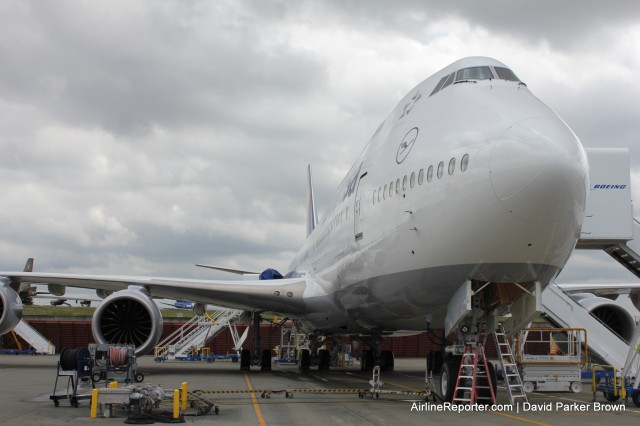
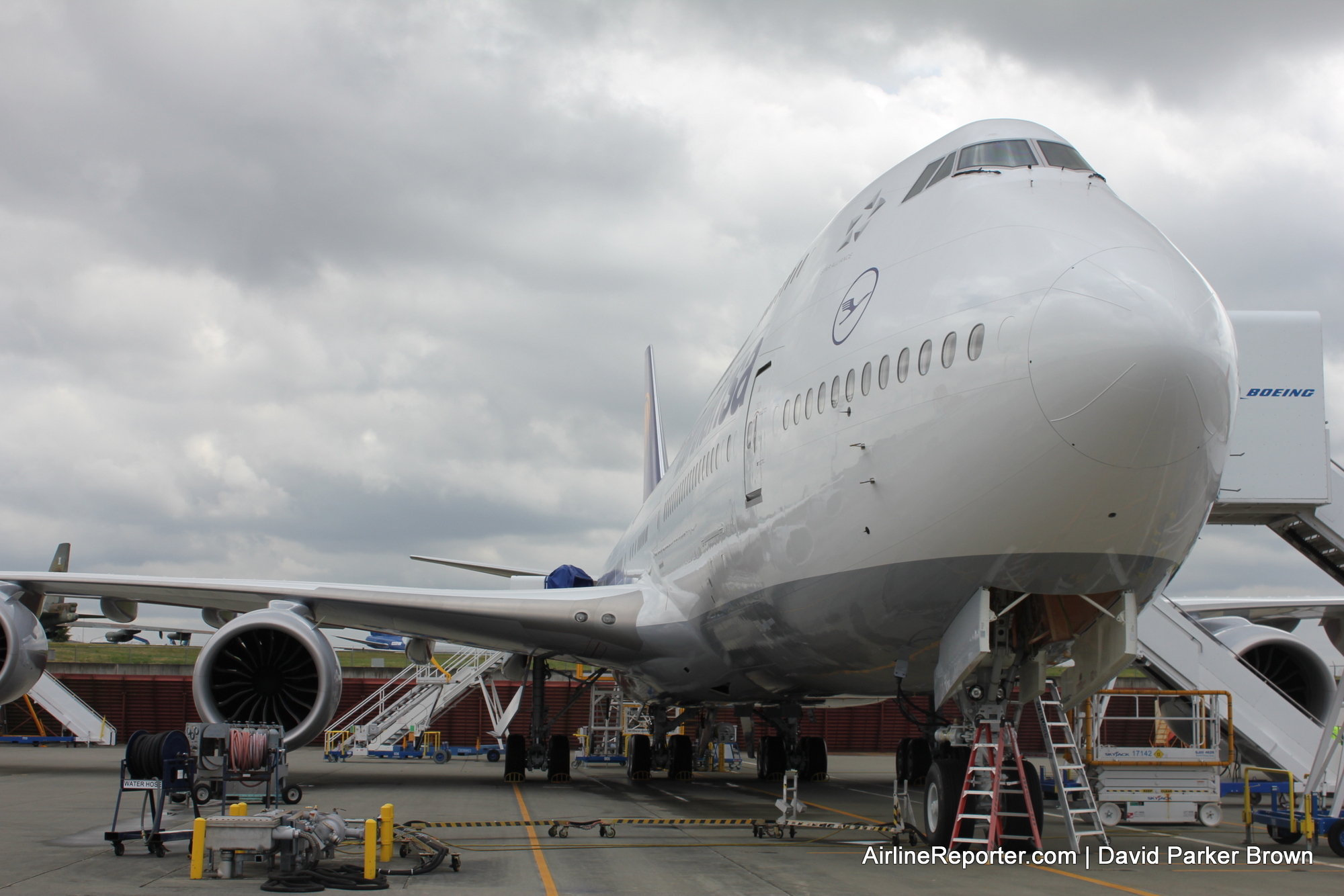
The 1,500th Boeing 747 (70th 747-8) sitting on the flight line at Paine Field
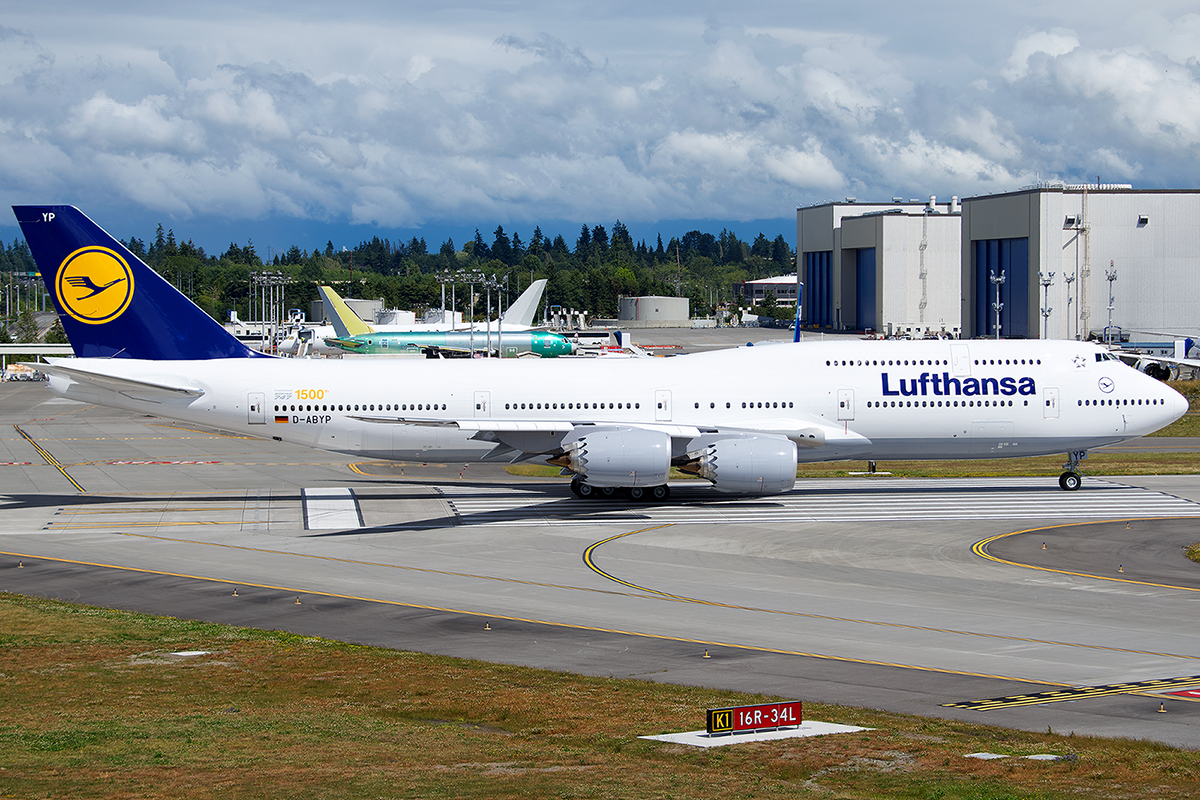
The 747 Jumbo Jet is an iconic aircraft. For years, it was the only double-deck commercial airliner and for many it is a favorite. From its first flight in 1969, the 747 has changed quite a bit. The newest iteration, the 747-8, might sport a similar shape to the original 747 or the 747-400, but it is quite a different beast (more than just LED lighting). This past weekend, the 1,500th 747 was delivered to Lufthansa Airlines. About a week earlier, Boeing took the opportunity to talk about their largest commercial airliner and its future relevance.
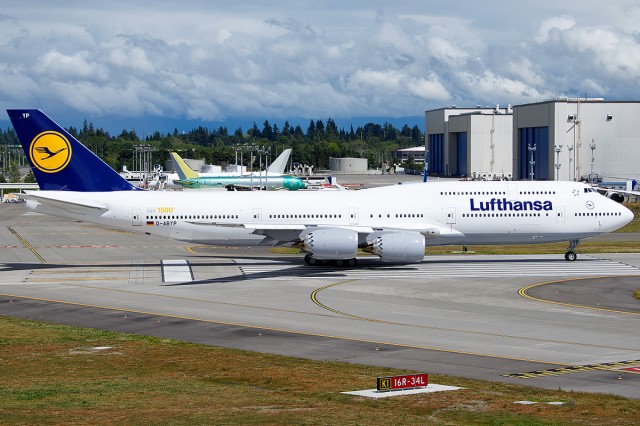
LN1500 lining up for take off – Photo: Bernie Leighton | AirlineReporter
I was invited to Boeing’s factory in Everett to sit down with Eric Lindblad, vice president and general manager of the 747 program, and we had a down-to-earth conversation about where the 747 has been, where it is today, and where Boeing is hoping it is going.
The big message that Lindblad wanted to get across is, “this is not your mother’s 747.” Not only is the 747-8I a very different aircraft than the 747-400, but the 70th 747-8 is much more efficient than the first one, and they plan to keep making it more efficient.
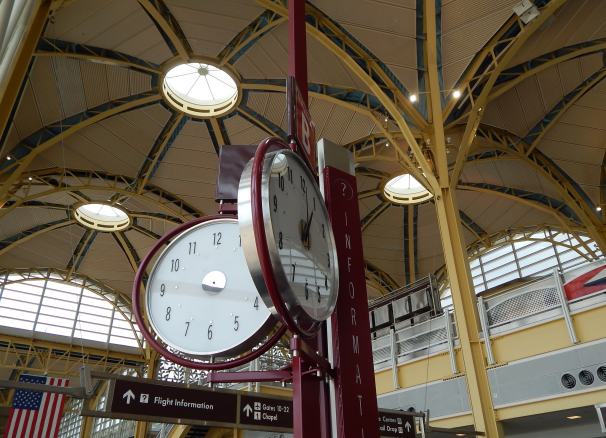
A Travelers Aid desk at DCA – Photo: Ryan Ewing
I love airplanes and sometimes I think airplanes love me. It is hard to fathom that these beautiful, curiosity-instilling works-of-art can fly. Throughout my life, I have always had a strong interest in aviation. My parents tell me that I would always ask a family friend, a pilot for a major carrier, questions about airplanes. I never caught the aviation bug – I was just born with it.
It was a summer day in May of 2013 when I came to the realization that I needed to find something to do during the summer besides sitting on the computer or watching TV. I talked to some people and found an organization called Travelers Aid International. Initially, I didn’t know Travelers Aid even existed, but I knew this would be a perfect place for me. I contacted the organization at Ronald Reagan Washington National Airport (DCA) and they sent me a very kind response telling me where to meet for the interview. There, during the interview, was where I would start something that I would never be able to end.
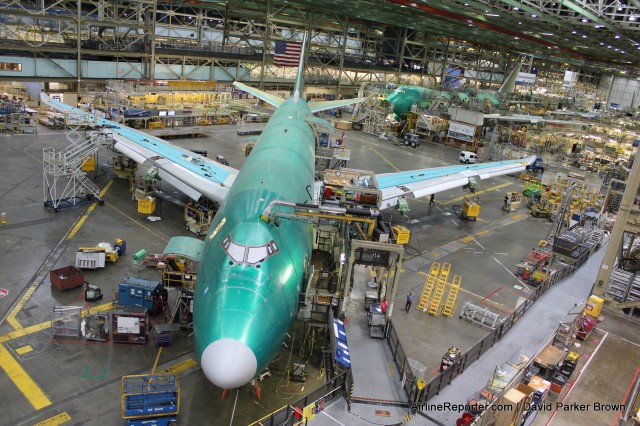
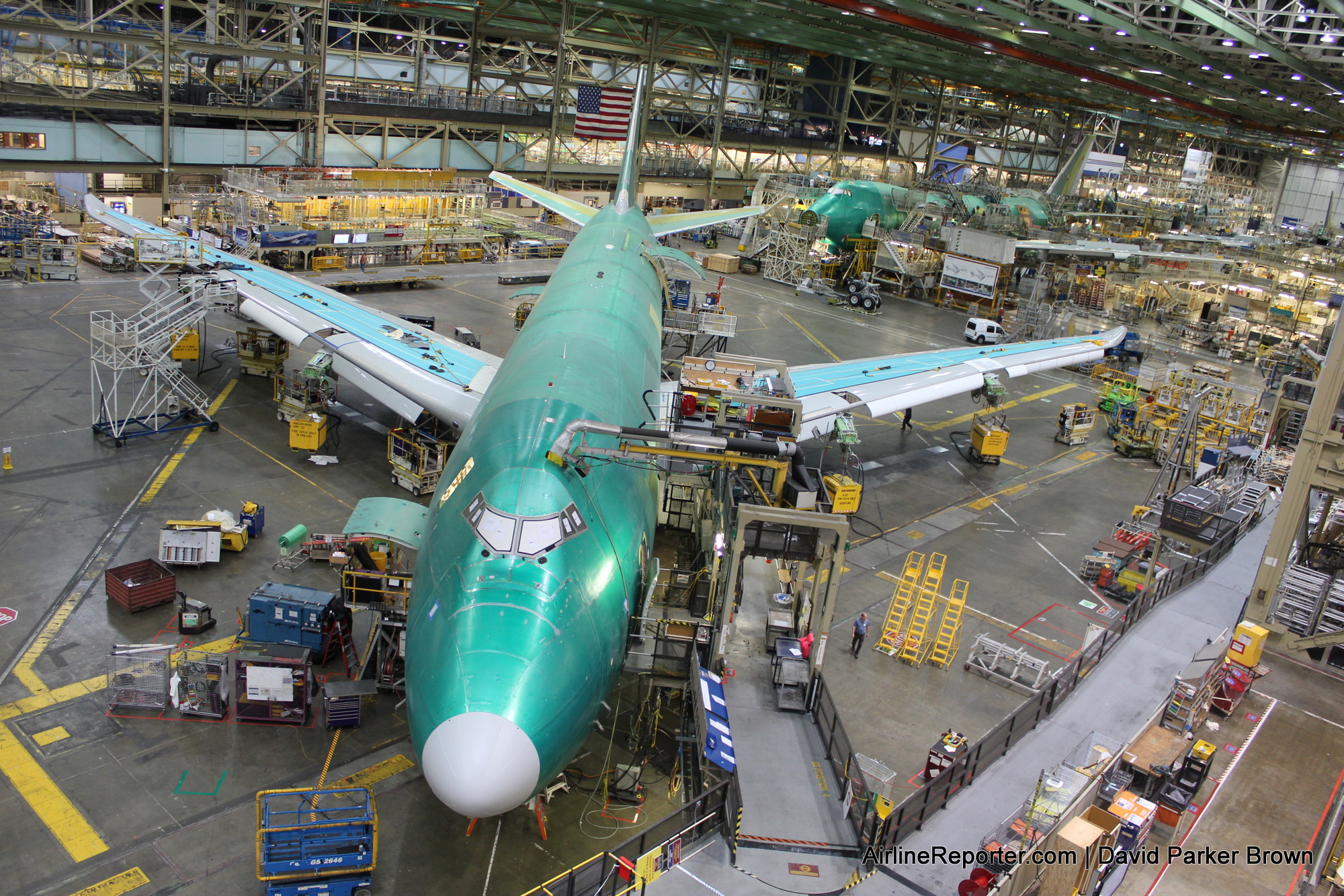
The money shot: 747 line inside the Boeing factory
Back in the 1960s Boeing made a big gamble. They decided to build the world’s largest airliner, the Boeing 747 Jumbo Jet. To build such a beast, they would need a large facility. After careful consideration, Boeing decided to build a large factory in Everett.
Since the first 747 rolled off the line in 1968, every other 747 has been built under the same roof. Even today, the 747-8 is built in the same factory.
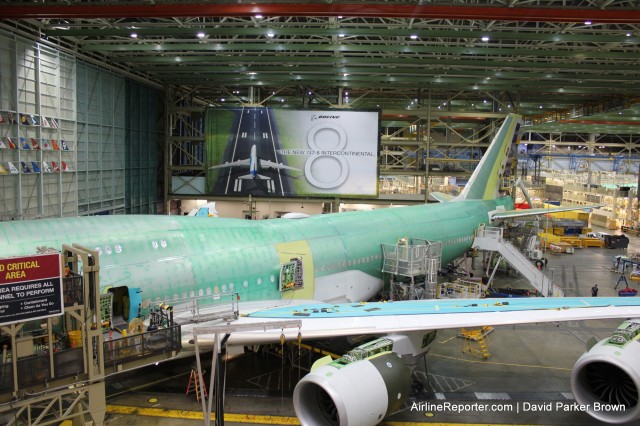
In case you didn’t know the aircraft type, there is a large sign on the wall.
Although Boeing offers public tours of the facility, they do not allow cameras. I was lucky enough to participate in a media event and take photos of the 747 line in the factory and I wanted to be able to share. Enjoy…