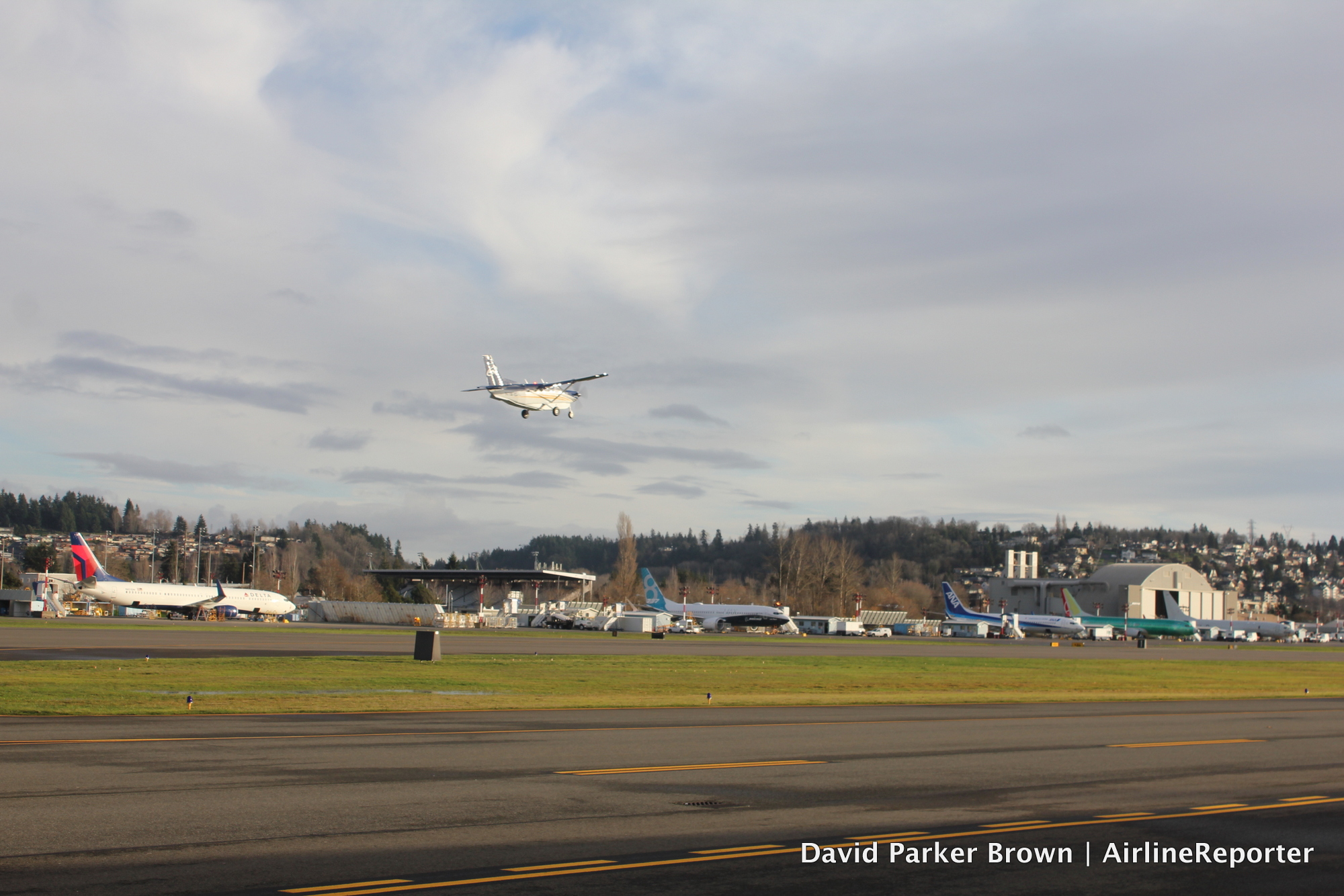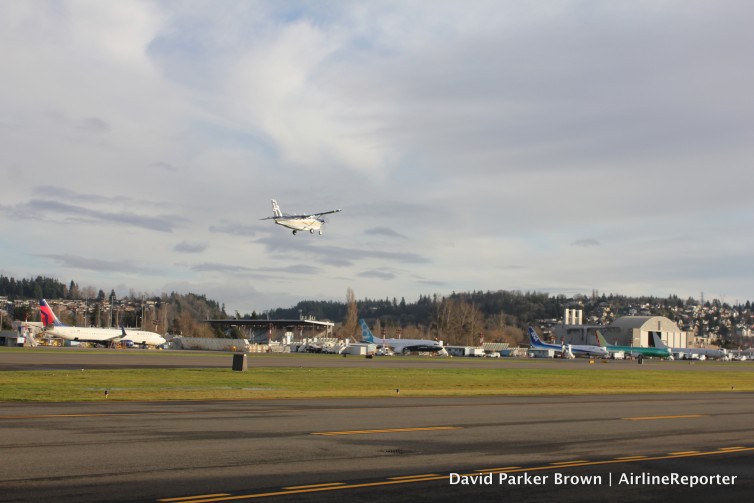
Clayton Scott Field in Renton, WA
As an airport manager, and on behalf of airport management all over the country, I wanted to take a moment and say thank you! If you have flown commercially recently, then this message of gratitude is specifically for you.
Why?
Well, because you are directly contributing to the financial well-being of the airport. And no, I am not talking about supporting the airlines, who in turn pay the airport to offer their services. And I am not referring to your purchase of concessions in the terminal before your flight, or the fee you paid to park, or for gazing at the advertising that companies pay the airport top dollar for.
Rather, I am talking about a nominal fee that is applied to your ticket that goes directly into the airport’s coffers. This fee is the “Passenger Facility Charge” or PFC, and it’s a huge lever in commercial airport infrastructure investment.
It is also a white-hot topic nationally for airports and airlines, as the Federal Aviation Administration (FAA) approaches the end of its temporary authorization in March of 2016.
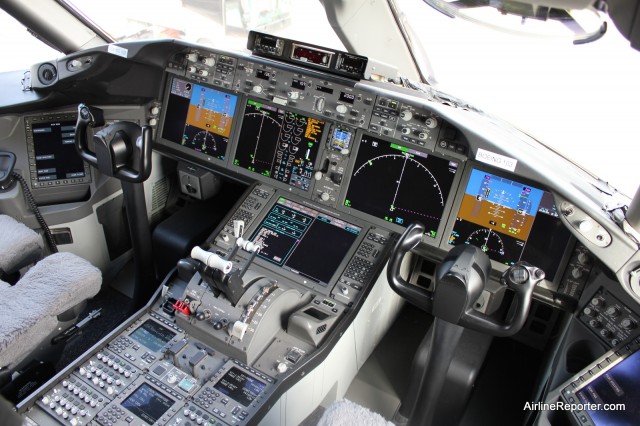
787 cockpit showing TCAS on the Multi-Function Display – Photo: AirlineReporter
A few months ago, a near-collision between two Boeing 757s off the coast of Hawaii was in the headlines. This event was particularly noteworthy because of the emergency descent made by United Airlines Flight 1205, which descended over 600 feet in a matter of seconds, terrifying passengers and sending items flying in the cabin. The pilots on the United flight were alerted to the oncoming traffic, and took action based on their Traffic Collision Avoidance System (TCAS).
History of mid-air incidents and TCAS mandate
Although TCAS systems are a (relatively) recent development in airline cockpits, the need for such systems was recognized long ago. On June 30,1956, a mid-air collision occurred at 20,000 feet between a United Airlines DC-7 and a TWA Lockheed 1049 over the Grand Canyon in northern Arizona. This incident, which resulted in 128 fatalities, served as a wake-up call for the aviation industry. Prior to the collision, ’œbig sky theory’ was the prevailing notion – that two aircraft flying in three-dimensional space were very unlikely to collide. Following this incident (which also led to the creation of the FAA), research began on developing collision avoidance systems.
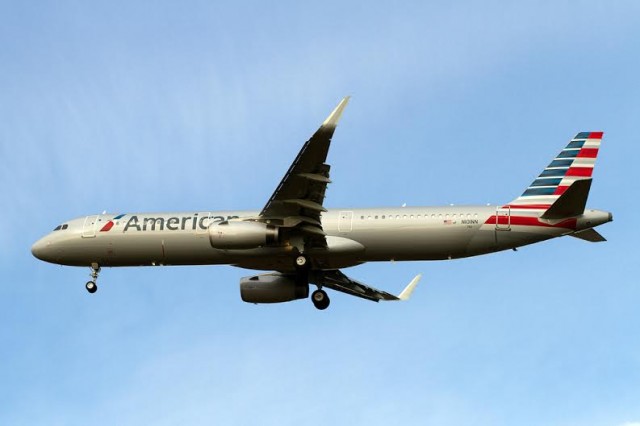
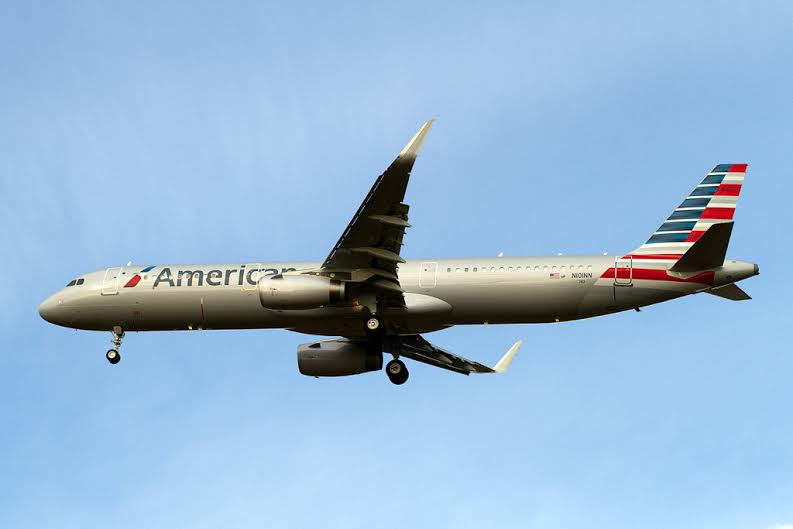
American’s new Airbus A321 in flight – Photo: Eric Dunetz
A while back, I viewed a tweet about an Air Traffic Control (ATC) conversation in New York, where JFK ATC got a little bit confused about an aircraft type. American Airlines (AA) Flight 32 was incorrectly called a ’œheavy’ aircraft, likely because for so long that flight was operated by a Boeing 767-200. Ever since AA debuted their new Airbus A321 on the LAX-JFK route, this flight no longer needs to use the “heavy” designation, but that didn’t stop the ATC staff from using old habits. It made me question, at what point does an aircraft become ’œheavy’?
When aircraft are approaching or departing an airport, they must use special designations to help avoid the wake turbulence from other aircraft. Larger aircraft, like a 767 or an A340, need more space behind them to prevent the wake vortices generated by the larger wing span from impacting other aircraft. The bigger the aircraft, the longer the distance.
The dangers are real, as all over the world a number of incidents have occurred that can be attributed to a wake vortex. From the crash of an XB-70 in the 60’s to some involving more modern aircraft in the last 10 years (including an A380 in Sydney).
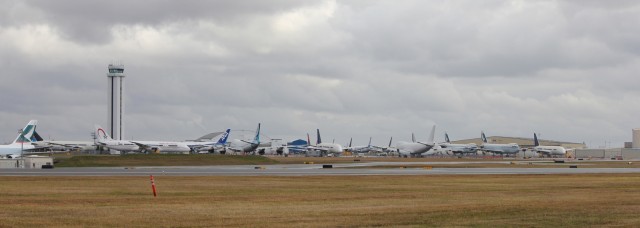
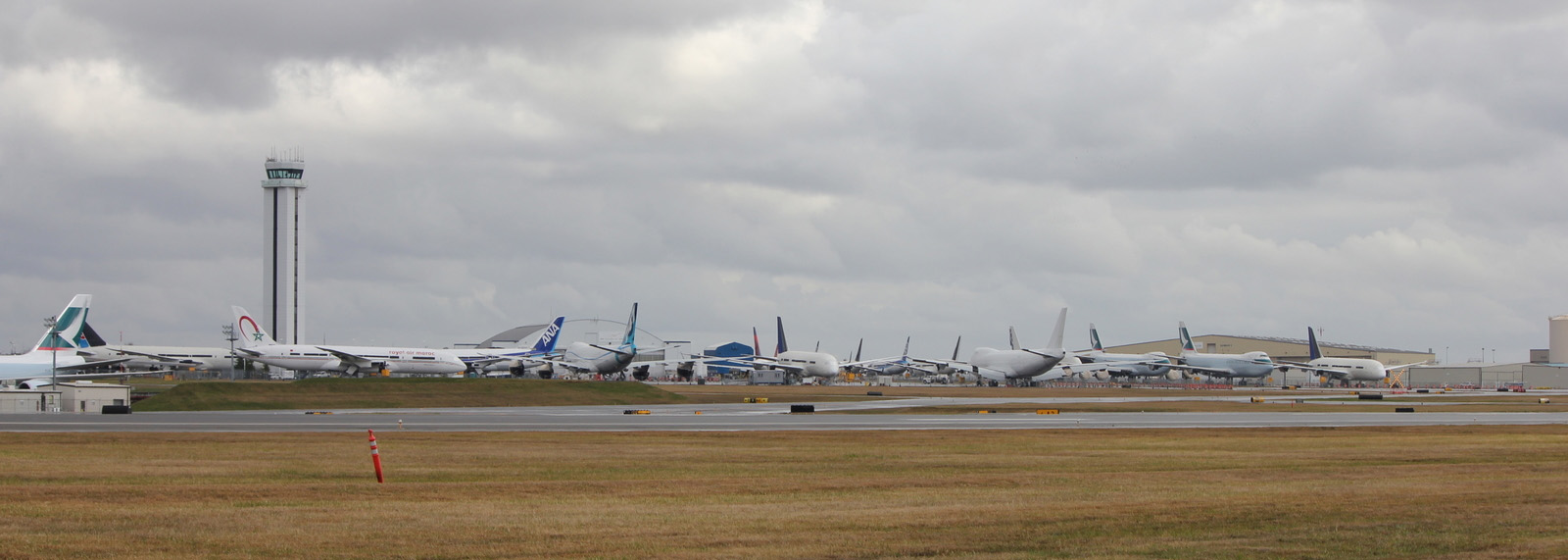
Paine Field (KPAE) already had tons of large planes that are built and flown around the local area.
Last week, the Federal Aviation Administration (FAA) approved commercial flights to operate from Paine Field (KPAE) in Everett, WA. Will that mean flights will actually start at the airport? Maybe not.
Paine Field is located about 30 miles north of Seattle-Tacoma International Airport and is where Boeing builds all 747, 767, 777 and (most) 787 aircraft. Although Boeing dominates the airport, it is owned and operated by Snohomish County and is a public airport.
Allegiant Air raised the commercial service issue at KPAE a few years ago and it has been a struggle since. Initially, Alaska Airlines said it would be interested in operating out of KPAE, then withdrew interest. It has noted that they would start flights if one of their competitors would (ie Allegiant).
Even though this approval passed, do not expect flights to start anytime soon. There is not a passenger terminal and members of the community are expected to sue to stop commercial flights.
PAINE FIELD COMMERCIAL FIGHTS BACKGROUND STORIES:
When the news of the approval surfaced, I emailed to multiple airport/airline contacts to get thoughts and some quotes. The lack of comments surprised me (ones listed as “no comment” actually wrote back to state that they had nothing to say on the matter):
Boeing: “We have no position on it.”
Paine Field: No comment.
Future of Flight: No comment.
Snohomish County Tourism Bureau: No comment.
Seattle-Tacoma International Airport: No comment.
Museum of Flight (Restoration Center at Paine Field): No comment.
Flying Heritage Collection: “FHC is following this issue with interest and we look forward to hearing more as details emerge.”
King County International Airport / Boeing Field: “The decisions at Paine Field have no direct impact on KBFI. As an open-access airport that receives Federal funds, the FAA requires us to evaluate any proposals to do business at the airport without discrimination. Currently, no commercial service companies have expressed an interest.”
Alaska Airlines: (they win for having the most to say) “Adding commercial air service to a regional airport located 42 miles away from the state’s largest airportand an hour’s drive from Bellingham International Airportis not a good alternative for our region. It would also require a multimillion-dollar investment to build a new terminal and other facilities to accommodate passenger service.” They continue with, “if a competitor begins commercial service at Paine Field, we would respond by adding flights using both a Bombardier Q400 turboprop and Boeing 737 jet.” (Read Alaska’s full statement here)
Kenmore Air: “At this time, we don’t see PAE fitting into our current or envisioned route structure. But we’ll definitely be watching developments there with interest.”
Allegiant Air: “The report on Paine Field certainly opens the airport up as a possible opportunity for Allegiant. We are constantly evaluating new cities and new routes that may be a successful addition to our current network. We will keep Paine Field on our radar, but there are no immediate plans for service there.”
The lack of comments, especially from those who are closely related to Paine Field, lead me to think there is much more going on behind the scenes. I can see why Boeing wouldn’t want commercial service traffic in its production airfield, but the commercial service would bring more money to the airport and area businesses. My guess: Politics.
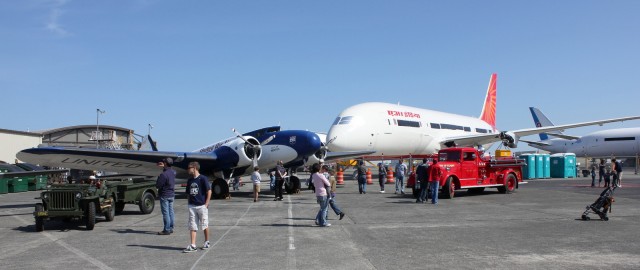
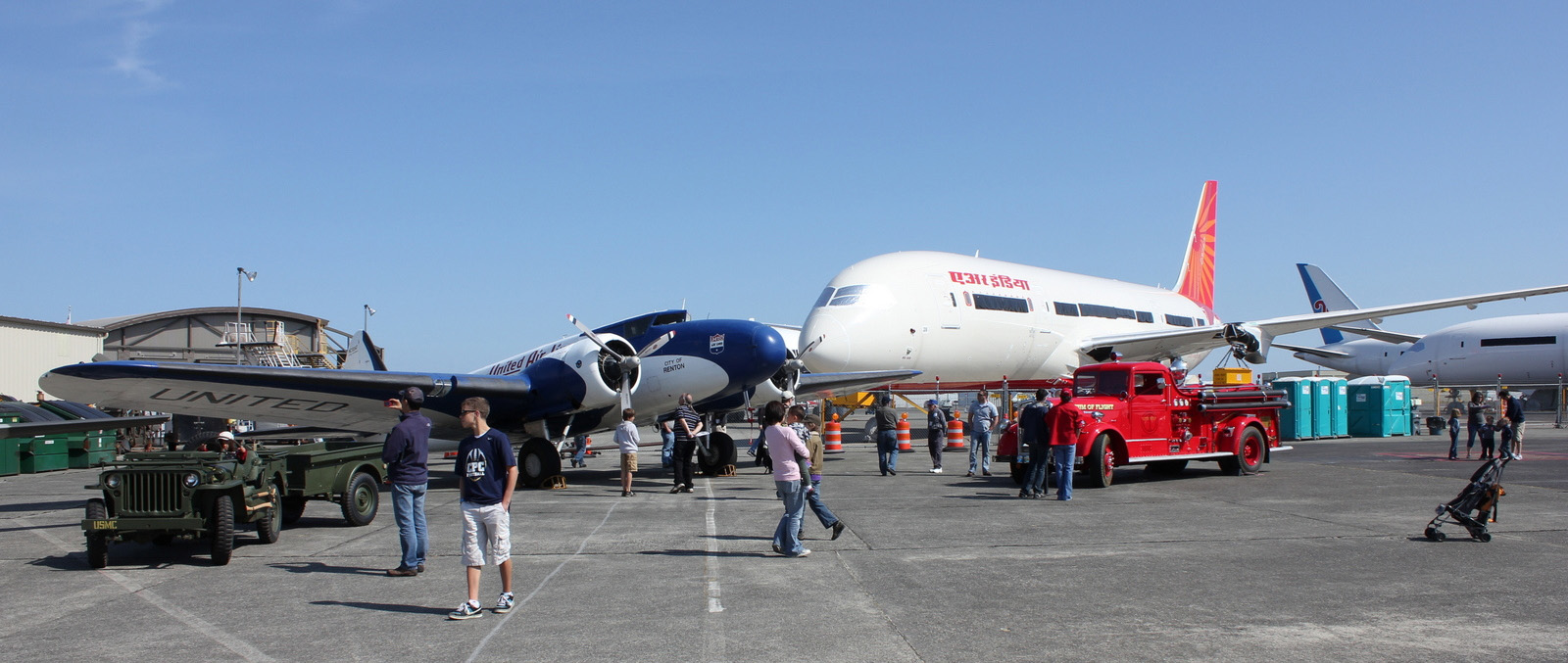
Paine Field Aviation Day 2012 at KPAE. Could events like this be reduced with commercial flights commencing?
Surrounding KPAE are quite a few affluent homes that overlook the water. I am sure that many of those folks do not want the values of their homes to decrease with the initiation of passenger service.
Personally, I have a hard time with stifling community growth. Residences purchased homes knowing that Paine Field existed and could expand. My own home is in the flight path of Paine Field and, even as an AvGeek who would love seeing more planes flying over, having my value decrease obviously doesn’t excite me. However, it’s important to look at the greater good of the community and region at large. Improving the local economy with the job growth a passenger service would provide, in exchange for a few loud MD-80 flyovers, would be a positive trade. I am okay with that. Obviously, most in the area of the airport do not share my sentiment.
Expanding commercial service to the region would mean badly needed economic recovery for many in the area; but many government institutions and politicians are either staying silent or are opposed the additional service. Why? Most likely: Re-Election.
The airport can surely handle the additional traffic. According to the Seattle Times: “The FAA spent three years responding to public comments and studying the impact of 8,340 additional flight operations a year at the airport over five years. The airport is operating now at about a third of its capacity of 350,000 operations a year.”
One of a few politicians who have come out in favor of commercial flights is Everett Mayor Ray Stephanson. ’œThe City of Everett has been on record supporting commercial air at Paine Field for many years now,’ Stephanson said according to KING5. ’œCommercial air is necessary for economic development and job growth. Hopefully we’ll soon be working with a company to provide commercial air at Paine Field.’
Snohomish County has already stated that it has a plan for a two-gate terminal, but it does not plan to spend any of its own money. With there being no terminal, looming litigation, and the fact that no airline is stating it will start commercial service… it is still going to be a few years before you can start flying out of Paine Field on an airline.
Other than Allegiant, I could easily see Spirit Airlines interested in starting operations in the Pacific Northwest. Frontier, who flies seasonally out of Bellingham, might be interested as well. It would be quite interesting to see an airline fly an Airbus product through the airport where the majority of Boeing wide-bodied aircraft are built. Hopefully someday.
 |
This story written by… David Parker Brown, Editor & Founder. David starting AirlineReporter.com in the summer of 2008, but has had a passion for aviation since he was a kid. Born and raised in the Seattle area (where he is currently based) has surely had an influence and he couldn’t imagine living anywhere else in the world.@AirlineReporter | Flickr | YouTube |
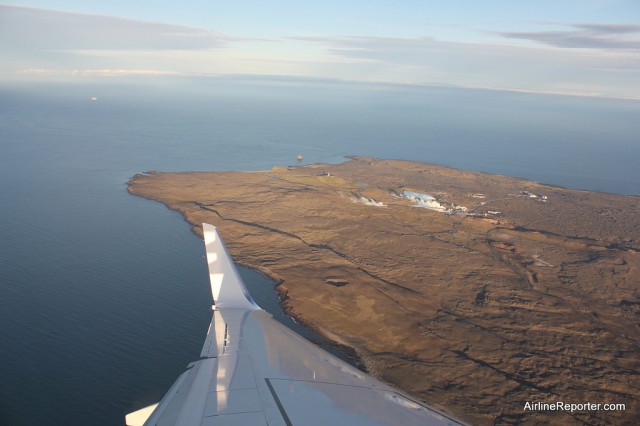
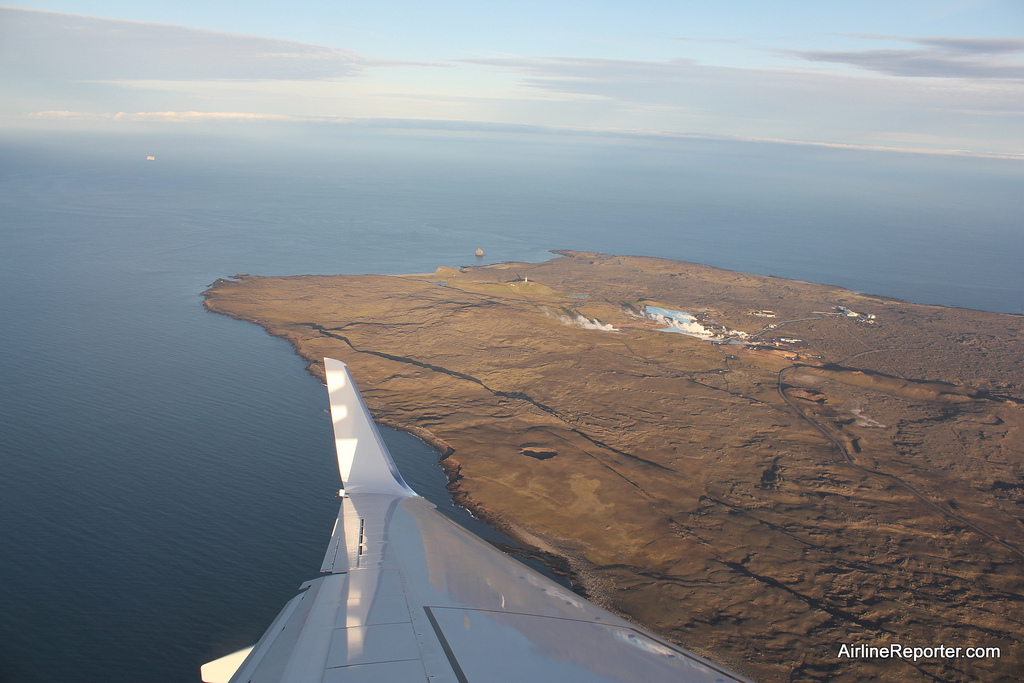
OMG!I took this photo below 10,000 over Iceland. I am in big trouble now?! Nope... I had permission.
Earlier in the week, I posted a time-lapse video of a Southwest flight from Denver (DEN) to Burbank (BUR) and back. Almost a year ago, I posted a similar video of an Air France video from San Francisco (SFO) to Paris (CDG). Along with the comments about how awesome the videos were, I also received quite a few angry comments, emails and tweets berating both artists for using their cameras below 10,000 feet.
First, let’s start with the facts. In both cases, the people making the videos received permission from the airline beforehand. According to the Federal Aviation Administration (FAA), airlines are able to approve the use of electronic devices on their own aircraft. From an FAA advisory: “The related 14 CFR sections in paragraph 3 allow for the operation of PEDs [Personal Electronic Devices] that the operator of the aircraft has determined will not interfere with the navigation or communication system of that aircraft… It should be noted that the responsibility for permitting passenger use of a particular PED technology lies solely with the operator.”
Just to make sure I was not reading this wrong, I reached out to the FAA and Alison Duquette with the FAA Office of Communications confirmed to AirlineReporter.com that, “The guidance states that everything should be turned off below 10.000 feet and we expect operators to follow that.” She continued with, “An airline could let someone use a video camera if they determine that there would be no interference.”
So now that we have those pesky facts out of the way, let’s talk some common sense. The rule to not allow cameras is overzealous and well… I think stupid. Do you honestly think that someone using a digital camera is going to cause any sort of interference for an airplane? Things like phones, computers, radios, are made to send and receive signals. Even with those, many have argued that they cause no real harm for airlines.
Most digital cameras, or at least mine, do not transmit anything outside of the body of the camera, they simply have a battery. I have successfully used my Canon digital camera in my house (lights didn’t short out), near my microwave (it didn’t explode), in a highly sophisticated/computerized car (didn’t lose operational control and crash), on the floor of the Boeing factory (paint didn’t catch on fire nor did engines mysteriously start & begin to run out of control), and on yes, on airplanes of all types and I’m still here writing my blog, right?
There is being careful and then there is going a little too far. As I am sure you know, airlines are extremely safe and cameras are not going to change that. With all the real issues going on in the world, being concerned about someone taking photos or video below 10,000 feet should be at the bottom of your list.
All that being said, I am not telling you to take photos below 10,000 without permission from the flight crew. Even if I might not agree with it, these are still the rules and every time I have been told that I cannot take photos I politely comply. It doesn’t mean I have to be happy about it.