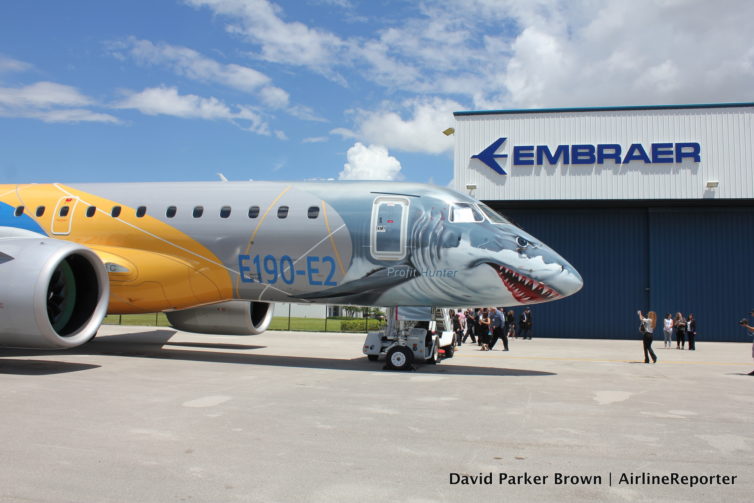
One mean looking aircraft: the first E190-E2 sits at FLL
I have to admit that it is not always easy keeping up with all aspects of the airline business. I knew Embraer was in process of upgrading their E-Jet family (called E2, as it’s the second generation), but I wasn’t sure what that really meant (I am sure LED lighting might have been involved). So, when I received an invite to fly on down to Florida to meet some executives, learn about the program, and take a flight on their E190-E2, how could I refuse? (spoiler: I didn’t!)
-
-
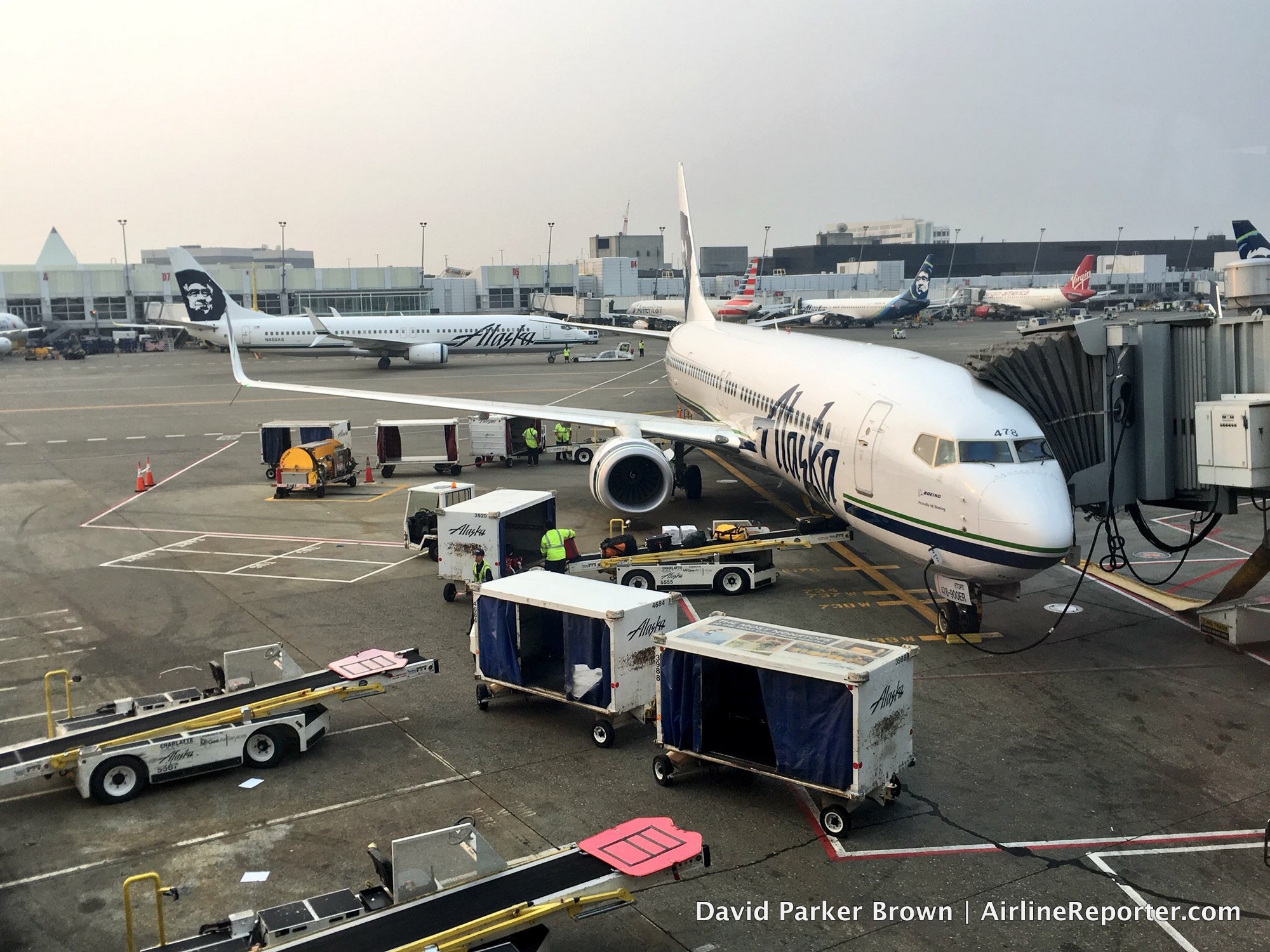
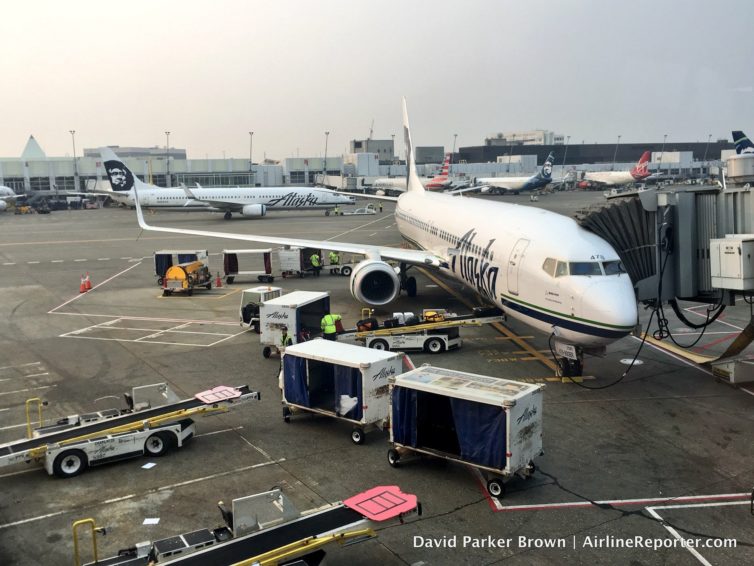
Leaving smokey Seattle (forest fires) on a 737
-
-
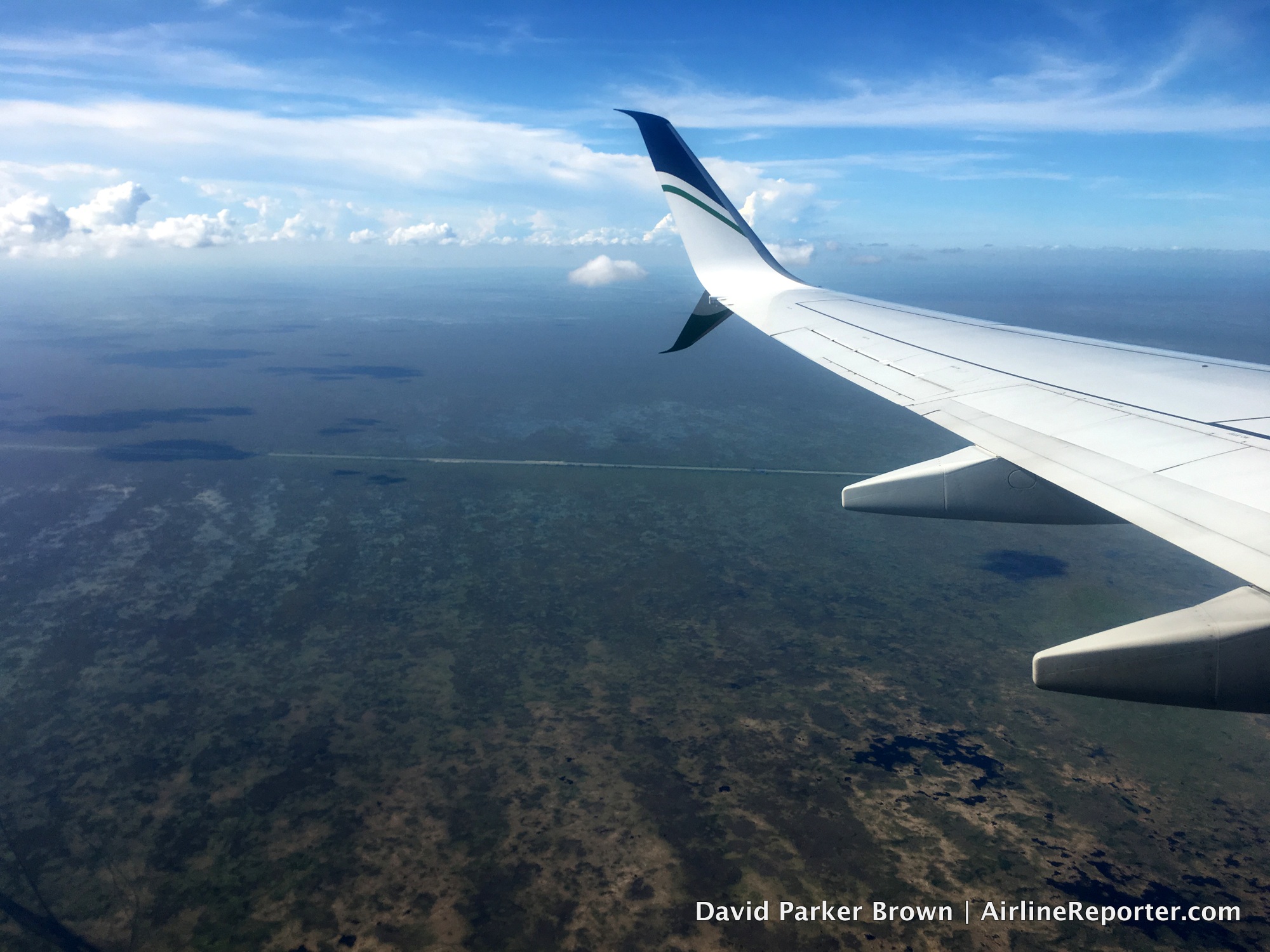
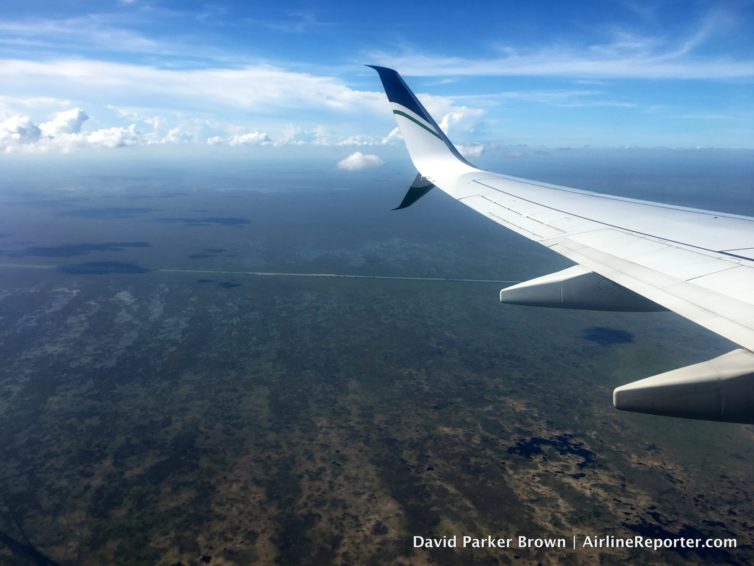
Flying over Florida’s swamp land
-
-
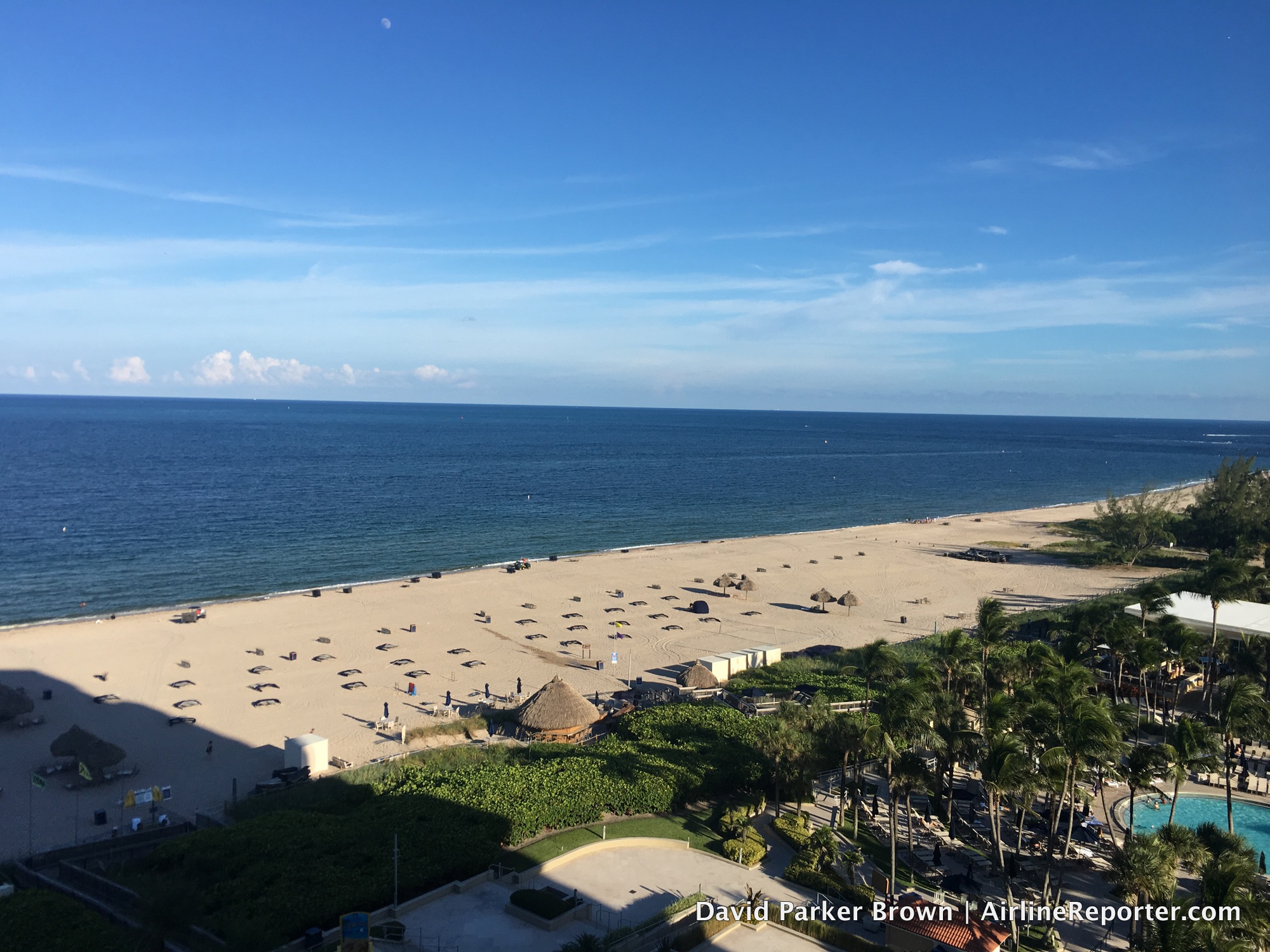
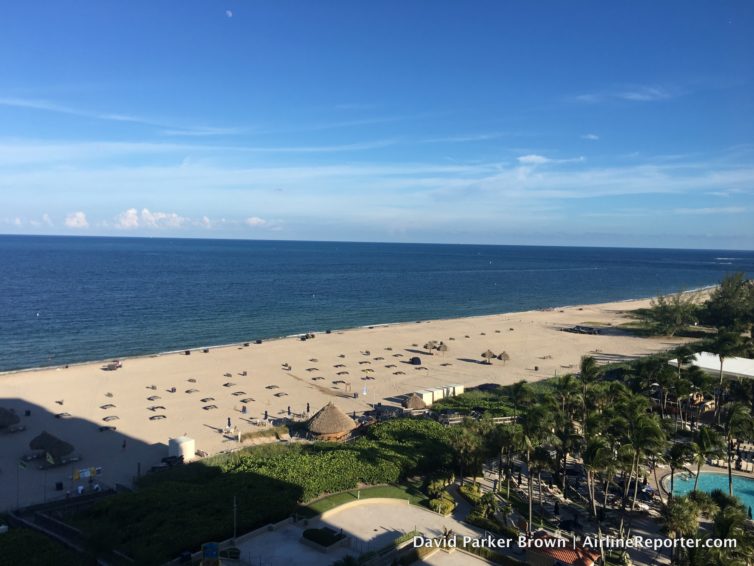
Sweet hotel beach view, but never went on the beach
It was a quick trip (what I like to call a ’œturn and burn’). I would hop on a plane (737) on Tuesday morning, head from one corner of the U.S. to the other (I like to call that a ’œdiagcon’), get some sleep (I got about four hours), get up the next day to fly on the E-Jet, and then get on another diagcon to be home by 11pm on Wednesday. Hey, I have done worse, and this trip was more than worth it!
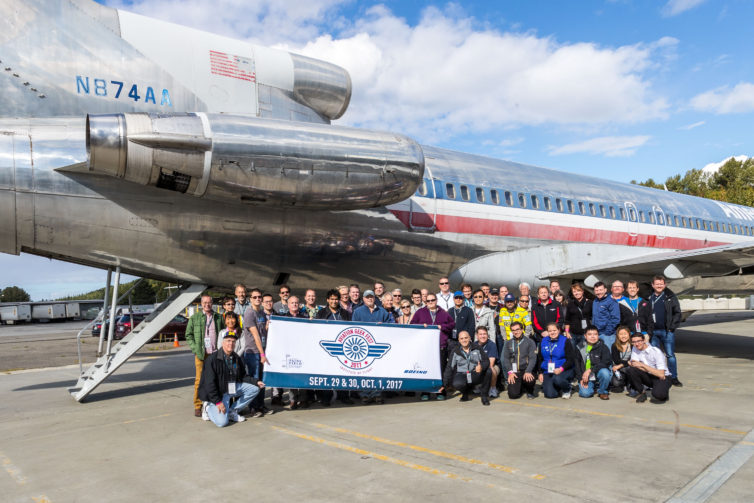
One group of AvGeeks enjoy the American 727 – Photo: Francis Zera
At the end of September we got to enjoy another amazing Aviation Geek Fest. If you follow the site, the name probably sounds familiar. It is a VIP-access event that allows AvGeeks to get together and experience some pretty cool things not typically open to the general public. This year we had people converge from around the world (guests from Argentina, Australia, Canada, France, Germany, Ireland, Israel, & USA) to Seattle, WA to partake in this three-day aviation-themed event. How cool is that?
As it has been the last in previous years, the events and activities are amazing, but you cannot beat hanging around a bunch of other like-minded folks for a few days! Everyone gets to tell their airplane stories and everyone actually wants to listen!
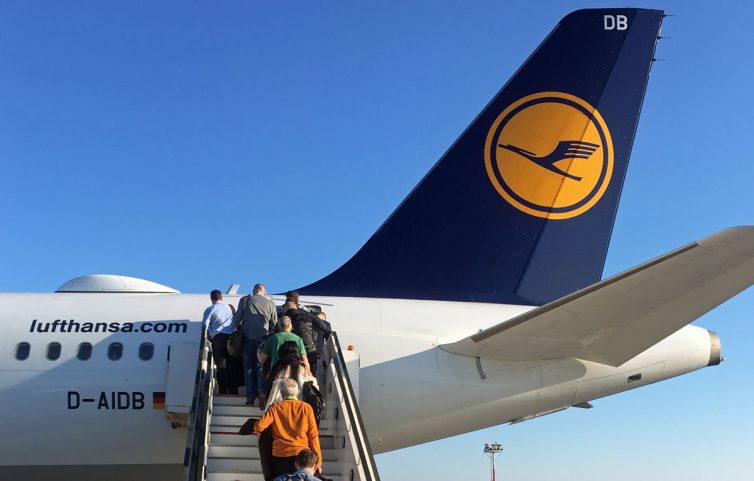
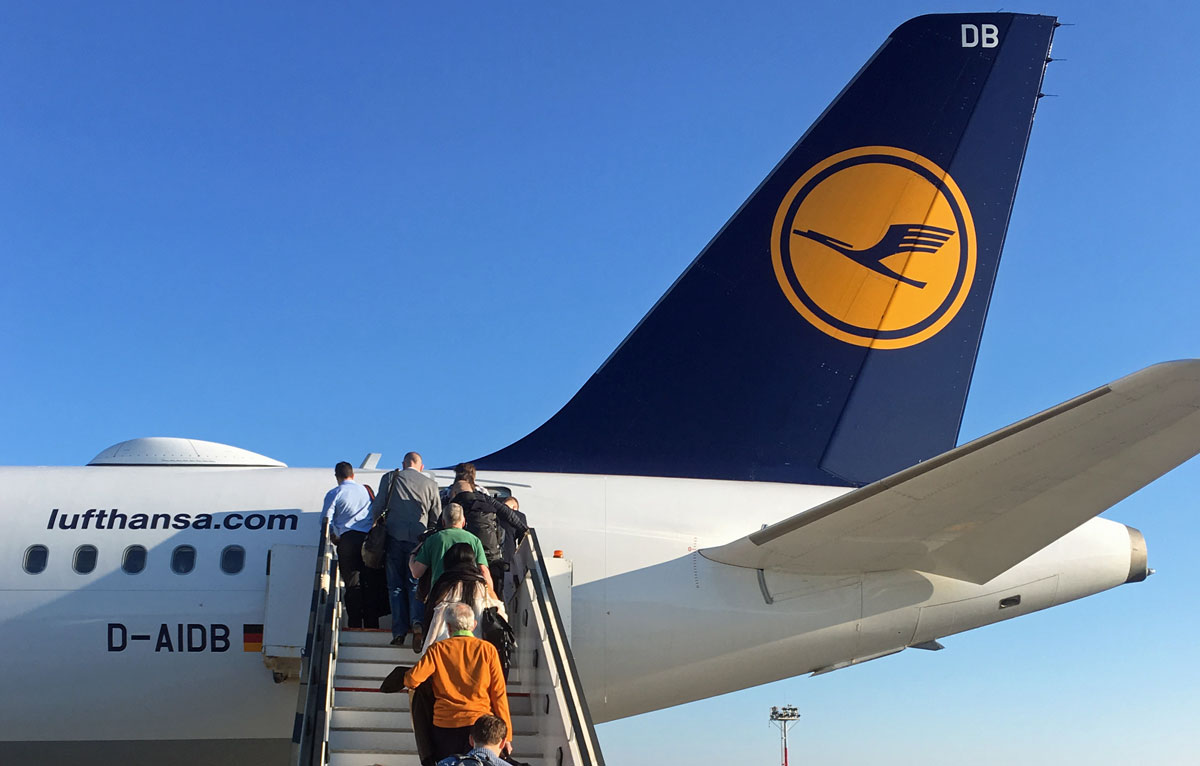
D-AIDB, one of Lufthansa’s newly-equipped IFC aircraft – Photo: JL Johnson | AirlineReporter
Here in the U.S., we have been spoiled by the ubiquity of in-flight connectivity (IFC). A few years ago the IFC saturation rate reached a level affording passengers the opportunity to adjust expectations from being a nice-to-have feature to a downright entitlement. Delta, our on-again, off-again largest domestic carrier, has long been an in-flight WiFi leader, having reached just shy of a 100% IFC-equipped fleet years ago. Thanks to early IFC pioneers like Gogo, with their ATG products, the U.S. has truly had a jump start on other markets.
Because of this, it may be surprising to our U.S. readership that IFC is not terribly common with short-to-medium-range flights in and around Europe. Lufthansa (plus subsidiaries Austrian Airlines and Eurowings) are looking to change that. In partnership with Lufthansa Technik, Honeywell Aerospace, and Inmarsat, these carriers are deploying a new IFC solution at the steady clip of eight planes per week.
I recently had the opportunity to spend some time with Lufthansa Technik to learn about Lufthansa’s new in-flight connectivity solution and even experience it first hand…
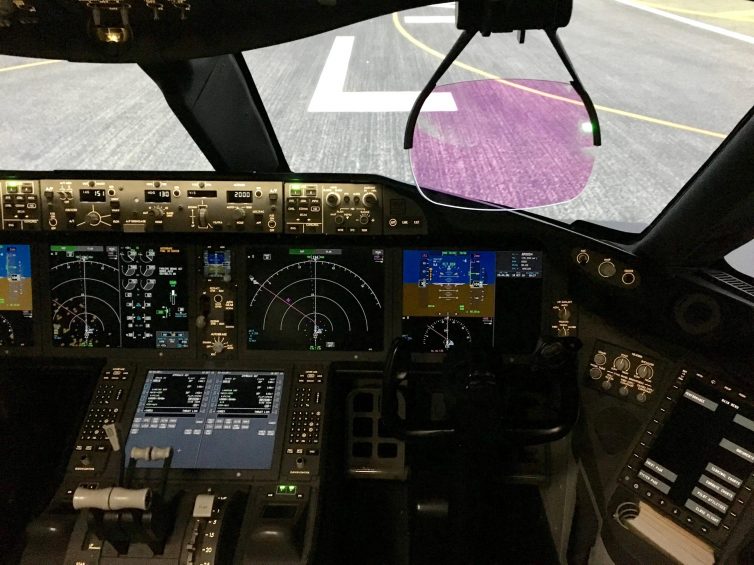
Flight deck looks so realistic! – Photo: Jason Rabinowitz | AirlineReporter
There are few things out there that given the chance to try for myself, I’ll jump at the opportunity. An hour in a level D Boeing 787 simulator is one of those things. In November 2015, Aeromexico cut the ribbon on its brand new 787 simulator, and last week it invited me down to Mexico City to experience it firsthand.
Level D means the simulator is as complex and realistic as it gets. Pilots are able to transition from other aircraft types such as the 737 over to the 787 and earn their type rating on these machines. Before I had my time in the right seat of the simulator, I’d have to sit in row 25 of a 737 to get down to Mexico City.
Between the extremely limited simulator availability and my little remaining vacation time (I used two of my three weeks for the year in March on a trip to Japan and regret nothing), I had to make the trip as short as possible. After much debate, I settled on taking a 9am flight out of New York JFK down to Mexico City, hit the sim, and then take the 1:20am flight back home the next day to get back to work.
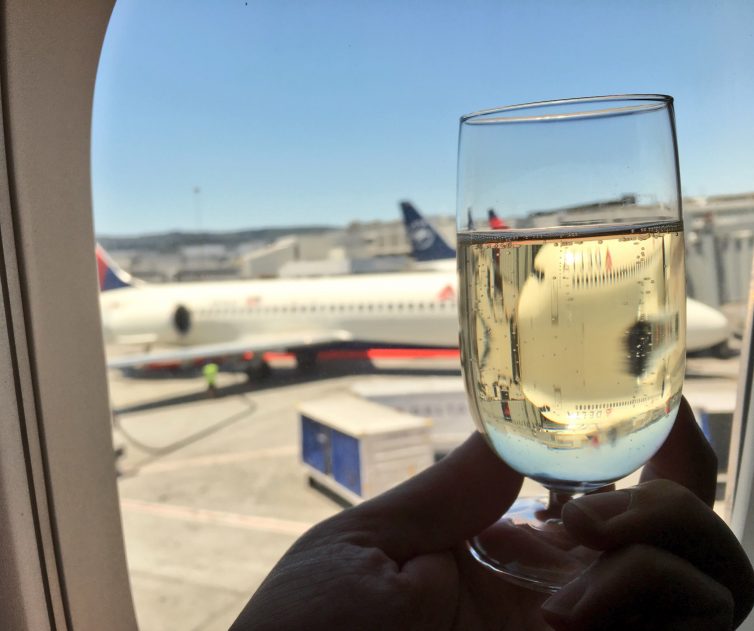
When life gives you lemons, make champagne – Photo: Jason Rabinowitz
Delta Air Lines likes to call itself the ’œthe on-time machine.’ Heck, they even filed for trademark protection of that term. Indeed, the airline does have a statistically high on-time performance and completion factor. But what happens when your flight is one of the minority that does get delayed? And what if I actually wanted it to be delayed? Weird, right?
Recently, I had to fly from San Jose (SJC) to New York City. San Jose is one of those oddball cities where the flights back to New York are lacking; just one non-stop exists, and it’s a redeye, which I won’t do. This meant I could get a little creative while booking. I settled on a one-hop journey through Salt Lake City, which would be my first visit to Utah.
During the booking process, the Delta website prompted me several times to upgrade to First Class. For $120, I would be upgraded on both legs of the trip, which isn’t such a bad deal considering I have paid nearly that much for Comfort+ domestically. I took the bait and selected my new seats, expecting to fly on a beat up ex-Northwest Airbus A319 and one of the older Boeing 737-800s with seatback entertainment screens.
The morning of my flight, I was minding my own business, watching TV in my hotel room when I suddenly got an email, text message, and app alert from Delta. Here we go, it’s the delay notification carpet bomb. My flight from San Jose to Salt Lake City was suddenly delayed three hours, meaning I wouldn’t have a chance at making the connecting flight (the last of the day) to New York. It was time to get creative if I wanted to get home.