Around the World

Miles flown in 2013 for stories: 141,861

Advertisement

Buy Wholesale products for your airline business on DHgate.com

Syndication


Advertisement

Buy many rc helicopters on Tmart.com and Free Shipping

Advertisement

Helicopter training school including beginners helicopter lessons and helicopter charter company.

Narrow Body Aircraft and the 757 – a Popular Long Haul Option?

An American Airlines 757-200 at Los Angeles, a sight that can't last forever - Photo: Mal Muir / AirlineReporter.com

An American Airlines 757-200 at Los Angeles, a sight that can’t last forever – Photo: Mal Muir / AirlineReporter.com

If you fly long-haul in North America you have probably flown on a narrow bodied aircraft. Whether it be transcontinental flights between the coasts or flying transatlantic between the USA and Europe, the North American airlines just love to use these smaller, more efficient aircraft.  For me, the daddy of these aircraft is the Boeing 757, which is no longer in production but still is the stalwart of the narrow bodies.

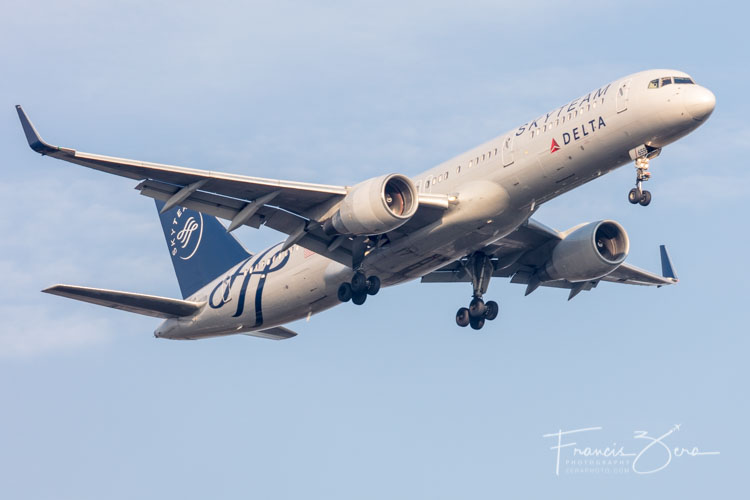
Flying with Delta, United, US Airways and American Airlines you will more than likely step onto a 757-200 or the super long 757-300 for a flight to Hawaii, New York or even London.  But what happens when this aircraft goes out of service?  What is there to replace it? As the 757s start to be retired from service due to age (US Airways is already doing this), the airlines are going to have to start replacing these aircraft with something… but what?

A Rough Chart showing Etops 60 vs Etops 120 between New York and London

A Rough Chart showing Etops 60 vs Etops 120 between New York and London

You need to look first at what makes these aircraft so popular: the passenger to range ratio.  The 757 has that unique mix of enough passengers on-board with the range to get it over an ocean or across a large continent without a hassle, while still maintaining reasonable fuel burn costs.  The narrow body set up (single aisle) allows the flight to serve routes, and especially cities, which would not be able to handle the wide body (generally double aisle) aircraft such as the Boeing 767, Boeing 777 or Airbus A330.

Historically if you were going to fly long-haul you needed four engines. Even as far back as the Boeing 707 or the Douglas DC 8, these aircraft were designed to fly those long haul routes with engines for backup, should one fail.  Then along came aircraft like the Boeing 757, 767 and Airbus A300.  They only had two engines, but were still able to cover long distances over water with only minor changes.

Although ETOPS (Extended Range Twin Engine Operations) has been around for quite some time it had always been restricted 60 minutes, then it was extended to 120 minutes.  The 120 extension came in to help flights across the Atlantic to London.


A United 757-300, the Aircraft that never ends - Photo: Mal Muir / AirlineReporter.com

A United 757-300, the Aircraft that never ends – Photo: Mal Muir / AirlineReporter.com

At a 60 minute rating they would have to fly from New York to London over Iceland to ensure that there was a landing site in range within 60 minutes.  With new engine & navigation technology, came the introduction of 120 rating (though 180 minute etops is now the standard).  It meant you could go direct over the ocean without a worry, as half way across you would still be within 2 hours of Iceland or New York or London.  This revolutionized air travel.

As technology progressed more, the ETOPS ratings extended out, with Boeing currently holding a 330 minute rating for the 777 & 787 aircraft. Airbus is expecting a 350 minute rating for the new A350 XWB.

Today, narrow body aircraft serve plenty of ETOPS routes.  Alaska Airlines operates the Boeing 737-800 & 900 from the west coast to Hawaii and there are quite a few rumors that Southwest might join them with their 737-800′s as well.

The A320 family though does some interesting ETOPS flights as well.  The Airbus A318, also known as the Baby Bus, flies across the Atlantic with British Airways and Air Canada  Air Canada flies an A319; a long way to go on such a small aircraft.  When you have long thin routes (long distance, small amount of passengers) you need to use an appropriate aircraft.

But which aircraft will most likely fill the gap that the 757 will leave?  Boeing has the 737-900ER and variants of the new 737 Max as well. Airbus is offering the A321 and soon the A321neo.

The A320neo family should extend the range of this aircraft by a good 600 miles.  This could be the difference of serving a route or not and combines the capacity of the original A321, with the range of an A319 (the aircraft in the Airbus narrow body family with the longest range).

American Airlines has selected the A321 to replace its aging 757-200s and 767-200s on its transcontinental routes.  Hawaiian Airlines just ordered the A321neo to expand its ETOPS operations. Flights from Honolulu to Los Angeles for instance are in the range of an A321neo and by utilizing this aircraft, they can free up some of their A330s or 767s to serve other, longer routes or routes that need the higher capacity. The A321neo will allow them to expand to possible new markets that do not have the demand for the larger A330 or 767.

Other airlines, like Icelandair, which currently only operates a fleet of Boeing 757s, are planning to expand their operations by introducing 12 737 MAX 8 and 9 aircraft. United Airlines, which currently has over 150 757s has ordered 100 737 MAX aircraft, which many will be used to replace the aging 757s.

Mock up of what Hawaiian Airlines Airbus A321NEO will look like. Aircraft image from Airbus.

Mock up of what Hawaiian Airlines Airbus A321NEO will look like. Aircraft image from Airbus, edited by Brandon Farris.

The new Airbus A321neo and 737 9 MAX will change the narrow body long range family, as it takes over those routes the 757 currently serves.  This will also put more 757s on the market and possibly low cost carriers like Allegiant Air, might be able to add more 757s to their fleet and expand their ETOPs flights.

These aircraft and other new ones like it should replace those venerable 757s flying the sky at the moment.  It will be good for those flying on-board, as new aircraft means a better on-board experience, but for some like me, it will be a sad day to see fewer 757s take flight.  Seeing that ungainly long body of the 757-300, which looks like it shouldn’t exist on such a thin aircraft, is an amazing sight. When you step on-board, the single aisle looks like it will never end.  Hopefully these new aircraft can inspire similar thoughts amongst future generations of AvGeeks.

This story written by…Malcolm Muir, Lead Correspondent. Mal is an Australian Avgeek now living and working in Seattle. With a passion for aircraft photography, traveling and the fun that combining the two can bring. Insights into the aviation world with a bit of a perspective thanks to working in the travel industry.@BigMalX | BigMal’s World | Photos

Image: Icelandair Commits to Purchasing 12 Boeing 737 MAX Aircraft

Boeing illustration showing what the Boeing 737 MAX will look like with Icelandair livery.

Boeing illustration showing what the Boeing 737 MAX will look like with Icelandair livery.

Boeing and Icelandair announced a commitment today for 12 MAX 8 and MAX 9 aircraft. Currently, the airline only operates the Boeing 757, with a fleet of 23.

“This commitment is the result of our research into what aircraft manufacturers have on offer to help us strengthen and grow our fleet and our network towards the future,” said Bjorgolfur Johannsson, Icelandair Group president and CEO. “We have had a successful relationship with Boeing for decades and we are pleased to continue our cooperation for years to come.”

It appears that the airline will not be replacing their 757 fleet (although some of the older 757s will likely be rotated out of service) with the 737 MAX, but supplementing it.

Icelandair currenlty only operates the Boeing 757. Image by: Daniel Jones / djlpbb40.

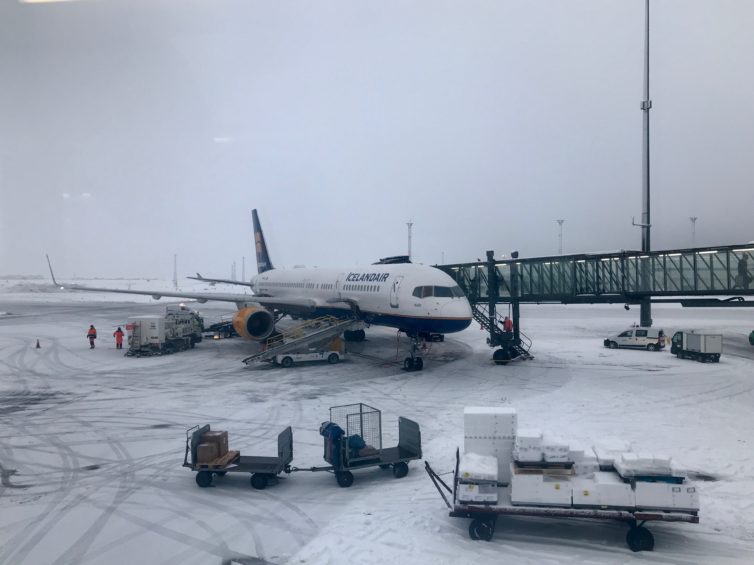
Icelandair currently only operates the Boeing 757. Image by: Daniel Jones / djlpbb40.

“Over the past decades, Icelandair has successfully utilized its all-Boeing 757 fleet to establish its Reykjavik-based hub as an important gateway between Europe and North America,” said Todd Nelp, vice president of European Sales, Boeing Commercial Airplanes. “The introduction of the 737 MAX to Icelandair’s operation will complement its existing 757 fleet and ensure the carrier’s continued expansion across both continents, offering significant fuel saving with unrivaled passenger comfort.”

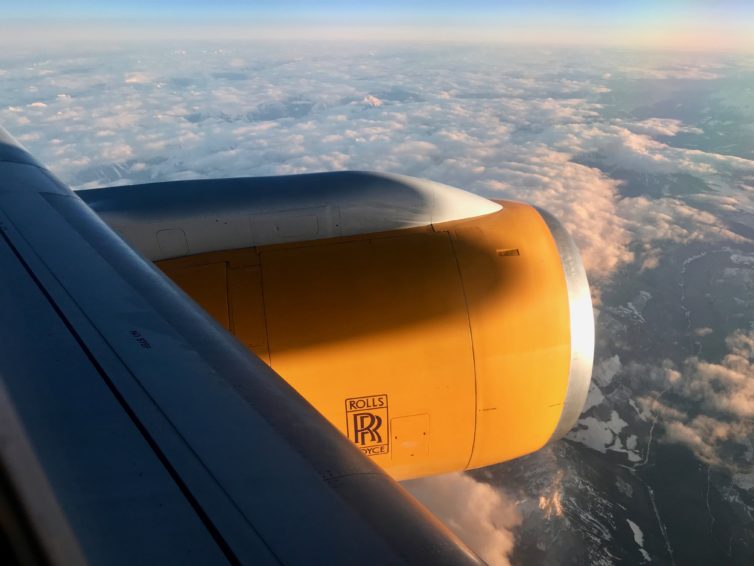
The Icelandair livery has always looked quite impressive on the Boeing 757 and I feel almost equally so on the MAX. One has to love those yellow nacelles.

This story written by…

David Parker Brown, Editor & Founder. David started AirlineReporter.com in the summer of 2008, but has had a passion for aviation since he was a kid. Born and raised in the Seattle area (where he is currently based) has surely had an influence and he couldn’t imagine living anywhere else in the world.

@AirlineReporter | Flickr | YouTube

Allegiant to Add Airbus A319 to Fleet

What Allegiant's Airbus A319s will look like. Image from Allegiant.

What Allegiant’s Airbus A319s will look like. Image from Allegiant.

Today, Allegiant Air has announced that they plan to add 19 Airbus A319s into their fleet.

Allegiant will lease nine A319′s from GE Capital Aviation Services (GECAS) and also lease 10 A319s from Cebu Pacific Air. The first two A319s are expected to start service during the second quarter of 2013.

The aircraft, which will be configured with 156 economy class seats, will not be new and aged seven to ten years old at the time of delivery.

Can Allegiant’s success of a one model fleet, still exist with a fleet of three different aircraft types? Traditionally, Allegiant only flew MD-80 aircraft and more recently added the 757-200. Now, with a third aircraft type, that greatly increases training and maintenance costs. In a presentation given today, Allegiant stated that, “Pilot transition/training -less efficient, but manageable,” and that “Economics dictate this added complexity is worthwhile.”

“The A319 is a new aircraft type for Allegiant, but we otherwise see this as a continuation of our existing business model,” said Andrew C. Levy, Allegiant President. “A319 asset values have significantly declined and now mirror the environment we saw when we first began buying MD-80s.”

Allegiant is hoping to place the A319s on routes that are just marginally profitable for the MD-80 aircraft. The A319 is 25% cheaper per block hour with fuel and 40% lower on maintenance than the MD-80 aircraft. Also, the range of the A319 is greater with a 3,600 nm vs just 1400 nm, allowing Allegiant to look at longer route opportunities. At this time, the airline is not planning on increasing fleet utilization.

The airline is planning to retire two MD-80s, which have heavy maintenance checks coming up, but do not have future retirement plans at this time. By 2015, Allegiant is planning to be operating 56 MD-80s (58 now), six Boeing 757s (four now) and 19 Airbus A319s (0 now).

Buying the A319 is not a fleeting changing plan, but a fleet growth plan. There is no question that Allegiant got a great deal on the A319, since multiple airlines are dumping that smaller model for larger A320 and A321 aircraft. Soon, there will be more A320CEOs in the market, as airlines upgrade to the A320NEO family.

I would not be surprised to see additional A320 family of aircraft join Allegiant’s fleet before 2015. There will be a lot of change with the airline in the next coming years that will test their ability to succeed. I have a feeling that with the demand for rock bottom airfares increasing, they might be able to pull this off.

Allegiant Air Receives ETOPS Certification to Fly 757′s to Hawaii – Finally

One of Allegiant Air's Boeing 757s (N902NV) while still in Everett, WA.

One of Allegiant Air's Boeing 757s (N902NV) while still in Everett, WA.

The journey from rumors that Allegiant Air was to add Boeing 757-200s during the summer 2010 to their fleet to now receiving ETOPS and Flag Carrier Status status from the Federal Aviation Administration has been long.

Last summer, it was a let down for Allegiant, when the FAA gave them authorization to fly the new aircraft type, but they would not give the airline ETOPS certification to fly over the water to Hawaii. Over the past year, Allegiant has been flying a few 757s on routes in the continental US to gain experience. That experience is finally paying off and starting at the end of this month, the airline will start service to Honolulu, followed by Maui in November. Allegiant’s non-stop service plan to Honolulu:

Las Vegas – begins June 29
Fresno, Calif. – begins June 30
Bellingham, Wash. – begins November 15
Monterey, Calif – begins November 16
Eugene, Ore. – begins November 17
Santa Maria, Calif. – begins November 17
Stockton, Calif. – begins November 18

Allegiant will also offer nonstop air service to Maui from:
Bellingham, Wash. – begins November 14

“This is an important day for Allegiant,” Andrew C. Levy, Allegiant Travel Company President, said. “Obtaining ETOPS and Flag Carrier status not only clears the path for our new service to Hawaii, but also opens up potential international opportunities and will play an important role in our company’s future growth.  Our operations team worked long and hard to ensure the completion of this certification and we thank them for their dedication in achieving this important goal.”

Currently, Allegiant operates a fleet of 58 MD-80 aircraft and four Boeing 757-200s. They still have two additional 757s that are being leased. Allegiant plans to put one 757 into service during fourth quarter 2012 and the second first quarter of 2013.

Allegiant is still planning to grow and is looking at other route options. Previously Levy has stated that the airline is looking at the possibility of flying to Canada, Mexico and even South America.

Guest Review: Flying Icelandair from Seattle to France

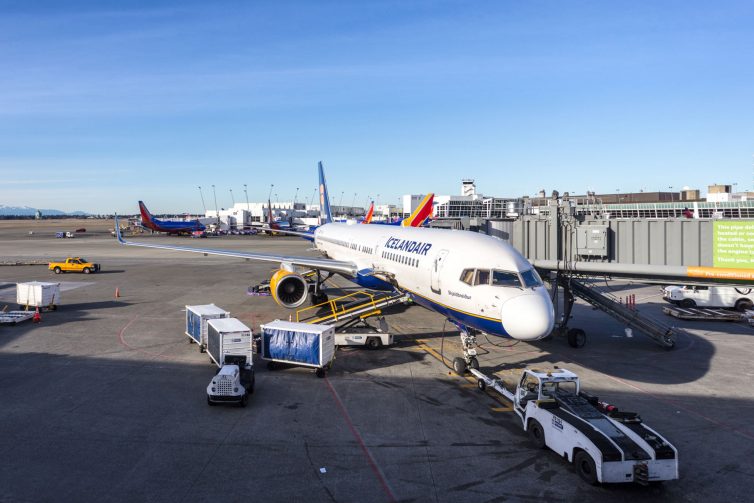
Icelandair's Boeing 757 sits at Seattle, waiting to be towed to its gate. Photo by Ben Whalen / AirlineReporter.com

Icelandair's Boeing 757 sits at Seattle, waiting to be towed to its gate. Photo by Ben Whalen / AirlineReporter.com

My friend Ben recently made the trip from Seattle to France and had a number of choices to going. After quite a bit of research (and many questions to me) he decided on trying out Icelandair, which flies from Seattle-Tacoma International Airport (SEA) to Keflavík International Airport (KEF) before changing planes and flying to Paris-Charles de Gaulle Airport (CDG). Since I have never flown on Icelandair, I asked him to write a review for me. Here is his Icelandair review in his own words:

ICELANDAIR REVIEW: SEATTLE TO PARIS

I bought the ticket online today, February 2nd, 2012 and the online process was a bit confusing. They first have you select your home airport and then the dates which are all simple enough.

This however is a bit confusing when you are used to the mm/dd/yyyy format, which most people use in the US. Icelandair has theirs in the dd/mm/yyyy format making me have to triple check that I was flying on April 7th not July 4th. Then unlike other websites where you can type in the airport code CDG for example I had to type the city name Paris. Okay, maybe these are not the biggest deals, but first impressions matter.

The rest of the ordering was simple enough. On the flight to Paris, I chose the cheaper economy class and on the way back it was only $47 more for the economy comfort. I figured it was worth the extra money to check out the differences. I was able to choose my seats for all of the legs except one where it showed no seats available, which is always annoying.

The economy class and economy comfort has a 3-3 layout. Photo by Benjamin Whalen / AirlineReporter.com

The economy class and economy comfort has a 3-3 layout. Photo by Benjamin Whalen / AirlineReporter.com

It is now April 7th, the day of my flight. I show up a few hours early and head to check in. Although they run only one flight per day out of Seattle, the airline had their own ticket counter with three lines: Economy, Comfort and Saga.

Because I was a bit early, there was no line and the front counter lady was extremely nice, checked my passport, and tagged up my luggage. My passport was in a cover and she organized my tickets and baggage claim tickets nicely in the different compartments then could tell by my fresh passport that I likely have not flown from the international terminal recently (wait Ben… “recently” wasn’t your last international flight like 13yrs ago? – David) and gave me directions.

I go through security and was disappointed that the body scanners weren’t operating; I was hoping to show off. My flight departed from the S-Terminal, so I the short train ride over. When I arrived at the gate the plane was parked across just sitting by itself away from the terminal.

Later, I found out that the flight from Iceland to Seattle lands an hour after the one from Seattle to Iceland leaves so one of their 757s sits on the ground 23 hours every day. About an hour before boarding they towed my aircraft to the gate.

Boarding was pretty painless and typical. They load first class (Saga) first then fill from the back.

Each seat has its own in-flight entertainment system, although I wish there were more options. Photo by Benjamin Whalen / AirlineReporter.com

Each seat has its own in-flight entertainment system, although I wish there were more options. Photo by Benjamin Whalen / AirlineReporter.com

It was a full flight but I didn’t have any trouble getting my stuff in the overhead bin. Everyone had a pillow and blanket on their seats and the IFE system displayed fun facts about Iceland such as the prime ministers phone number is listed in the phone book and that every Icelander can trace their family back to the original settlers.

As we were taxing, the IFE system started working. You could pay $4 for headphones provided by the airline or use your own. The IFE consists of about 30 movies and 11 TV shows, but they most only showed the pilot episodes. I thought this would be plenty, but after 24 hours in the air (round trip), my choices felt quite limited.

The food service started as soon as we started to level off. Being fairly close to the front of the economy section, I only had to wait about 15 minutes to get my food and beverage. But the food doesn’t come free and everyone must pay, which takes time.

You have to pay for the food, but it isn't too bad. Photo by Benjamin Whalen / AirlineReporter.com

You have to pay for the food, but it isn't too bad. Photo by Benjamin Whalen / AirlineReporter.com

After choosing the main hot meal and a beer, the flight attendant said it would cost twenty four hundred — uh WHAT? At first she thought I was being cheap but then realized I was just an ignorant American and gave me the cost in US currency — $18. Not too cheap. I noticed that a good majority of people declined a meal and drink.

Upon arrival in Iceland I had 50 minutes before the next leg of my trip to Paris. We were led off the plane through a series of passageways and then we had to go through security again. The downside to this is I had a liter of water in a Nalgene bottle I had filled up in Seattle and it was chug it or lose it. There was no opportunity to dump it out.

Once through security and getting my passport stamped into Iceland, I still had time to check out the gift shop before heading to my gate (thanks for not getting me anything –David). Boarding in Iceland was a bit different. The gates were just in the hallways and the flights weren’t announced. Because it was a hallway, people just naturally were lined up and they just started boarding without announcing anything. The remaining leg of the flight was pretty uneventful.

Upon arrival in Paris we disembarked and by the time I made it to the baggage claim I only had to wait two minutes for my bag to arrive.

The signs diving the different classes can be moved to offer quite a bit of versitility. Photo by Benjamin Whalen / AirlineReporter.com

The signs diving the different classes can be moved to offer quite a bit of versatility. Photo by Benjamin Whalen / AirlineReporter.com

BACK HOME, PARIS TO SEATTLE ON ICELANDAIR

The check-in process was a bit odd in France. The notes on the ticket for comfort Economy stated there would be a separate check-ins, however there was only Economy and Saga check-in. After 20 minutes in line the gate agent was quite abrupt and told me to stop when he was the next free agent. When he finally let me approach and after a minute of looking at my passport he just handed me a ticket and pointed to the security line.

I thought his abruptness may have been a language barrier thing as I am non-French speaker in France but then I heard him speak fine English to the next person asking questions.

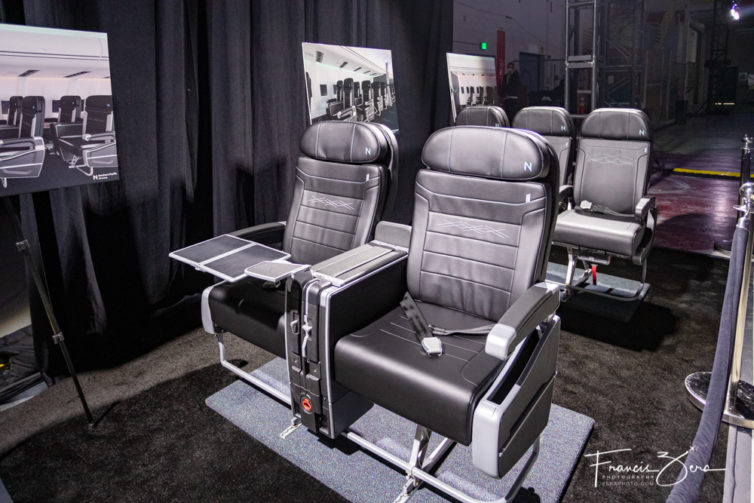
When buying my ticket for this leg there were no seat options available. Turns out I got put in seat 4A, which was actually a Saga class seat. I was able to sit in the 2-2 Saga class, but still received Economy Comfort level of service. There were moveable signs on the seat backs marking the separation from Saga and Economy Class seats.

The Saga seats were plush with plenty of leg room the info card said 39″ pitch in first class, 33″ in comfort and 32″ in coach. The only other difference I noted was a much nicer pillow. It was not a bad deal having a Saga Class seat with a lower level of service.

Food in economy comfort is free, except for spirits and champagne. I had the sandwich of the day which was a chicken and a cheese thing, a gull beer, and an Icelandic milk chocolate bar. All of which tasted decent (I say this after spending a week dining on French cuisine).

I was able to sit in Saga Class, which has a 2-2 layout, but still received Economy Comfort service. Photo by Benjamin Whalen / AirlineReporter.com

I was able to sit in Saga Class, which has a 2-2 layout, but still received Economy Comfort service. Photo by Benjamin Whalen / AirlineReporter.com

After landing back in Iceland, I had 90minutes and was excited to check out the lounge that you have access to with an upgraded ticket. We were guided out of the plane and directed through passport control after which I could easily locate my gate however could not find the lounge.

The airport at KEF looks very simple and clean with hardwood and glass everywhere. The challenging part is there is not much seating at the gates which are long hallways so people are standing around crowded a bit.

This time I was in an actual comfort class seat it is an economy seat with an inch more leg room and the center seat has a tray folded down. I got lucky with my seat being 9C because it was by the loading door and gave me an extra four feet of leg room. If you get this seat, I suggest boarding last, since I had the whole plane squeezing by me as they boarded.

The seven hour flight from Iceland to Seattle was pretty uneventful, which I prefer on a flight. We landed on time even after taking off a few minutes later than scheduled.

Overall I would recommend Iceland air when traveling to Europe. They seem to have the scheduling down for very short layovers. Their whole fleet is 757s which seems to take less time to load. If you choose economy either plan to pay for the food or pack your own. The only other downside is their IFE is quite limited I watched all the tv shows and most of the movies. If the ticket is not much more, I wold suggest springing for economy comfort. It gets you much better service more legroom and not having to fight over the shared armrest.