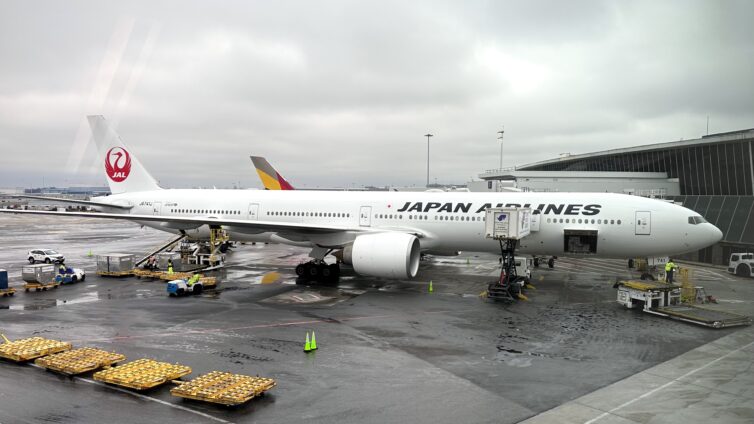
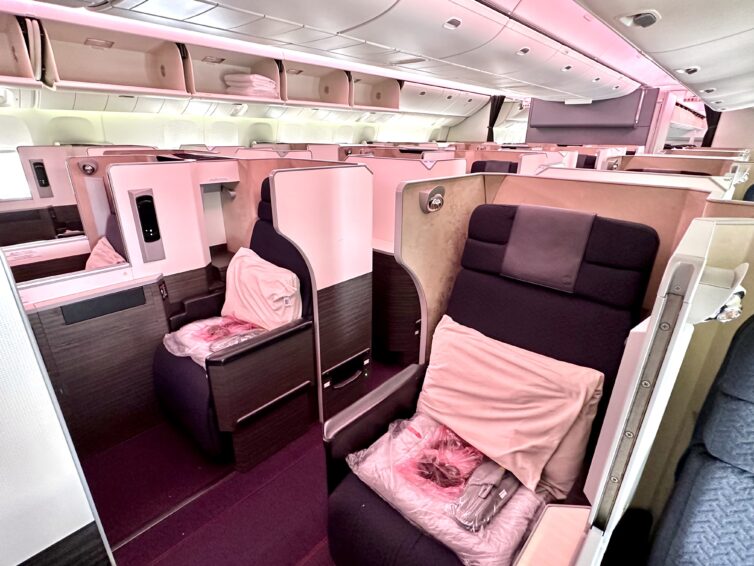
Sometimes it’s hard to beat a classic. Japan Airlines’ 777-300ERs are the heavy lifter of their long-haul fleet. And although the current premium cabins have been flying for around ten years, they’re still a fan favorite.
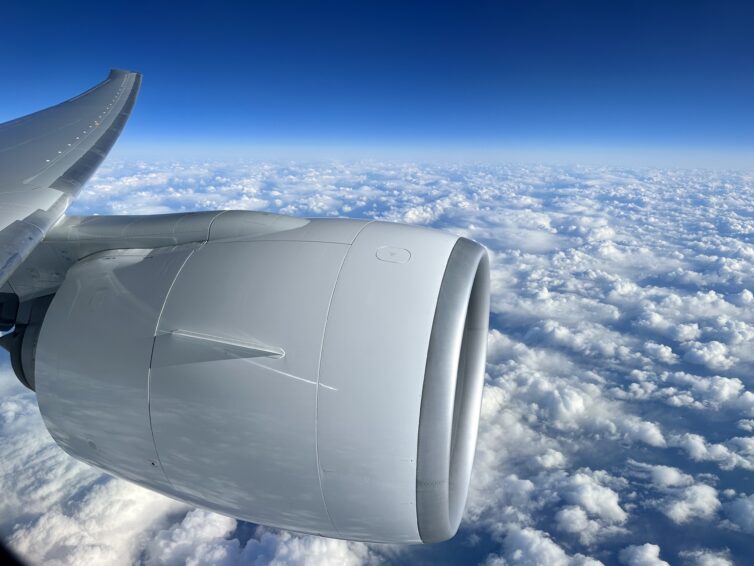
I had my first chance to fly JAL’s Sky Suite business class on a flagship route from New York JFK to Tokyo Haneda – now I completely understand why it’s so popular. As an added bonus the window seat views were pretty amazing, since it was nothing but daylight for the full 15 hours from boarding to deplaning.
Read on for more photos, videos, and highlights from this classic long-haul route.
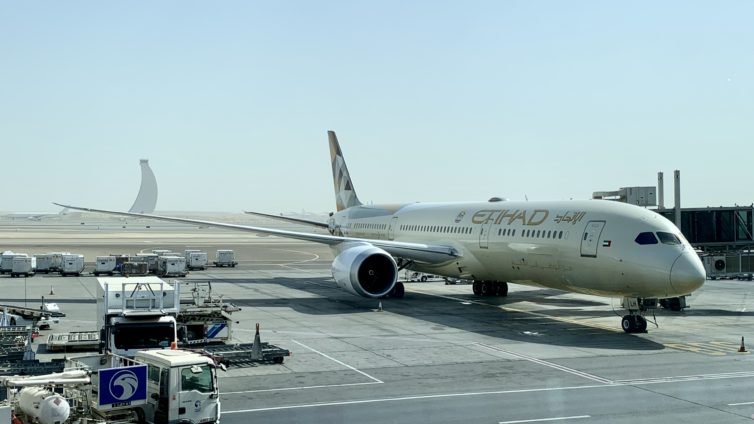
A few months ago I wrote about a flight in Etihad’s 787 business class. Later in the trip, during a long connection, I got to explore the highlights of the airline’s hub in Abu Dhabi.
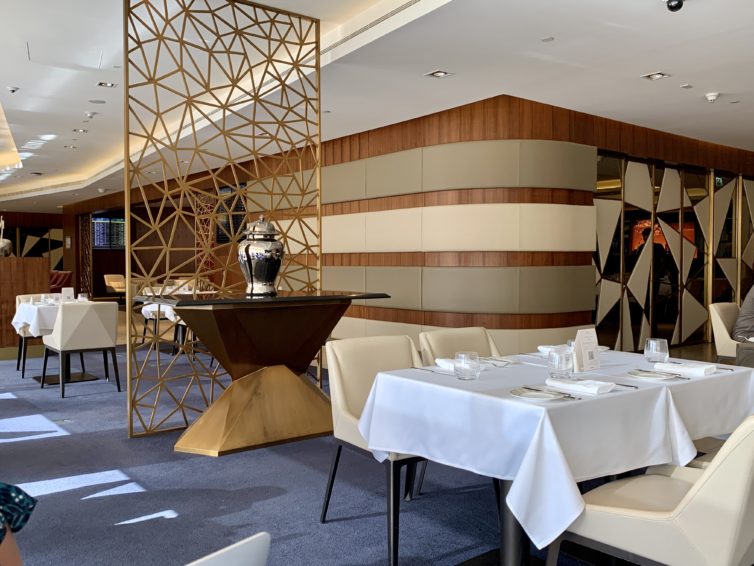
Those highlights included a free hotel program for long layovers and a unique US immigration pre-clearance facility. The pièce de résistance was a morning visit to the incredible first class lounge, with a gourmet breakfast, great views of the ramp, and even a cigar bar.
Read on for a walkthrough of Etihad’s Abu Dhabi hub, and for tips on how to take advantage if you pass through the airport yourself.
A few years ago Etihad Airways set out to streamline itself. After hitting hard times and running into fierce competition, it cut routes, cut costs, and invested in a more fuel-efficient fleet. And earlier this year Etihad announced a long-awaited return to profitability. So that part of the transformation seems to be working.
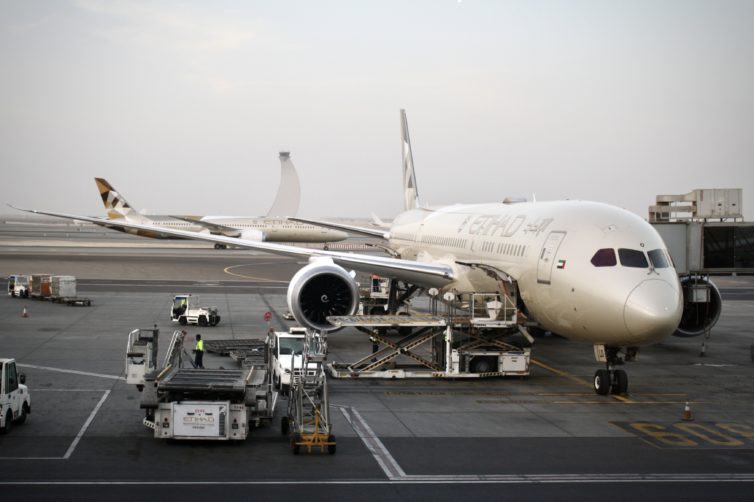
What’s better than one Dreamliner? How about Two? – Photo: Manu Venkat
But did the passenger experience take a hit from the airline’s belt-tightening? We had a chance to find while flying business class on their 787-9 Dreamliner, a staple of their leaner long-haul fleet. Read on for plenty of photos, videos, and opinions on the experience. And at the end of the story we have some fresh news about Etihad’s onboard product.
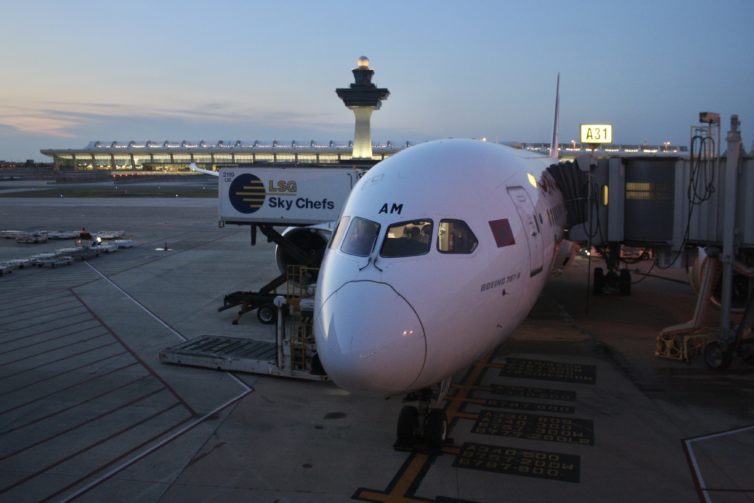
Arriving at Dulles
Our flight was in business class from Washington D.C. to Abu Dhabi. I love planespotting at Dulles, especially from onboard those goofy “mobile lounge” buses.
Etihad’s Verified to Fly program allows you to confirm your COVID vaccine related documentation in advance, which scores you access to a separate shorter check-in line. Definitely take advantage of if you can — it can mean major time savings at the airport.
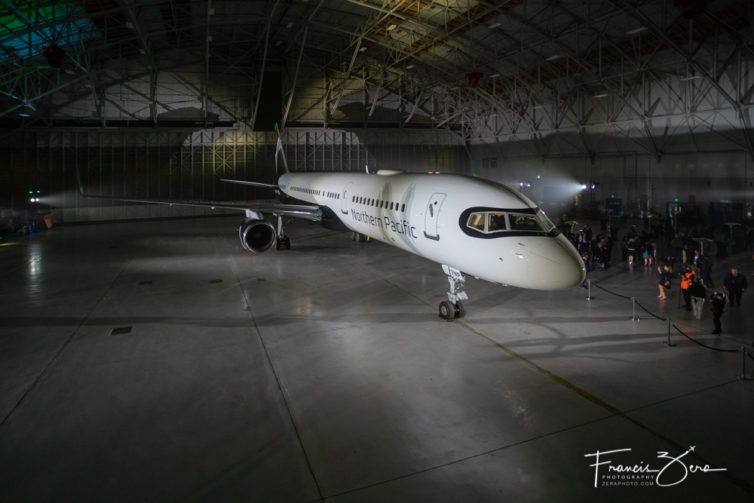
Northern Pacific’s fresh livery on it’s first 757-200 at the recent rollout event in San Bernardino, Calif.
AvGeeks loooooove liveries. An interesting livery is one of the main reasons we go planespotting – we head to the airport to see either a particular type of aircraft, or to see that aircraft wearing a special or unusual livery.
A lot of time, effort, deliberation, and money go into designing those liveries, both the special ones and the mainline designs. A new multi-part series takes a look at how those liveries are designed. Last time, we looked at Icelandair’s branding and livery refresh. Today, we’ll take a look at Northern Pacific Airways‘ mainline livery.
Edmond Huot, Northern Pacific Airways’ chief creative officer and airline designer, explained that “We were given a clean slate to design the livery, the collateral, and the name. I was given a lot of latitude, for sure, and that is the exception to the rule as projects typically come with a framework and the client might be more hands on.”
For the name of the new airline, Huot said he wanted a name that “had an inherent story to it, and I didn’t want a trendy name.”
“Northern was the first name we came up with, but the legal team came back and said we can’t do northern,” so the name eventually morphed into Northern Pacific Airways.
“The stress for me, in the world of airline design, is that you only get one or two kicks at the can, so I already knew up front we had to nail it – I did a lot of research into the factors that would influence the brand – people, regions, etc.
Naming projects are usually very tricky, and that’s when the pressure started. We actually came up with the idea on a plane flying back from a meeting with a different client.”
He continued that “The idea was to come up with a name that wasn’t typical of a LCC (low-cost carrier).”
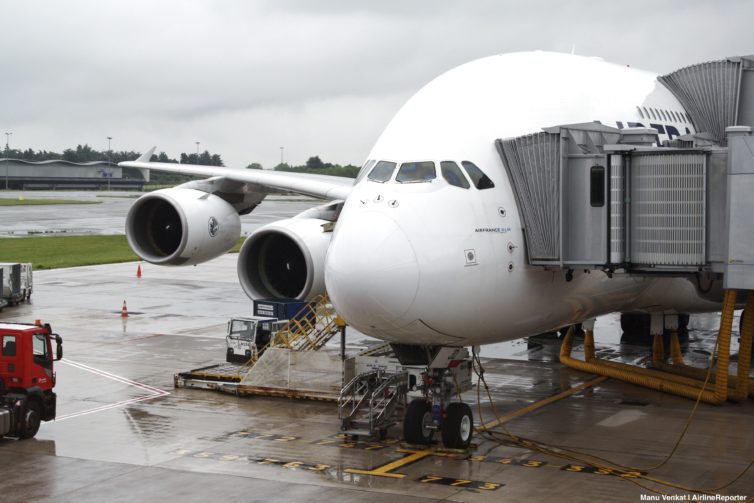
A little over ten years ago, Air France took delivery of its first Airbus A380 and flew its first commercial service from Paris to New York. Since then, the superjumbo has been the flagship of Air France’s fleet. But ten years is an eternity in the fast-moving airline world, and time takes its toll on hard-working airplanes. Air France originally announced plans to retire its A380 fleet by 2022, but with COVID capacity cuts, the airline just announced yesterday that the plane will be removed from service immediately. So whenever your last flight on an Air France A380 was — if you ever flew it — it was your last.
I had the chance to fly an Air France A380 last year on the same historic route that started its story with Air France: CDG to JFK. I’ve had some good times flying A380s in the past. My very first AirlineReporter story was a Lufthansa A380 trip report. And I got to fly a BA A380 in Club World a few years ago.
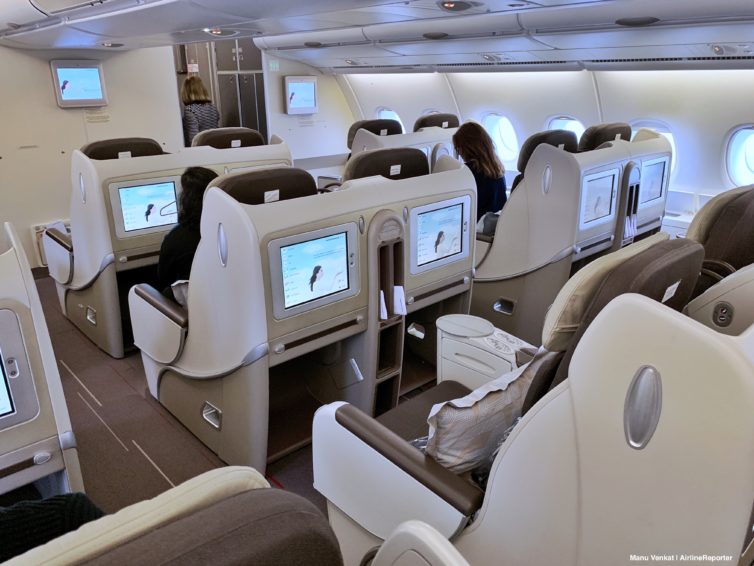
But by the time the flight was over, I could see why it was a plane that wasn’t going to be in the fleet for much longer. I did appreciate some things, like the super-smooth takeoff, whisper-quiet ride, and soaking in the spectacular scale of the double-decker. But the AF A380 is a plane that’s stuck in the past, and overall I won’t miss them much as they transition to their well-earned retirement. Whether you’re an A380 fan or a hater, read on for the full scoop.