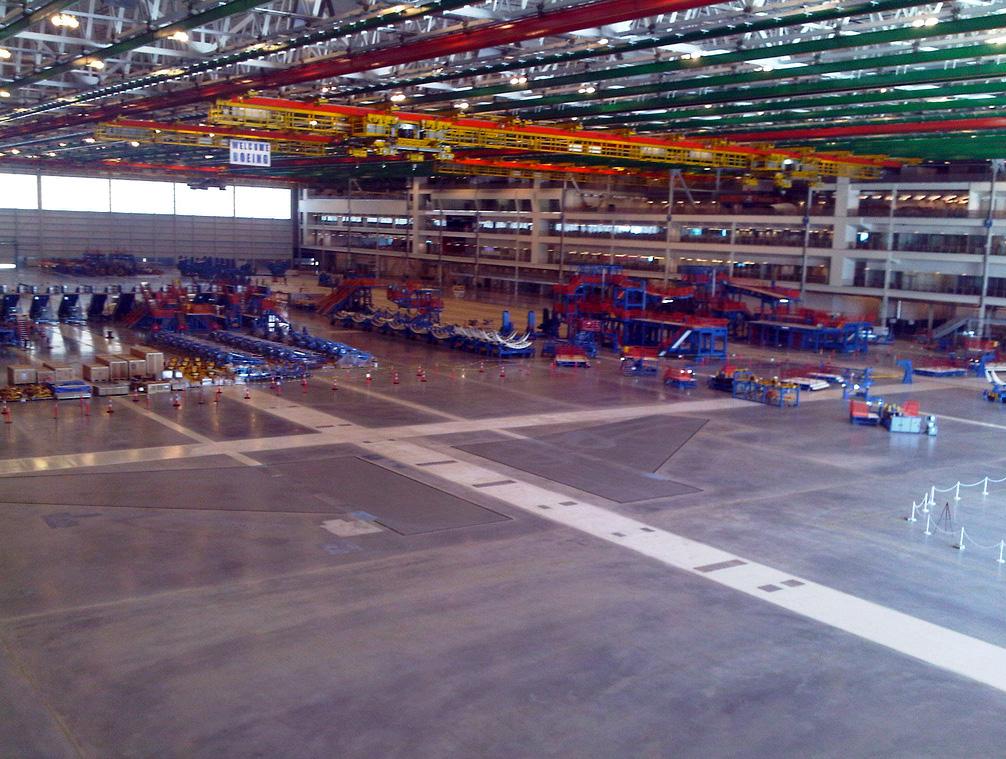
The new Final Assembly Building in South Carolina
Boeing has been busy this week releasing one important press release after another. I am a little behind still, so I decided to put them all in one easy to follow blog to keep everyone updated:
BOEING OPENS NEW SOUTH CAROLINA 787 FINAL ASSEMBLY BUILDING
Boeing has officially opened the second location where the Boeing 787 Dreamliner will be built – North Charleston South Carolina. Although the 787 is a bit behind schedule, the new facility was completed six months ahead of its origional schedule. The final assembly of the first South Carolina-built 787 Dreamliner will begin later this summer. Once up and running, the facility is expected to produce three 787 Dreamliners per month.
The new Final Assembly building encompasses 642,720 square feet and used one million cubic feet of concrete. Compare that to the Boeing Factory in Everett, WA being 4,299,967 square feet.
BOEING STARTS SHARING ON FLICKR
If you read the blog, you know I have loved following Boeing through their social media exploration. Not too long ago, they started a YouTube account adn now they have started Flickr — be sure to follow.
AIRCRAFT DELIVERY MILESTONES
This week Boeing delivered their 50th aircraft to Egyptair and their 275th Boeing 737 Next Generation to GE Capital Aviation Services (GECAS). Boeing also delivered Angola Airline’s first 777-300ER.
BOEING 747-8F FLYING TO PARIS ON BIOFUEL
This will be the first time that an airliner has flown across the Atlantic Ocean using BioFuel. Boeing pilots Capt. Keith Otsuka and Capt. Rick Braun and Cargolux Capt. Sten Rossby will fly the airplane with each of the 747-8 Freighter’s four GE GEnx-2B engines powered by a blend of 15 percent camelina-based biofuel mixed with 85 percent traditional kerosene fuel (Jet-A).
BOEING EXPECTS DEMAND FOR 33,500 NEW PLANES OVER NEXT 20 YEARS
That is a lot of moola — about $4trillion to be exact. Boeing forcasts that the world fleet will double by 2030 and obviously want to get in on the action. Boeing is concentrating on growth in China and India with most new aircraft deliveries taking place in Asian Pacific countries.
Image: Boeing
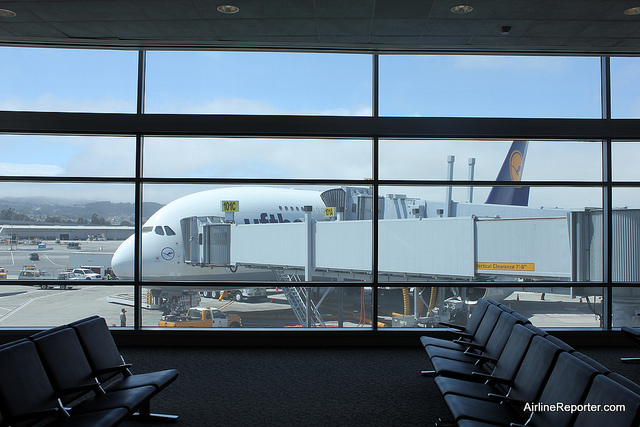
Lufthansa's Airbus A380 waits at SFO
Yesterday, San Francisco International Airport saw their first passenger carrying Airbus A380 arrive, operated by Lufthansa. Once all the passengers were able to de-plane and the aircraft was cleaned up (this was the first time that the SFO based cleaning crew cleaned up an A380), media and guests were able to take an inside look at one of Lufthansa’s seven Airbus A380’s.
I was excited, since this was my first time actually inside an A380. I had only seen one previously from the tarmac and of course I have viewed lots of photos, but there is nothing like getting inside the world’s largest commercial airliner.
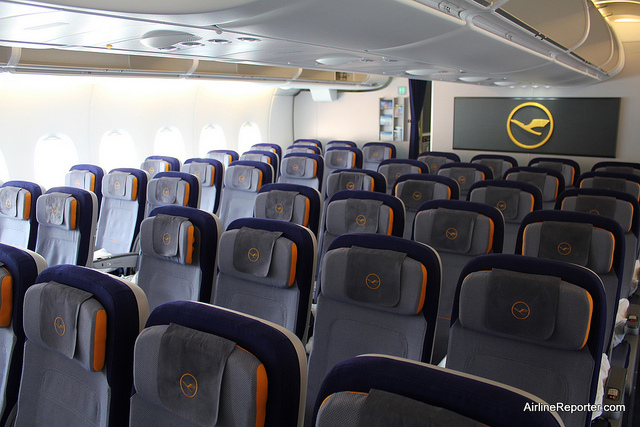
The economy class seats on Lufthansa's A380 look slick and are pretty comfy to boot.
Due to the A380’s size, there are three jetways options that passengers can board. Two are located on the bottom deck and one goes to the top. The tour started on the bottom where all 420 economy seats are located. Even though the bottom deck is long, but it doesn’t feel it, since it is broken up into individual sections. Every seat has their own in-flight entertainment system, adjustable headrest and ample legroom. Sitting in the seat, I was plenty comfortable for the three minutes I was there. Not too sure how my 6’1″, 250lbs frame would handle 11 hours if I had someone sitting next to me.
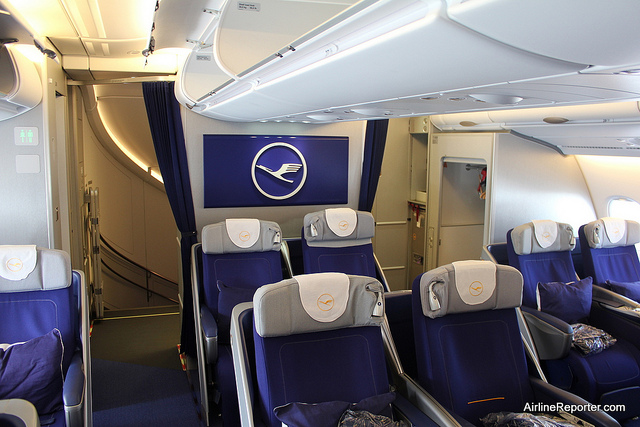
All the Business Class seats can be found on the upper deck of the A380.
On a longer flight, I would prefer to head up top where you can find 98 Business Class and eight First Class seats. One of the first things I noticed were all the seats on the aircraft were cloth. In most Business and First Class areas, one is more likely to find leather. This didn’t make the seats any less comfortable and most likely would reduce sliding when converted into a bed.
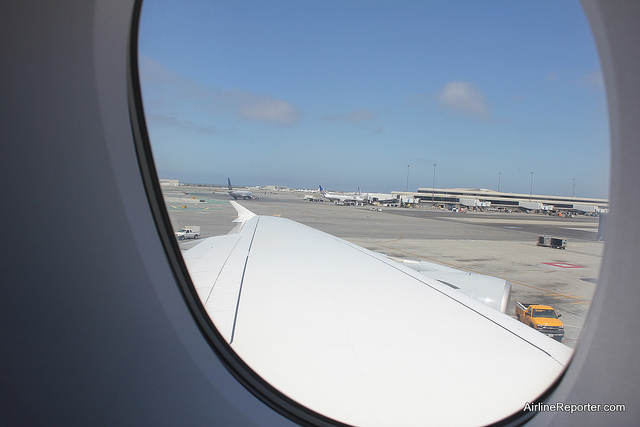
While on the upper deck, I took a look at the Airbus A380's massive wing.
While up on the second deck, I had a chance to sit down and take a look out the window. The Airbus A380 has one frek’n big wing. These large wings have 54% more surface area over a Boeing 747-400 and you can tell.
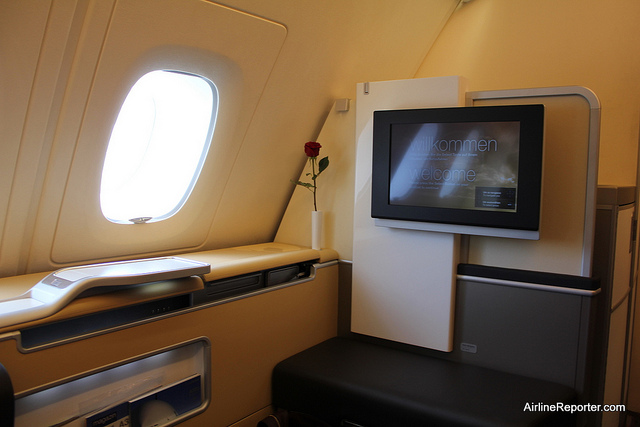
The new Lufthansa First Class has ample room and a large screen. I could easily burn 11 hours happily in this section.
The new Lufthansa First Class on the A380 was quite impressive. Each person has their own area, with large screen and fold down bed. The walls were covered in suede (or fake suede) and extra sound deadening is used to keep the sound to a minimum. The First Class cabin also has access to two very large lavatories. We are talking full sitting couch and vanity. If you ever wanted to join the mile-high club, this would be the place to do it — even all that extra sound deadening might help. From forks to roses, Lufthansa’s catering crew loads on 40,000 items for just the First Class passengers alone (yes, 40,000). That just goes to show the level of service that flying First Class provides.
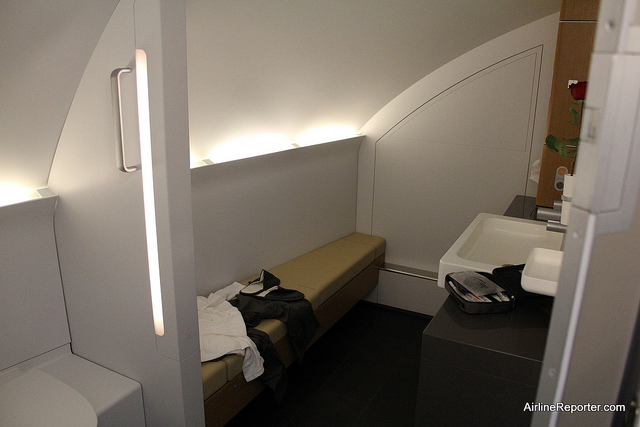
This is one of the lavatories in the First Class section. Can anyone say Mile High Club?
One thing you will find missing in the first class section are overhead bins — they are missing. Instead each seat has a storage area where passengers can store their belongings. This really adds a sense of upward space and makes the First Class cabin that much more comfortable. Even though the Business and First Class areas are what you might expect, it just doesn’t feel as exclusive on the top deck of the A380 versus the smaller top deck of the Boeing 747-400.
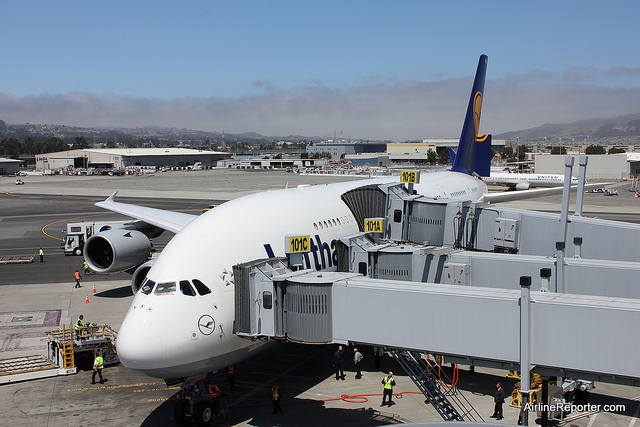
This is the first time I have seen three jet ways be used to de-plane an aircraft.
Although the A380 looks impressive pulling up to the gate, it is missing some of the grace that the Boeing 747-8 Intercontinental has in my opinion. The Airbus A380’s job is not to win any beauty contests, but to provide airlines with an economical way to move a lot of people in style and it does just that. After my tour of an A380 I am super pumped to get a ride in one and hope to write up a trip report soon.
For those of you who have flown in an Airbus A380 what have been your impressions?
CHECK OUT THE REST OF MY PHOTOS ON FLICKR
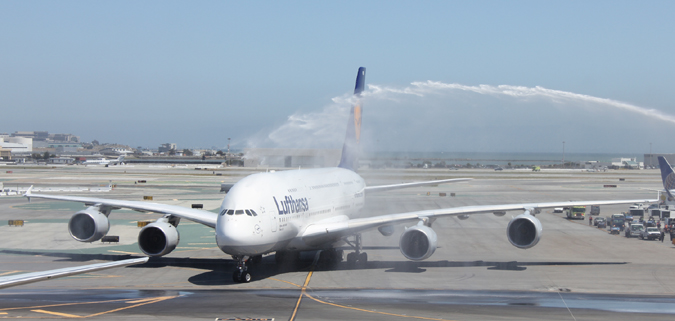
Lufthansa's Airbus A380 (D-AIMD) gets a water salute when arriving to San Francisco on May 10th.
Today was a beautiful day to fly down to San Francisco (SFO) to greet the Lufthansa’s first Airbus A380 passenger flight from Frankfurt, Germany to SFO.
The Airbus A380 is the largest passenger airliner made and it’s closest competitor will be the Boeing 747-8 Intercontinental, when it makes it to the market. I have been able to catch a glimpse of a Qantas Airbus A380 while in LAX, but this was my first time to get up close and personal. I do not think the A380 is as majestic as the Boeing 747, but she is very impressive for sure.
The event is a big deal for the airline and the city. San Francisco Mayor Edwin M. Lee has officially declared May 10, 2011, as “Lufthansa German Airlines Day.” Pretty cool when an airline gets an official city day. I am not sure it really means anything, but still neat.
The airport had to make very little updates to prepare for the A380, since the International Terminal was designed with the A380 in mind and it fit with no problems.
Lufthansa already has taken delivery of seven A380’s with an additional 15 on order.
As part of the event, we got a tour of the interior of the A380 and I will be posting that story tomorrow.
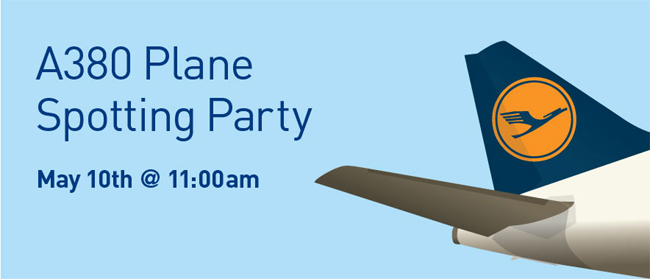 First off I want to say how cool it is that I can blog about the Boeing 747-8 Intercontinental one day and then the Airbus A380 the next for the exact airline. Anyhow, tomorrow, Tuesday May 10th at 11am, San Francisco International Airport (SFO) is hosting a “A380 Plane Spotting Party.” The shindig will start at 11am at Bayfront Park and should provide good views of Lufthansa’s Airbus A380 landing at SFO. For more information check out their website.
I am also heading down to SFO and am excited to get on an Airbus A380 for the first time. Should be able to get a full tour inside and out. Be sure to watch my Twitter (what’s Twitter?) for plenty of photo updates throughout the day tomorrow.
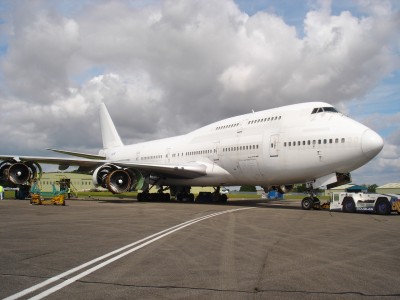
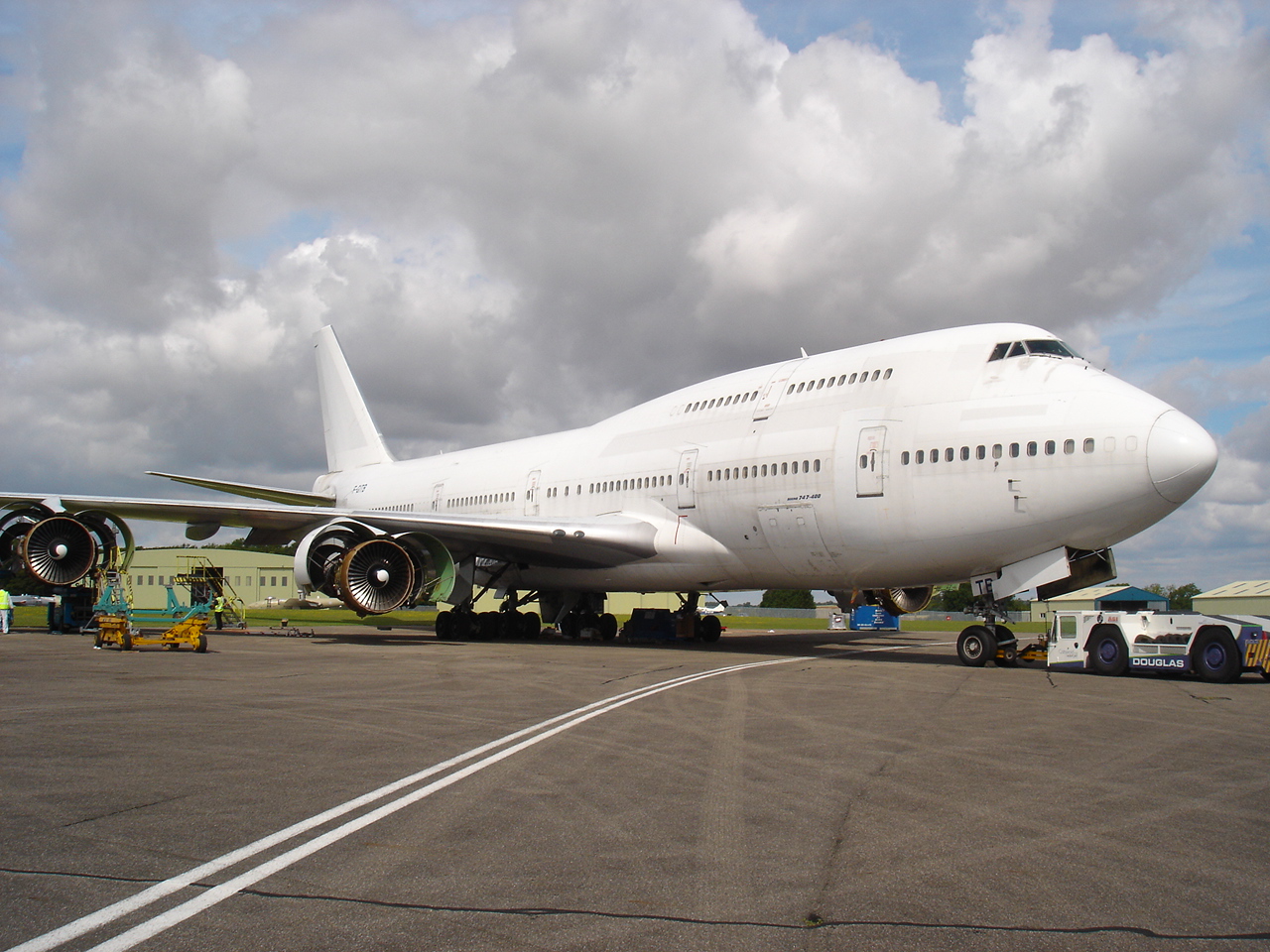
The second Boeing 747-400 (F-GITB) to be scapped. Photo from Air Salvage International Limited
The Boeing 747 starts her next chapter with the first flight of the 747-8 Intercontinental. As we look to the future of the jumbo jet, we also have started the begining of the end for the Boeing 747-400. In July 2010, the first three 747-400s were taken to Air Salvage International, located in Hampshire, UK and destroyed for salvage.
The first -400 first flew on April 29, 1988 and became the best selling 747 model. The -400 differed from the -300 with an updated cockpit, the addition of winglets, additional fuel and other odds and ends. The first three to be salvaged all served their entire lives with Air France. It is sad to think about the first Boeing 747-400’s being destroyed, never to fly again. Let’s get to know the three -400’s that were the first to go:
F-GITA:
This aircraft was delivered to Air France in February 1991. In September 1993, she was operating as flight AF072 from Paris to Los Angeles to Tahiti. The aircraft went off the end of the runway, but no one was killed and the plane was repaired and placed back into service. The aircraft was stored in February 2010 after serving Air France for almost 20 years. She has the official title of being the very first Boeing 747-400 to be scrapped.
* Photo of F-GITA being torn up via Airliners.net
* Photo of F-GITA off the runway via AirDisaster.com
* 88 pics of F-GITA’s life via Airliners.net
F-GITB:
She was delivered to Air France in May of 1991. During her almost 20 years of service for Air France, she mostly flew out of Paris Charles De Gaulle Airport (CDG). She was pulled out of service and stored in March 2010.
* 77 Photos of F-GITB via Airliners.net
F-GITC:
This is the newest of the first three to be scrapped. She was delivered to Air France in September 1991 and served just short of 19 years before being stored in April 2009.
* Photo of F-GITC wearing and experimental Air France livery
*72 photos of F-GITC via Airliners.net
While Boeing 747-400s are being destroyed, there talk of two Boeing 747-200s to fly US passengers. It might seem odd at first, but when you look at the fact that there were 694 Boeing 747-400s delivered and only 12 have been taken out of service to date, that isn’t too shabby.
“For more than 20 years, the 747-400 has helped foster the proud legacy of the 747 family. It has been the world’s favorite airplane and a proven performer,” Joanna Pickup with Boeing 747 Communications told AirlineReporter.com.
When asked what aircraft type that Boeing is hoping customers will replace their Boeing 747-400 with, Pickup explained, “The 747-8 Intercontinental is perfectly suited to serve the 400 to 500-seat market served by the 747-400, with more range, more passengers, more cargo, and with lower operating costs.”
So if you are in the market to buy a Boeing 747-400 in the next few years, you are in luck. It is likely that we will see more -400’s looking for a new home (or maybe to be made into a home) for cheap.
UPDATE: “Note that to date Air France counts in its fleet 10 B747-400. This aicraft is foreseen to be maintained in the fleet until 2016, ” Air France spokesperson explained. “Indeed, B747-400 was one of the most successful devices of an economic point of view up to the arrival of the new generation 777-300ER.”