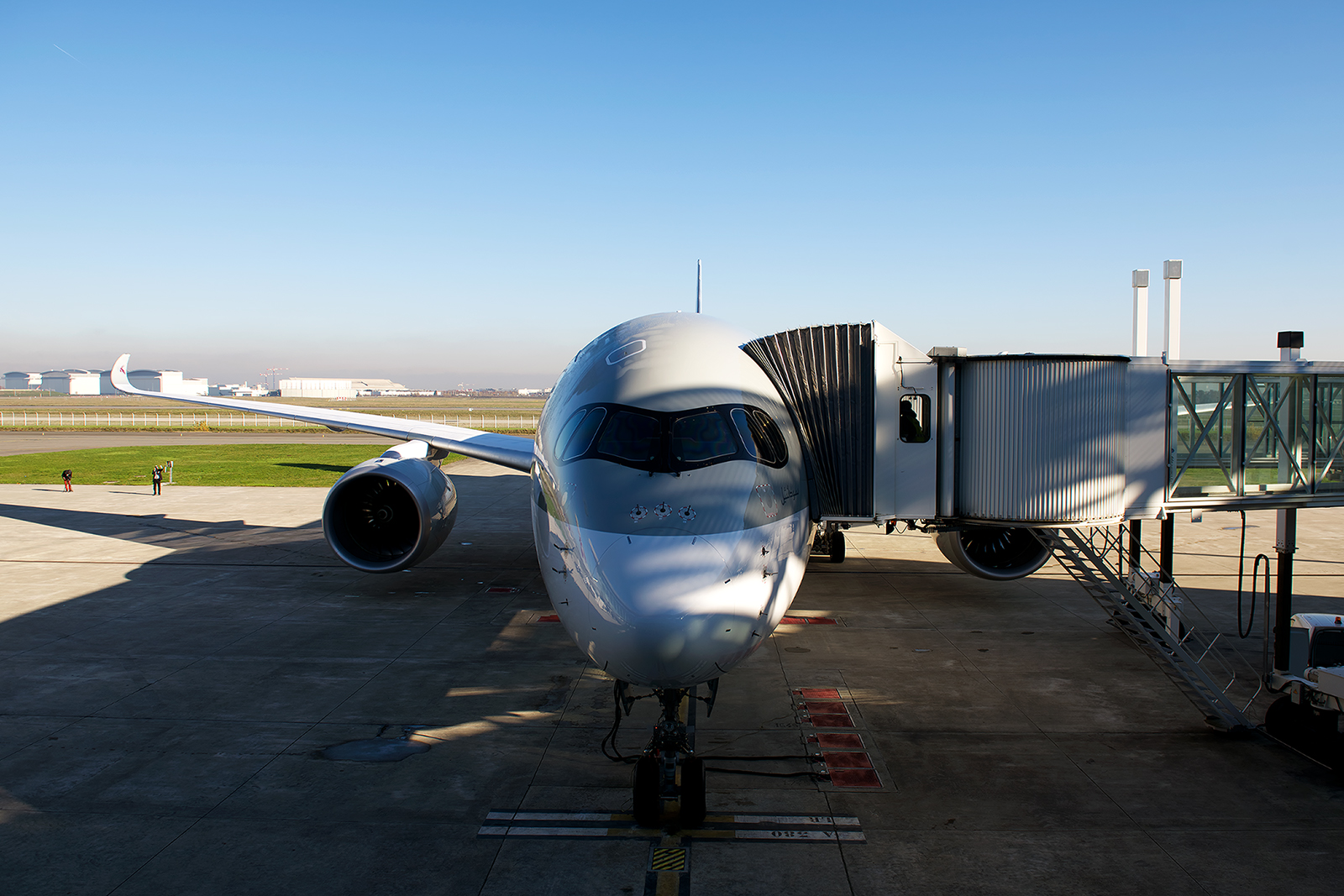
Qatar Airways’ First A350 (MSN006) at the Airbus Delivery Center – Photo: Bernie Leighton | AirlineReporter
Qatar Airways, to much fanfare, took delivery today of the first commercial A350-900. Not only is this the first serial production A350 to be delivered to a customer, it is also the first of 80 A350s headed for Qatar Airways. Qatar has 36 additional -900s on order as well as 43 -1000s.
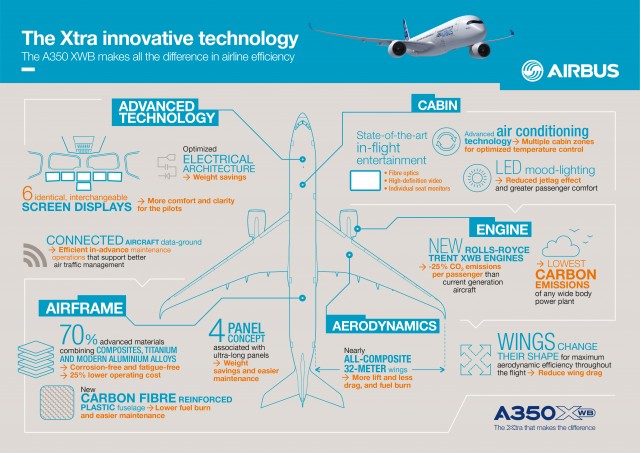
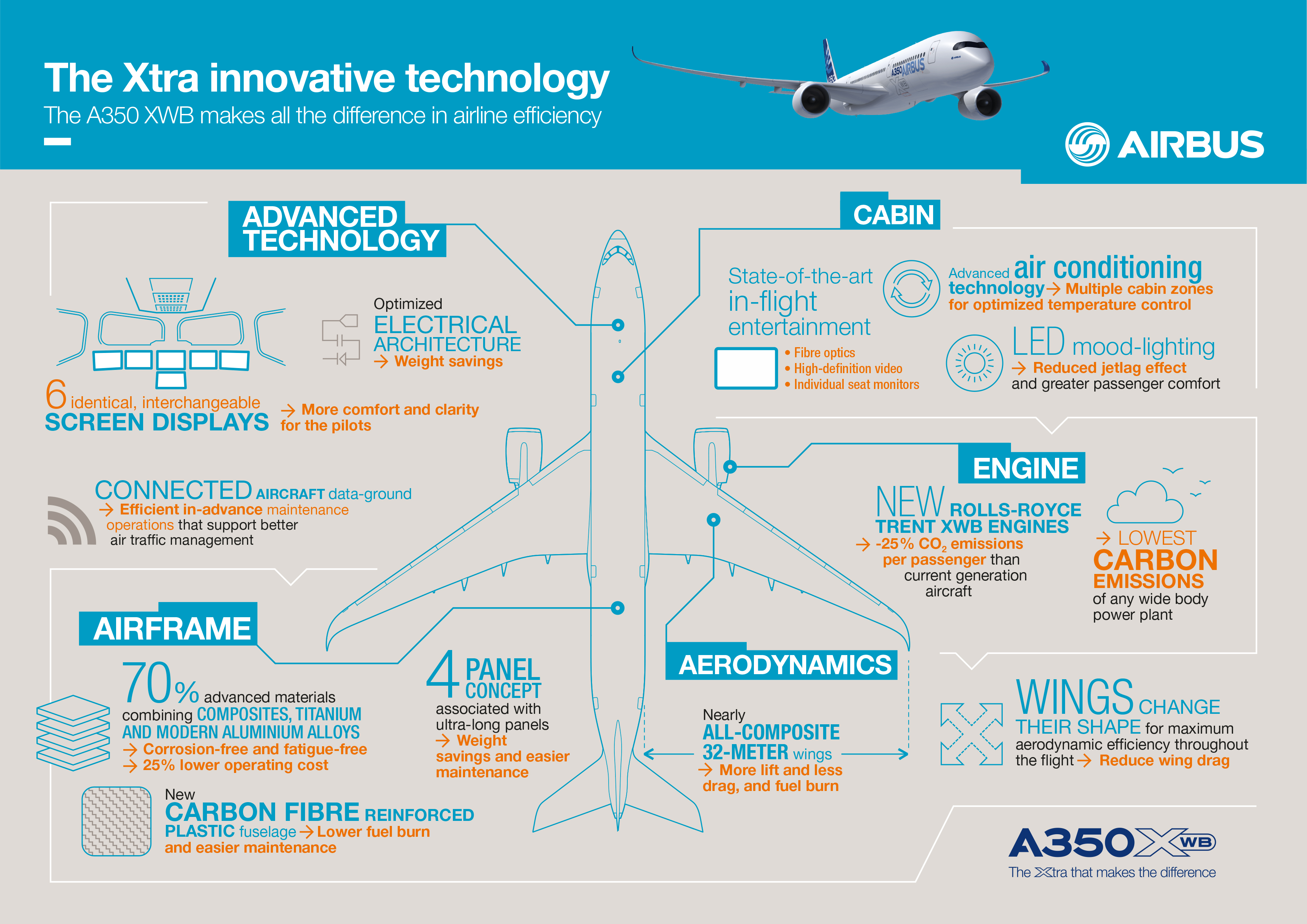
An easy way to understand the technology in the A350 – Image: Airbus
The A350 itself represents a technological leap for Airbus, as it is their first aircraft to be over 50% composite materials; 53%, technically – including the longest manufactured single pieces of carbon fiber that make up the wing assembly. The remainder of the aircraft is made up of modern metallurgical feats that manifest themselves as lighter titanium and aluminum alloys.
BONUS: OMG YES! Photos & Video of Five Airbus A350s Flying in Formation
If that wasn’t enough to impress you, the A350 is the first aircraft certified by the EASA to operate ETOPS 370 missions prior to entry-into-service (EIS). ETOPS 370 is the next phase of Extended-range Twin Operations, allowing an aircraft to be certified to fly on one engine for more than six hours. This opens up a whole host of new destinations for twin-engine aircraft, as well as adds efficiencies to existing air routes as airlines will no longer have to “hug” strategic alternate airports as tightly.
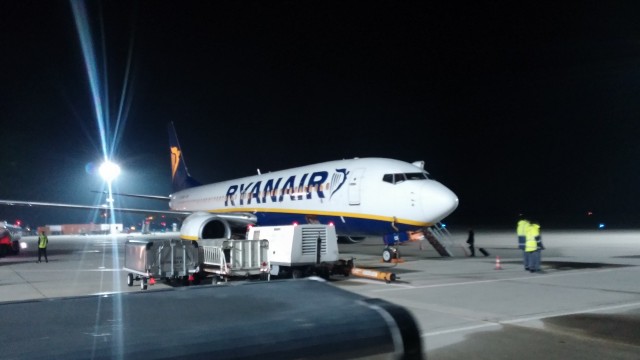
Ryanair Boeing 737-800 – Photo: Steven Paduchak
That’s right, people, it happened! Last weekend, I flew Ryanair with my buddy Dan. It was a quick weekend getaway from Frankfurt to London. We’re here in Germany on a semester abroad, and neither of us had been to the United Kingdom. Before coming over “the pond”, we knew it was on the list of places to visit.
It all started on a Wednesday afternoon. We booked the trip a few weeks prior, and we were counting down the days. We all know Ryanair. They’re known for having the cheapest airfare in the industry; making the airline beloved here in all of Europe. The Dublin-based air carrier offered us each a forty euro (yes, you read that right) roundtrip from Frankfurt to London. That’s a huge deal, flying between two major European markets.
I knew after a deal this unbelievable, there’d be some sort of catch. In the end, there definitely was. Left and right, we were advised we had to pay for everything; printing off boarding passes, seat selection, food, etc… Being cautious of something like this, we came well prepared with food and boarding passes already printed off, so we managed to avoid all the imposed fees.
The day finally came, and we were on our way. To our surprise, however, the airport we flew out of was FOREVER away. It was one of the biggest catches we didn’t realize until our journey. The airline flies into the smaller and medium-sized airports in order to avoid the hefty landing fees imposed by the major international locations. This is completely understandable – we all want to save money whenever we can, right?

Antares explodes following a loss of thrust – Photo: NASA
The last week of October, 2014 was not a good one for commercial space flight. The week started with Orbital Sciences (OSC) attempting to launch their Antares rocket, carrying their unmanned Cygnus cargo vessel to the International Space Station. After a cancelled launch on Monday for a boat in the safety zone, the second attempt on Tuesday ended in failure.
Seven seconds after liftoff, a catastrophic failure in one or both of the engines caused the rocket to lose all thrust and fall back onto the launch pad, with a large explosion. OSC had launched the Antares four times previously with success, three of those times carrying a Cygnus craft. The company has been a major player in the spaceflight industry for over 30 years, having proven themselves with their unique Pegasus rocket, and a wide range of commercial satellites that they produce for various customers.
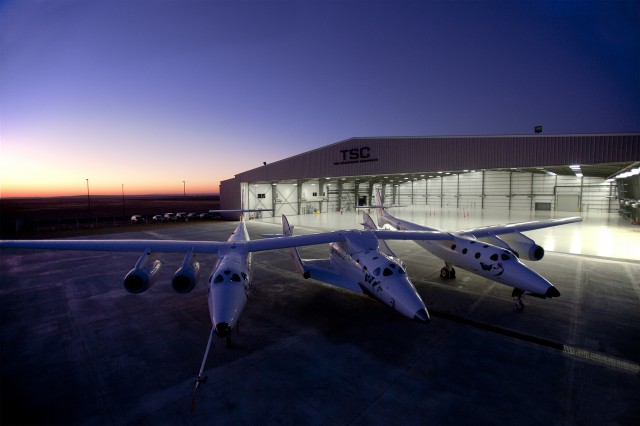
WhiteKnightTwo and SpaceShipTwo togther – Photo: Virgin Galactic
With the failure of the Antares still fresh in everyone’s mind, on the following Friday, Virgin Galactic prepared for a test flight of their private space passenger vehicle, SpaceShipTwo. Shortly after 10:00AM PST, Virgin sent out a cryptic tweet: “#SpaceShipTwo has experienced an in-flight anomaly.” That anomaly turned out to be a worst-case scenario, with the craft breaking up 55,000 ft above the Mojave Desert for still-unkown reasons. With one pilot in serious condition, the other was not as lucky. Mark Alsbury was the latest test pilot to pay the ultimate sacrifice in the pursuit of pushing aviation to the limits. Over the past 70 years, hundreds of brave pilots gave their all for the same purpose, and it has not been in vain.
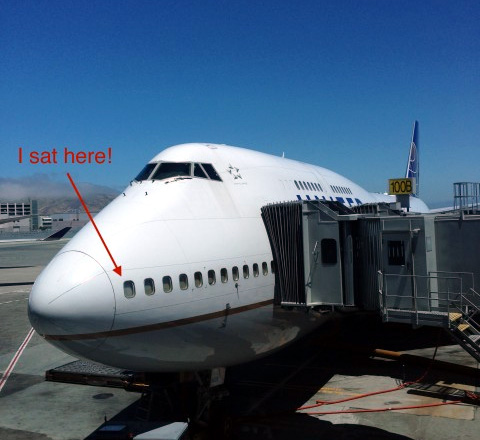
I’ve always wanted to fly in seat 1A on a 747 – Photo: Blaine Nickeson | AirlineReporter
Recently, my wife and I took a trip to Japan to celebrate our 10th wedding anniversary. Because we have two toddlers (who were NOT coming with us), we wanted to travel in luxury and make it something very special.
Besides being an AvGeek, I also happen to be very savvy with airline miles and hotel points. While that’s not a topic AirlineReporter focuses on (there are lots of great sites out there that do), I booked all of our flights using United miles that I’ve collected through various means.
On the outbound, I booked us DEN-SFO-NRT, with the SFO-NRT segment operated by the 747-400 (the bulk of United’s 747s operate out of SFO to Asia, with a handful of 747 flights also based out of Chicago O’Hare). I could have booked us on United’s direct flight from Denver, operated by a Dreamliner, but United’s 787 fleet doesn’t feature a first class cabin (which United calls “Global First”). Also, I really wanted to check out the United Global First Lounge in San Francisco.
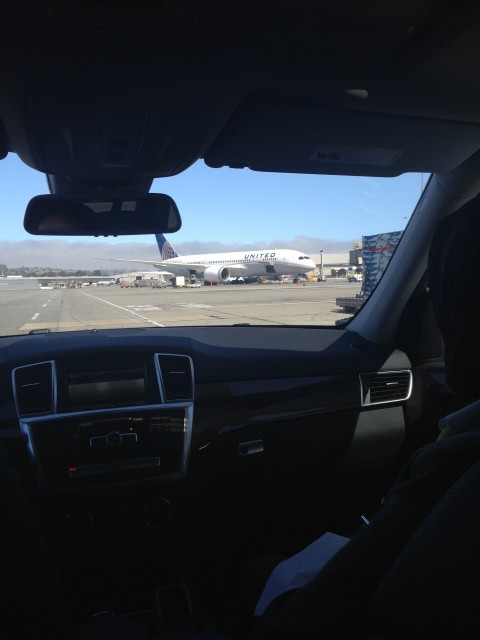
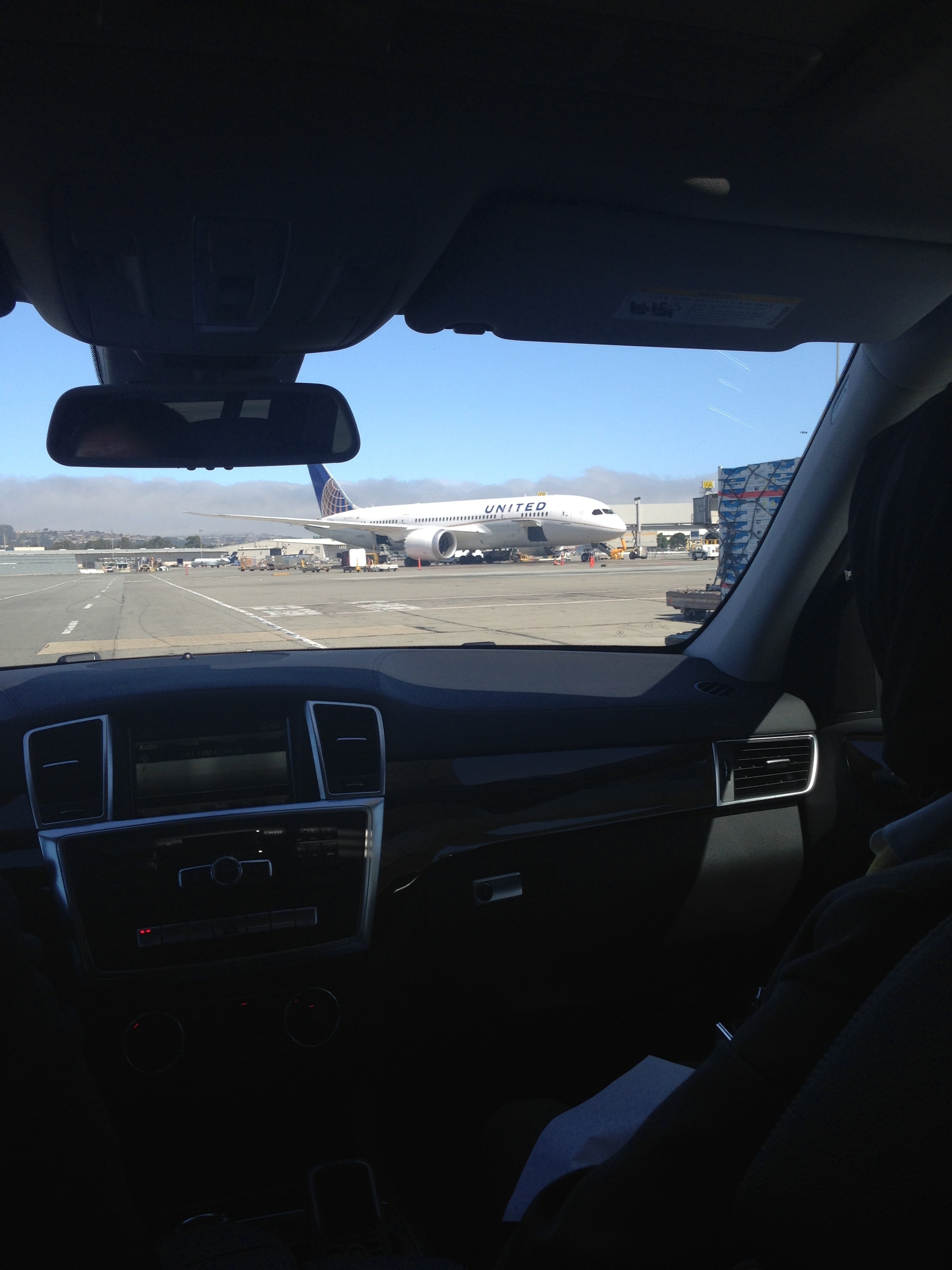
United 787 at SFO…viewed from inside a Mercedes! Photo: Blaine Nickeson | AirlineReporter
Full disclosure: on our last big trip without the kids, we flew Lufthansa First Class and got to visit the Lufthansa First Class Terminal. Both were so good, I think it ruined us for any future flights. As much as I love United, I didn’t have great expectations. Here’s the shocker/spoiler: our United experience was really good.
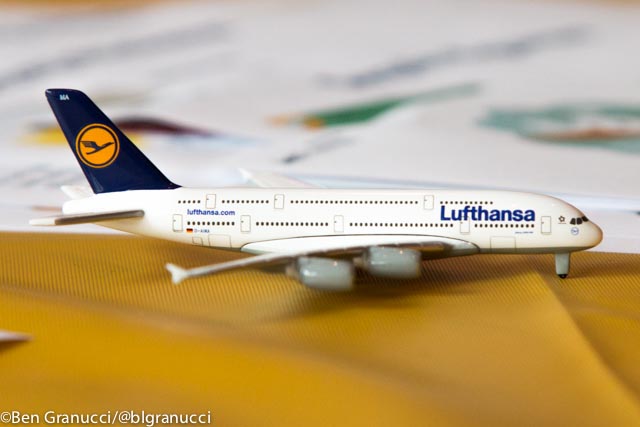
Over the past few years, few issues in the aviation industry have been more polarizing than children on commercial airplanes. The need for families to travel from place to place, or even for children to travel alone, often clashes with the desire of frequent fliers to have a peaceful flight. Some airlines have taken drastic measures, like Malaysia Airlines which has banned babies from first class and all children from the upper deck on their fleet of A380s. Other airlines have added child-free cabins as an ancillary amenity that is available for a fee.
As a newly-minted dad, I look froward to taking my son on his first flight (and many more after that). However I realize that sometimes the unfamiliar atmosphere onboard an airliner can disturb a small child. And when the child is disturbed, they may disturb those seated around them. All children could use an experience that is specially tailored to younger fliers in an industry that usually focuses more on high value (adult) frequent fliers. Unfortunately, cost cutting measures at most airlines have eliminated kid-friendly perks such as kids meals and pin-on airplane wings.
Fortunately, this is not the case at every airline, including at Lufthansa. Last year, 2.1 million children aged eleven and under flew on the German carrier, which is a number based on how many childrens’ fares they sold. Yes, Lufthansa still offers discounted fares for children, which are 75% of the adult fare.
3,123 children qualified as “elites” with the airline, having flown a minimum of 35,000 miles in a year. Some children even attain higher status levels: the youngest Senator member (having flown at least 100,000 miles in a year) is just two years old.