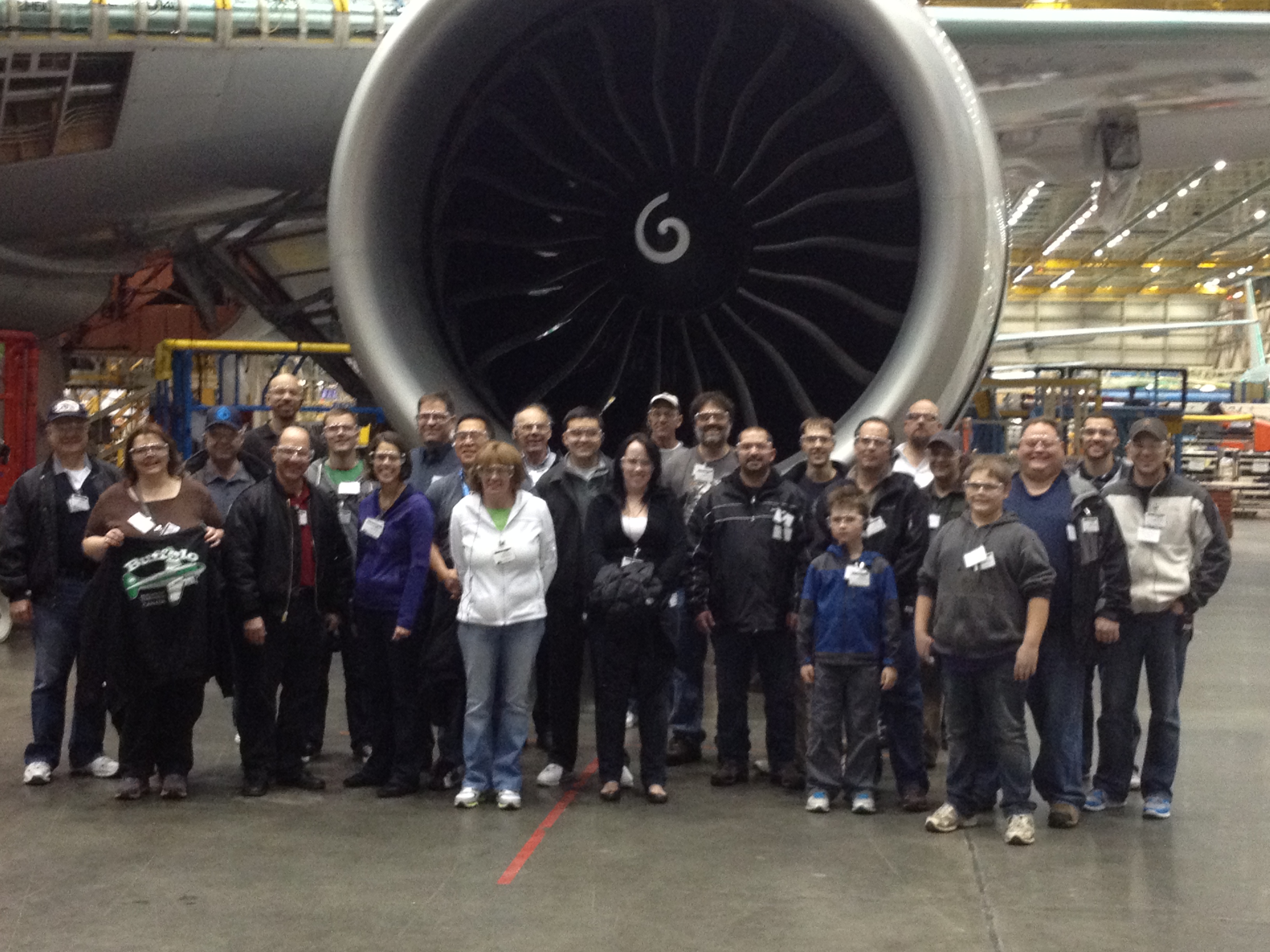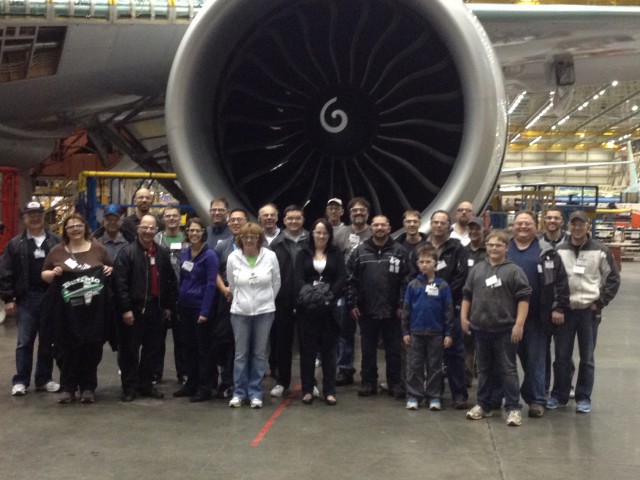
A group from Aviation Geek Fest pose in front of a 777 GE90 engine on the Boeing factory floor. Photo by Boeing.
This weekend was the third Aviation Geek Fest and I think it was a success! We had people come from Denver, Calgary, Vancouver, Dallas and even New York City to share their passion for aviation. In all, about 70 people attended the event and were able to experience unique aviation activities.
The day started with a nice welcome by a Boeing 747 Dreamlifter taking off from Paine Field as some aviation geeks gathered to watch on the Future of Flight’s Strato Deck. Afterwards, folks had the opportunity to check out the Future of Flight’s gallery before we divided into four different tour groups: Boeing Factory Floor Tour, Boeing Dreamliner Gallery, Paine Field Fire Department Tour and How to Become an Airline Pilot with Regal Air.
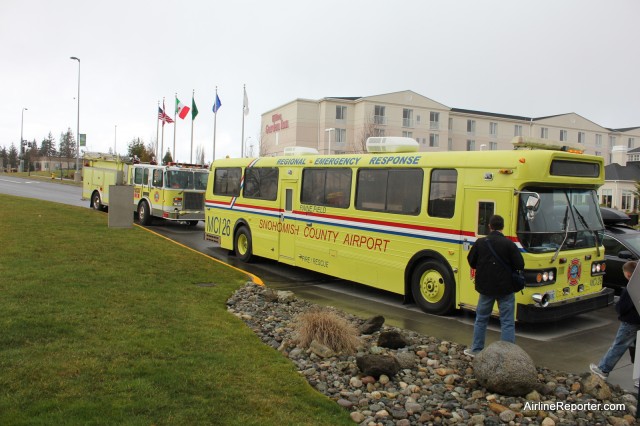
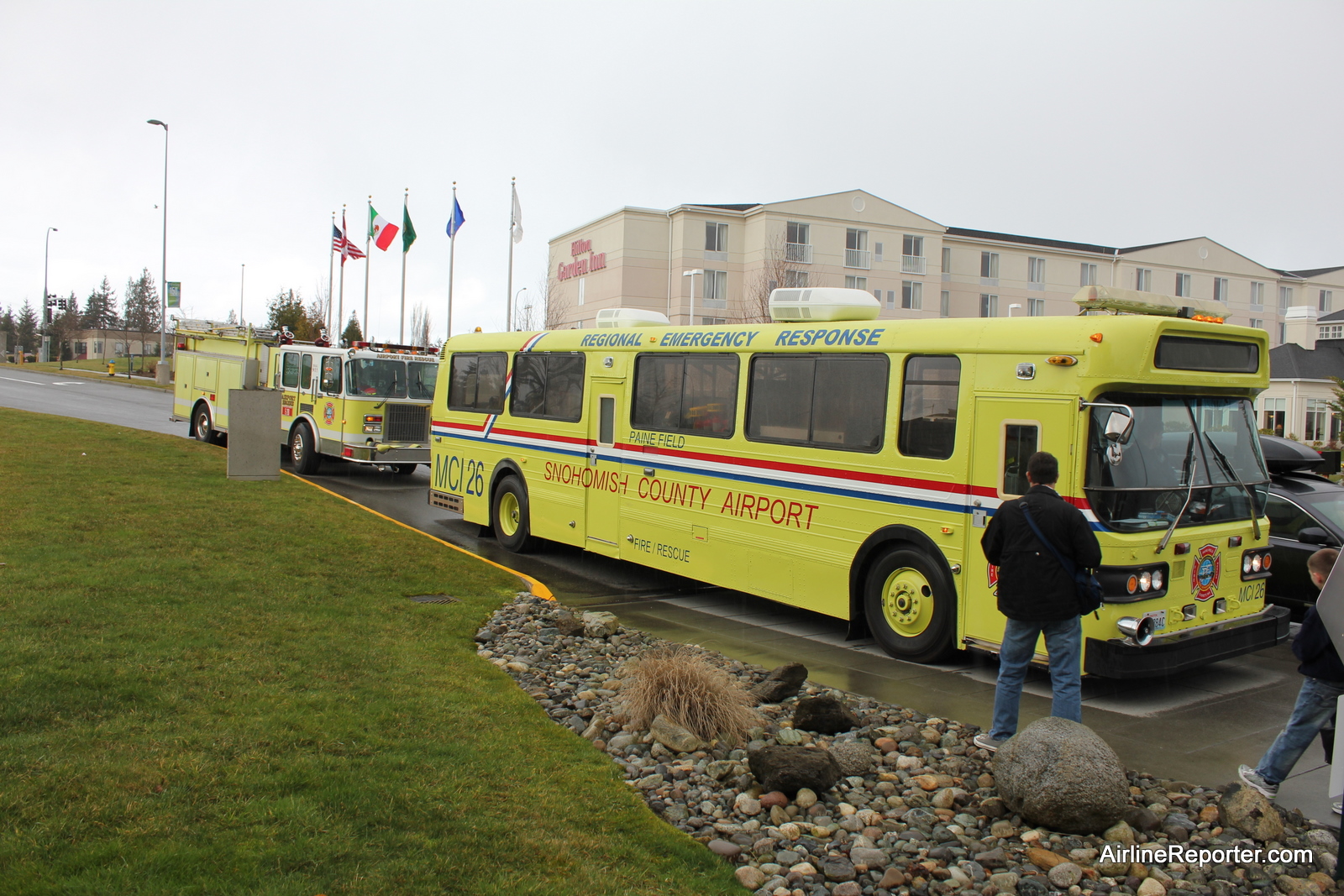
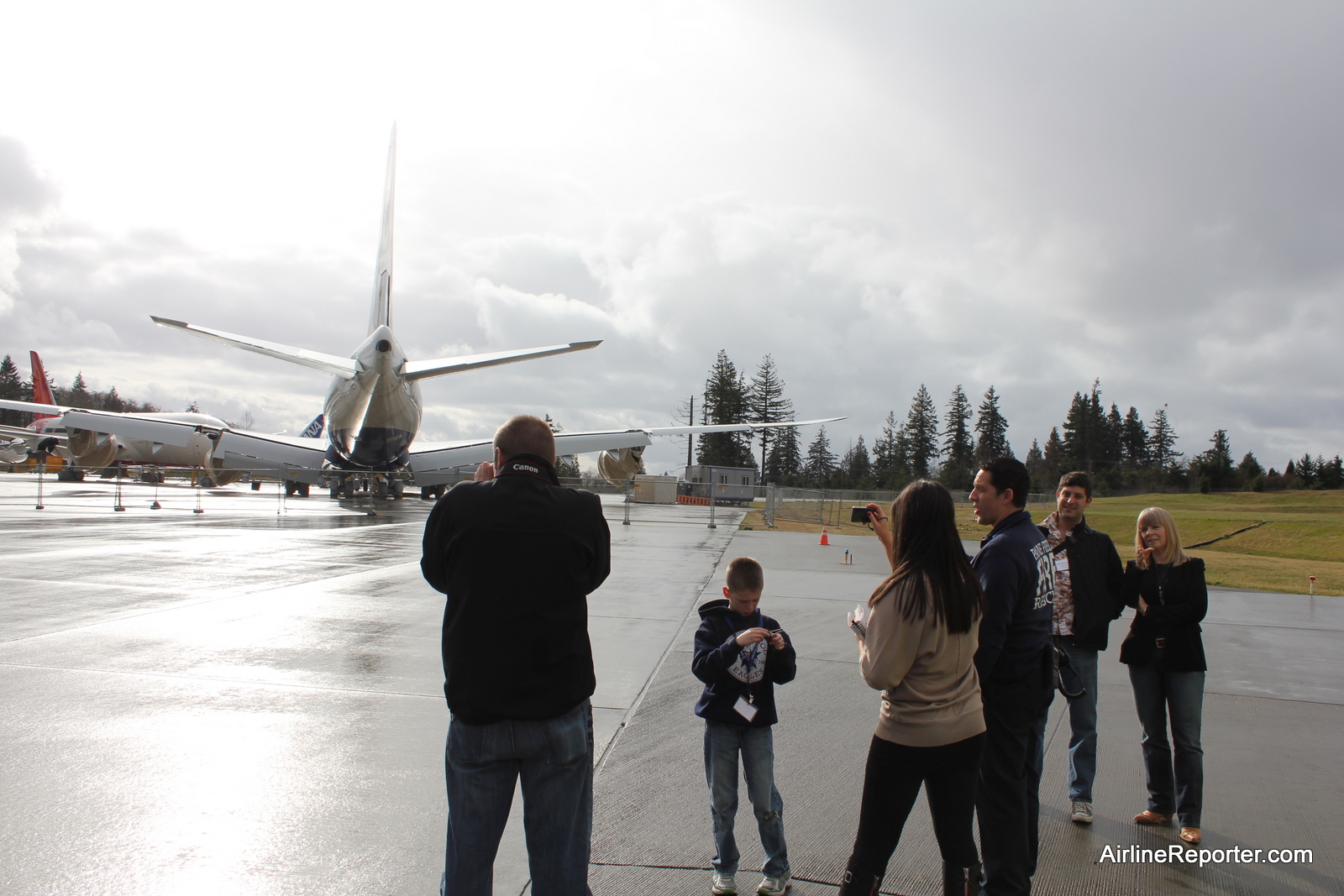
The folks that took the fire department tour were given a ride in style.
Since I have been lucky enough to get a few factory floor tours and a view inside the Dreamliner Gallery, I decided to take the Paine Field’s Fire Department tour and was not disappointed.
I heard that the rest of the events went great and I am kind of hoping that some of you that were able to go on the other tours can leave your impressions in the comments.
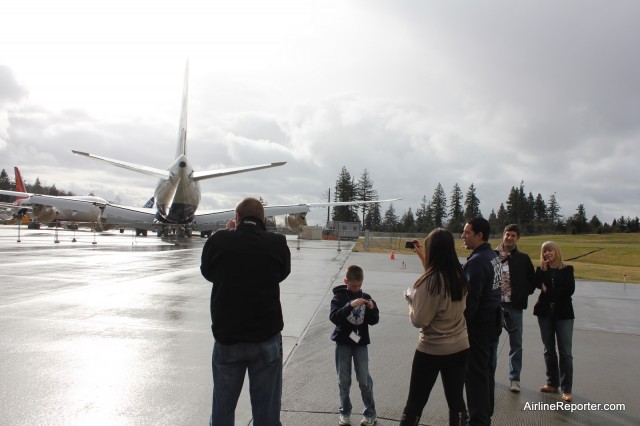
Not only did we get to ride on a fire bus, but we also got to stop and take photos of airplanes.
I went on this tour not to write a story on the fire department (although I hope they welcome me back for one), but I was going as an aviation geek. This means I was able to fully enjoy myself, take photos, ask interesting questions, but did not having to worry about taking notes — like a true avgeek.
Although the actual fire station was very interesting, getting there was half the fun. We were picked up in a the fire department’s Mass Casualty Incident (MCI) bus and were followed by a fire truck. This was in case something were to happen at the airport, the fire personnel in the bus, could hop on the truck and take care of any situation.
The bus had everything that would be needed in an emergency and even a few old first class airline seats to rest on, if needed.
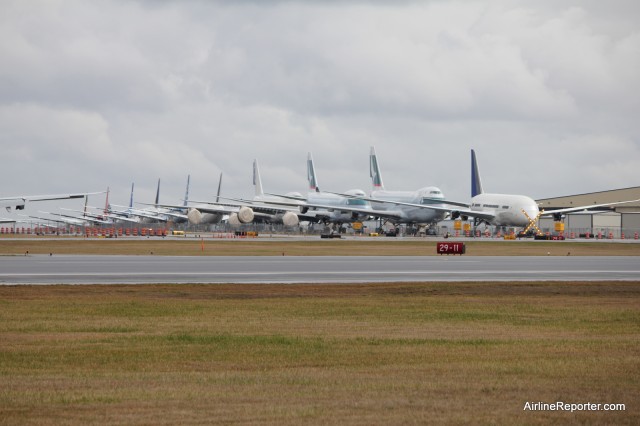
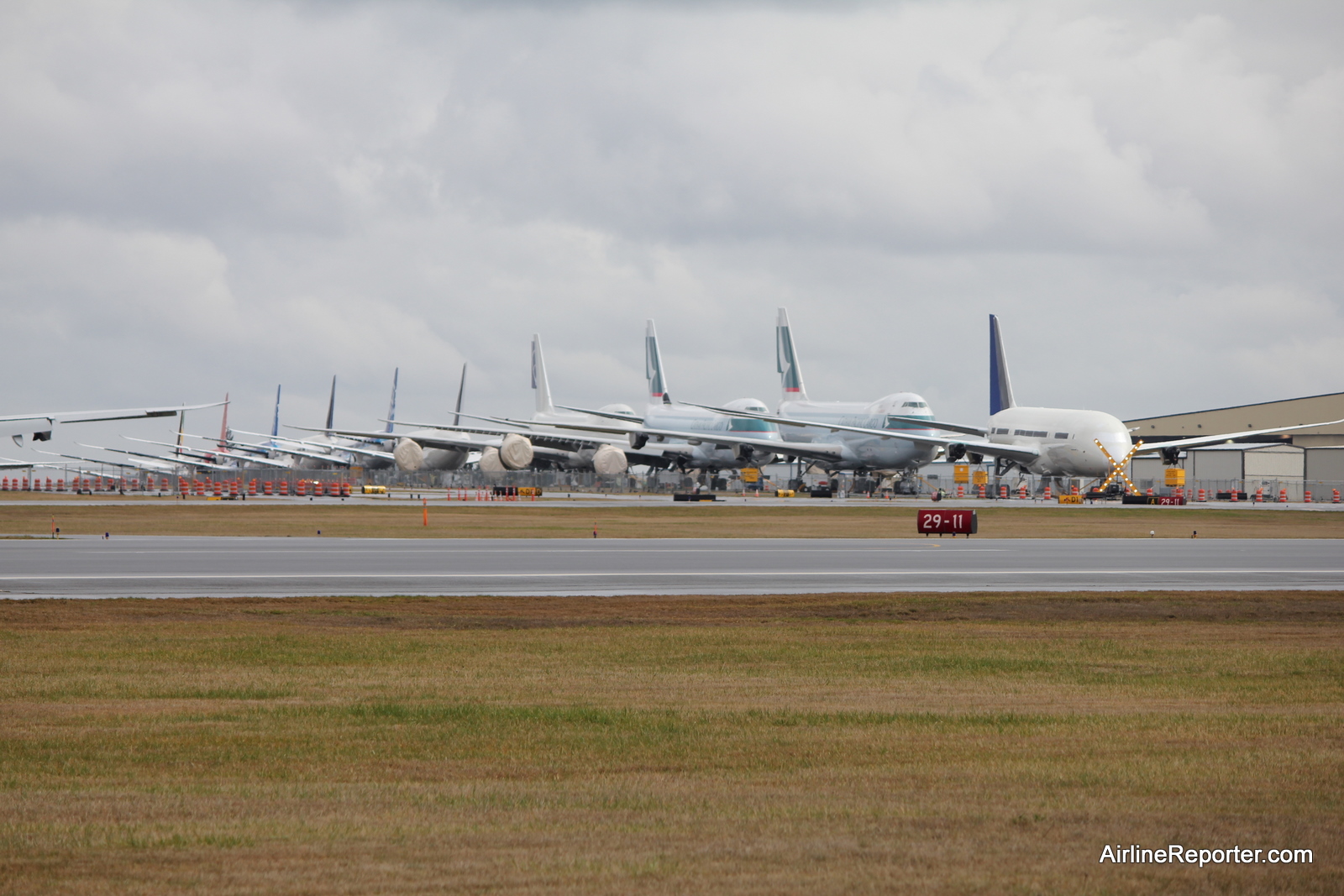
There are quite a few Boeing 787s and 747s still waiting to be delivered.
As we headed towards the fire department, on the other side of Paine Field, we stopped and were given some wonderful photo opportunities of the airport. It was nice to be able to see aircraft from angles I have never seen before, while being escorted by a fire truck. The kid in me was quite pleased.
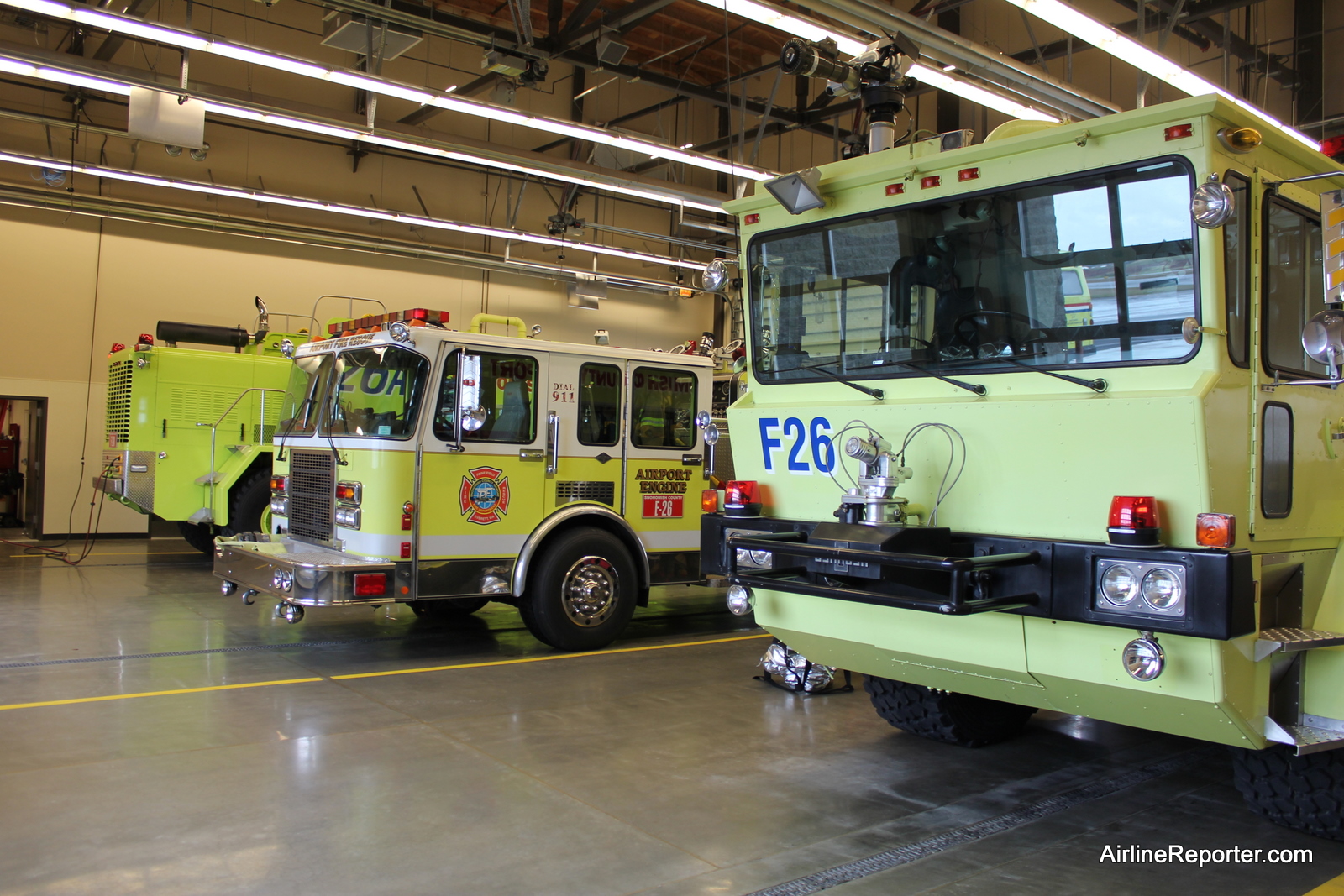
Once we arrived at the fire station, it was time for our tour. The station is still rather new and has everything needed to take care of most incidents that might occur at Paine Field. The airport actually has two fire departments; the one we toured that is operated by Snohomish County and a second that is operated by Boeing. They work together to insure proper airport operations.
The Snohomish County’s main duty is to take care of the airport and private operators, while Boeing’s department is to watch after all the new 777, 767, 787 and 747-8 aircraft.
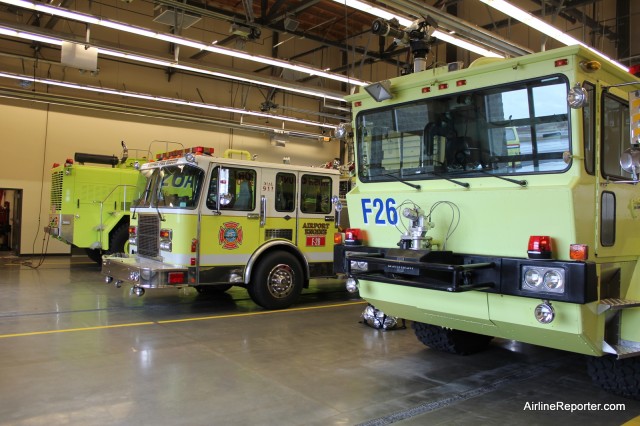
Planes and fire trucks -- what more could you want?
Although there were so many questions that one could ask about an airport fire operation, my big question was if I could turn on the fire truck lights — and I did. A life long dream was finally accomplished.
Seth Miller, who was also on the tour, put on all the fire gear that a person would need during an emergency situation. It make me hot just thinking about sporting all the gear while fighting a fire.
At the end of the tour, one of the fire rigs pulled outside and showed off its two water cannons on the front of the engine. The largest cannon on the roof is capable of pumping out around 1500 gallons of water per minute, which is sure to help put out most fires.
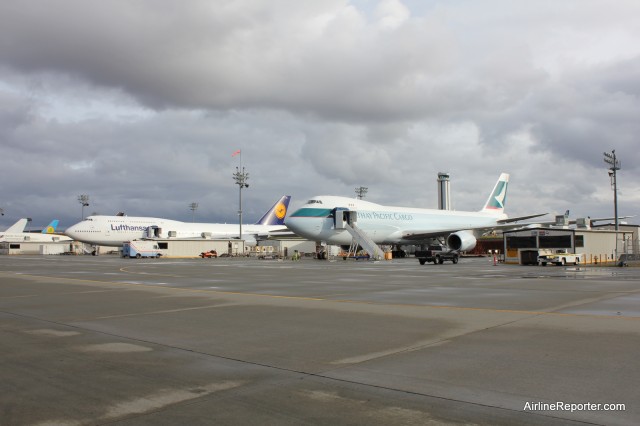
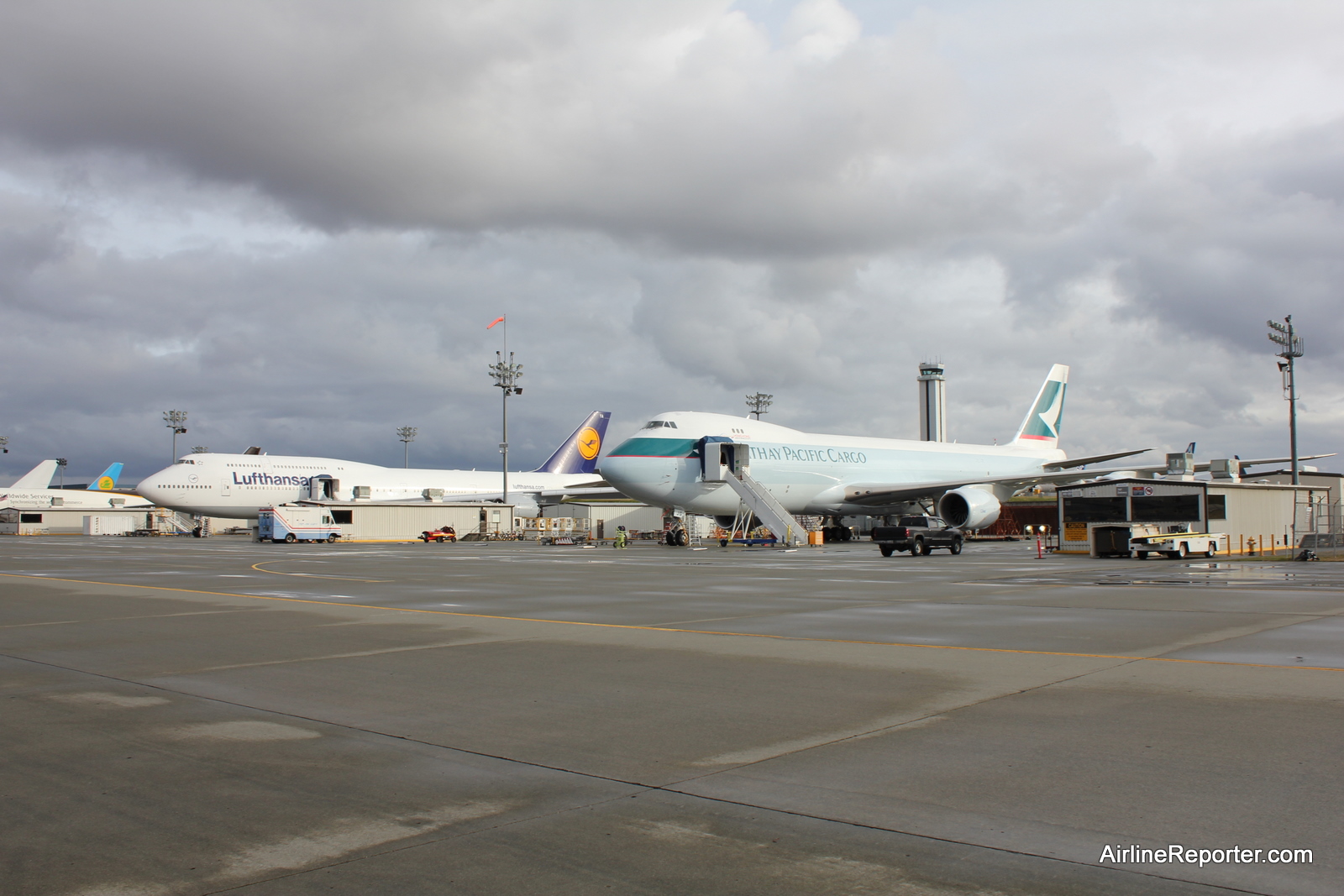
Cathay Pacific Boeing 747-8F sits next to Lufthansa's Boeing 747-8 Intercontinental.
As we headed back to the Future of Flight, we had some additional opportunities to plane spot and enjoy our drive around Paine Field. Although it is a bit sad to see so many aircraft waiting to be delivered, it provides photo opportunities that will soon no longer be possible.
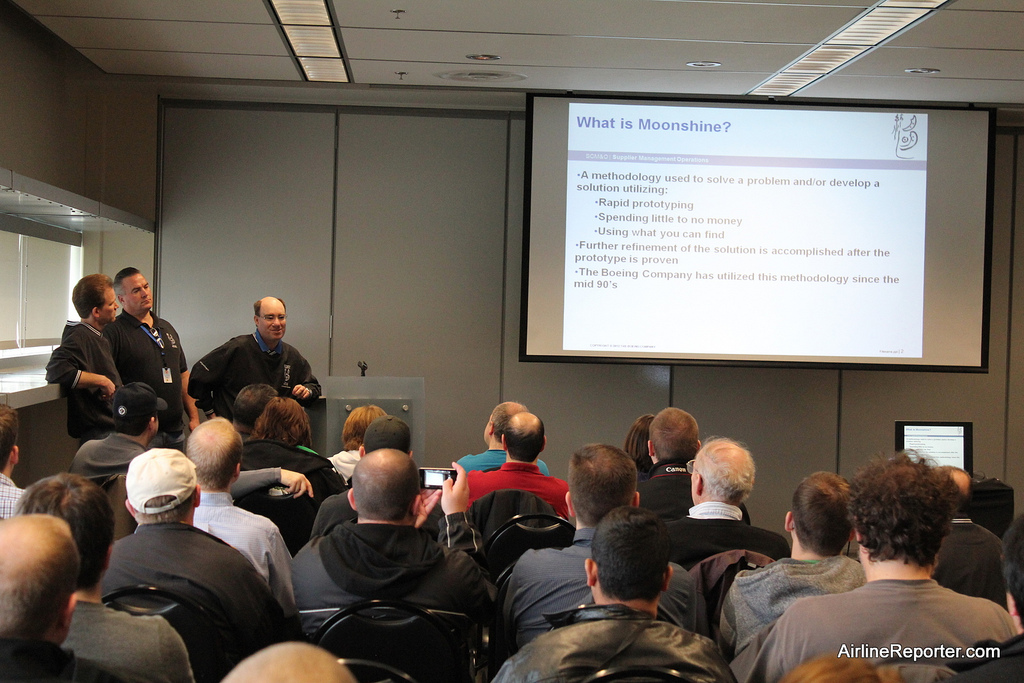
After everyone returned from their separate tours, we received a presentation from a team of the Boeing Moonshine group who specialize in making production lines as efficient as possible. They are a MacGyver-like team that will build tools and equipment on the spot to help the productivity of supply lines around the world. Their accomplishments has allowed Boeing and their suppliers to become more efficient and able to do more with the same or less space.
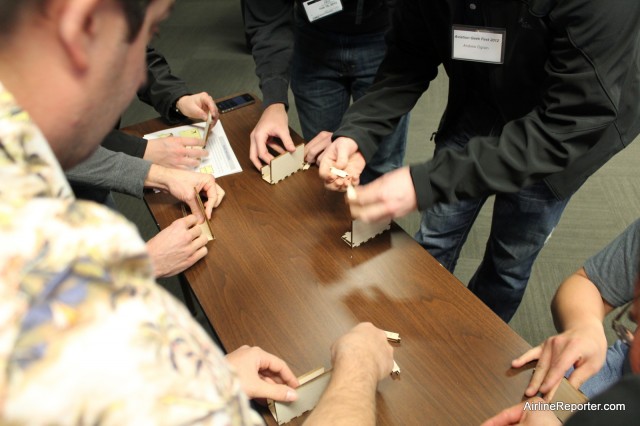
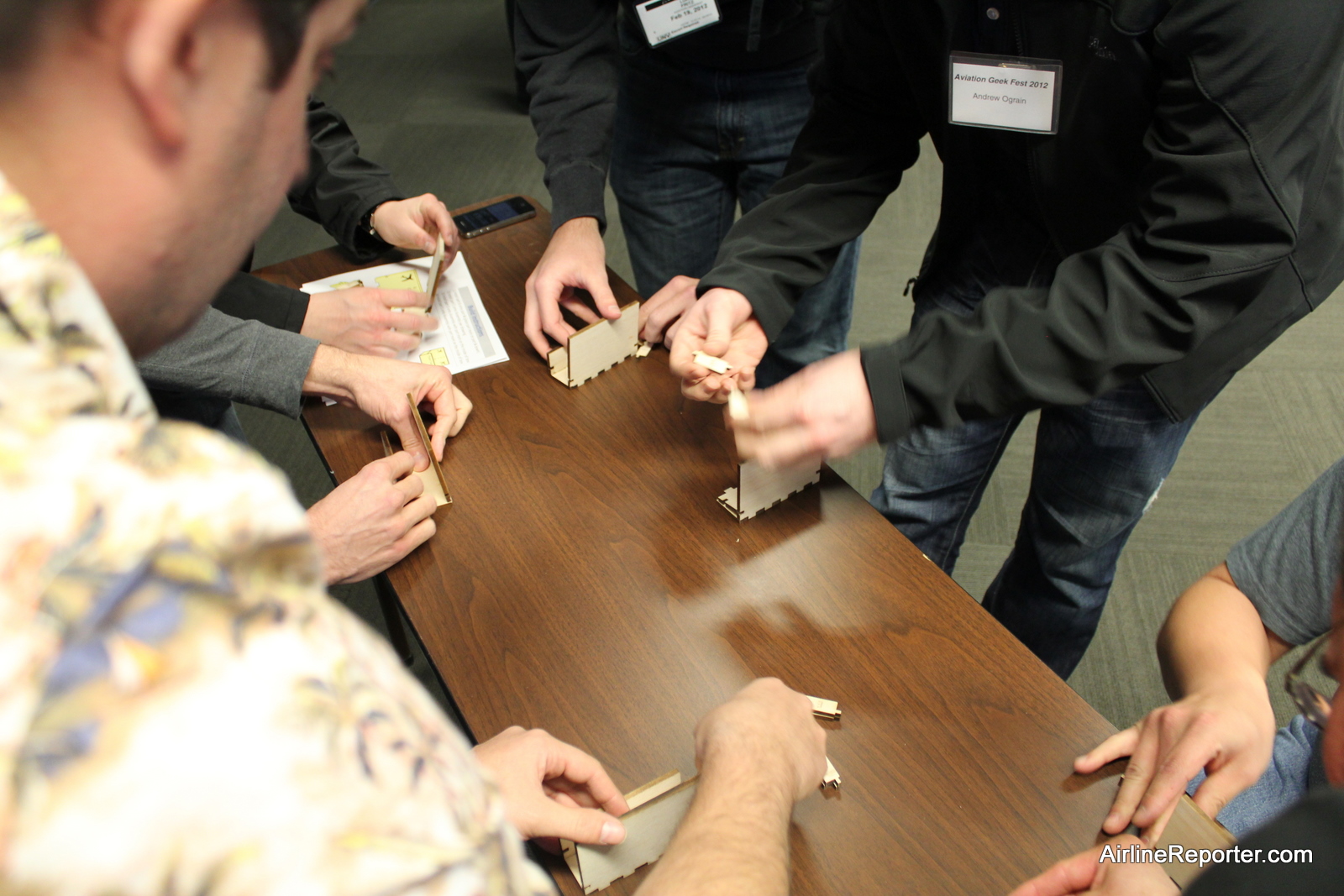
Teams of eight got a lesson in supply line management, while building souvenirs.
After their talk, we were taken to another room where the avgeeks gathered eight to a table and were given the task of building an unknown item in a short amount of time. At first it was not so clear what the items were, but after fiddling around, it started to become obvious that they were customized business card holders.
When they completed the first round, they had to take them all a part again, the Moonshine team gave them better instructions and explained that they wanted eight of them built in 1minute and 50 seconds. The first team, who celebrated their quickness, completed theirs in less than a minute. An impressive feat, but they did not end up winning the competition.
It was a lesson in how a supply chain successfully functions. You cannot be late, but you also cannot be too early. It is about delivering your product right on time and the team that was closest to the delivery schedule of 1min and 50 seconds became the actual winner.
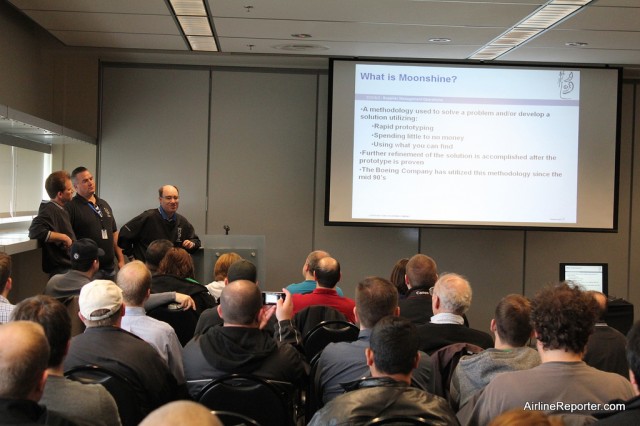
Members of the Boeing Moonshine team give a presentation to the aviation geek fest.
Once our supply chain tasks were completed, it was time to head to the Future of Flight Cafe to enjoy pizza, soda and beer while handing out prizes that were donated by United Airlines, Southwest Airlines and the Future of Flight. Luckily there were enough that everyone received at least one thing, but I was so into the socializing and talking about airplanes that I managed not to take one photo of this part of the event — oh well.
I think overall, it was an amazing event and I always love getting around others that share my passion of aviation and airlines. A huge thanks to the Future of Flight and Boeing for working to make this event unforgettable and to United for donating gifts and for Southwest to not only donating gifts, but also having one of their bloggers attend.
You better believe there will be another in the future and I hope that you will be able to join us.
OTHER PHOTOS OF AVIATION GEEK FEST:
Rest of my photos of #AGF12
Seth Miller – aka Wandering Aramean
Kevin Frysinger – aka @TxAgFlyer
If you attended and have photos you are willing to share, either leave a link in the comments or email them to me – da***@*************er.com

The official Boeing 787 Delivery ceremony starts tomorrow, but Boeing is hosting a variety of events today for media and guests on the 787 and ANA. The morning will start off with briefings on the interior of the 787, followed by information on ANA and then the Rolls-Royce Trent 1000 engine. After lunch we will get additional information on the 787, followed by a trip to the Boeing Factory (they never get old) and the Dreamliner Gallery. I hope to keep updating this blog throughout the day with any interesting information and photos. You can also follow my Twitter account or #ANA787 (you do not need a Twitter account to follow) to experience more.
If you have any questions that you want me to ask of Boeing or ANA, post them in the comments and I will see what I can do. Alright, I am off to Everett, I will be updating this soon.
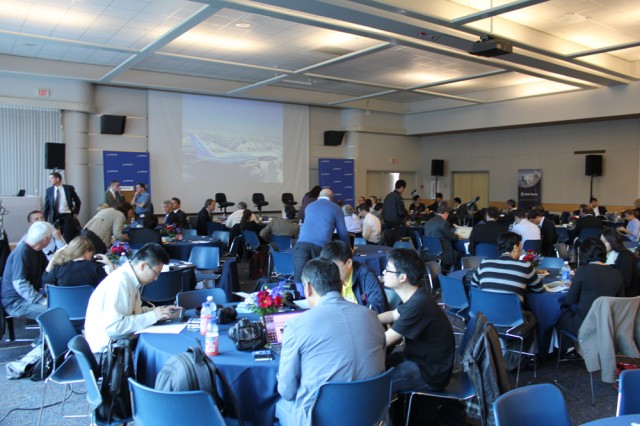
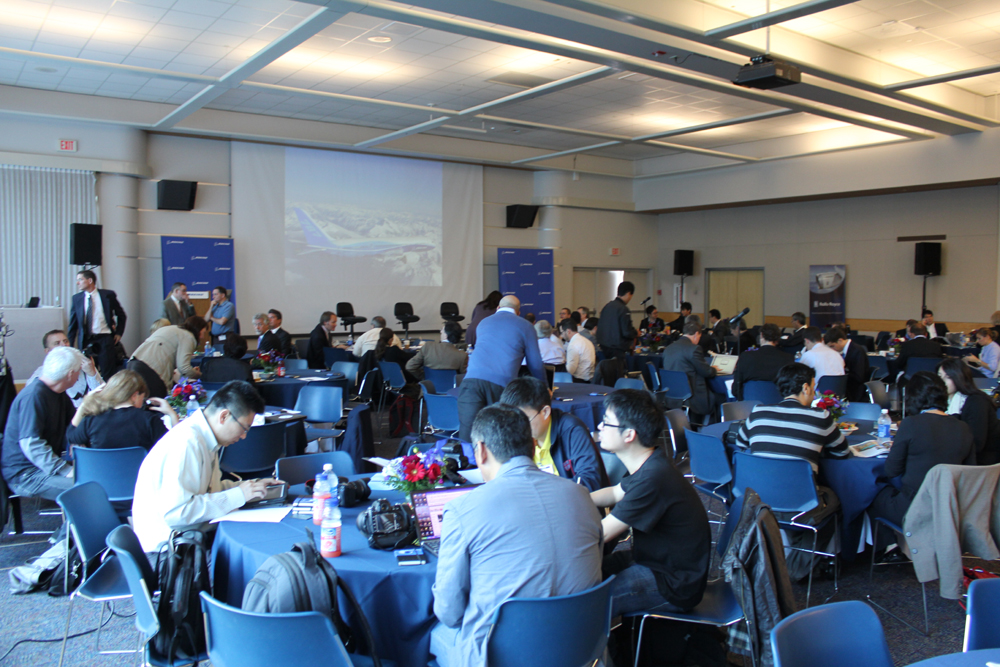
We will all be in this conference room for a few hours to get 787 briefings.
9:15AM
We are all in a Boeing meeting room and the events have started. First big announcement is at 8:10am this morning, Boeing officially transferred ownership of ANA’s first 787 Dreamliner (JA801A) to the airline.
We just watched a video highlighting 250 Boeing employees who took a special six hour flight on the 787 (jealous) and tested out all the in-flight features. From playing games on the seat back entertainment system to playing games on their own devices, passengers were able to show that the 787 is ready to take on a plane full of passengers.
9:30AM
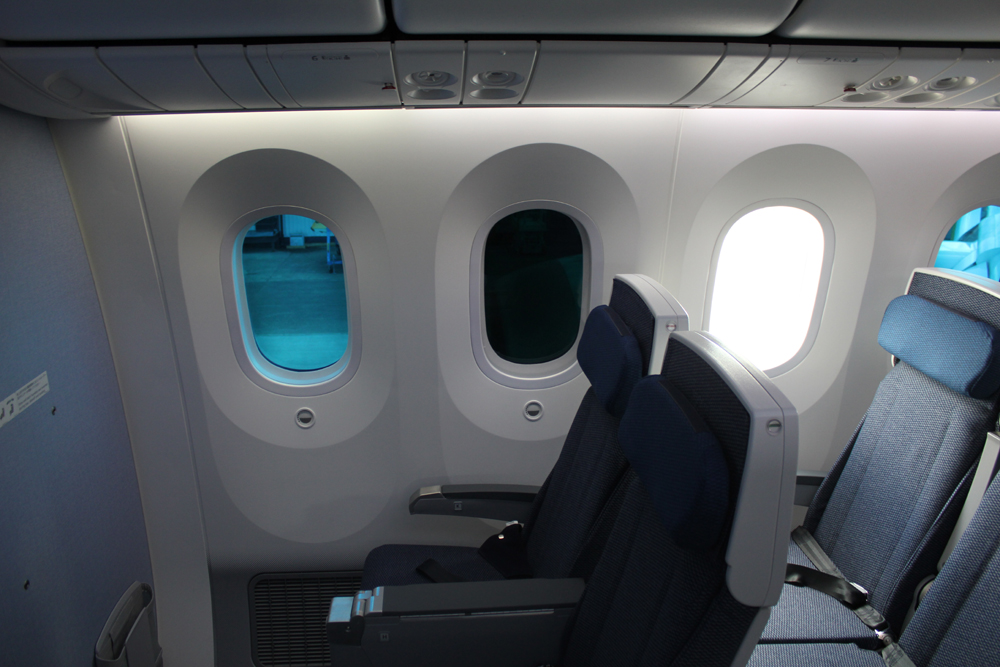
There is Q&A about the interior of the 787 Dreamliner. Going over the benefits of the new 787 interior: increased humidity, tinting windows that flight attendants can dim all at once, LED lighting and connectivity.
Boeing stated that it is most likely that future airliners will have the tinting windows, like those found in the Dreamliner. Most airliners today have pressurization that is equal to being at about 8,000 feet.
Boeing completed research to find what the pressurization should be inside the 787 Dreamliner. Boeing rotated 500 people through mock cabins up to 20hours at a time to test out different pressures. Boeing found that sea level to 6,000 feet people did not report symptoms, but over that, people had side effects of the pressure. This means that the inside of the Dreamliner will feel like you are sitting at sea level to 6,000, reducing negative side effects.
9:45AM
The current Boeing panel was asked how the 787 Dreamliner has changed over the past three years due to delays. Airlines put in their orders years ago and trends and needs have changed. Boeing stated that airlines have minimal flexibility to make changes closer to delivery, but Boeing has been keeping an eye on trends to keep the 787 leading edge. Boeing has looked at upgrading seat models, updating in-flight entertainment, and keeping the colors and looks of the interior, relevant.
The 787 was designed to be a nine-abreast aircraft – ANA has configured their Dreamliners with eight across.
10:00AM
Through their research, Boeing found that a person’s first flight (take off, seeing your home town, etc) is a magical experience. When Boeing asked people to compare their first flight versus their most recent flight, obviously the feelings are very different. Researchers found that passengers find the airline experience “annoying,” and the 787 Dreamliner was designed to try to bring back the connection to flight.
Boeing stated that through their research, they have not found that passengers have concerns about the aircraft being made out of composite versus aluminum. Blake Emery, Director of Boeing Differentiation Strategy, stated that he only hears concerns about the composite when journalists ask the question.
10:15 AM
Boeing found that a seat configuration with three seats together is better since it increases the chance of a passenger having an empty seat. When asked how Boeing is handling passengers of size, they directed that question to the individual airline.
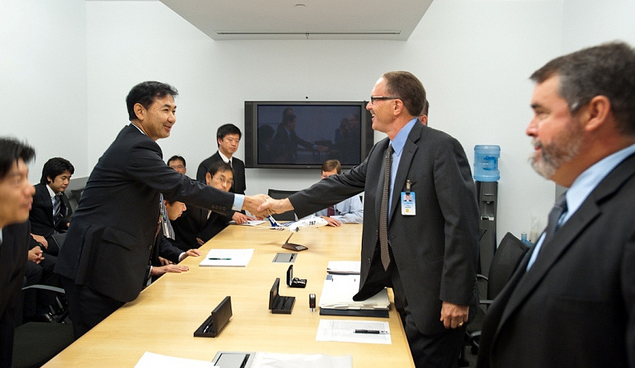
Takeo Kikuchi (left), All Nippon Airways' general manager for its Seattle office, shakes hands with Paul Baldwin, Boeing's Aircraft Contracts, after signing the final paperwork for contractual delivery of the first-ever 787 Dreamliner. Photo From Boeing.
The photo above was taken by Boeing during this morning when ANA signed contracts to take ownership of their first Dreamliner.
10:30AM
Great for Seattle people: Seattle Tacoma International Airport (SEA) is in talks with airlines about bringing 787 Dreamliner flights to Seattle. One of the “whys” for the Dreamliner is to allow airlines to provide a unique experience for their passengers and stands out against other aircraft.
We are about to have a little break. Afterwards we will hear from Satoru Fujiki, senior vice president of All Nippon Airways.
11:00AM
In 2010, ANA was #2 in revenue between Asian airlines, right behind JAL. Out of all airlines around the world, they are the 9th largest with 40million passengers per year. ANA operates 1,142 flights per day with 222 aircraft. The airline started operations with only domestic flights and today they still have the majority of their flights with-in Japan. They currently operate 126 flights domestically and 62 internationally. They plan to increase their international flights using the 787 Dreamliner.
Why did ANA choose to be the 787 launch customer? Because the 787 is: a medium-size aircraft, has 20% better fuel economy, is able to fly long-haul routes like Tokyo to New York and it provides a better cabin experience. “The Boeing 787 is truly a game changing aircraft,” Fujiki stated during his speech.
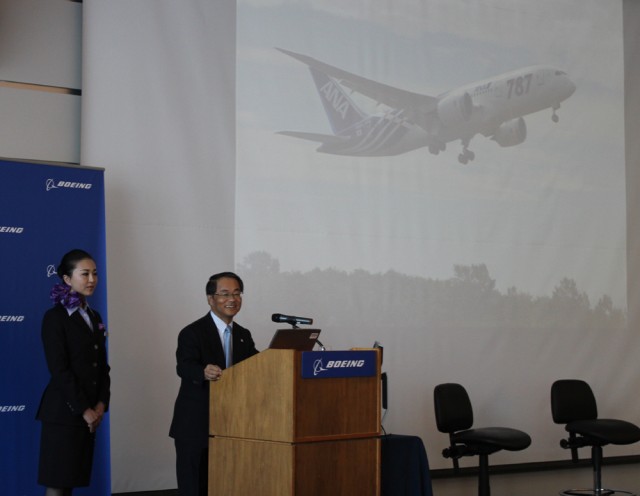
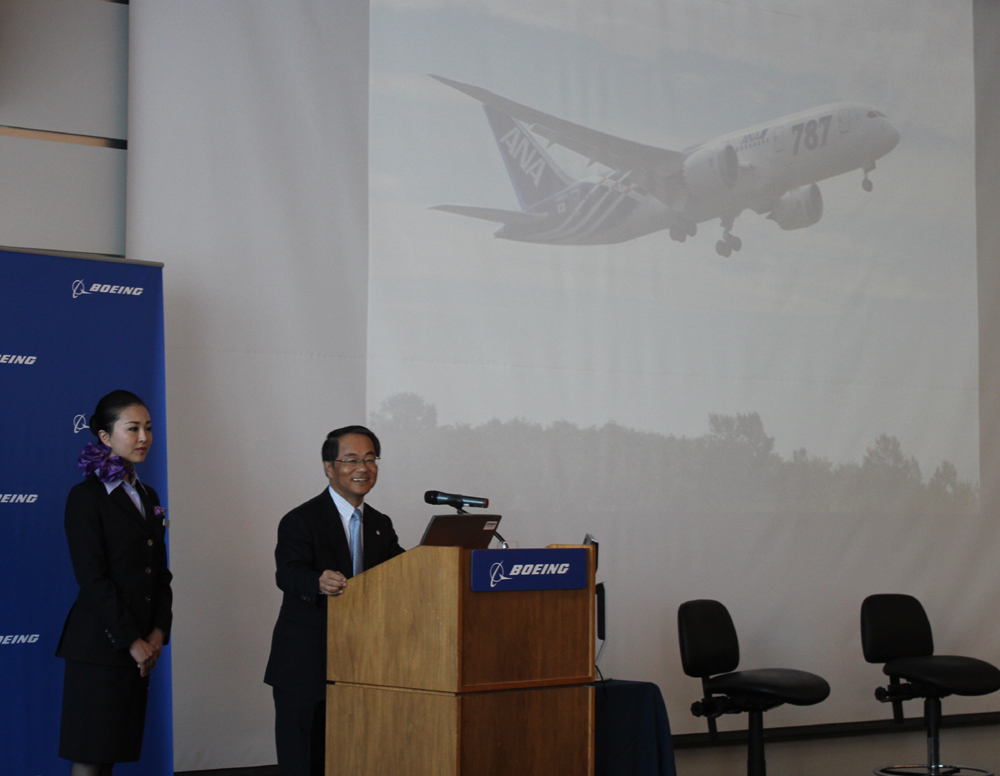
Satoru Fujiki, ANA senior vice president, answers questions about ANA and the 787.
11:20AM
Question was asked how ANA has been compensated for the 787 delays. Fujiki stated that ANA has been able to take additional deliveries of 767s and 777s.
ANA originally was interested in the short haul 787-3 for domestic flights. Since their flights would be so short using the -3, it wouldn’t have gotten the most out of the fuel efficiency, so they changed their orders to -8 and -9s.
It is very obvious that ANA and Fujiki are very excited about getting their 787 Dreamliner. I don’t think I have seen such a big smile on an executive’s face when he was asked about all the global-excitement for this aircraft.
Fujiki stated that Seattle, “is a candidate,” for future 787 Dreamliner service to Tokyo for ANA.
11:30AM
ANA does not yet know the date they will take their second 787. It will be configured for domestic flights. Fujiki stated since the 787 is heavier than was originally planned, these first aircraft are being put on domestic service. ANA hopes to have all 55 of their Dreamliners by 2015.
A short break and next Rolls-Royce will be talking about their Trent 1000 engine, which will be on ANA’s 787.
11:45AM
Bill Boyd Civil Aerospace Vice President of Rolls-Royce (RR) is currently speaking to our group about their Trent 1000 engine. RR has over 13,000 engines current in service with more than 500 customers. Statistically, ever 2.5 seconds an aircraft powered by RR engines takes off or lands.
Rolls’Royce has had a close relationship with Boeing in 1956 with the 707. RR has had engine options on almost all Boeing aircraft: 707, 717, 727, 747, 757, 767, 777 and now the 787.
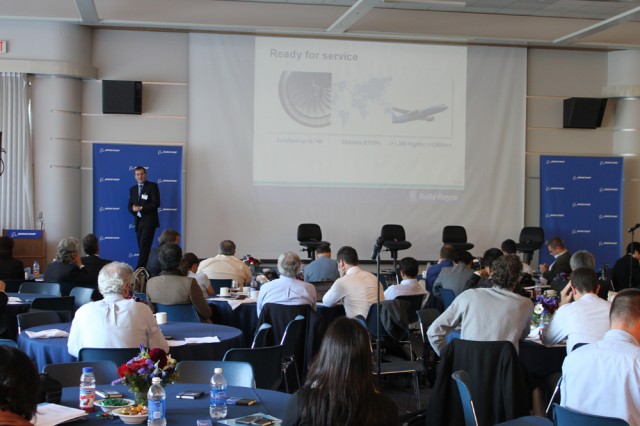
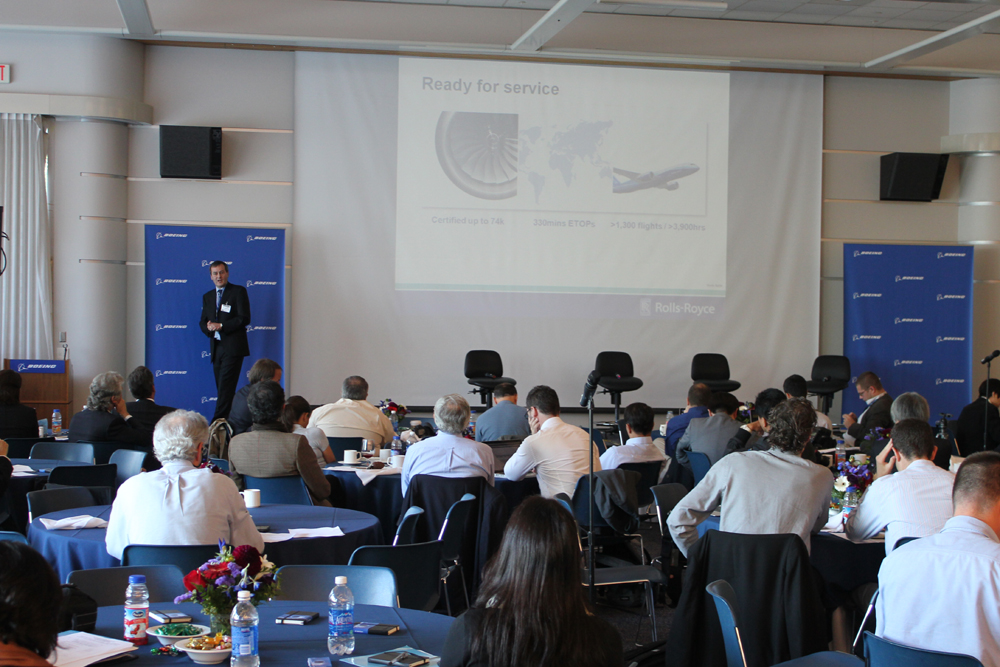
Bill Boyd, Civil Aerospace Vice President, Boeing Programs, Rolls Royce is talking about the Trent 1000 engine on the ANA.
NOON:
The fan on the Trent 1000 engine is over nine feet in diameter. The fan tips exceed 900mph and the force on each fan blade at take off weighs the same of a freight train. The Trent 1000 has so much airflow through it, that it can suck the air out of two racquetball courts in one second.
The engine is certified to 74,000lb thrust and can fly 5.5hrs on one engine via ETOPS.
RR states that there is ability to grow the thrust of the engine that could work on a future, bigger 787 model (ie 787-10X).
12:20PM:
Rolls-Royce monitors information from all engines to look at how the engine is performing and if it might need some work by the time it lands. It allows RR to keep down time less and look at long-term trends. RR has live data coming in from engines around the world at all times.
We have been told we are going to take a tour of the inside of ANA’s second 787 Dreamliner. Then a tour of the Boeing factory and the Dreamliner Gallery. So, more interesting photos will be coming this afternoon. Now it is lunch time followed by a Q&A panel of Boeing folks on the 787.
1:10PM
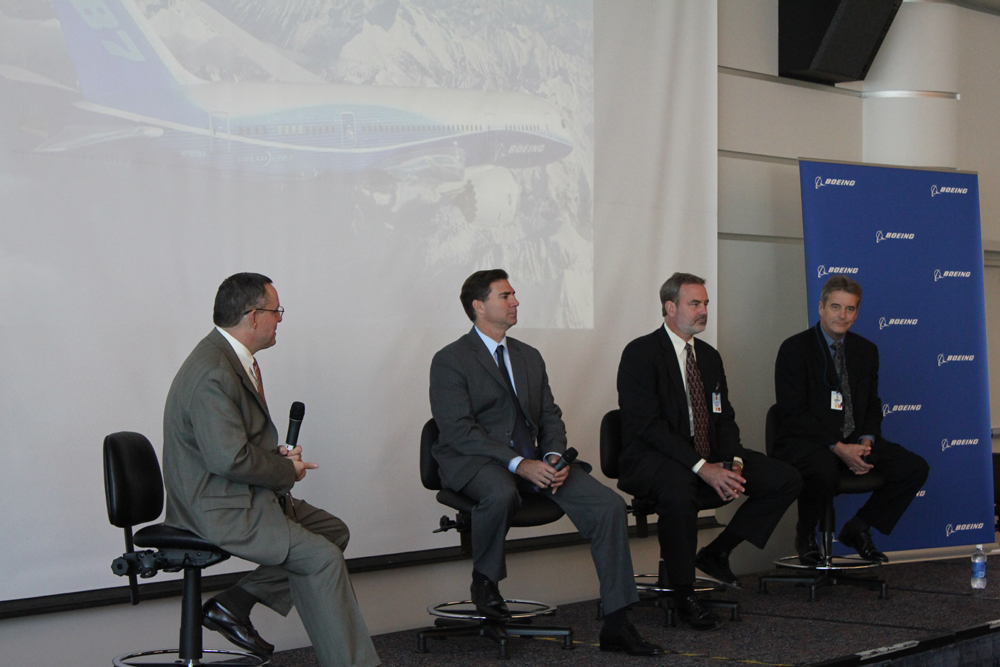
And we are back. Boeing always has a way of providing good meals. All fueled up and ready for some more 787 action. Now it is time for a Q&A panel with Mike Sinnet, vice president and chief project engineer, 787 program, Mike Carriker, chief pilot, and Mike Flemming, 787 Services and Support. Should be good.
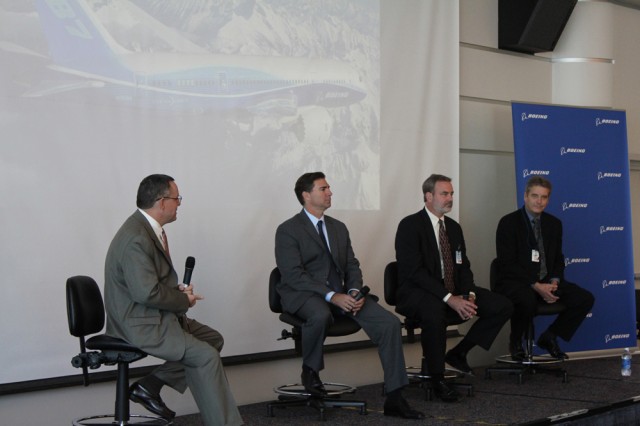
Scott and three Mikes.
1:20PM
When designing the flight deck on the 787, Boeing looked at every air accident to see what triggered those and what could they do to improve safety for pilots. They also spoke with airline customers on how they customize their aircraft.
Mike Carriker states that the cockpit met Boeing’s philosophical goals and economic goals.
1:30PM
If the pilot has the control stick in the center and the 787 hits turbulence, the aircraft knows the pilot wants to fly level and the aircraft will compensate to do so. The aircraft also tries to seek out pressure that causes turbulance and prepare for it. The Dreamliner can detect if there will be a vertical lift and help to dampen the gusts. Passengers will notice a reduction in bumpy approaches and motion sickness.
The 787 has about 18million source line of code, making the aircraft very computer reliant.
Chief pilot Mike Carriker almost has 1000 hours on the 787 Dreamliner.
1:40PM
Boeing states that the 787 will be the backbone of future aircraft development.
The 787 was designed to try to limit as much wiring as possible due to its cost and weight. The Dreamliner has about 60 miles of wiring, which is 25 miles less than the 767. Compare that to the 328 miles found on the A380.
Each 787 has the ability to create 1.45 megawatts of energy and it pulls less of its energy from the engines, saving money and allowing the engines to have more power to do what they were made to do — fly the plane.
2:00 PM
When asked if the 787 is as big of a leap forward as the 747 was, Scott Fancher, Vice President and General Manage of the 787 program answered that the Dreamliner, “is as big of a leap forward as the 707 was.”
Boeing is in process of building tools for the Boeing 787-9.
2:10PM
The Dreamliner has many safety features to reduce the likelihood of a stall. For certification, they had to turn off the system, so the aircraft would be able to stall and show it could recover.
The South Carolina 787 line is very similar to the line in Everett. It could have the potential to produce as many aircraft as Everett. There will be a third “surge” line set up in Everett.
Make sure to read this interesting story by Dominic Gates at the Seattle Times on the overall costs of the 787 and the difficult time Boeing will have on recovering their costs.
Q&A is over. We are now going to break into two groups, where one group will go to ANA’s 2nd aircraft and the other half to the factory — then swap.
3:00PM
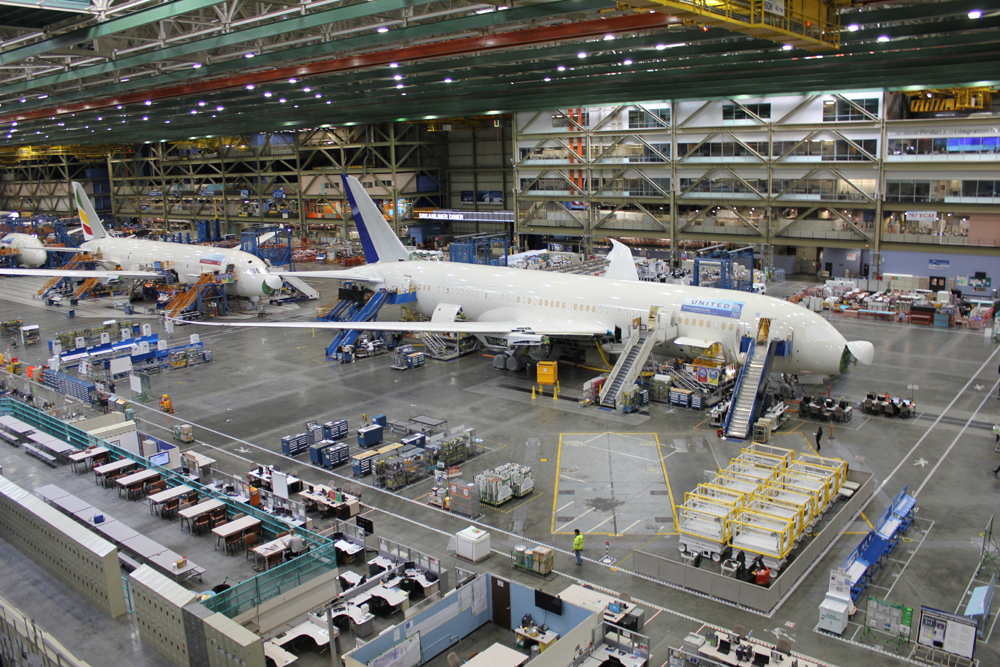
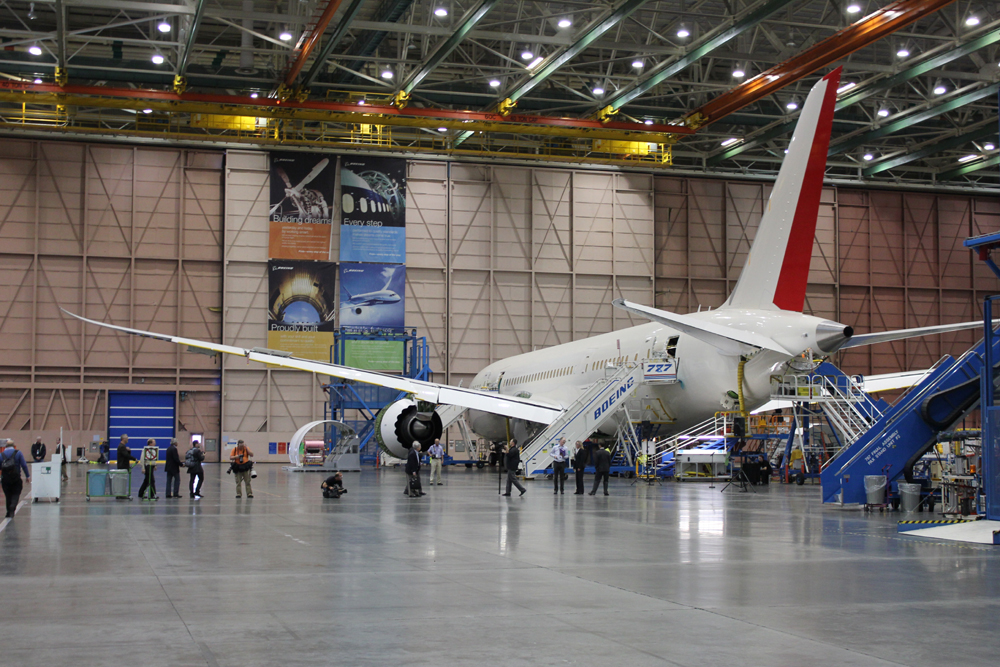
In the Boeing Factory. On the way in, can see they are setting up for the delivery celebration with a standard ANA livery 787 with a stage going up.
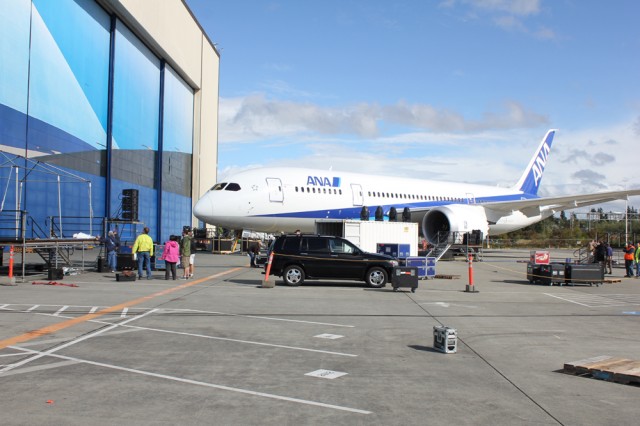
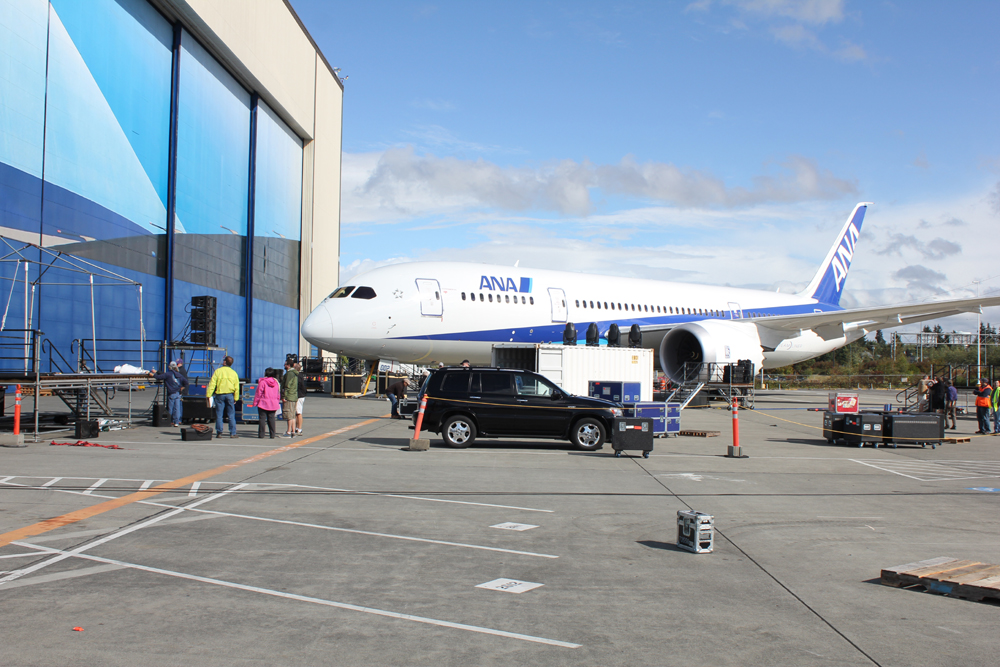
Outside the factory, Boeing is setting up for the delivery celebration. Looks like a standard livery 787 ANA will join in.
Another special treat is seeing United Airline’s first Boeing 787, which I posted a gallery previously, but nice to see it in person. I am told we will be able to get down on the 787 factory floor WITH cameras, which will be a first for me.
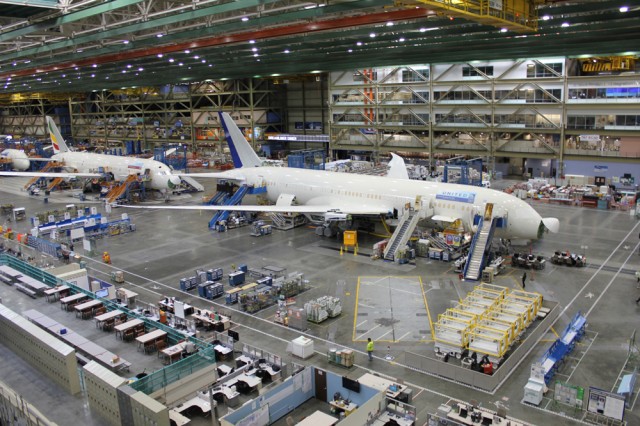
United's first Boeing 787 Dreamliner on the factory floor.
3:50PM
Still making our way through the factory. I took many photos that I will be sharing later, but a few fun ones. I am writing this with my laptop on a trash can right now in front of United’s first 787. Pretty cool.
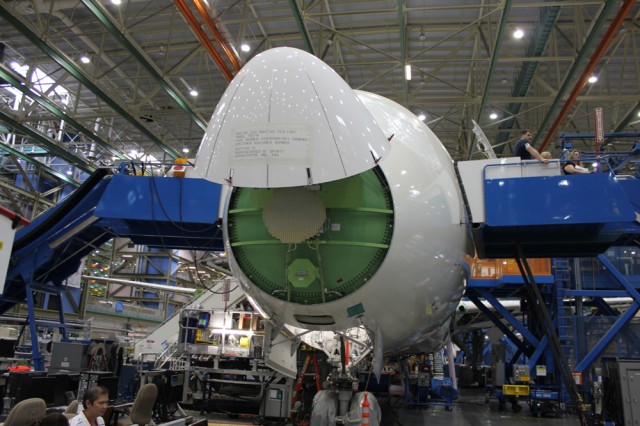
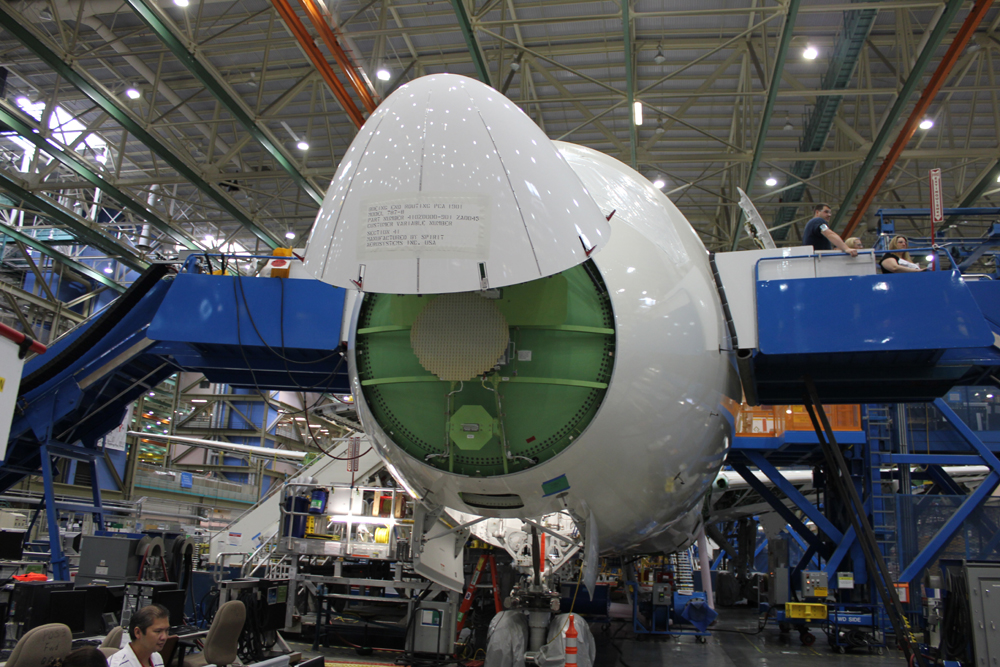
Nose shot of United's first Boeing 787 Dreamliner. It is aircraft #45.
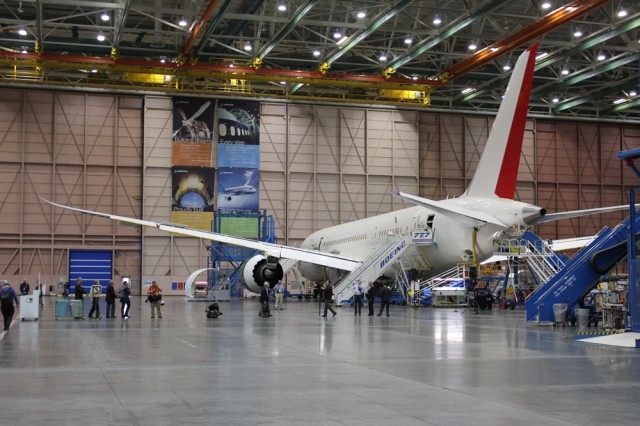
Check out the stairs up next to this Air India. Modified 777 stairs maybe?
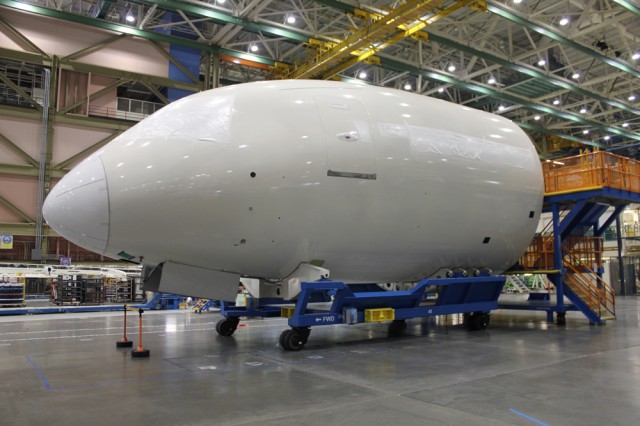
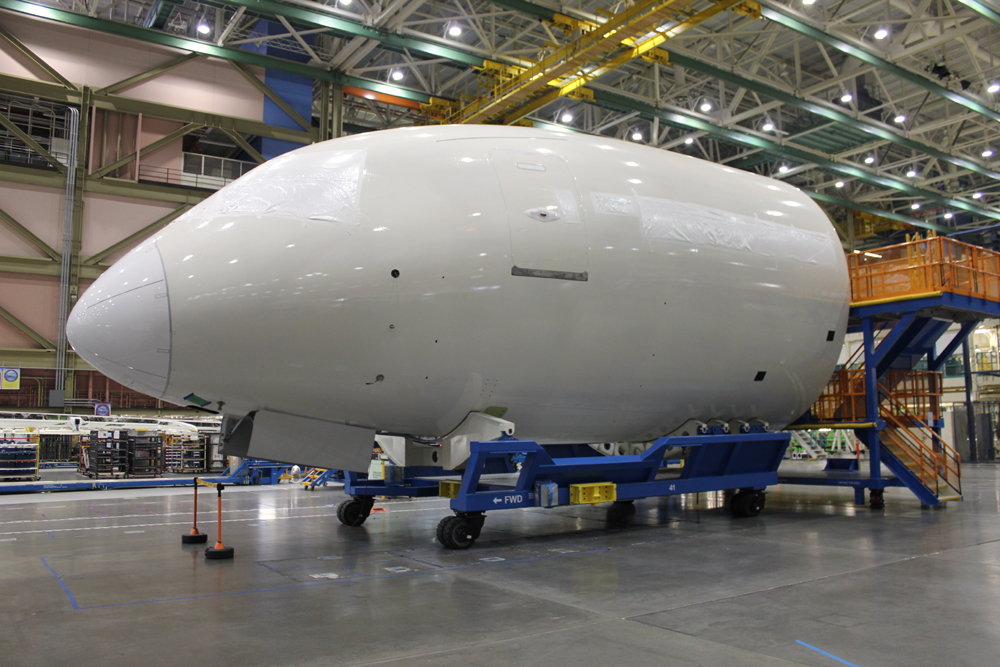
This comes in as one piece. Funny that there is a big sticker on it with a part number. I would think it would obviously be the nose part?
5:15PM
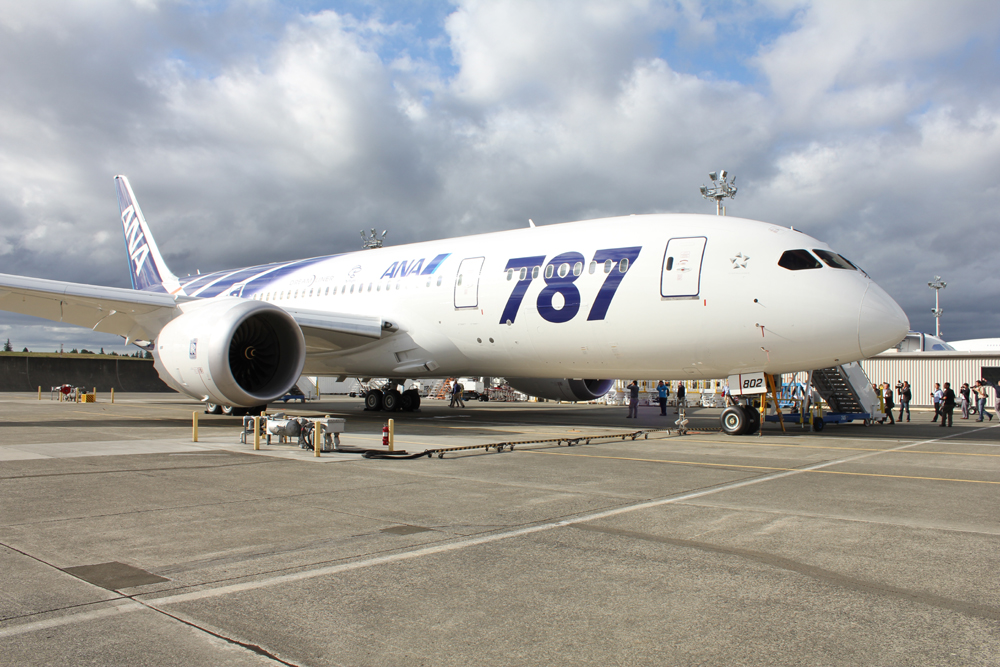
We just wrapped up a tour on ANA’s second Boeing 787 JA802A. The interior looks very similar to the first, except it is not quite delivery ready with a bunch of wires running around and two engineer jump seats near the back. Here are a few photos:
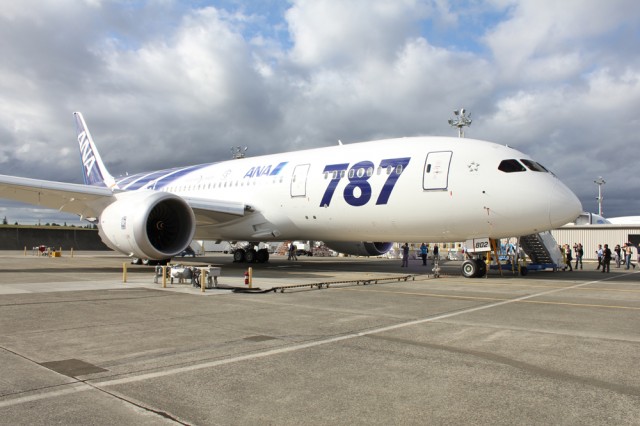
ANA's second aircraft JA802A on the tarmac at Paine Field.
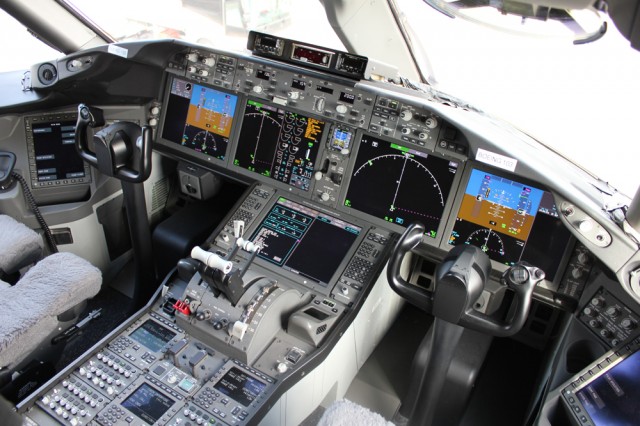
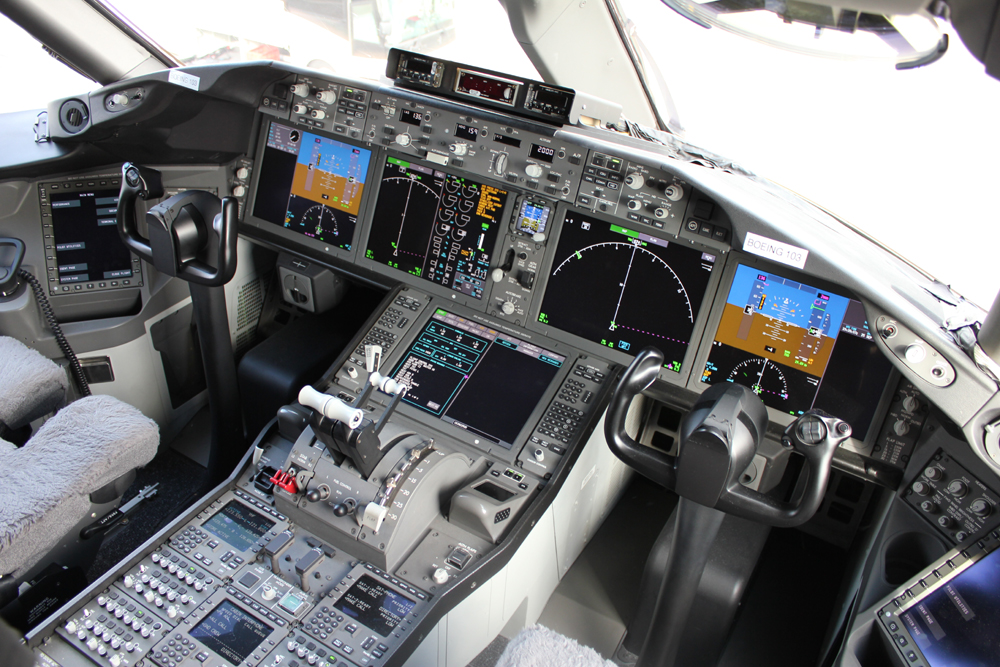
My favorite place to be -- the cockpit. It is so easy to see out the aircraft from any of the seats up front.
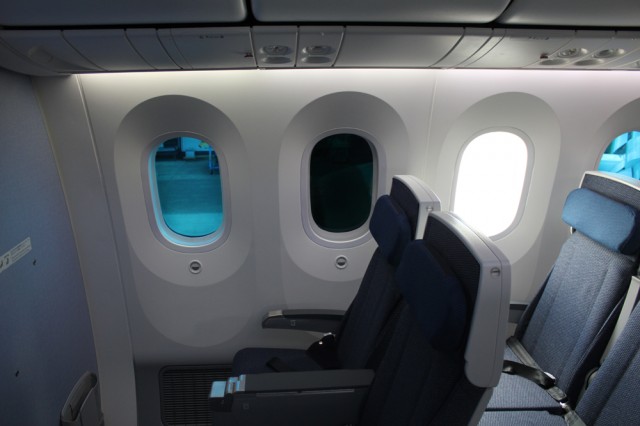
Three windows, three different shades.
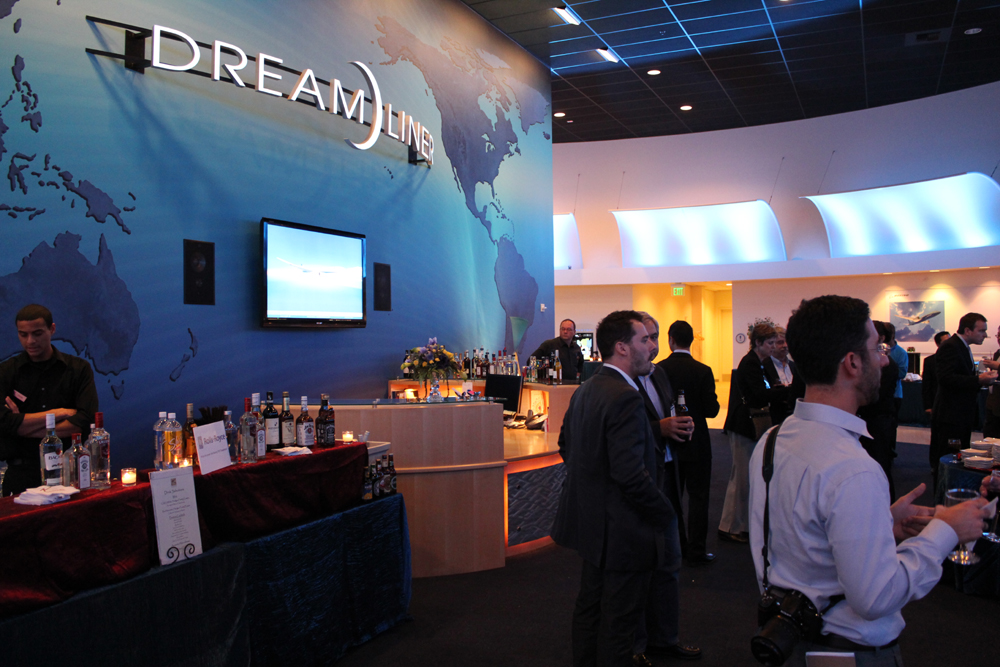
Currently at the Dreamliner Gallery for some drinks and food and of course a tour. The day is not quite done.
5:40PM
It is nice and relaxing now. Having some drinks and light food and hear we will get a tour of the Dreamliner Gallery here soon.
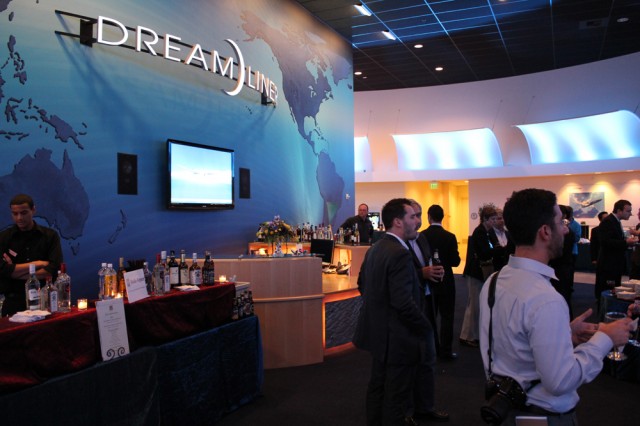
Having a good time at the Dreamliner Gallery in Everett, WA. Do you recognize the guy in the white shirt? The famous Flight Blogger.
6:30PM
These sort of events are great to talk to aviation journalists from around the world. Many I catch at other events. Then of course talking to all the Boeing folks is great (none of them are willing to talk about the Cargolux 747-8F). There is a very large model of ZA001 with working stobes and lights that is pretty slick:
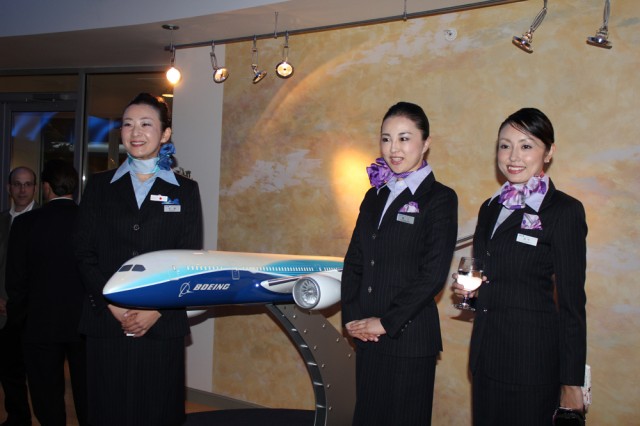
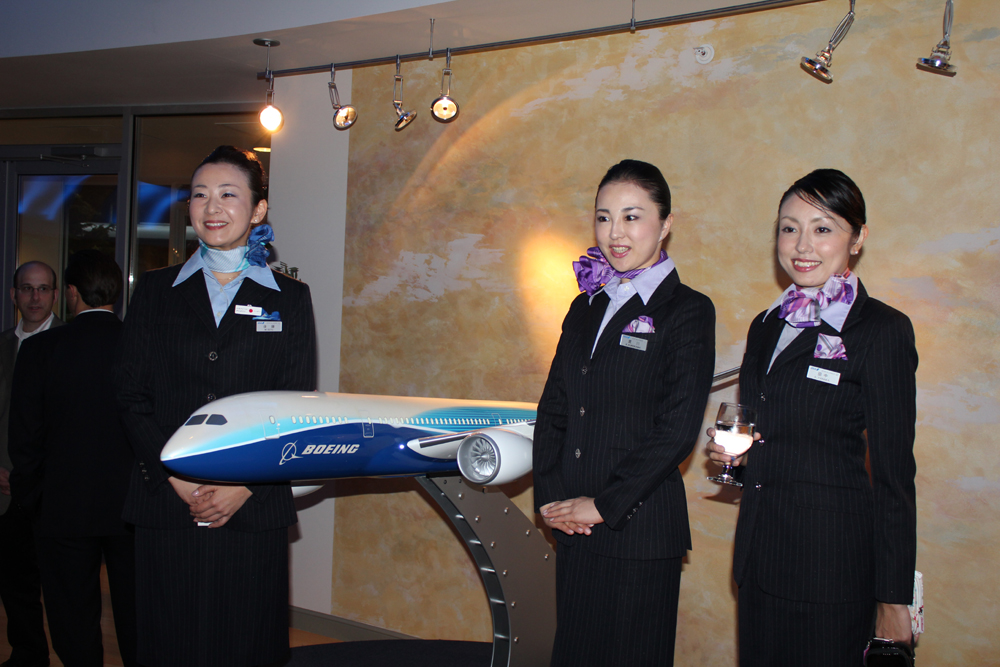
ANA flight attendants pose in front of a large 787 model at the Dreamliner Gallery.
7:45PM – Last of the Day
Just got a quick tour of the Dreamliner Gallery. This location is to let customers choose what the interiors of Dreamliners will look like. From lighting to seats to fabric, this is a one of a kind location. I hope to come back to do a longer tour and a full write up, but for now a few photos:
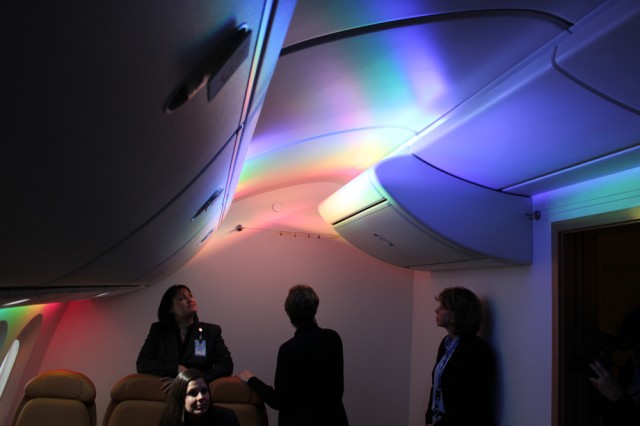
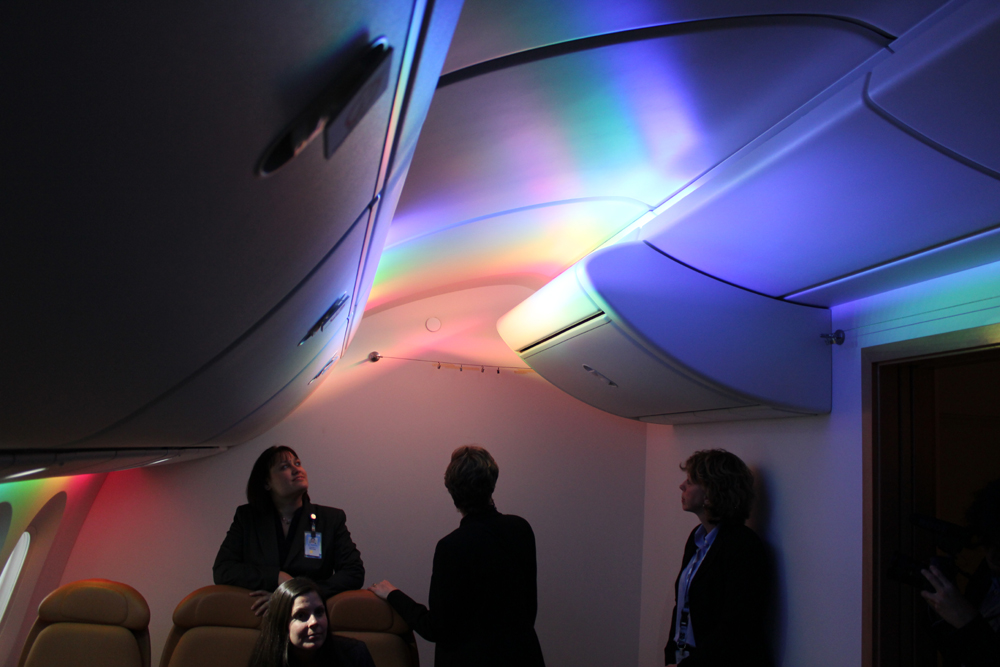
There is a special room that allows airlines to try different lighting combinations. This one is called "disco wave" and no airline has chosen it yet.
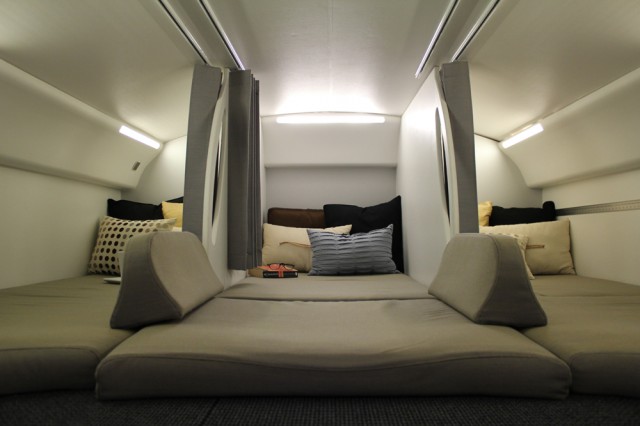
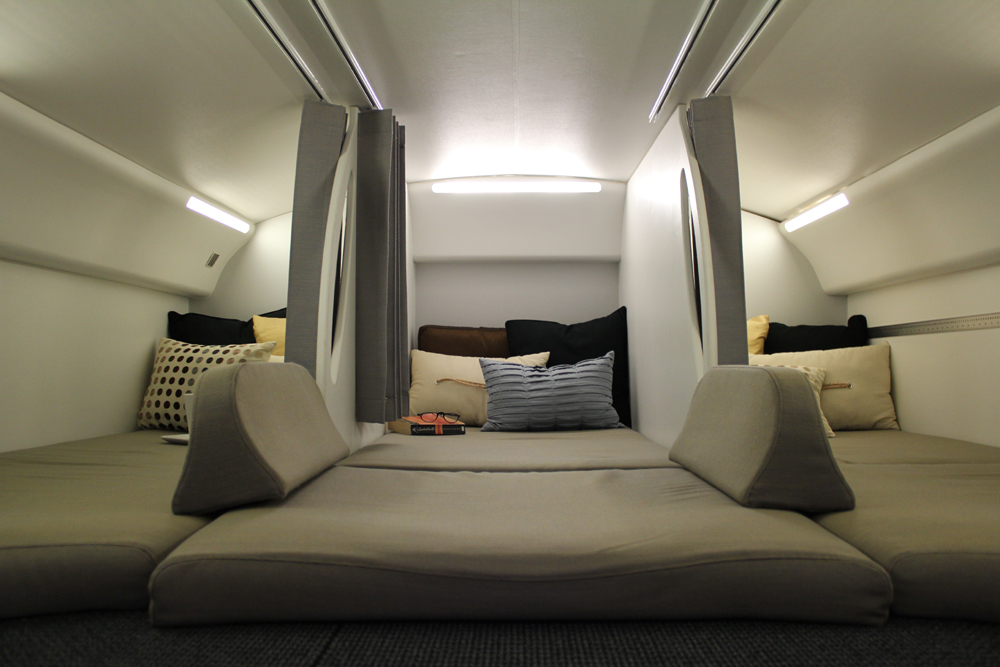
Crew rest area mock up of the 787 Dreamliner.
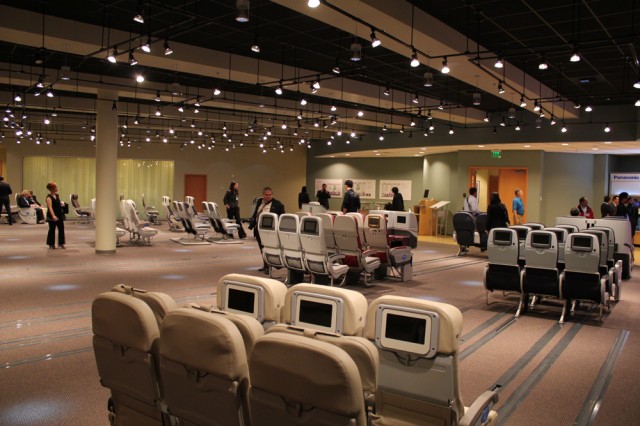
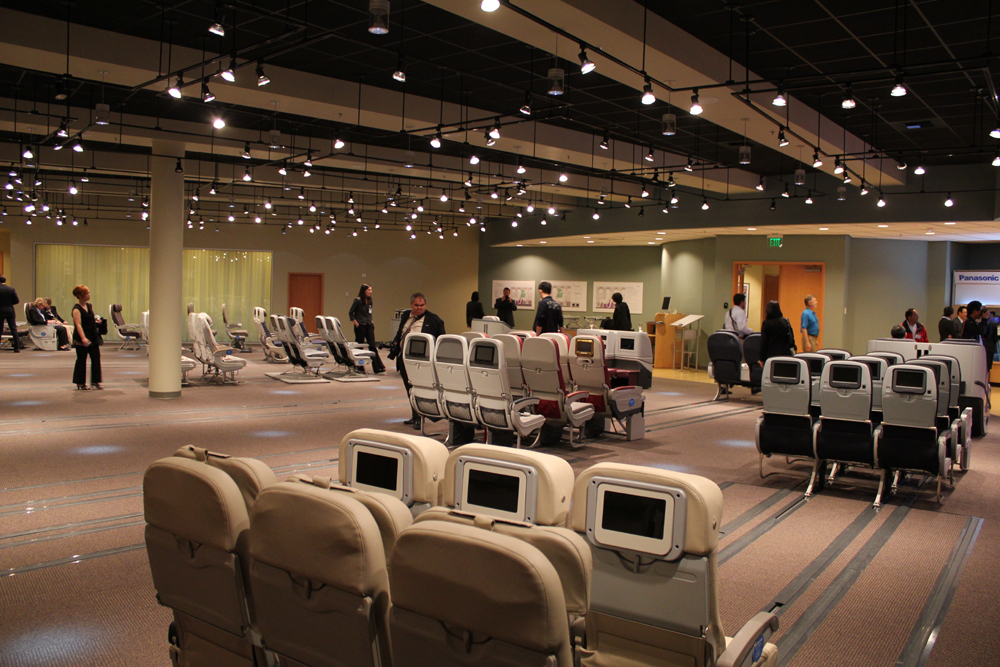
The seat room. Where there are a lot of airline seats to test out.
Okay, that does it folks for today. I am off to home to get some rest and back at it again tomorrow for the official delivery ceremony. I hear there might be some surprises for us tomorrow. Thanks for reading.
I will be live blogging and updating this post through out the day with photos and information. Since I will be in a hurry, more than usual, and posting remotely, you might find a grammatical mistake here and there — for that I apologize. Stay tuned…
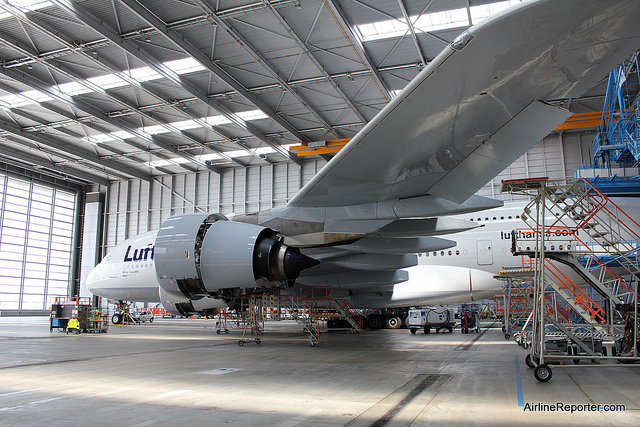
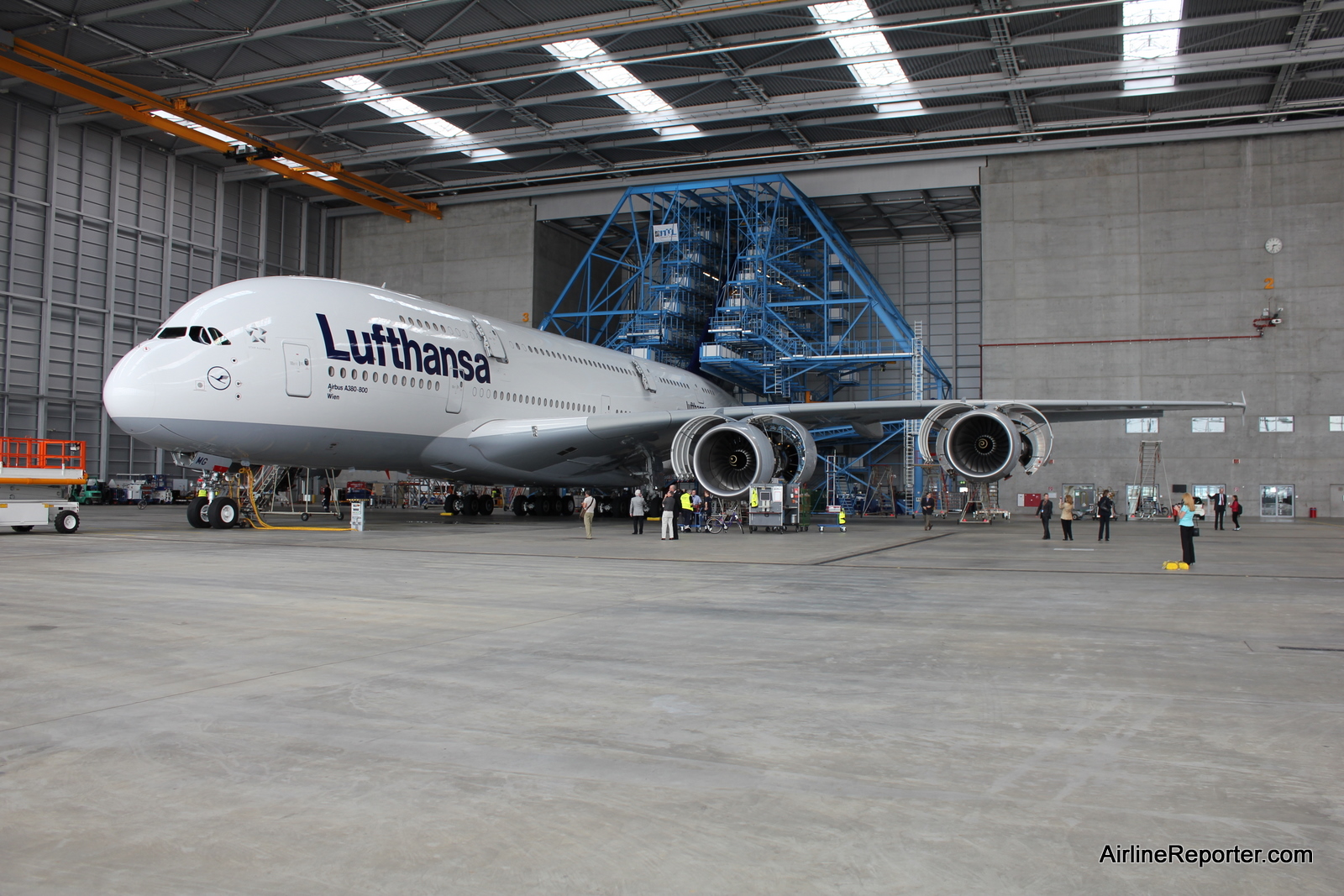
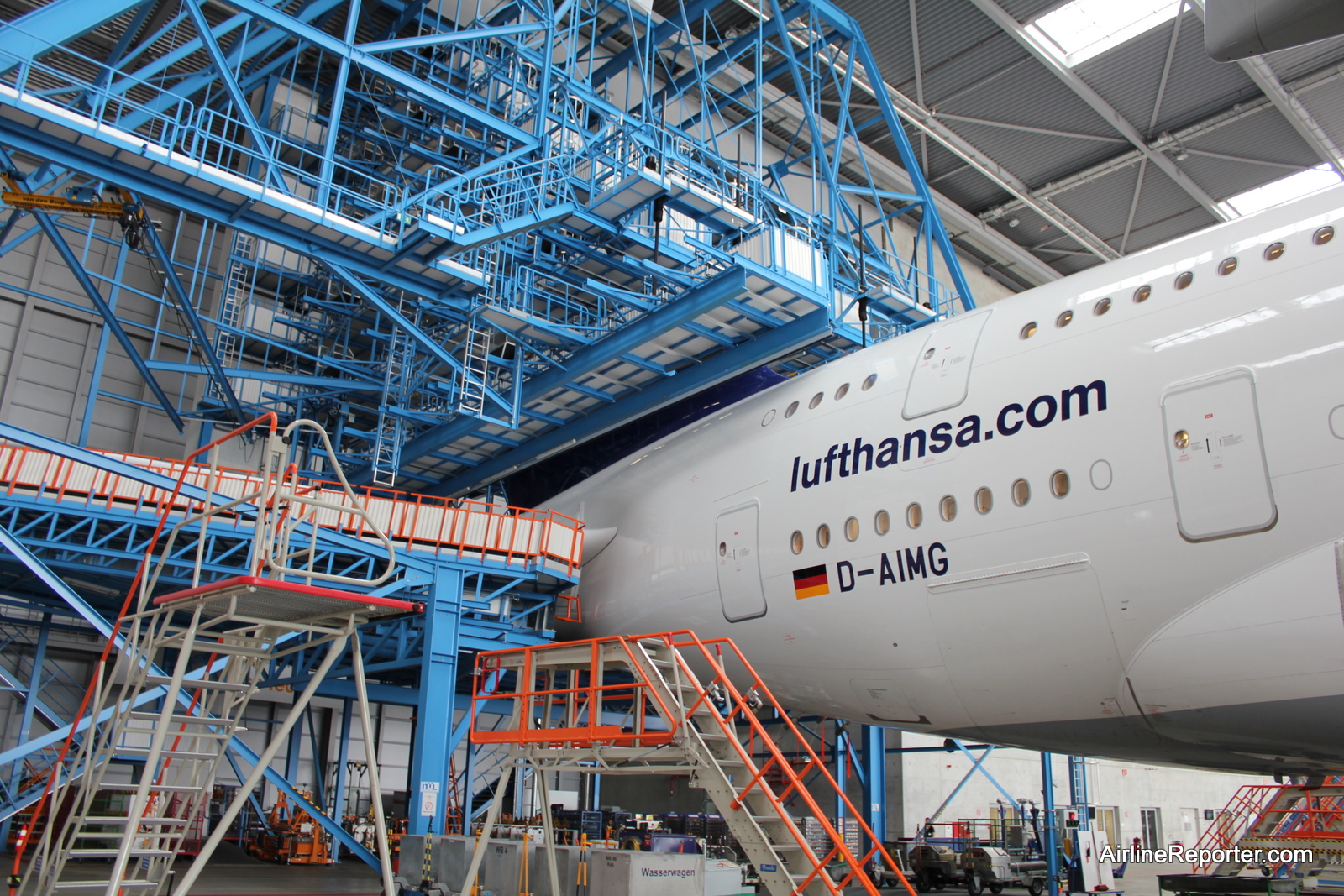
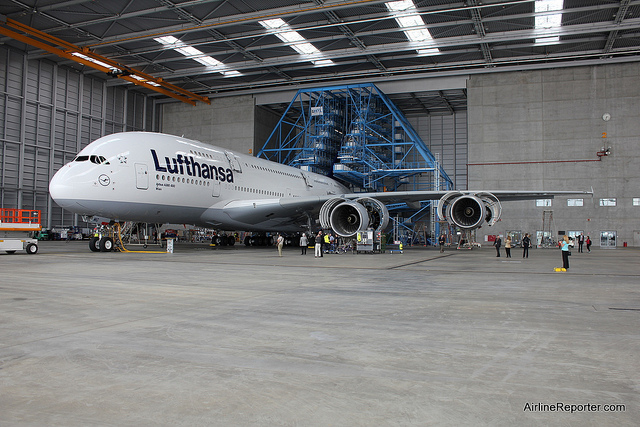
The massive Technik hangar makes the large Airbus A380 look small.
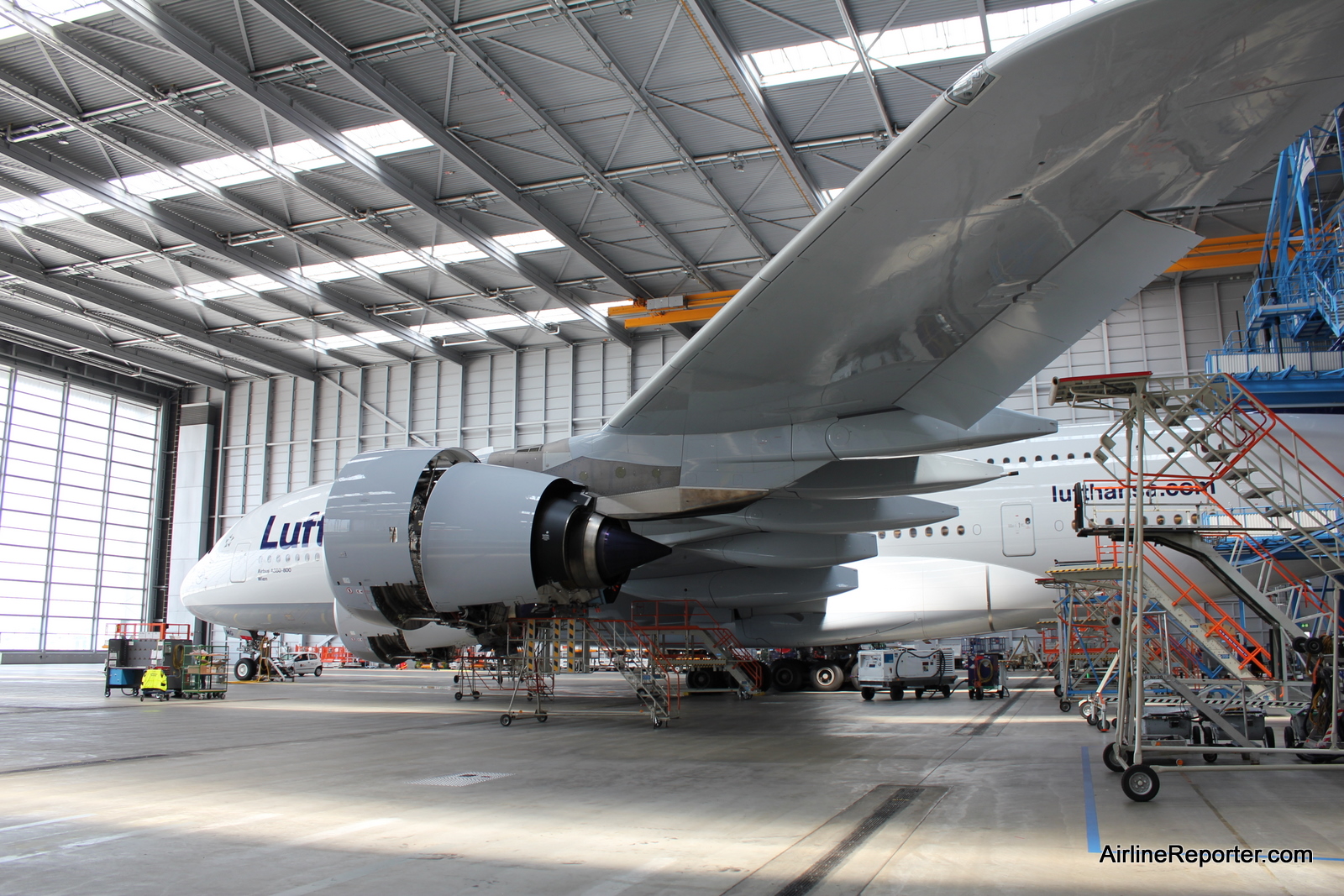
How do you make the Airbus A380, the world’s largest airliner, look small? Put it into the Lufthansa Technik Hangar in Frankfurt Germany that’s how. While in Frankfurt for a 24 hour spiel to celebrate Lufthansa’s first Airbus A380 flight from Frankfurt to Miami, I had a chance to go check out where maintenance is done on the A380.
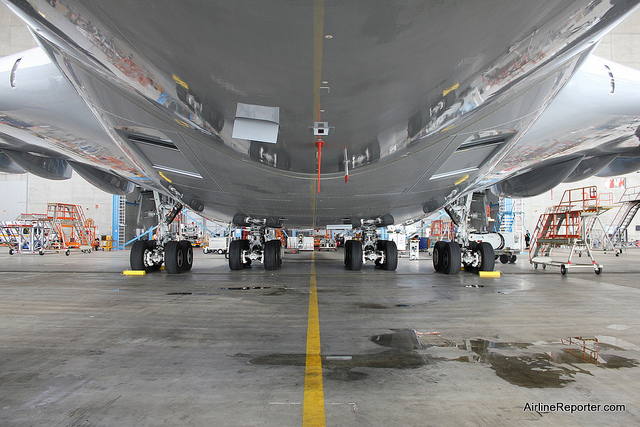
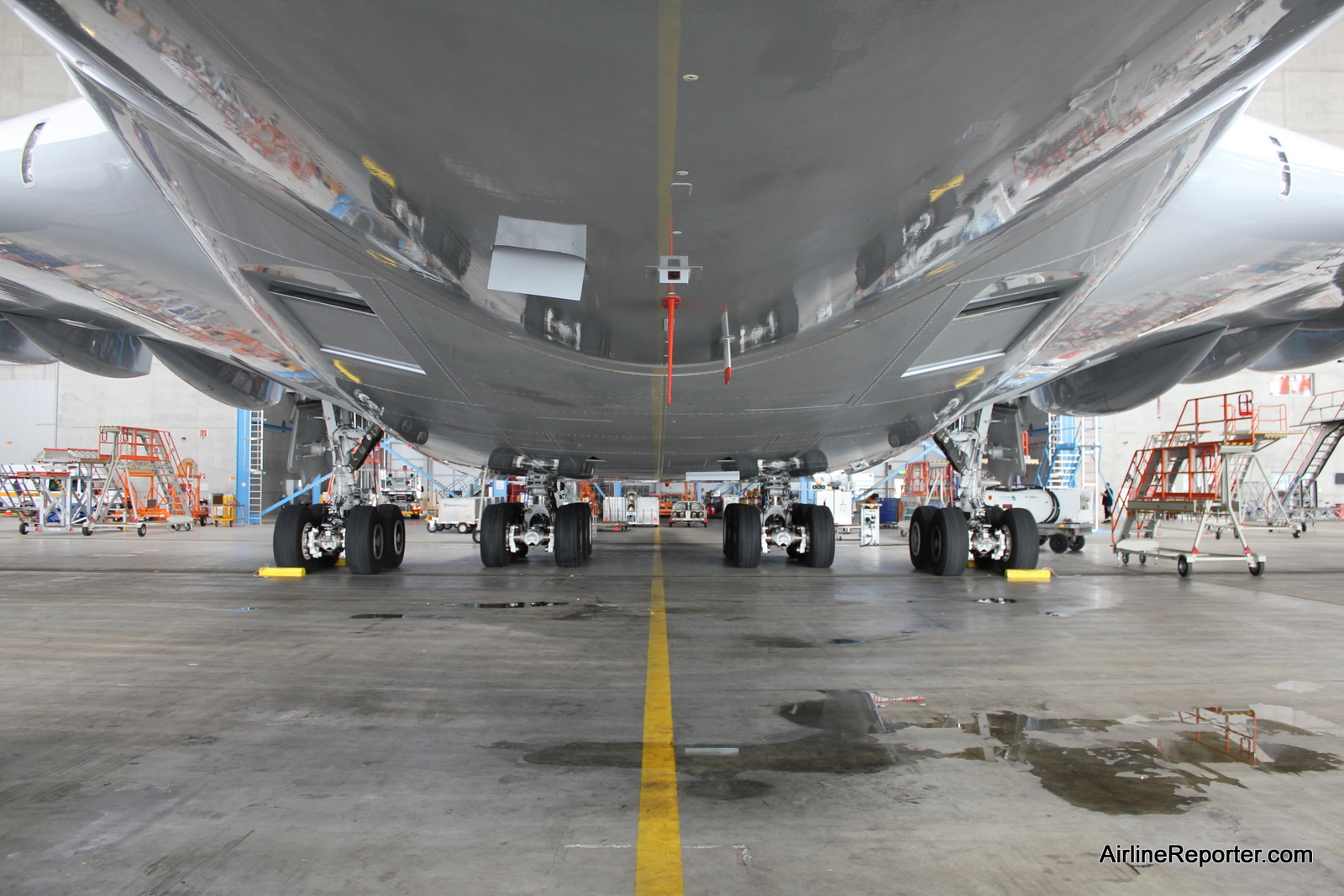
The Airbus A380 actually sits relatively low, but has lots of wheels.
At the time, I have seen the A380 at a distance and even got to tour the inside. But this was my first opportunity to walk around the aircraft on the outside. It is surreal how tall it is standing next to it, but how at the same time it is so close to the ground. I am 6’1″ tall and my head was touching the bottom of the aircraft when taking the photo above. Closer towards the main landing gear, there is even less head room. From ground to tail, the A380 is about eight stories tall and just the fuselage is about three.
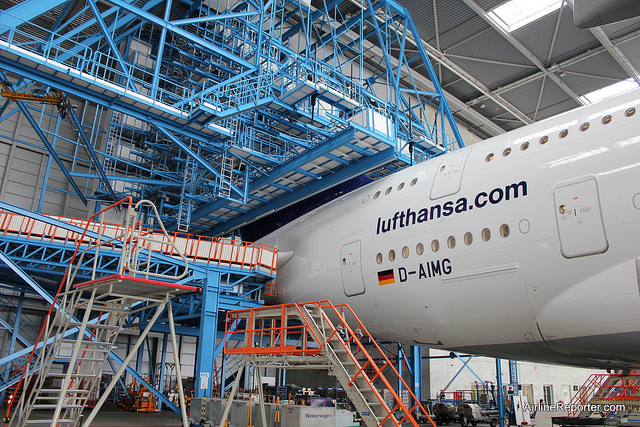
This A380 (D-AIMG) was just having minor work done and I saw her back at Frankfurt Airport the next day ready to fly.
Lufthansa Technik Group is compiled of 30 companies world-wide that help keep Lufthansa and many other aircraft operational. Lufthansa Technik has the ability to perform checks at 60 airports around the world and they are organized into six different operational groups which serve about 750 customers worldwide: Maintenance, Overhaul, Component Services, Engine Services, VIP Services and Landing Gear Services.
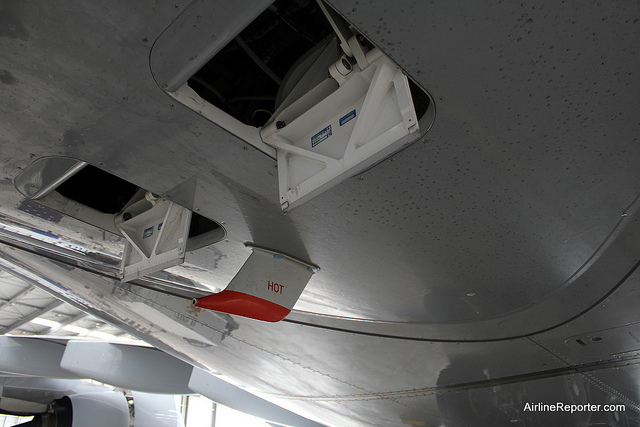
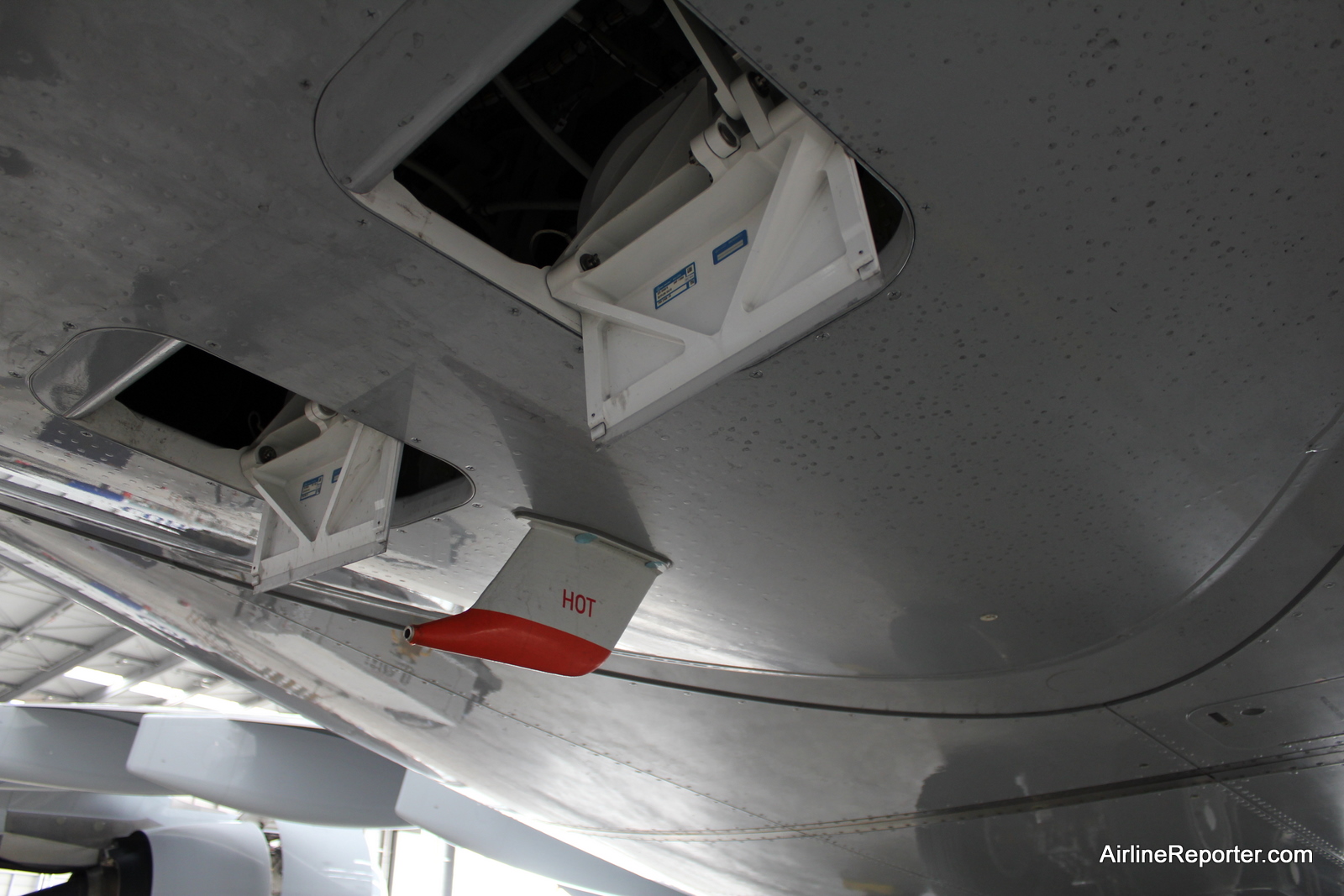
- Three “out holes” for the A380. The larger ones vent out air, the center will vent liquid.
Before Lufthansa took delivery of their first Airbus A380, two large facilities were built for Lufthansa Technik to handle the new aircraft. One was in Frankfurt and the other is located in Beijing. The facility in Frankfurt was completed in December of 2007 and measures about 590 x 460 feet. The hangar is large enough to hold two Airbus A380s and one Dreamlifter as was proven not too long ago.
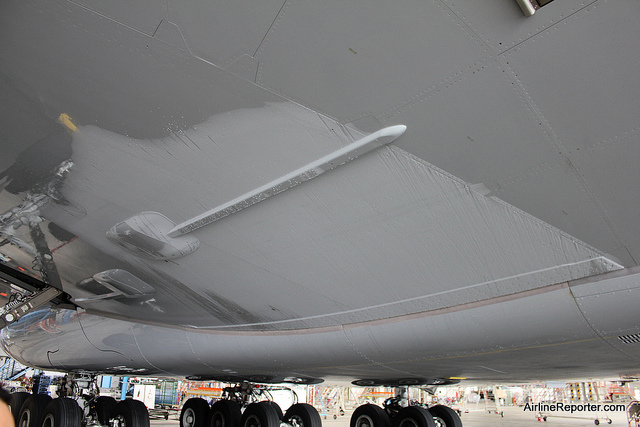
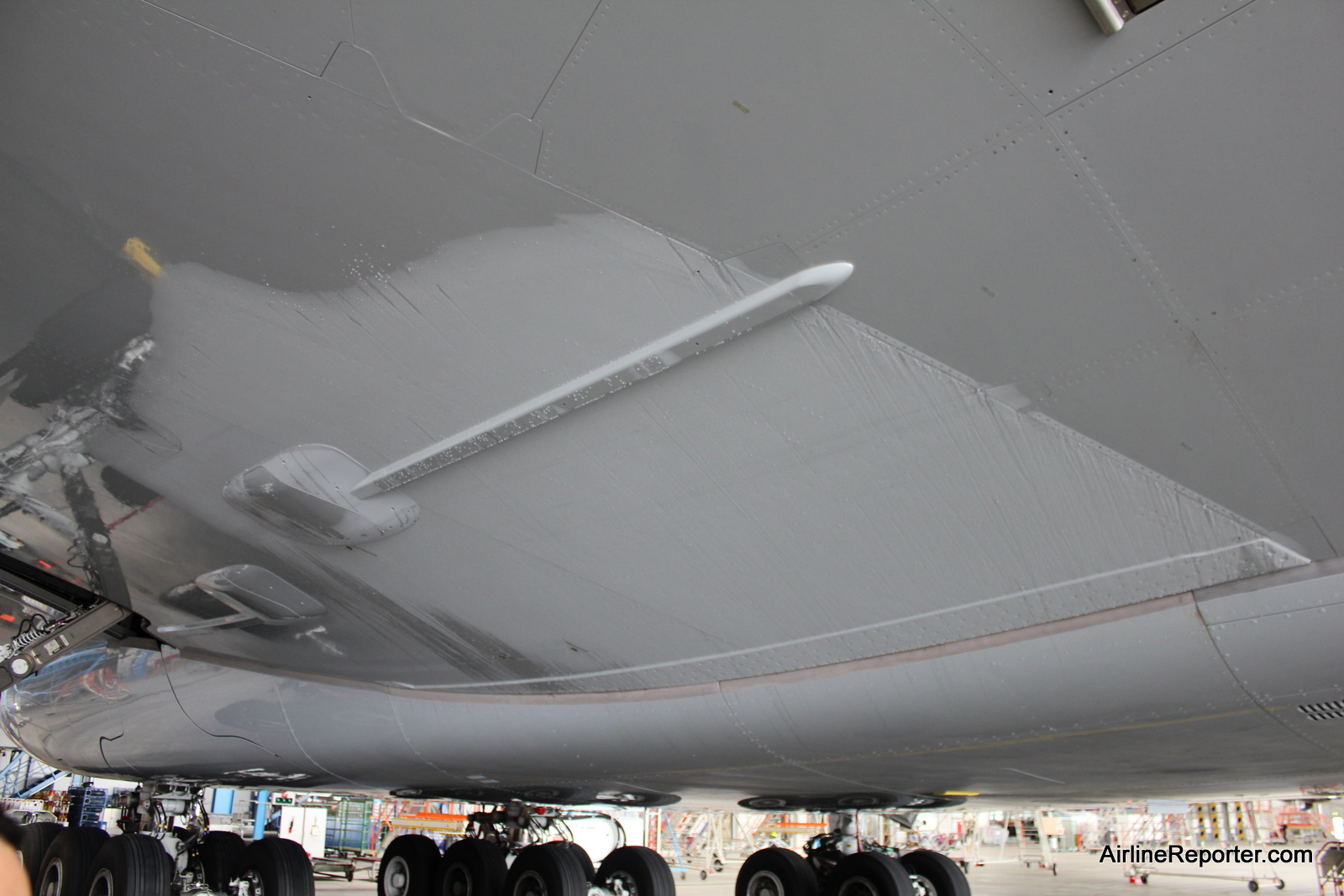
Can you tell where the fuel tanks are located in the wing of the A380?
Obviously the Airbus A380 can hold a lot of fuel — about 85,000 gallons worth. Unlike most other aircraft, no fuel is stored in the fuselage and it is all stored in the wings. During the tour I was wondering how I had dripping water on my head and realized that I was being rained on via the condensation from the fuel tanks in the wings.
How would you like to climb around the A380 tail? I wanted to, but they said something about liability.
Buying the aircraft and building the hangar is just part of the process. Lufthansa Technik also had to get the tools, parts and people to make it complete. The facility has more than 70,000 parts in their inventory ranging from screws to engines. Outside the hangar there is a jet testing area, which was in use during our visit (but could not take photos since it was a non-Lufthansa aircraft).
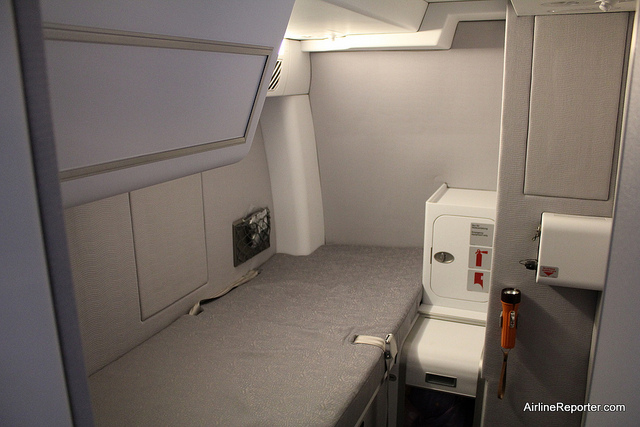
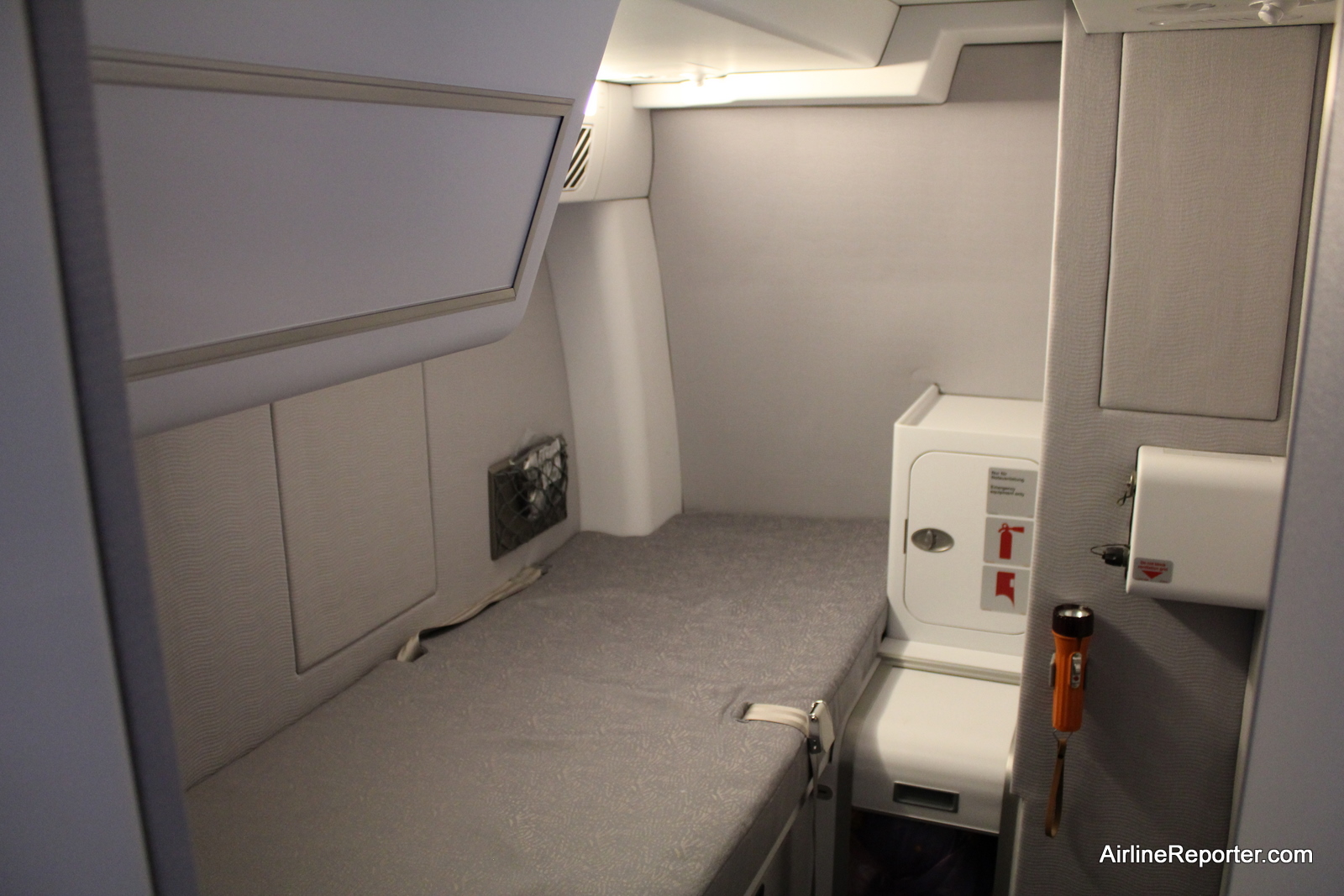
This is where the pilots can get a little shut eye during flight.
During the tour of the facility we were able to get on board D-AIMG to take a look around. Since I was about to take a 10 hour flight in an A380 in a few hours, I decided to hang out more in the front of the aircraft by the cockpit. Lufthansa’s A380 are designed so there is an external door that leads to a crew sleeping area and lavatory for the flight crew. The crew rest area was actually the largest I have seen in an aircraft and didn’t feel as claustrophobic as others.
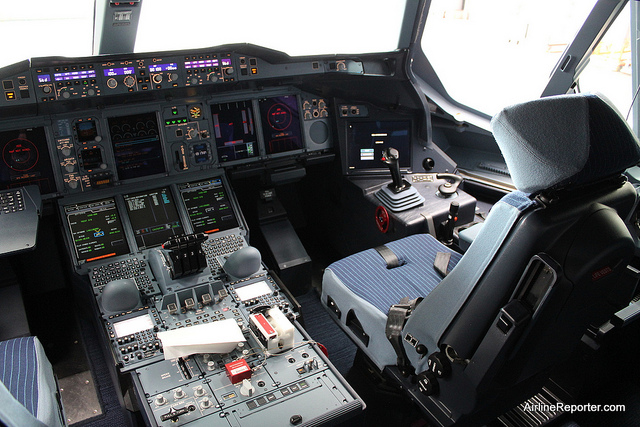
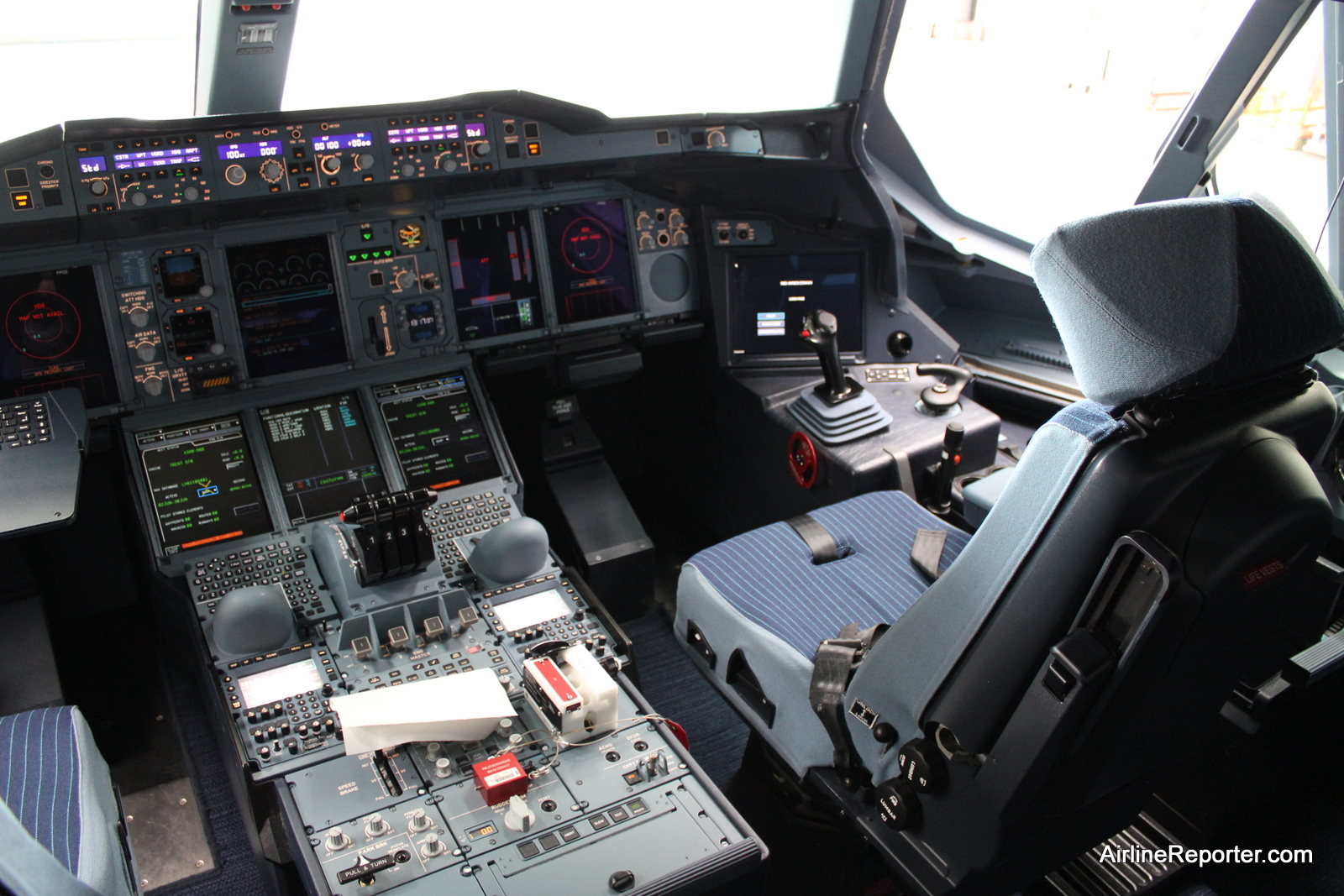
Where all the action happens. Hard to believe this large aircraft is controlled by a little joystick.
Some folks think first class is the best seat in the house. Although they are nice, they cannot compare to the seats in the cockpit. The cockpit is very roomy and it is hard to get a feeling of the true size of the aircraft. The flight deck is located in the middle of the aircraft, which doesn’t give it the sense of height that the cockpit in the Boeing 747-400 has.
CHECK OUT ALL 19 PHOTOS FROM THE LUFTHANSA TECHNIK TOUR