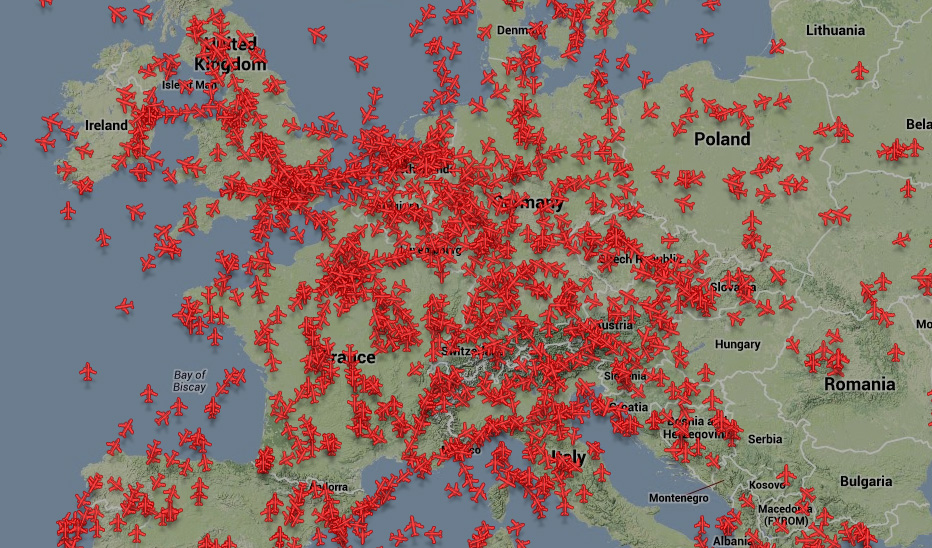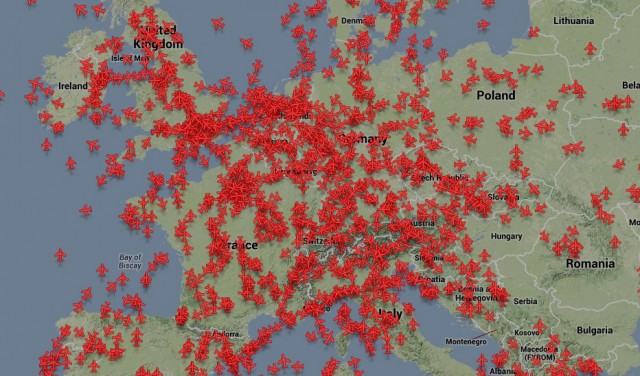
Many aircraft are flying over Europe at any given time. Image from PlaneFinder.net / Google Maps.
Story written by Steve Fulton, Technical Fellow at GE Aviation and shared on AirlineReporter.com:
We are taught from a young age about the importance of working together.
’œThere’s no I in team’ was a common inspirational poster in my children’s classrooms and libraries. This is certainly still relevant to our lives today — in business, it is critical for groups to partner to address a common challenge. This mantra is especially applicable to aviation, as we must work together to make the most out of our increasingly congested skies.
With business and government leaders and even industry enthusiasts gathering in Le Bourget for the Paris Air Show last week, we were reminded of the importance of an efficient airspace system that can accommodate increased demand in interconnected air travel. The international airport that supported the influx of visitors from around the world was Charles de Gaulle Airport, located outside of Paris. It is Europe’s second busiest airport and in 2011, the year of the previous Paris Air Show, the airport handled 514,059 aircraft movements and 60.97 million passengers.
Whether it’s to manage an increase in traffic to support a major event or to plan for steady global growth, stakeholders working as a team to create an efficient, interconnected sky — and a modern air traffic control system to effectively manage and improve it — will be critical to the success of the future of aviation.
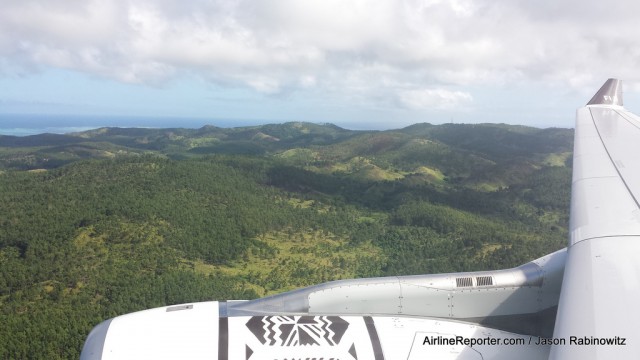
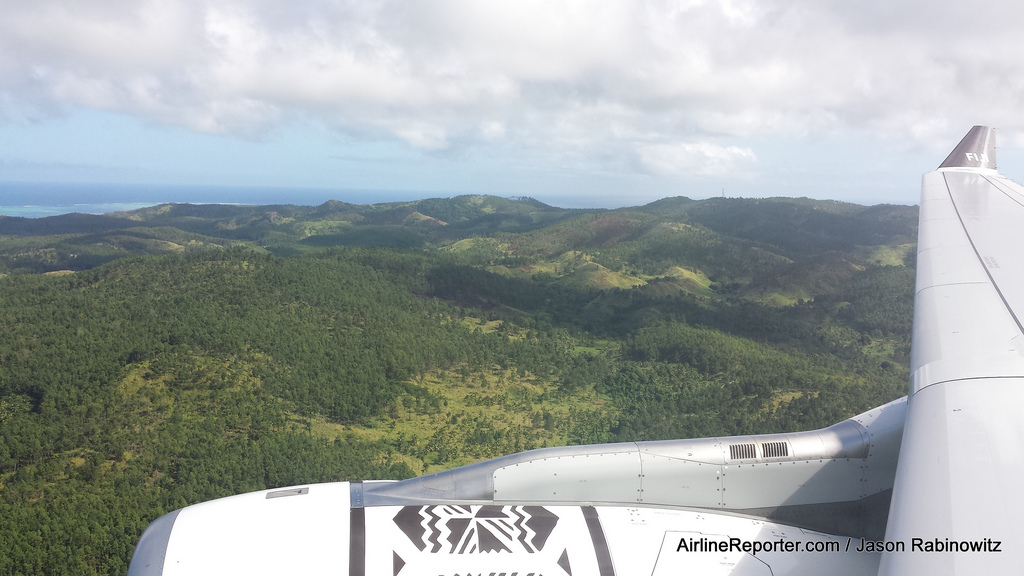
Flying only 900 feet above Fiji was not too shabby.
A media flight is always a special event, but there are a few things that can make it even more special. So how special is a media flight that also happens to be a delivery flight flown by two Airbus “expert pilots” who preformed a 2 hour low altitude fly by with the airline CEO on board as well as the artist responsible for the airlines brand new image? Yea, that is special. What else could Air Pacific, soon to be Fiji Airways, possibly have added to this flight to make it more special? I can’t think of anything. This is the story of a small airline that made a big impression.
Air Pacific is re-branding in a big way, which I detailed in a review of their new Airbus A330. To help promote these big changes, Fiji Airways in cooperation with Tourism Fiji invited a small handful of travel bloggers and journalists, as well as one #AvGeek (me), to fly out to Fiji and witness the delivery ceremonies of their second new Airbus A330.
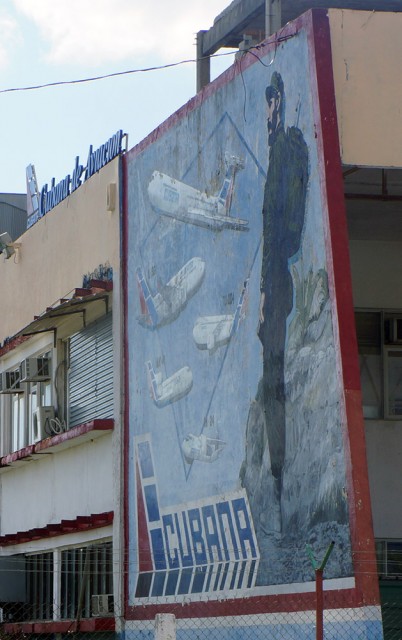
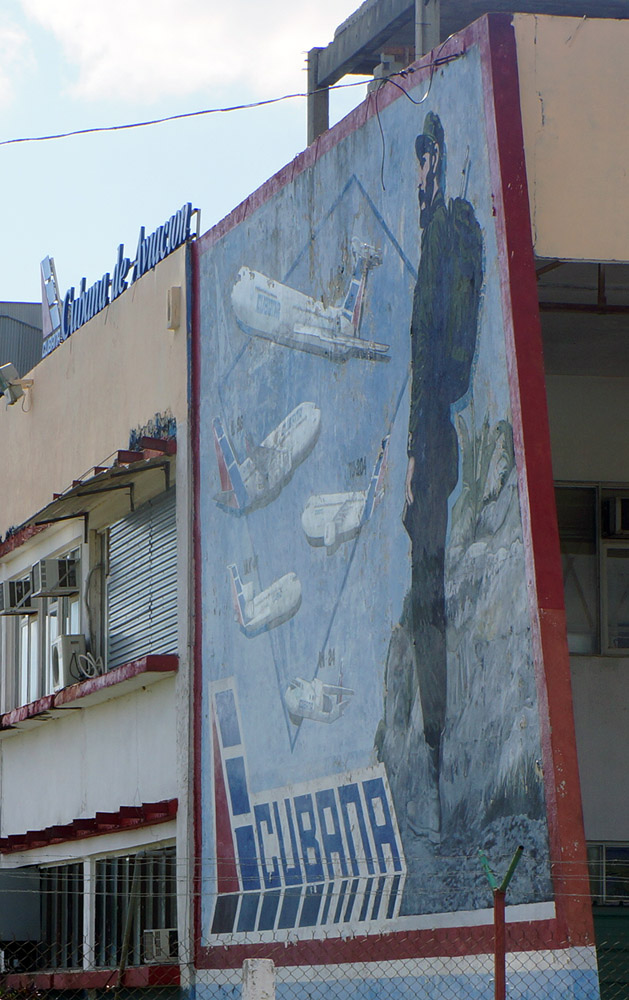
Fidel Castro, in full military garb, is painted posing with Cubana’s old Russian fleet in this mural on a wall of the airline’s maintenance base at HAV. Photo by Chris Sloan / Airchive.com.
This is an excerpt from Chris Sloan’s full story on Airchive.com:
For the first half of the 20th Century, particularly beginning during the U.S. Prohibition Era, Cuba was a playground for Americans where rum, gambling, and often-illicit activities flowed freely. Our closest Caribbean neighbor and ally to the South was also a major trading partner with the United States with many U.S. major multi-national companies having interests in sugar, farming, and tourism throughout the country. Havana, in particular was a sexy, and at times infamous place with exotic locales and attractions such as the Tropicana Night Club, Hotel Nacional, famed beaches, lively salsa music, and majestic old world architecture. The world-renowned hospitality, warmth, and exuberant personalities of the proud Cuban people were and remain an enduring feature of the nation. The mob and its iconic figures such as Meyer Lansky as well as Ernest Hemmingway’s books only enhanced Cuba’s sexiness and notoriety. It was in many ways ’œThe Las Vegas of the Caribbean’ before there was even the Las Vegas we know of today.
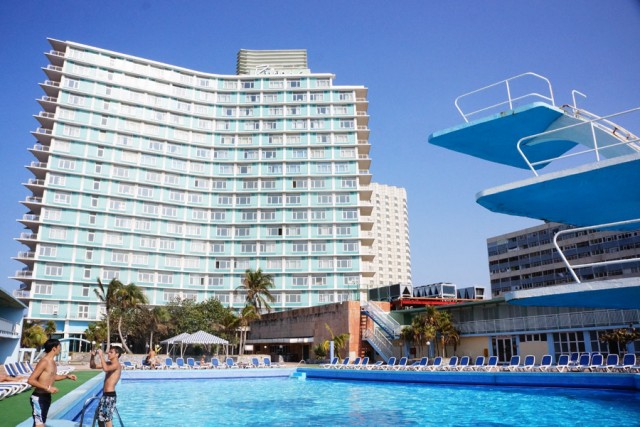
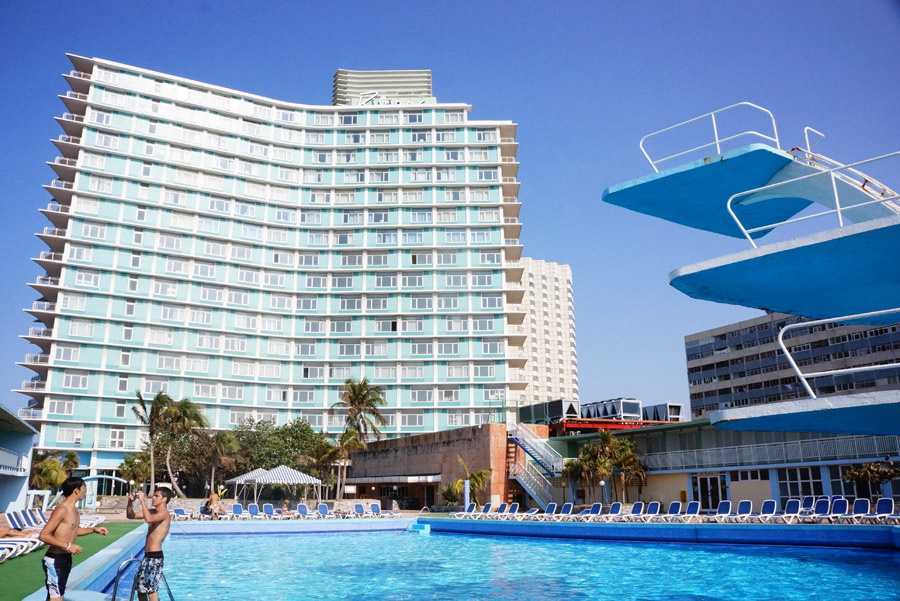
The Hotel Habana Riviera, or Havana Rivera as it is otherwise known, is located on the Malecón, looks virtually just as it did at the time of its 1957 opening. Overlooking the Gulf of Mexico, the Rivera was the first hotel in Cuba with air-conditioned rooms. After the revolution, it was taken over by the Cuban government and its casino was closed. This 350+ room hotel, remains one of the most perfectly preserved example of its kind in the world. Photo by Chris Sloan / Airchive.com.
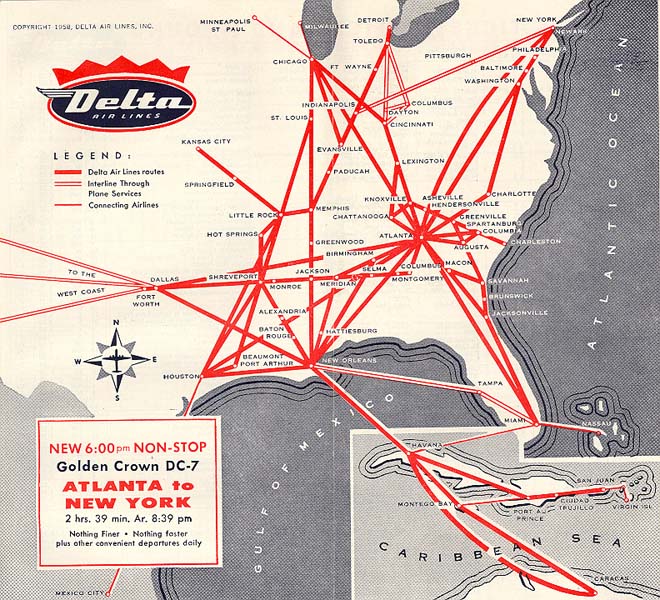
Cuba and the United States had very close ties from the very beginning of aviation as well. Pan Am’s first flight was between Key West and Havana in 1929. Many other U.S. airlines spirited passengers, businessman, and cargo to Havana: Delta (via New Orleans), Braniff (via Houston), Pan Am (offering flights to Miami, Merida Mexico, San Salvador, and Jamaica), National (via Miami), Eastern (via Miami), and other smaller carriers such as Mackey (via Miami). Founded in 1930, Cuba’s national airline, Cubana, was once partially supported by Pan Am. CU frequently flew daily flights to Miami and New York Idyllwild first using DC-3s, DC-4s, Lockheed Constellations, Vickers jet-prop Viscount 318s and Bristol turbo-prop Britannia’s.
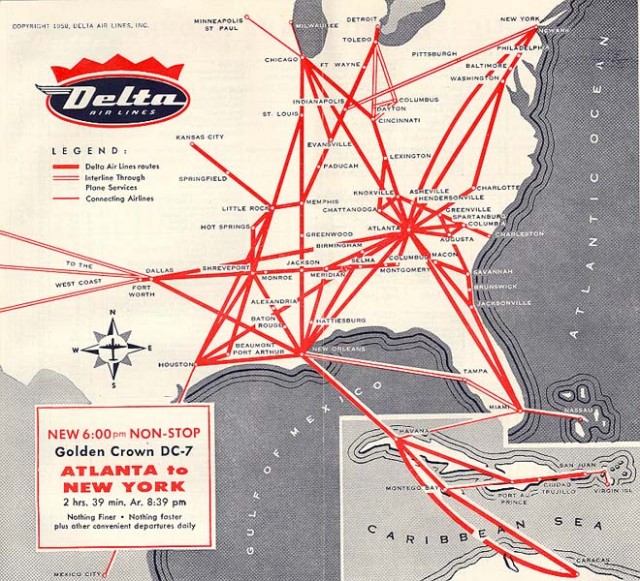
Delta served Havana and other cities in Cuba from New Orleans, its former Caribbean and Latin America gateway. Delta ended services to Cuba in 1961 under order of the U.S. government. Photo from Chris Sloan / Airchive.com.
For the citizens of Cuba, these were the best of times and the worst of times. Under an oppressive and corrupt dictatorship led by Batista who was supported by the American Government, there were a few ’œhave’s’ but many ’œhave not’s’. When Fidel Castro came to power on New Year’s Day 1959, many Cubans cheered at the prospect of change. No one really knew at the time just exactly what profound changes would come shortly to this remarkable country.
When the arguably even more brutal Castro regime began moving closer to Nikita Khrushchev and the Soviet Union during the Cold War, then nationalized all private businesses (including the foreign interests), and confiscated personal property, many Cubans and Americans fled the nation. Many felt at the time that this would be a short-term regime, not one that would be led by one of the longest lasting leader’s in modern history. Many Cubans sadly would lose everything they have and never return to their homeland again. Those that were fortunate enough to have survived the Castro regime, lost most of their personal property, businesses, homes, and especially their already limited freedom.
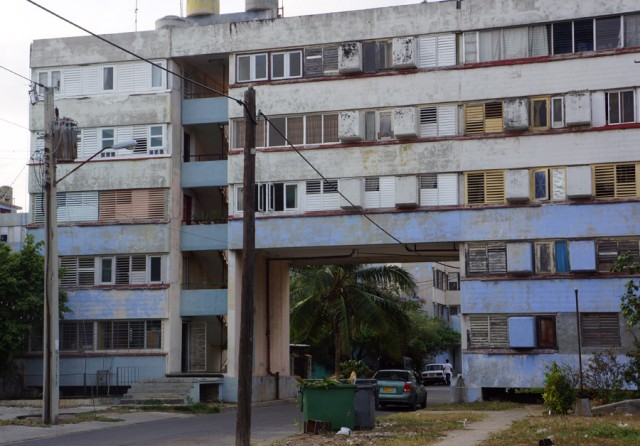
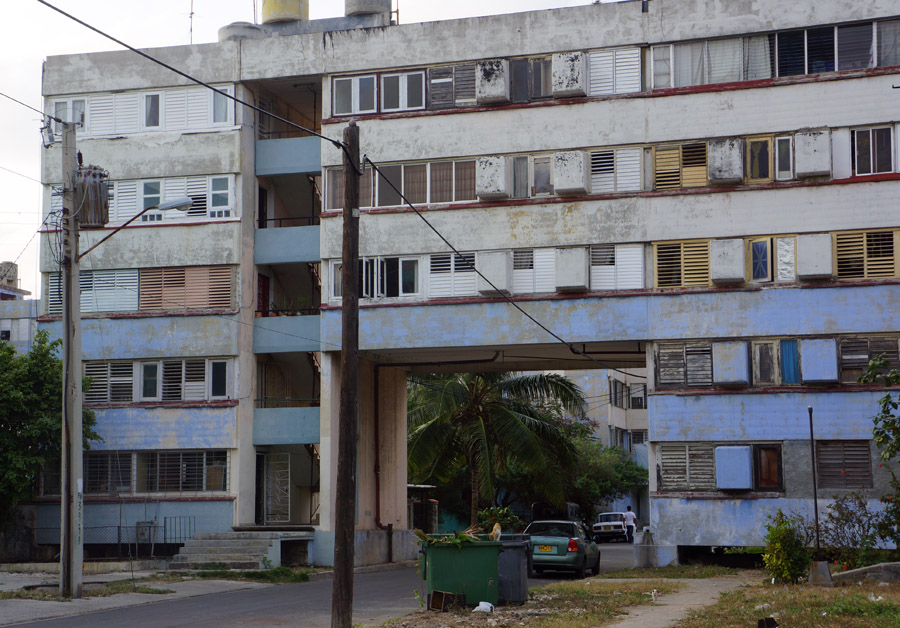
After the Revolution of 1959, American modernist and art-deco and Spanish inspired Mediterranean architecture was super-ceded by 1960s Soviet Eastern Bloc design. This ugly architecture, more at home in old East Berlin, Moscow, or Prague then the tropics is unfortunately ubiquitous throughout Havana. One can only hope that decay and new construction eventually means an end to these eyesores. Photo by Chris Sloan / Airchive.com.
The United States began limiting travel to Cuba shortly after the Revolution in 1959. Diplomatic relations were broken off in 1961, and following the Cuban Missile Crisis of October 1962 travel and trade restrictions were officially imposed under the Trading with the Enemy Act. An embargo on all business with the island Communist nation went into effect and has endured for 60 years.
Apart from humanitarian flights such as the Pedro Pan flights of the mid 1960s where children were allowed to leave Cuba for the United States; occasional relief flights, limited flights for Cubans to visit home, and a short time during the years under President Jimmy Carter when restrictions were loosened for educational, religious, and cultural exchanges were allowed, travel to the island nation has been virtually off limits. Following the often disastrous and tragic era of the Muriel Boatlift of 1980, President Ronald Reagan once again made travel to Cuba off-limits to most Americans in 1982.
For many, many years the only U.S. airlines operating to Cuba were those whose airplanes were hijacked ’“ a particularly frequent occurrence in the 1970s and early 1980s.
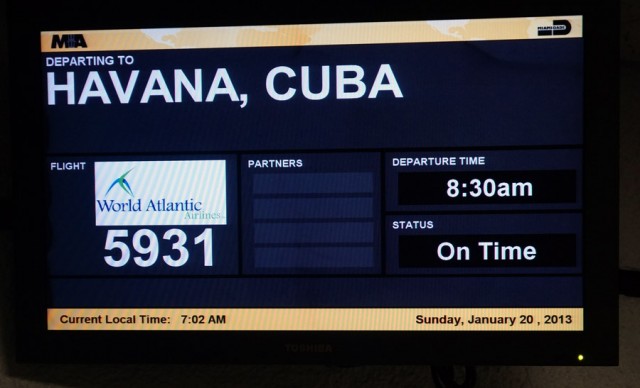
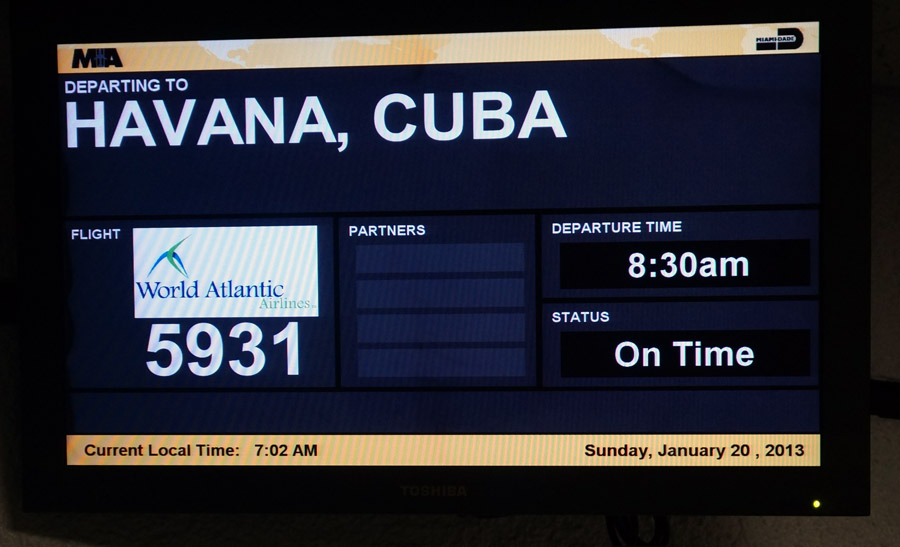
It’s not every day the Flight Information Screens display Havana Airport as a destination unless you’re at Miami International Airport. Photo by Chris Sloan / Airchive.com.
Technically it is not illegal for Americans to actually travel to Cuba, but the U.S. government prohibits its citizens from spending money in the country unless they fall into one of the groups with legal reasons to go there. Lured by the ’œforbidden fruit’ of Cuba, many Americans have illegally flown to Cuba via the Bahamas, Mexico, and Canada.
Those traveling illegally to Cuba run the risk of heavy fines and jail sentences through the Department of the Treasury. Though Cuba doesn’t stamp U.S. passports, there are many ways the United States government can detect travel to Cuba including access to airline’s reservation systems.
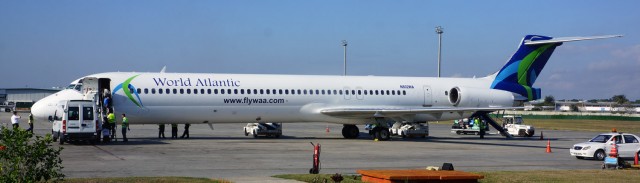
N802WA, a World Atlantic McDonnell Douglas MD-83, is the airplane we flew to Havana. It was built in 1990. Before flying for World Atlantic, the airplane flew for bankrupt Spanair. WAA’s Boeing MD-83 aircraft have a new interior and new configuration of 155 one class seats, providing with seat pitch ranging from 30’³ to 33’³. Photo by Chris Sloan / Airchive.com.
Cuban Americans visiting family are still the most frequent travelers between the United States and Cuba. In 2011, an estimated 400,000 Americans visited Cuba both legally and illegally, up from 250,000 in 2010. This is a surprisingly large portion of the 2.5 million annual visitors to Cuba. These are predominantly tourists from Canada and Europe who are drawn to this relatively inexpensive tropical paradise, with its wealth of culture, history, hospitality, and budding resort industry. Americans, however are barred from these resorts, and are discouraged from even visiting the beaches.
As a resident of Miami (sometime called Havana North), an aficionado of Cuban culture, a global wanderer and well, let me just say it ’œA Wandering Jew’, I had always had a fascination to visit this off-limits Island. When my synagogue Temple Beth Shalom in Miami Beach organized a humanitarian and cultural exchange trip, my wife and I leapt at the chance. The story of our 6-day trip to Cuba is one left to another post, and one difficult to put concisely into words.
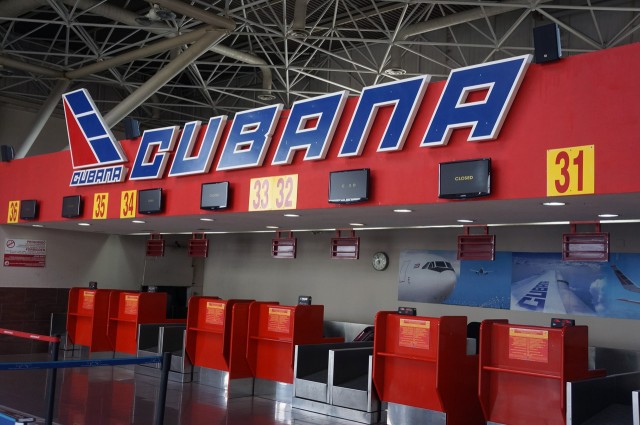
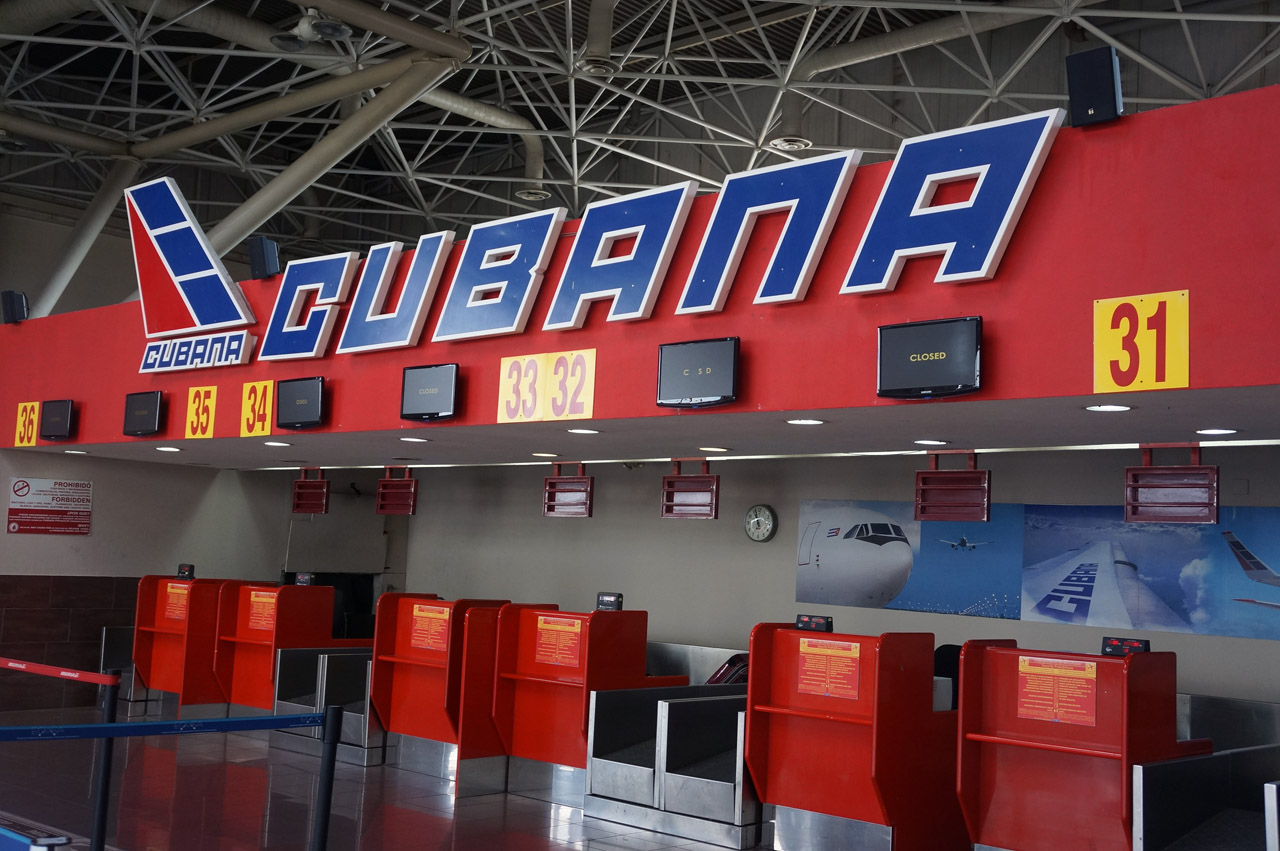
Unsurprisingly, Cubana dominates operations at Havana Jose Marti. Their ticketing takes up half of all space in Terminal 3, the newest at HAV. Photo by Chris Sloan / Airchive.com.
It is a bittersweet experience of paradoxes and contradictions. On one hand, it is fascinating and beautiful. On the other hand, it’s tragic, sad, and desperate. Two things stood out the most: Traveling to Cuba is indeed stepping back in time and not just because half the cars on the road are pre-1959 ’œDetroit Steel’. Second, the people in spite of all they have endured remain warm, and full of passion. We never once felt unsafe or unwelcome, except by 2 aggressive customs officer on the way out of the country.
Sixty minute private interrogations even if eventually communicated to me as ’œroutine’ are never fun, especially in a country that’s still a police state. But back to the positives, as an affirmed AvGeek, the experience of flying to Cuba nonstop from Miami and a visit to Jos Martà International Airport were of almost equal attraction in anticipation and in hindsight.
CONTINUE READING (MORE AWESOME AIRPLANE + CUBAN PHOTOS TOO) ON TRAVELING TO CUBA ON AIRCHIVE.COM
Other Good Cuban Stuff:
 |
This story written by… Chris Sloan, Correspondent.
Chris has been an airline enthusiast, or #AvGeek, since he was 5 years old. Over the years, he has amassed an extensive collection of aviation memorabilia and photos that he shares on his site, Airchive.com. He is the President and Founder of the TV production and promotion company, 2CMedia.com and Executive Producer and Creator of ’œAirport 24/7’ Travel Channel series.
@Airchive | Airchive.com | Facebook |
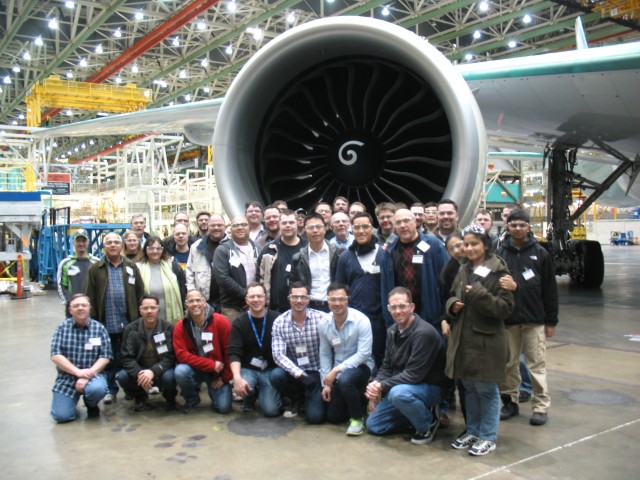
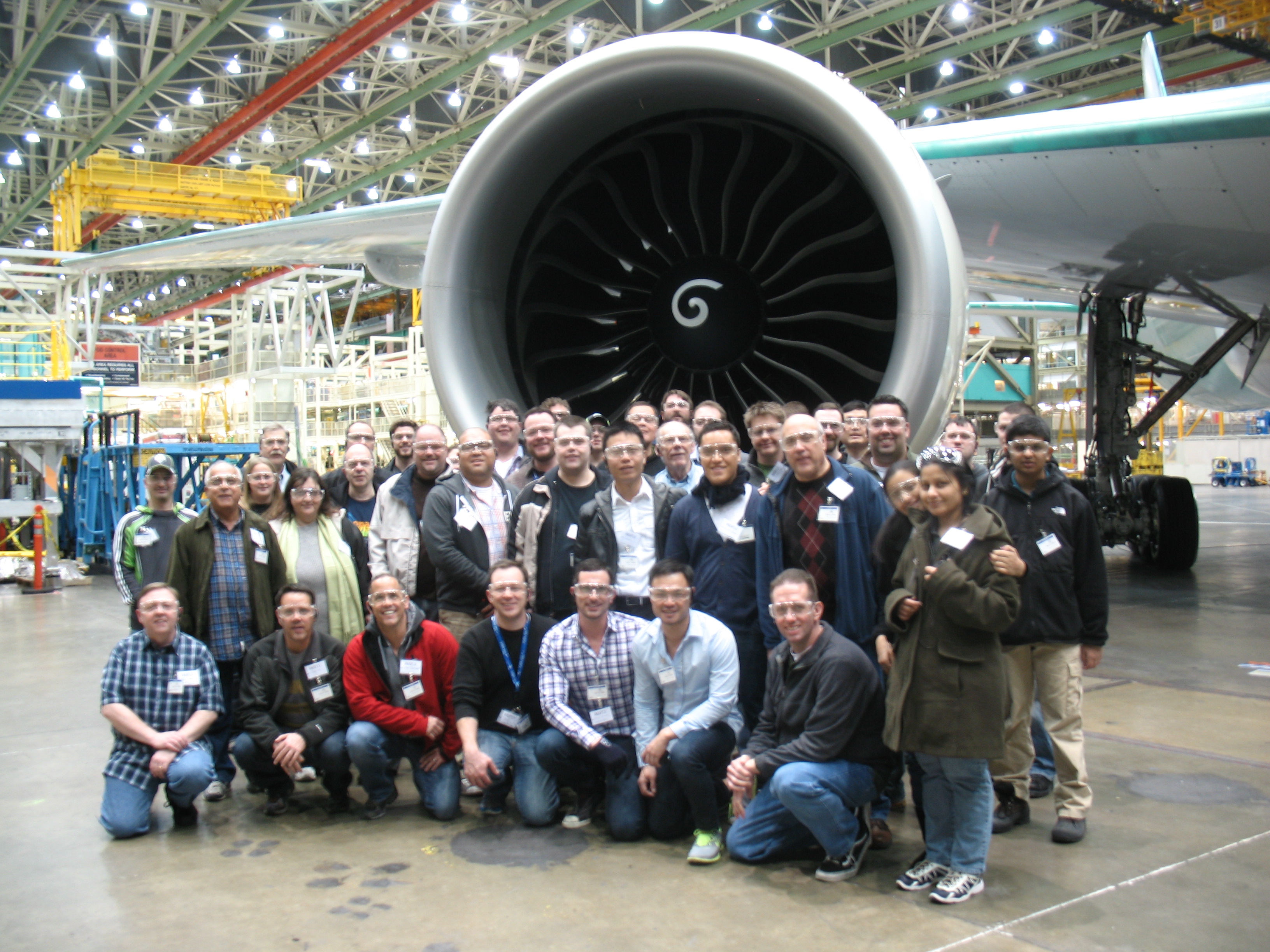
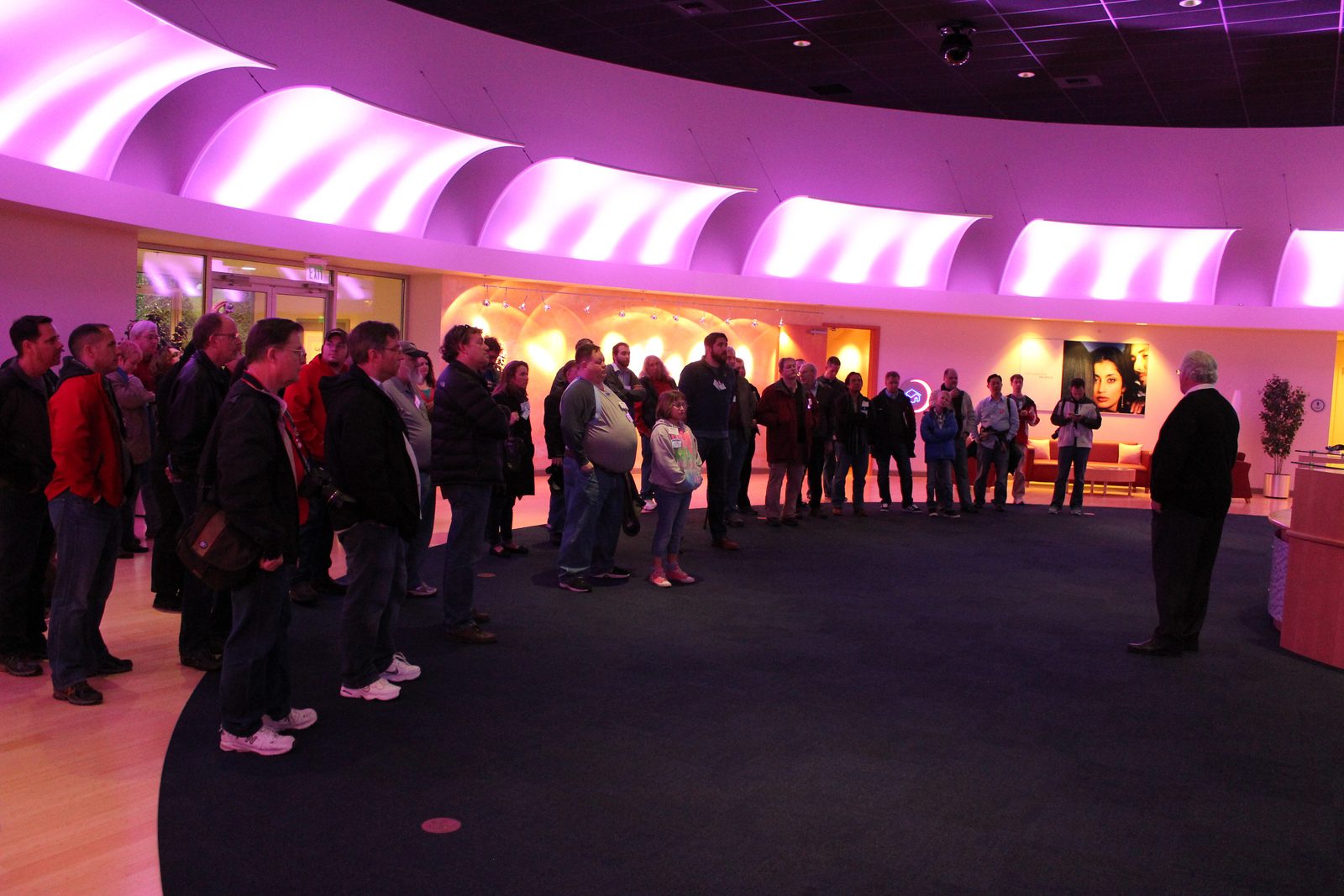
One of three Aviation Geek Fest groups that toured the Boeing Factory Floor. Photo by Boeing.
This weekend was amazing. Almost 200 people attended Aviation Geek Fest 2013 in Seattle this year — it was bigger and better than ever.
Many attendees came from the Seattle area, but we are quite a few who came from out of state: Colorado, Oregon, Minnesota, Arizona, Georgia, Florida, New York, Texas, North Carolina, Nevada, Montana, Hawaii, Massachusetts and California.
The group was also international. There were a few folks from Canada (British Columbia, Ontario and Quebec) and a father and son came all the way from Oslo Norway for the event. This has truly turned into a world event and it makes sense since Seattle is a major hub for aviation lovers. Awesome.

The point of the event is to bring aviation lovers (or AvGeeks) together to celebrate our passion and do some pretty cool things together.
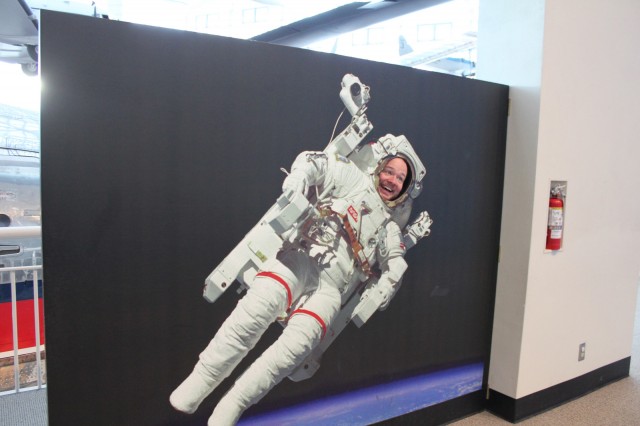
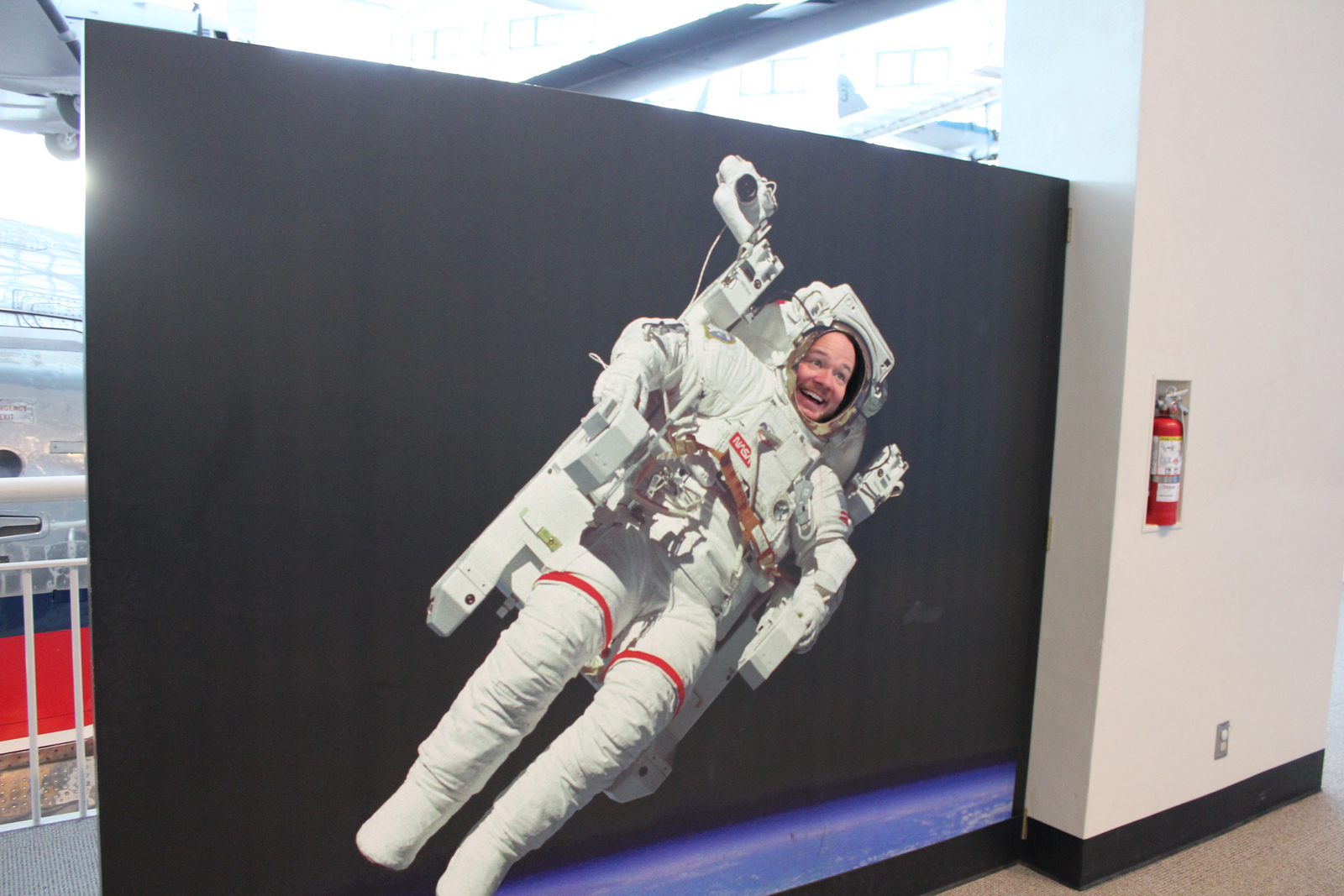
We all got to check out the new space exhibits, including the Space Shuttle trainer at the Museum of Flight. Image by AirlineReporter.com.
This was the first year where the event was two days. Saturday, the 16th, took place down south at Boeing Field and Sunday took place up north at Paine Field. Starting at 9am, AvGeeks were able to enter the Museum of Flight and start their aviation adventure.
Our group had own room up on the top floor, overlooking the runway with free coffee, tea and water — all of which was needed to keep up during the day. The 737 tour was not until, noon, which gave people plenty of time to check out the Museum of Flight.
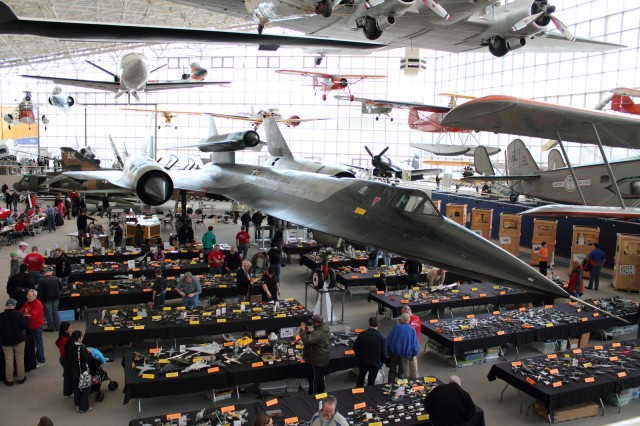
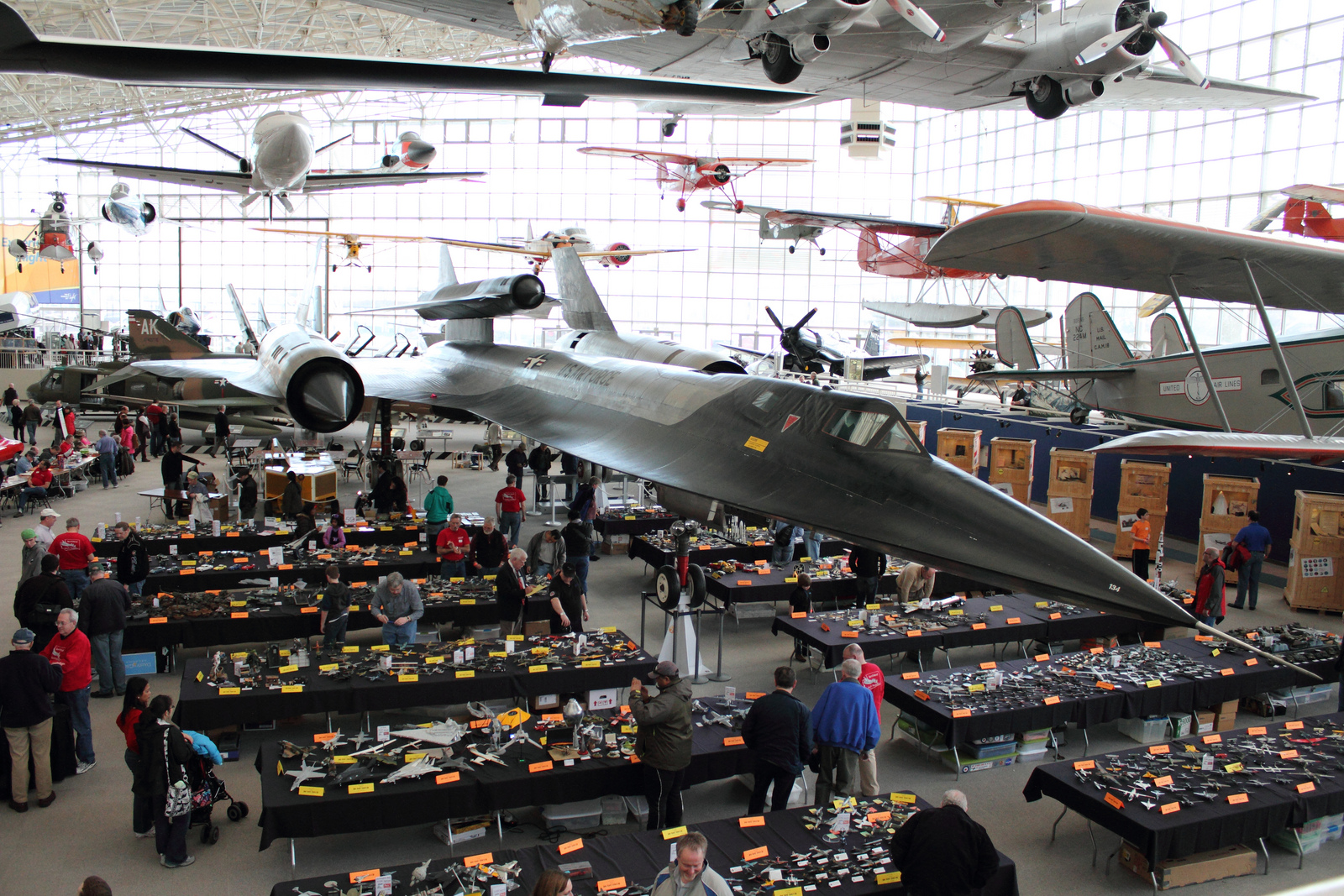
There was a model show going on at the Museum of Flight. Image by AirlineReporter.com.
I spent the morning up at #AGF13 HQ (the room at the Museum of Flight) talking aviation and airlines with all the AvGeeks that showed up. At about noon, it was time for us to prepare to get on the three buses to be taken to the Renton 737 Factory. The only down side to the tour is we were not allowed to take any of our own photos. Luckily, Boeing agreed to take some photos for us and share them.
On the ride over to the 737 factory, I Tweeted out a photo of the AvGeeks on my bus and was told they looked sad. This was because I just got done telling them, “no phones and no cameras,” then took the photo. Right after, I also explained that everyone was getting a free $20 gift card to The Boeing Store — that is when I should have taken the photo — oops.
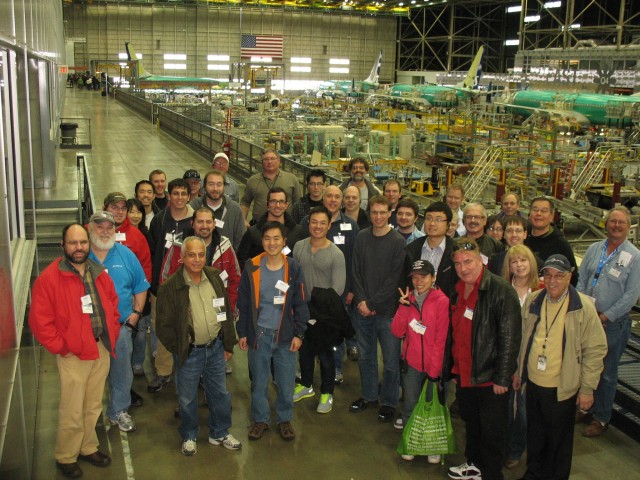
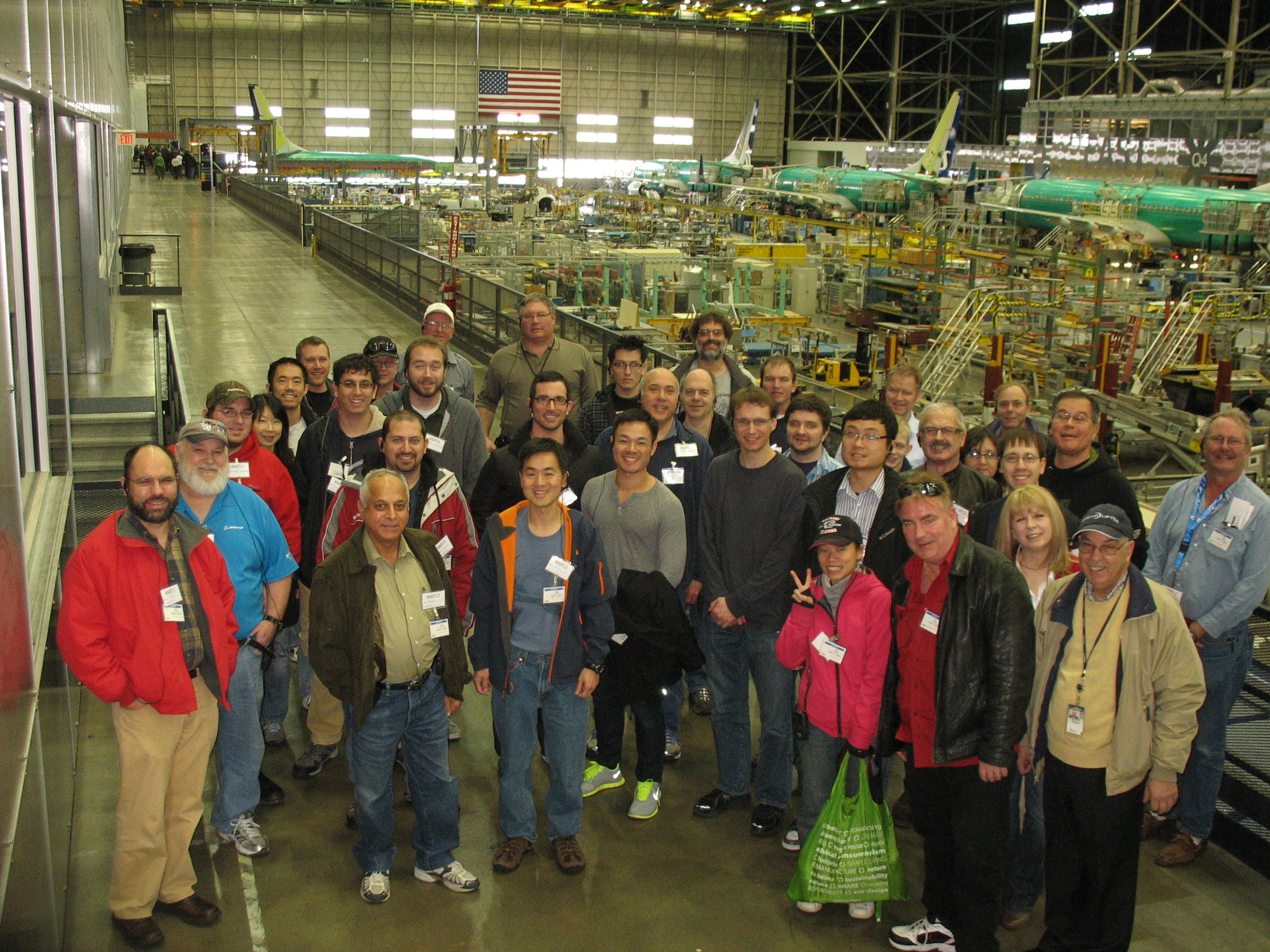
One of the AGF13 groups inside the Renton 737 Factory. Photo by Boeing.
Our 737 tour started with a few short videos highlighting the 737 and of course the new MAX. This tour was super VIP, since it is not open to the public and they stated that this was the largest group that have toured the facility. We were broken into four groups and taken down both of the 737 lines. Since it was Saturday, the line was not moving, but we all enjoyed figuring out the airlines that the 737s belonged to by the liveries on their rudders and winglets. Not too surprising, there was not one livery that could stump our group.
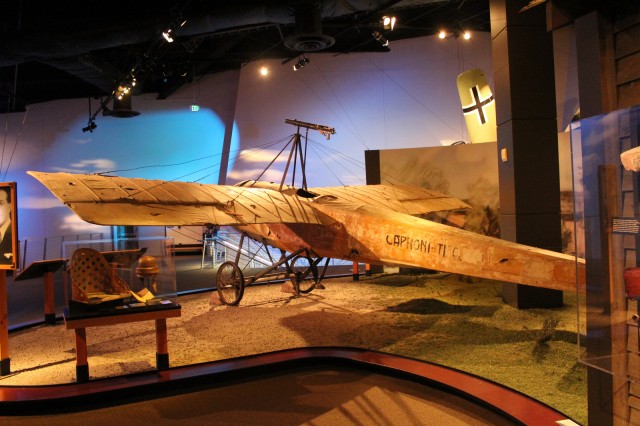
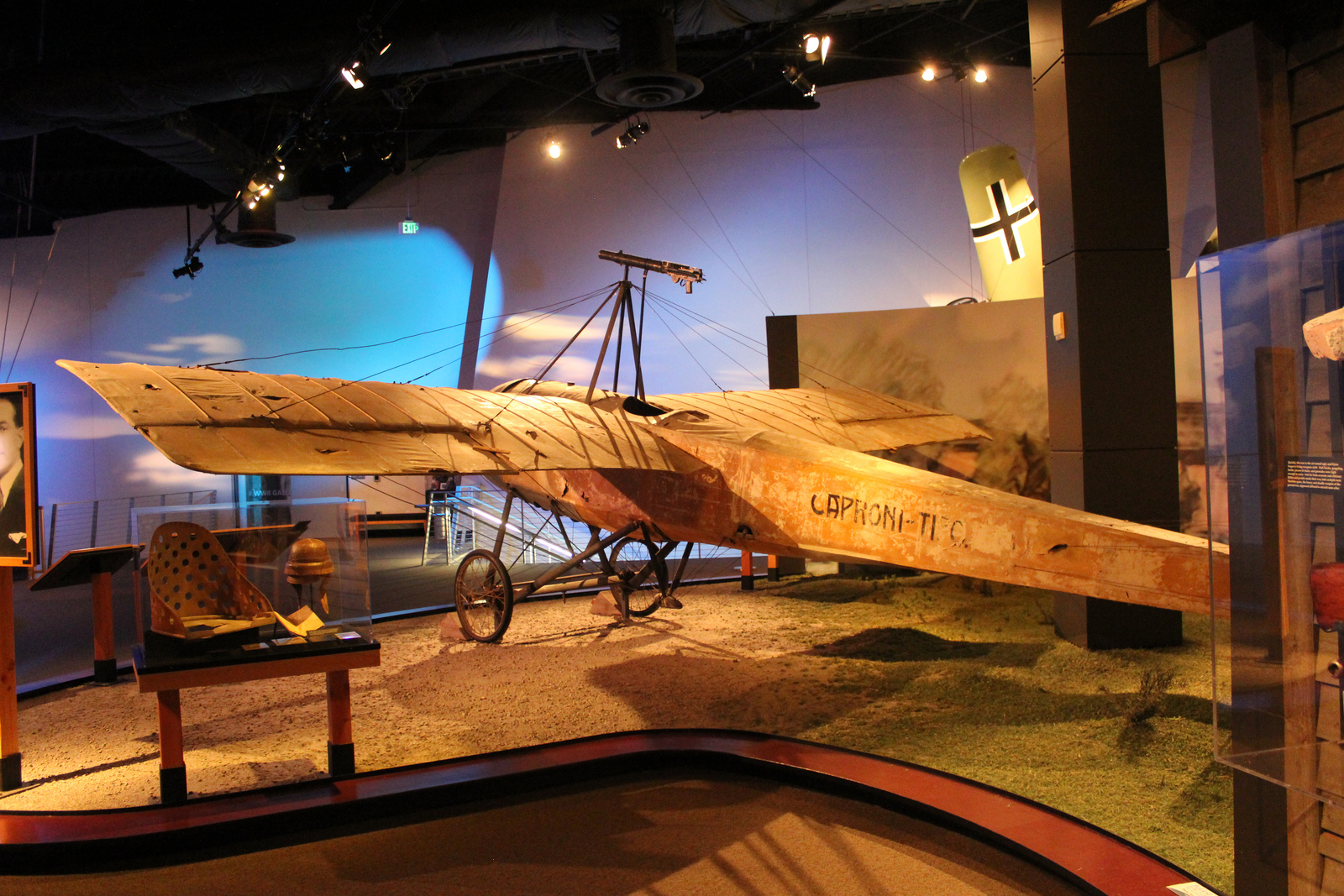
The world’s first fighter plane: the Caproni Ca.20 at the Museum of Flight. Image by AirlineReporter.com.
After the tour, it was back on the buses and we headed back to the Museum of Flight. I hadn’t been in a few years, so I took about two hours quickly going through their new shuttle trainer and checking out old friends (Concorde, first Boeing 747, Constellation, among others) in the Air Park. The museum closed at 5pm, but we were given a special after hours tour of the Personal Courage Wing, which shows off aircraft and memorabilia from World War I and II.
By the time our tour was done at 6:30pm I was quite tired. Really we only had one scheduled event: the 737 tour, but everyone was kept busy the entire day. It was a great day, but I was excited for the next.
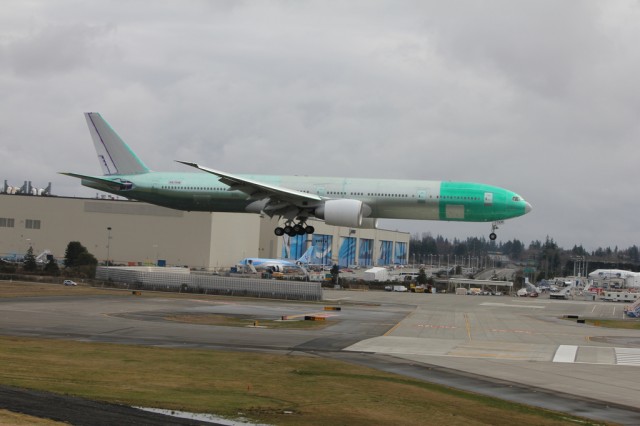
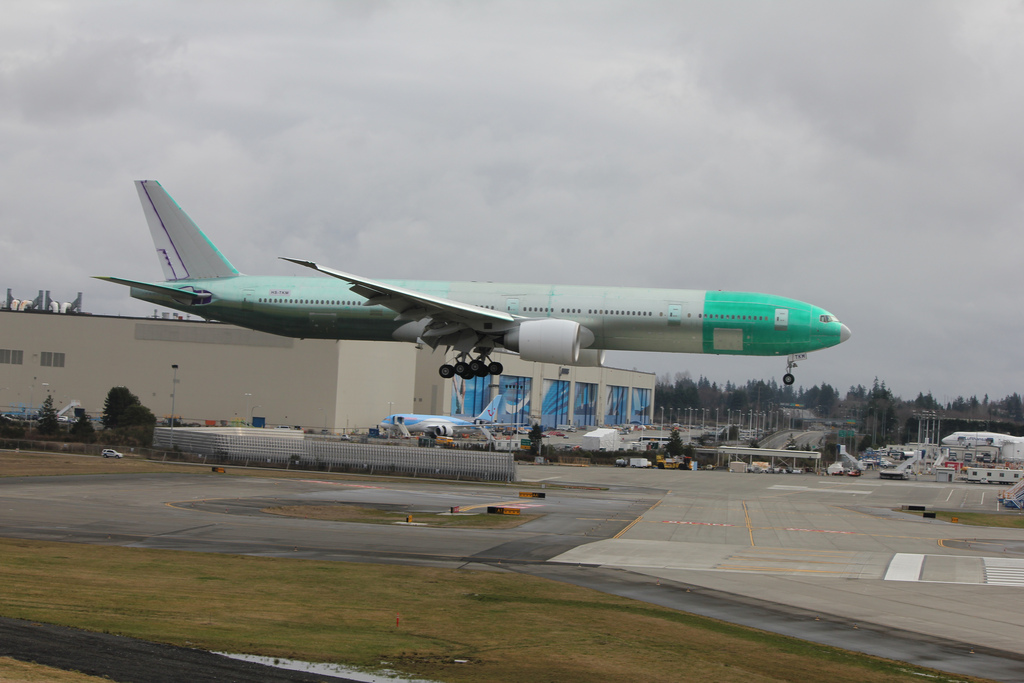
Upon arriving at the Future of Flight, we were greeted by a few Boeing 777’s viewed from the Strato Deck. Image by AirlineReporter.com.
I was up earlier than I normally am during the weekend, but I didn’t even need coffee right away, I had AvGeek adrenaline in my blood. Shortly after arriving at the Future of Flight, we were treated with a few Boeing 777 test flights, viewed from the strato deck. Like down south, we had our own AGF13 room with coffee to fuel us through the day.
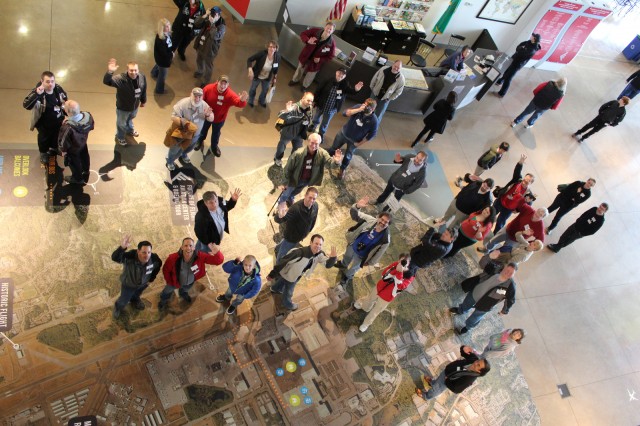
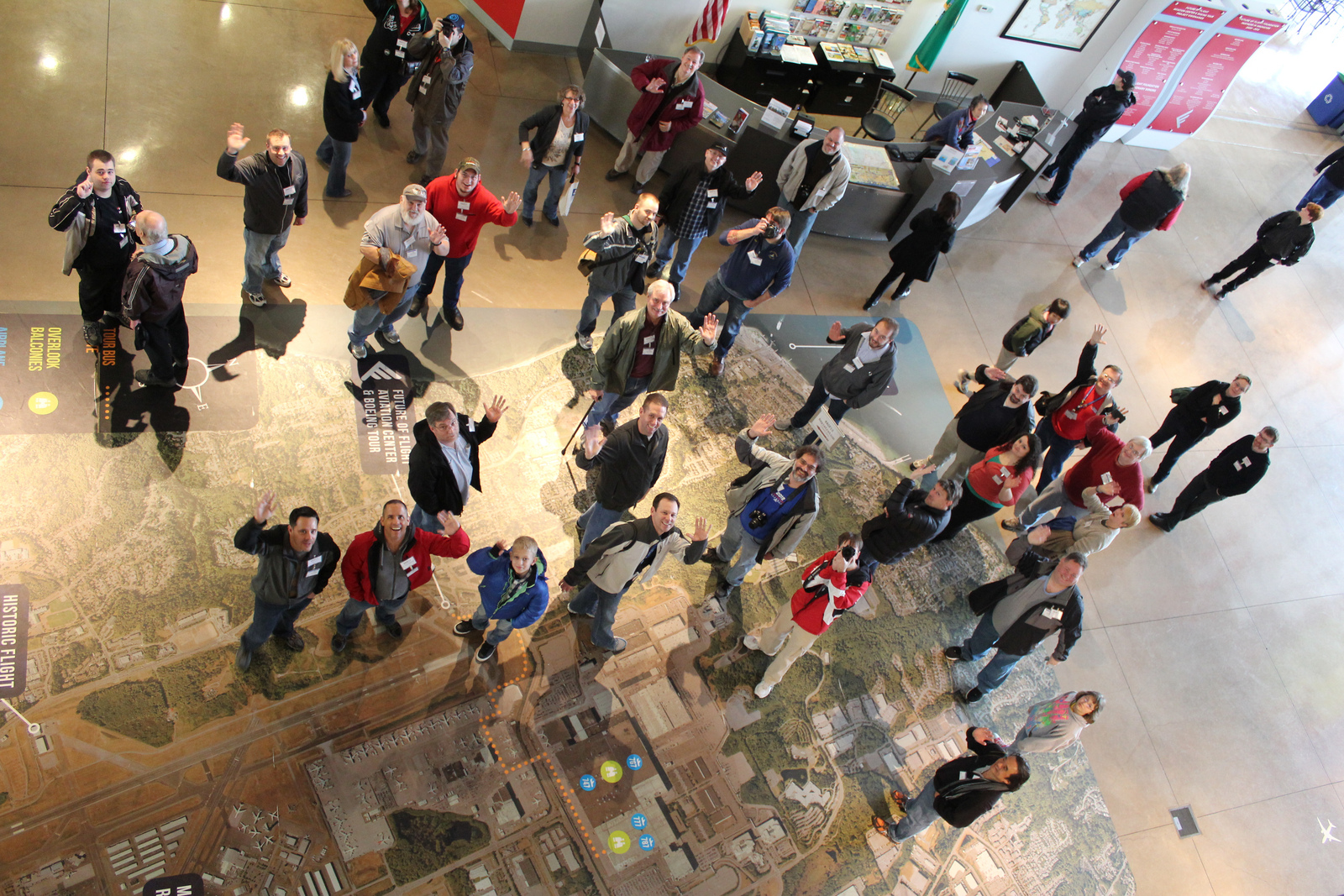
Getting ready to head to the Dreamliner Gallery, AvGeeks hang out at the Future of Flight. Image from AirlineReporter.com
Throughout the day, AvGeeks had the ability to check out the Future of Flight, Historic Flight Foundation and the Flying Heritage Collection free of charge. Although I wasn’t able to do everything, it was fun watching the #AGF13 hashtag on Twitter to see what everyone else was up to. I was hoping to get over to also see the Flying Heritage Collection and the Museum of Flight Restoration Center, but I just ran out of time — next year I promise.
Our Boeing Factory floor tour was set at 3pm. Before hand, at 10am, 11:30am and finally at 1pm, there were separate tours to the Dreamliner Gallery.
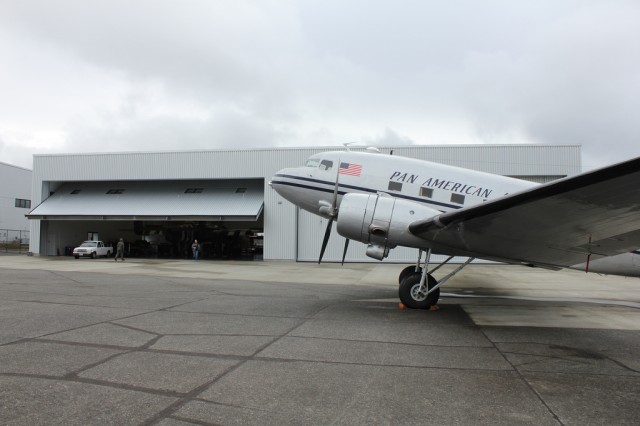
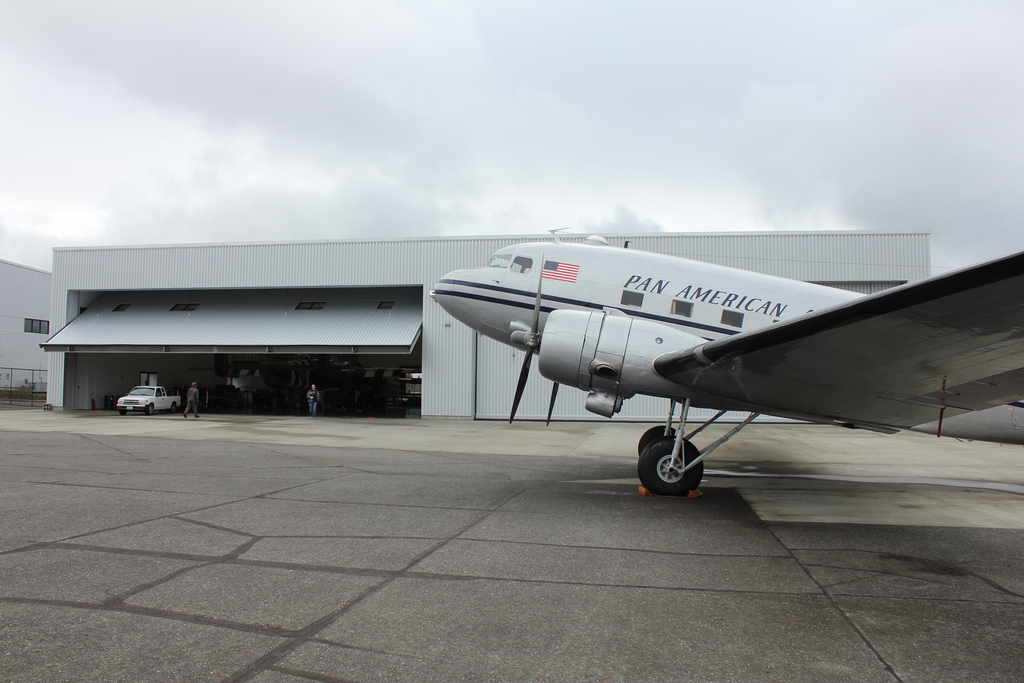
Restored Pan Am DC-3 at Historic Flight. Image by AirlineReporter.com.
My tour wasn’t until 1pm, but I was once again enjoying talking with the other AvGeeks who were hanging out at the Future of Flight. At about noon a group of us saw via social media that the DC-3 at Historic Flight Foundation was open and very quickly, we were all piled into a car and headed over. I don’t think I have seen a group of AvGeeks move so fast.
I have seen the outside of the plane before, but never the inside — she is a beauty. Historic Flight is hoping to offer rides to paying passengers later in the year (hopefully more on that in a future story).
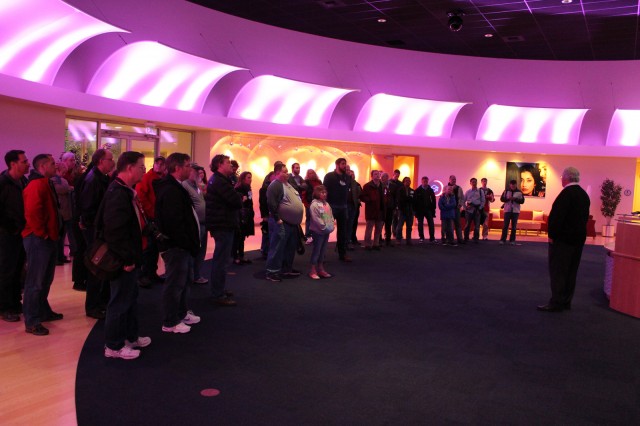
Our group got to check out the Dreamliner Gallery. Image by AirlineReporter.com.
After grabbing a quick lunch, we hurried back to the Future of Flight to catch our bus to the Dreamliner Gallery. The gallery is the place where airlines go to design the interiors of their 787’s. This is the first facility like this in the world that allows customers to figure out so many options at one place, greatly reducing the time and money spent to prepare a new aircraft to join their fleet.
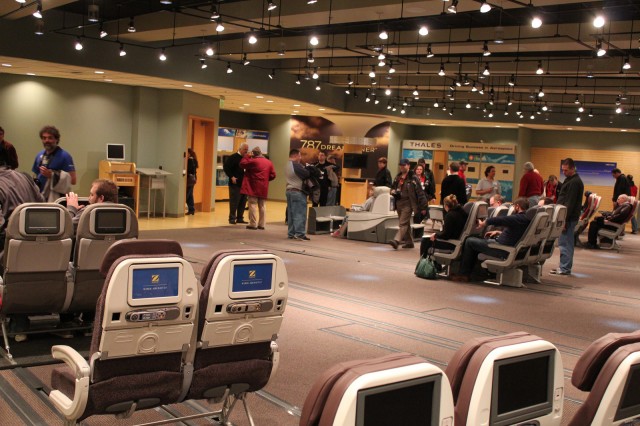
Checking out the different seating options of the Dreamliner. Image by AirlineReporter.com.
Like the 737 factory, the Dreamliner Gallery is not normally open to the public. We went room-to-room looking at seats, lighting, galley options, lavatories and even crew rest areas. None of us wanted to leave, but we were excited to take our Boeing Factory floor tour. We boarded our bus again and headed back to the Future of Flight for a short video before getting on another set of buses to be taken to the factory.
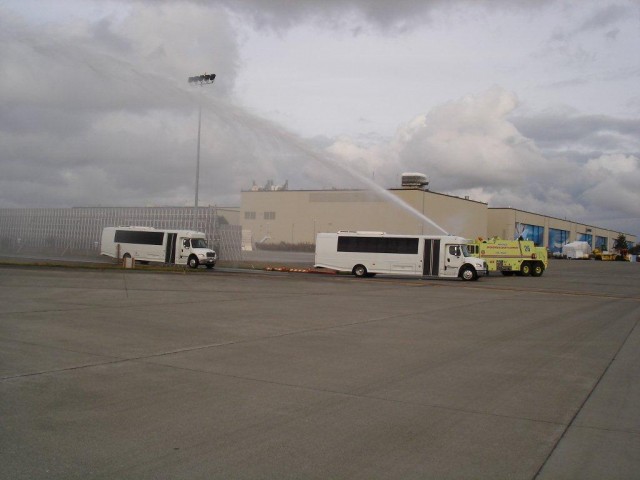
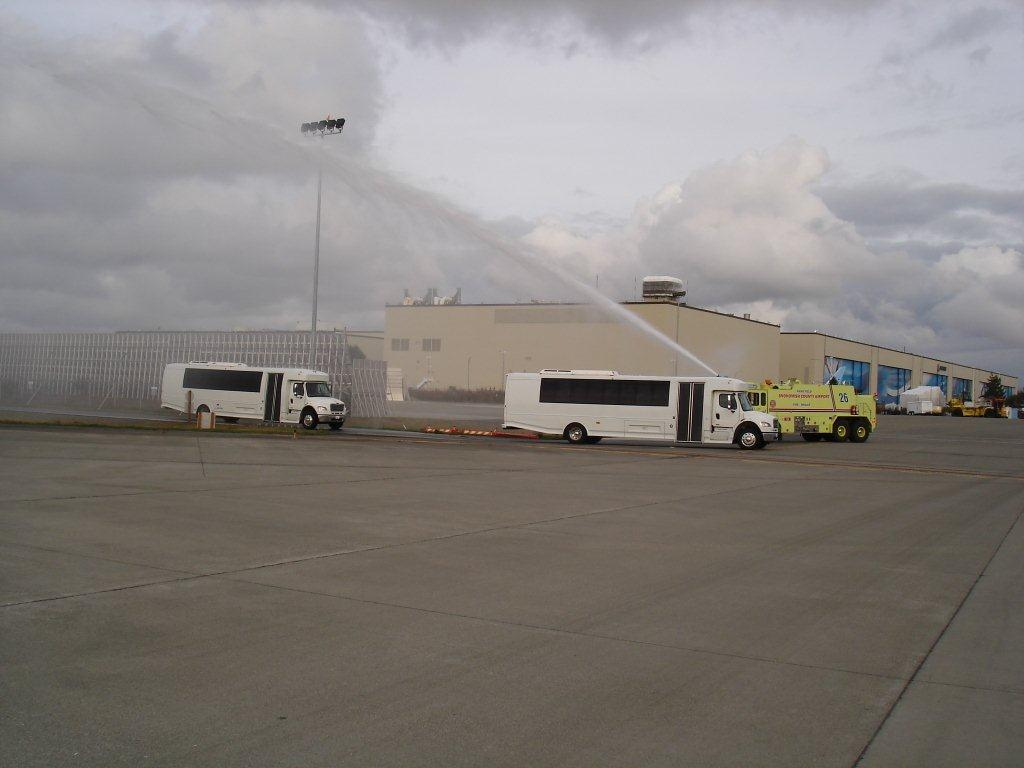
Three of the buses got a water canon salute. Photo by Snohomish County Airport Fire Dept.
It is a nice tradition that aircraft get a water canon salute — our buses were no different — at least most of our buses. We were split up into four different buses and just so happens that two of the buses (one which I was on) missed the water canon salute. The other two received a nice wash down from the Snohomish County Airport Fire Department. Kindly, one of the fire fighters took photos and shared them with us.
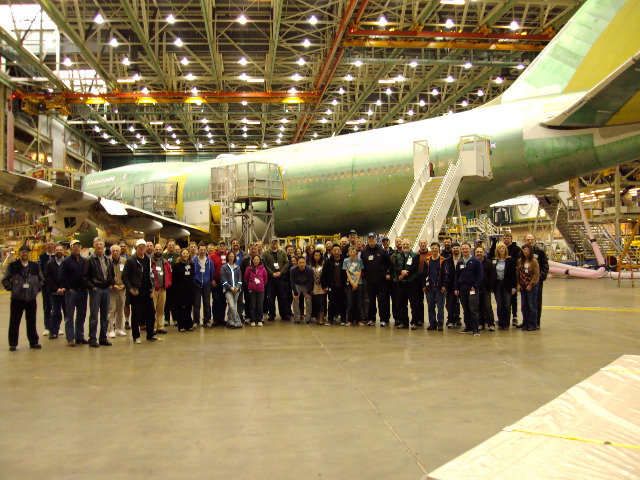
AvGeeks in front of a Boeing 747-8I on the factory floor in Everett. Photo by Boeing.
Our four AvGeek groups toured around the factory floor, including the new 787 surge line. I have toured the factory a number of times now, but each time is a bit different and it never gets old walking among the brand new airliners. Being on the floor is very different than the public tour that takes place up on the walking platforms. I much more enjoy looking up at a 777, 787 or 747-8 than looking down.
After our tour, it was back on the buses and to the Future of Flight for an AvGeek social with pizza and beer.
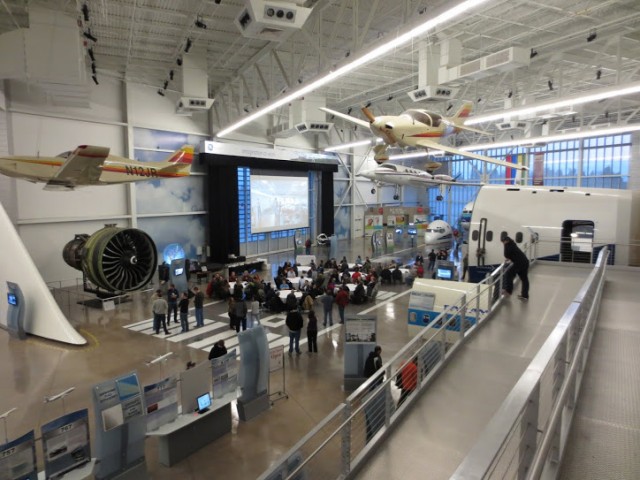
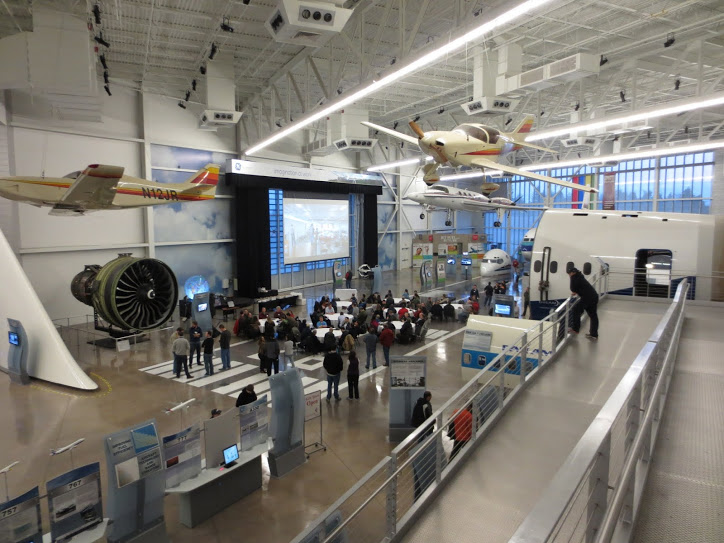
The Future of Flight gallery floor set up in AvGeek social-mode. Image by Mal Muir.
Part of the social was giving out a number of prizes, including two free tickets on Southwest Airlines. By the time I was heading home, I was exhausted — but in a good way. There was quite a bit of walking, talking and learning and I was so thankful everything went so smoothly.

Will there be an Aviation Geek Fest 2014? Heck yes there will! Start preparing now.
We are going to set the date to be President’s Day Weekend for next year, which is February 15th and 16th, 2014. The event will likely be similar with new and exciting things. Be sure to add your email to the AGF e-mail list (if you already signed up for AGF13, you do NOT need to sign up again). No details yet, but we are planning for it to be epic.
A huge thanks to…. the Future of Flight, Boeing, Museum of Flight, Historic Flight Foundation, the Flying Heritage Collection, Southwest Airlines and everyone else who helped to make this an amazing event. I cannot wait until next year!
125 PHOTOS OF AVIATION GEEK FEST
More AGF13 Goodies:
 |
This story written by…David Parker Brown, Editor & Founder. David started AirlineReporter.com in the summer of 2008, but has had a passion for aviation since he was a kid. Born and raised in the Seattle area (where he is currently based) has surely had an influence and he couldn’t imagine living anywhere else in the world.@AirlineReporter | Flickr | YouTube |
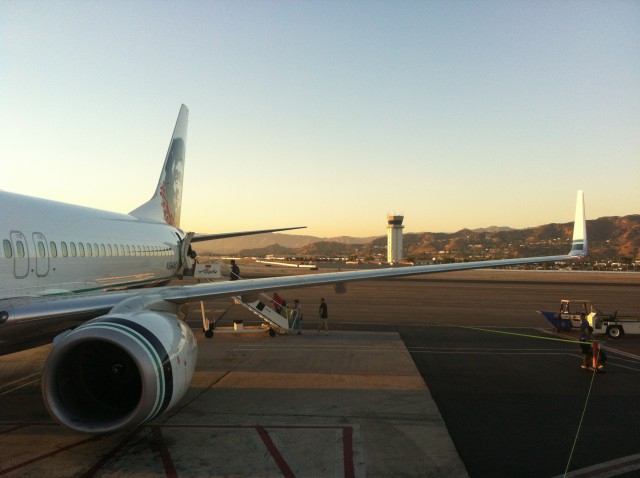
Boarding an Alaska Airlines Boeing 737 at Burbank. Image by Colin Cook.
It used to be that most major airlines shared commonalities in the way they boarded passengers. However it seems that each airline has so their own boarding processes that it’s hard to keep up. Sure, the way an airline boards likely won’t sway a decision on which airline to fly, I wanted to put together a list of how some of the major airlines operate their boarding process.
As one would expect, the majority of airlines give priority boarding to their elite level fliers. Having personally achieved even a low level MVP with Alaska Airlines I can say that I would never want to go back to being just ’œone of the herd.’ While I haven’t gone on a ’œmileage run’, there are many well documented stories of folks taking a quick trip just for the sake of achieving elite-level status.
With precious overhead space and many airlines now charging for checked luggage it’s become a race to get on board as early as possible. While some low cost carriers are now charging for carry-on bags, the major US airlines typically allow one carry-on bag (i.e. a roller bag or other bag for the overhead bin) and one personal item (laptop bag, purse, backpack, etc). Since many travelers are now bringing a large carry-on bag, boarding times have soared. An article in the New York Times suggested that boarding a plane with 140 people in the 1970’s took about 15 minutes which has more than doubled to 30-40 minutes.
Without further adieu, here is how the various airlines handle their boarding procedures (a small note: these are all the boarding requirements as found by AirlineReporter.com at the time of publishing. These change frequently, so please add any changes/ideas to the comments and listen to all gate announcements for proper boarding proceedures):
How does Air Tran board? ’“ This airline’s boarding procedures will undoubtedly change as the integration into Southwest takes place over time. Southwest operates a 737 only fleet and is in the process of subleasing Air Tran’s Boeing 717 planes to Delta. Presently, Air Tran pre-boards unaccompanied minors, passengers traveling with an infant, and passengers needing special assistance prior to general boarding. Like many other airlines, Air Tran utilizes a zone boarding process.
How does Alaska Airlines board? ’“ Being based in the Pacific Northwest, I fly Alaska more than any other airline. Their boarding process is pretty straightforward. They don’t mess around with zones or boarding groups and have a seemingly more streamlined approach. They begin with preboarding ’“ those customers who are traveling with children or need some additional time to get down the jet way. After preboarding, they invite First Class, Alaska Airlines MVP and 75k elite level fliers. Next are passengers seated in row six of the main cabin (bulkhead row at the front of economy) and Alaska MVPs and partner elites. After that, they board from the rear of the plane starting with passengers seated in row 15 and higher. Finally they open to general boarding at that point. It’s a pretty well organized system and tends to work well.
STORY: Flying First Class on Alaska Airlines
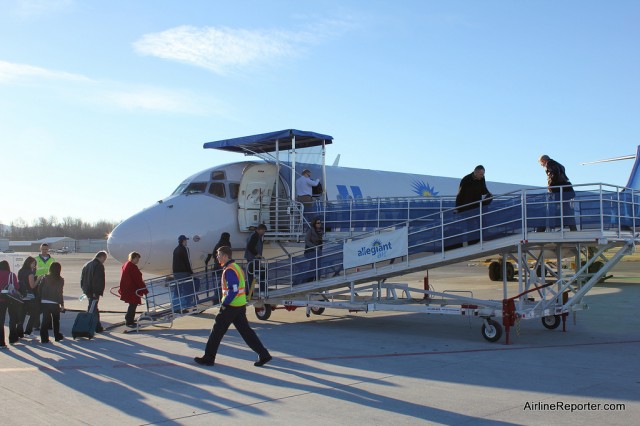
Boarding an Allegiant MD-80 in Bellingham. Image from David Parker Brown / AirlineReporter.com.
How does Allegiant board? ’“ Allegiant offers many different add-ons to their standard fare and does a nice job of providing ala carte service where you can add additional services to their basic fare. Among their options are Priority Boarding for $9.99 (allows you to board first), Premium Seat Selection $9.99 (an assigned seat near the front or exit row), Standard Seat Assignment $6.99 (assigned seat towards the back of the plane). You can certainly opt to fly without paying any of those additional fees, but be prepared to sit in a middle seat. Their boarding process allows people that paid for priority boarding to board first, followed by those who need a little extra time. Then passengers who paid for the standard seat assignment are allowed to board followed by those who do not have seat assignments but have young children. Lastly it goes to open seating and people get to fend for them self to find an open seat.
STORY: Flight review flying Allegiant Airlines
How does American Airlines board? ’“ American is one of the airlines that actually disclose their boarding process on their website. Many airlines do not give a specific process but simply expect you to pay attention when you get to the airport. American employs a process similar to most of the other legacy carriers in that they give priority to elites and then general boarding. Their process consists of preboarding First Class, Uniformed Military, AAdvantage Executive Platinum, and oneworld Emerald. On aircraft with three class service, Business Class is boarded next. The next group consists of AAdvantage Platinum and oneworld Sapphire, followed by Priority AAccess and oneworld Ruby. From there, American is in the home stretch boarding groups 1-4. Of course this could all be changing with the airline merging with US Airways.
STORY: Taking American’s 737 Sky Interior Delivery Flight
How does Delta Air Lines board? ’“ The world’s largest airline by passengers carried and fleet size has developed a good reputation among both business and leisure travelers. They utilize a zone boarding process similar to many of the other large airlines. They first offer preboarding to their Sky Miles Medallion elite level fliers (Diamond, Platinum, and Gold) and passengers traveling in the first class cabin. On international flights they then invite passengers traveling in BusinessElite, Sky Miles Medallion Silver frequent fliers, and partner elites to board. Delta then begins general boarding via a zone process beginning from the rear of the aircraft. Depending on the size of the plane and whether it is an international or domestic flight, Delta can have as many as nine different boarding groups.
How does Frontier Airlines board? ’“ Denver’s hometown airline has been undergoing some big changes in recent years. Frontier uses a zone boarding style similar to many other carriers, beginning with preboarding for passengers with special needs, which include passengers who need assistance and unaccompanied minors. Similarly to Jet Blue’s Silent Boarding group, they do not announce a special boarding for this group. The one nice thing is that you don’t have to make a reservation in advance for the extra time, whereas you do on Jet Blue. Frontier then invites their Summit Members to board which is the top tier of their EarlyReturns frequent flier program. They then begin priority boarding and Zone 1 which includes Ascent members (second tier of EarlyReturns), as well as people traveling on a Classic Plus fare or seated in Stretch seating. Next, they invite families with small children and passengers requiring additional time or assistance to board. They also have a separate boarding group here for people who are not utilizing overhead bins (it pays to pack lightly). After that, they begin boarding with Zone 2, which are passengers in Select seating. Finally, they board Zone 3 which is pretty much anyone else. So while Frontier technically only has three zones, they really have seven different boarding groups.
STORY: Review flying Frontier Airlines to Denver and back
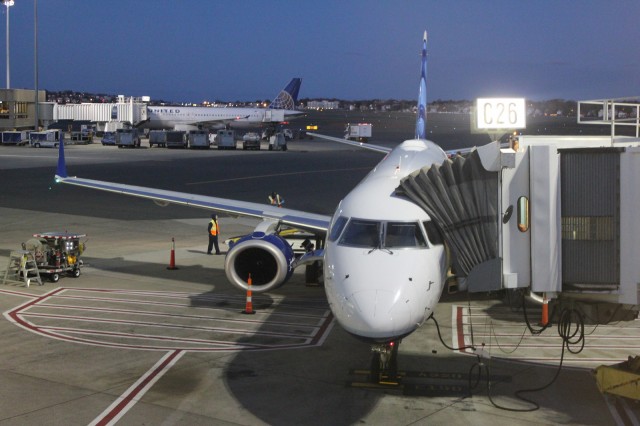
A JetBlue E-190 in Boston. Image from David Parker Brown / AirlineReporter.com.
How does JetBlue board?’“ As is typically true with most things JetBlue, they try to keep their boarding process simple. They begin with pre-boarding which they call Silent Boarding. This is a service that must be requested in advance and is designed for people who have requested or appear to need additional time boarding. The interesting bit is that they do not make a gate announcement (hence the Silent Boarding name), so it is up to you to request this service and show up at the right time. After Silent Boarding they begin priority boarding for Mosaic and Even More Space customers. Mosaic is their elite level program which has many of the same benefits as competitors (priority security lane, preferred seating, 2 free checked bags, bonus points, and dedicated customer service line). Even More Space is an option that you can select when booking and just like it name suggests you get more space.
JetBlue then invites families with children under the age of 2 and other individuals who need additional time to board. It’s interesting that they have their Silent Boarding and then a separate pre-board for people who may need additional time. Finally, they board from the rear of the aircraft forward in five row increments. This begins with individuals in rows 20-25, then 15-25, 10-25, and lastly 5-25.
STORY: Flying JetBlue from the Bahamas to Boston in an E-190
How does Southwest Airlines board? ’“ Southwest is unique since they do not actually assign seats. So it’s still important to get a good boarding group to ensure a good seat and overhead storage. Their overall process contains a boarding group (A, B, or C) and a number (1-60) and they have passengers queue up in the boarding area in a line according to the boarding group and number. Some have called this process a “cattle call,” but really it seems like less people end up standing around waiting to be called than with other methods. Alternatively, you can buy a Business Select or EarlyBird Check-In to be among the first to board. For frequent fliers, it is a pretty simple boarding process, but it seems that people who do not fly often, easily get confused on how to board a Southwest plane.
STORY: Guide to getting a good seat on Southwest Airlines
How does Spirit Airlines board? ’“ Spirit is the ultimate King of low cost travel and their boarding process and baggage policies reflect that. Like Allegiant, their base fares are always amongst the lowest but Spirit is betting you will purchase additional services. They not only have fees for seat selection but also other amenities such as checked baggage and soft drinks on board. Spirit employs a zone boarding process similar to many airlines with some differences. They allow unaccompanied minors and others requiring assistance first, followed by folks sitting in their Big Front Seats (first row or two depending on aircraft that are in a 2-2 layout and have better seat pitch), and then the remaining zones 2, 3, & 4. The one difference is that they board from the front to the back.
How does United Airlines board? ’“ No sooner than I finished writing the original section on United, the airline made yet another change in their boarding process. This marks the fifth time in less than two years that the airline has changed their procedure. This is not surprising as mergers always result in some chaos, but it would seem smart for the airline to stick to one process for a while — hopefully this one will stick.
Under the new process, they begin with pre-boarding of customers with disabilities, Global Services, and uniformed military personnel. Following that, Group 1 is invited to board which included Global Services (for customers that did not pre-board), Premier 1K, Premier Platinum, and their premium cabins. Group 2 is essentially for all of the United and partner elite fliers including Premier Gold and Silver, Star Alliance Gold and Silver, MileagePlus Presidential Plus and Club cardholders, MileagePlus Explorer and Awards cardholders.
It’s interesting that United does not give greater priority to their Gold and Silver level fliers ’“ someone who holds their credit card is given the same boarding priority. United has really been pushing their Explorer credit card so it’s no surprise they used priority boarding as a selling point. United then opens up for groups 3-5 for general boarding from the rear of the aircraft. Unlike other airlines, they no longer give priority boarding to families traveling with infants or young children. Those families must board when their group number is called.
How does US Airways board? ’“ Much like other legacy carriers, US Airways uses a zone boarding process. They begin with preboarding of First Class / Envoy, Preferred members of their Dividend Miles program, and Star Alliance Gold members. After preboarding, zone 1 consists of the bulkhead row and exit row seats without under the seat storage. It’s interesting that they allow exit row seats without under the seat storage to board early. I realize that these folks have responsibilities since they are in the exit row, but does it really take them longer to board?
Zone 2 is made up of US Airways Premier World MasterCard holders, US Airways Visa Signature card holders, ChoiceSeats, and Exit row seats with under-the-seat storage. Much like United, they have given their credit card holders a priority boarding group. At least the elite members of their Dividend Miles program get a higher priority (United has the same boarding priority for Gold and Silver elites as they do for their credit card holders). Finally they board from the rear forward beginning with zones 3-5. It’s a fairly straightforward process which is nice.
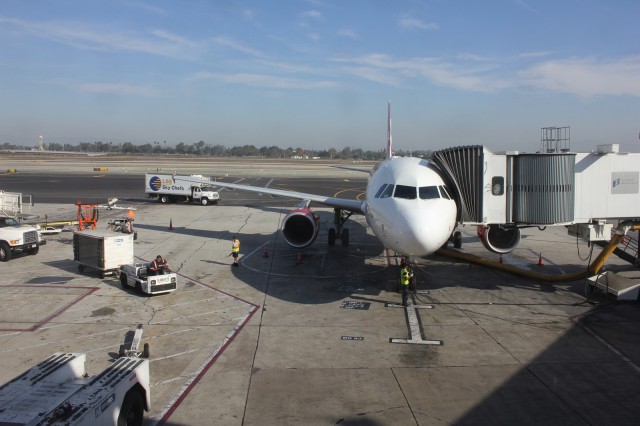
Virgin American Airbus A320 at LAX. Image by David Parker Brown / AirlineReporter.com.
How does Virgin America board? ’“ Virgin American starts with allowing their First Class passengers to board before allowing folks with children and disabled people who need a little more time. Then they move on to Main Cabin Select, which are in the first row of economy and the exit rows so they have more legroom. The Main Cabin Select fare also comes with complimentary food and drinks and one free checked bag. After those two groups, they board the Main Cabin Express group. Ultimately, this is just an add-on that you can purchase to be among the first to board.
Being that I really like to be sit near the front and be able to get off the plane as soon as possible, this fare is quite appealing. Finally, they move on to a group based boarding process, starting with A and moving through the alphabet. I recall on one flight it went groups A-D, but on another it went A-F.
STORY: Flying in Virgin America’s First Class
Hopefully this article can provide some insight the next time you are traveling and are curious about how different airlines board. In the comments, be sure to talk about your boarding experiences and which processes do you like (or hate the most)?
Related links in airline boarding:
 |
This story written by…Colin Cook, Correspondent.Colin is an avid AvGeek who works in finance and is based in the Seattle area. He has an immense passion for aviation and loves to travel as much as possible.
@CRoscoe2121 |