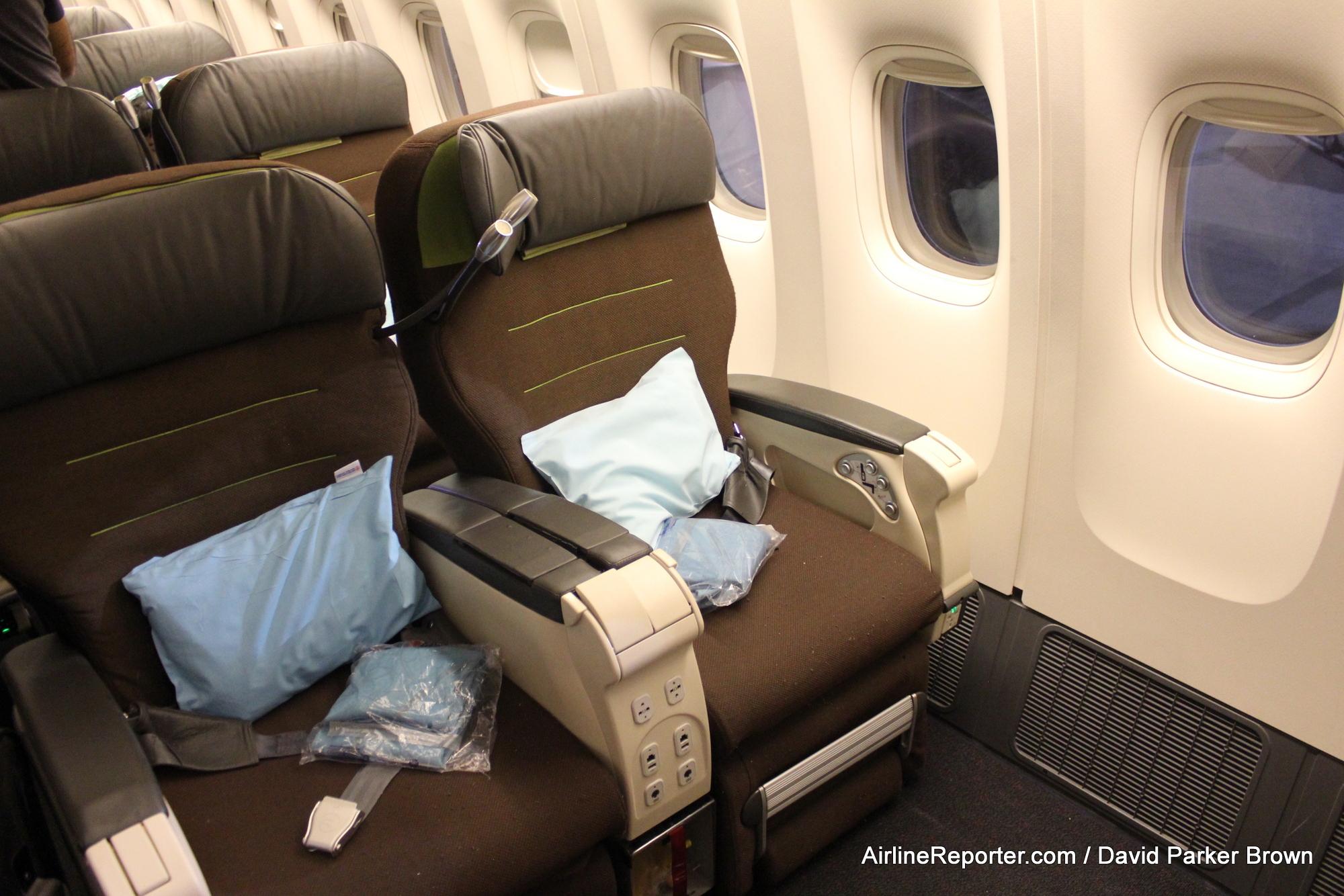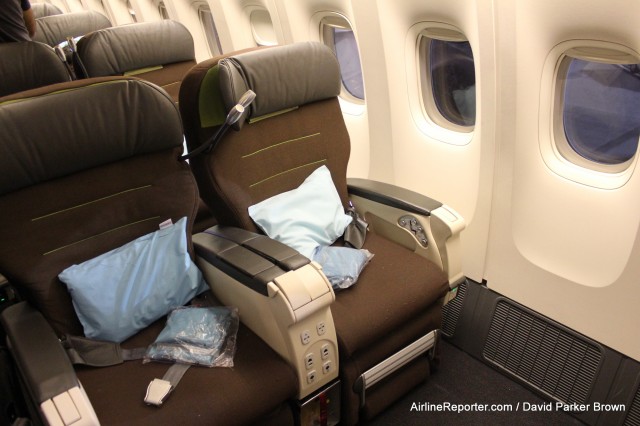
My Comfort Class seat on my Turkish Airlines Boeing 777-300ER out of LAX
Introduction
When I first saw I was booked in Comfort Class on Turkish Airlines, I wasn’t sure what to expect. I knew it was a premium economy product, but that could mean anything from a few inches of extra leg room to having an almost-business-class experience.
Being able to check out the product during my recent flights to and from Los Angeles to Istanbul, I was impressed overall by my whole experience. I enjoyed the comfortable seat, my amenities, the delicious food, and the access to the in-flight entertainment (IFE) system. However, I felt let down by the service that I received during certain points of my trip, which left me wanting a bit more.
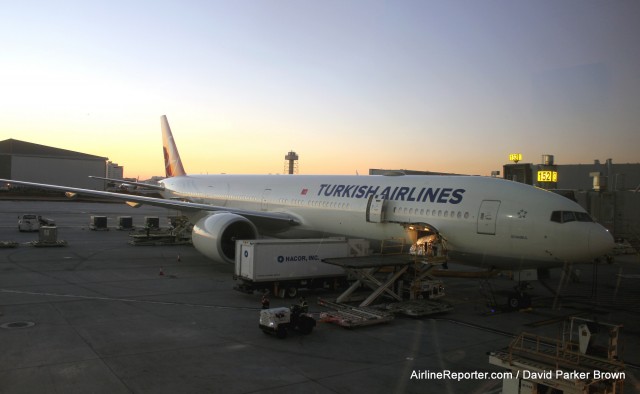
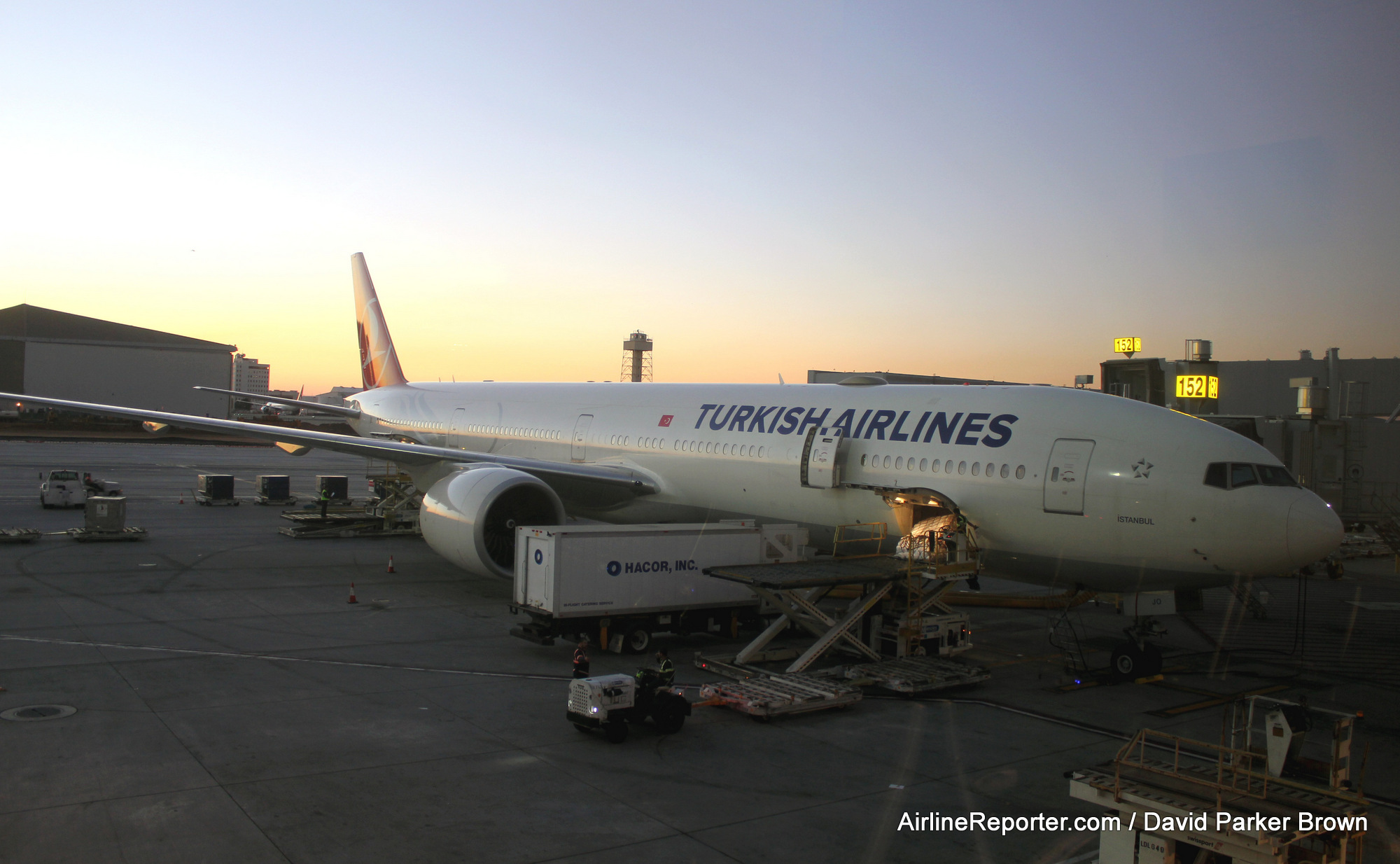
Turkish Airlines’ Boeing 777-300ER sitting at Istanbul
It was nothing that horrible, but just added up enough to make me disappointed overall about the experience. I think some of the things could easily be avoided or changed to make the passenger experience a bit better, and make people who feel like they shelled out some additional money for a premium product feel a bit more special.
One of the main reasons that I was flown to Istanbul was to work with Turkish to help them look into the future of their business – and part of that was related to customer service. I am grateful to work with an airline wanting to learn, and I hope that they are listening.
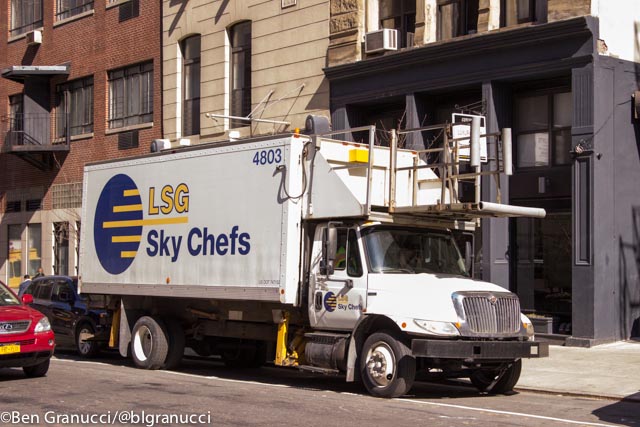
It is not very often that you see one of these parked on a street corner in Lower Manhattan
Let’s face it, airline food doesn’t necessarily have the best reputation. For many people, it is thought of as bland, mushy, overcooked, or any one of a plethora of other unappetizing adjectives. Those who actually look forward to airline food are few and far between. While I have personally had some delicious food onboard (I’m looking at you, JetBlue and Virgin America), I have also been served things that rank highly on my list of the worst things I have ever eaten.
When it comes to long-haul flying on international airlines, your prospects for getting a quality meal may improve. Airlines such as Lufthansa consider themselves among the premier airlines in the world, and realize that providing a tasty and nutritious meal is an essential part of the passenger experience.
Recently, I had the chance to meet with a team from Lufthansa and its subsidiary LSG Sky Chefs in New York City to learn about what factors go into making a great onboard meal.
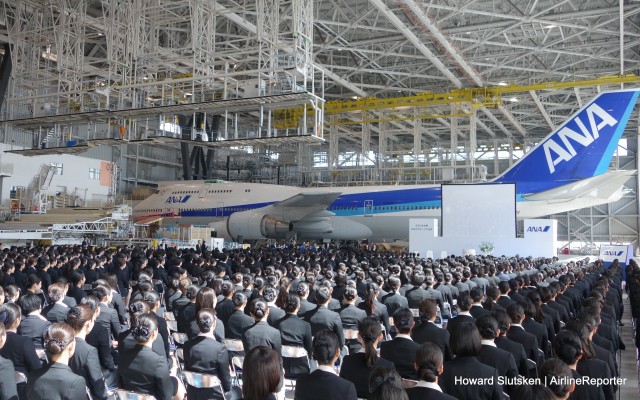
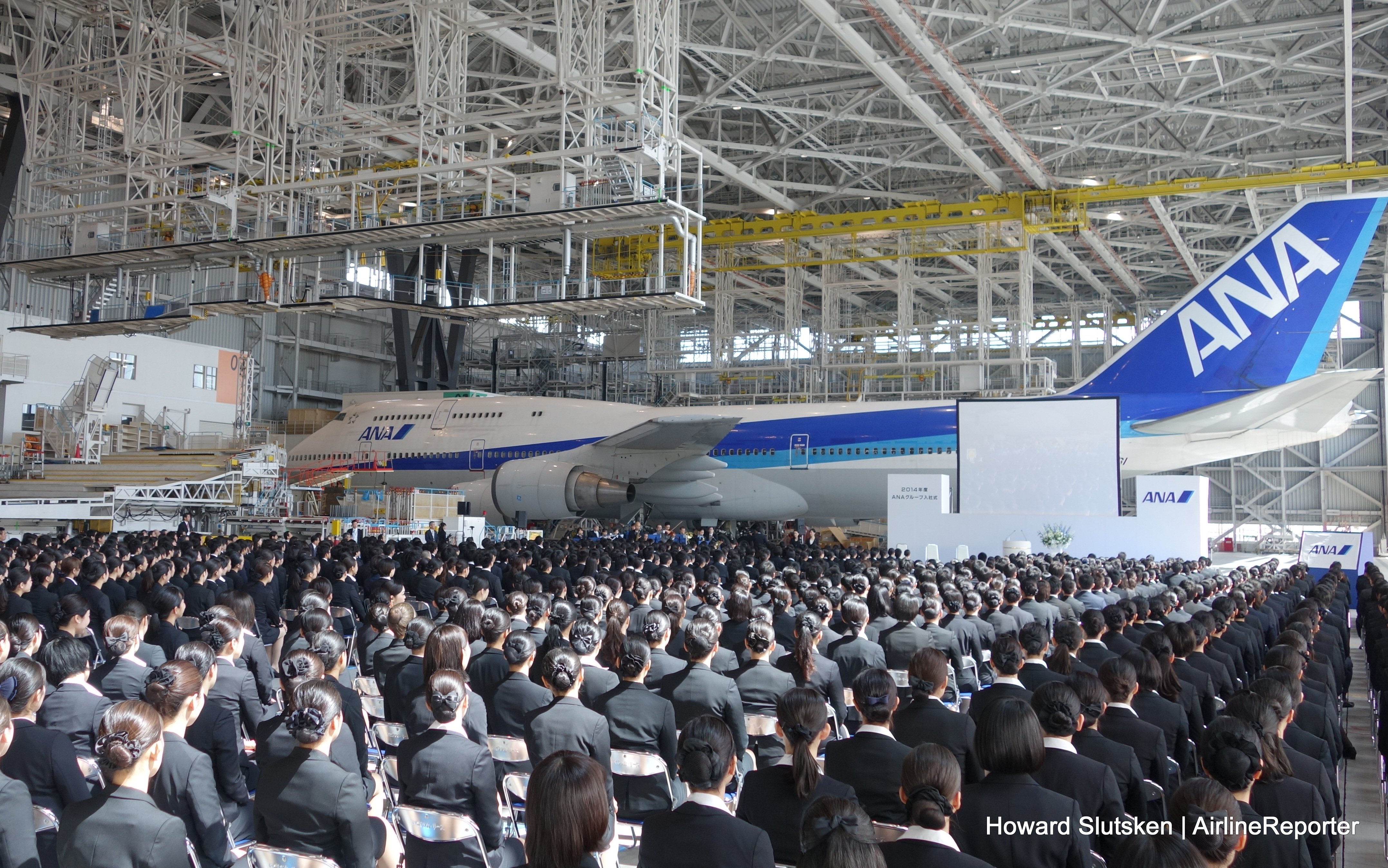
ANA – All Nippon Airways’ New Employee Celebration, with ANA’s last 747-400D
In Japan, April 1 is most certainly not April Fools’ Day.
April 1 is actually the start of the financial year for Japanese companies. And along with this fiscal reset, April 1 is the day that groups of recent graduates begin their careers with a new company, a loyal relationship that may very well be life-long. This unique recruitment culture is called Shinsotsu. Talented students are identified at various institutions. They go through testing, seminars, company visits, and other methods to make sure there’s a solid ’œfit’ with a company’s culture and values. It makes sense. In a culture with a tradition of life-long employment, it’s critical for both the students and the companies to get it right.
The ANA ’“ All Nippon Airways Group has well over 30,000 employees, and on April 1, I was honored to be part of a celebration to welcome over a thousand new graduates to ANA. It was Tuesday morning, and I was quite well jet-lagged after the departure events and inaugural flight on ANA’s new service from Vancouver (YVR) to Tokyo-Haneda (HND). Our hosts shuttled us over to ANA’s aircraft maintenance facility at HND. It’s huge, with seven hangar bays and the ability to service all of ANA’s jet fleet, right up to major ’œD’ checks.
But we weren’t there to look at airplanes. Well, not quite. As we were escorted through the hangars, there was one plane looming in a semi-lit bay. It was ANA’s last Boeing 747-400D (Domestic), registered JA8961. It wasn’t there for maintenance, but to be part of ANA’s New Employee Celebration of Shinsotsu.
We walked to the back of the hangar to be seated behind a remarkably large and perfectly organized group of 1,089 new ANA employees-to-be. The 747 was the ideal backdrop for the event.
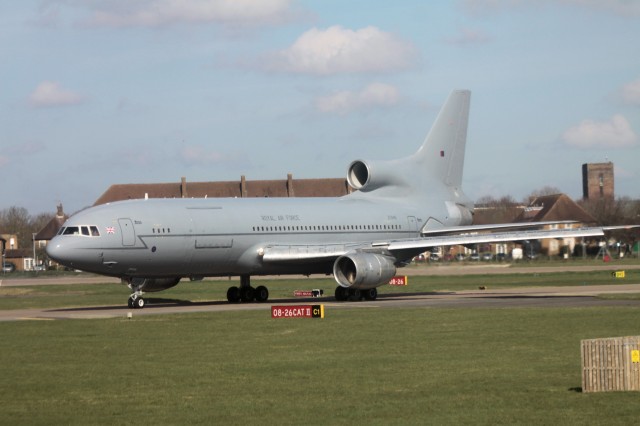
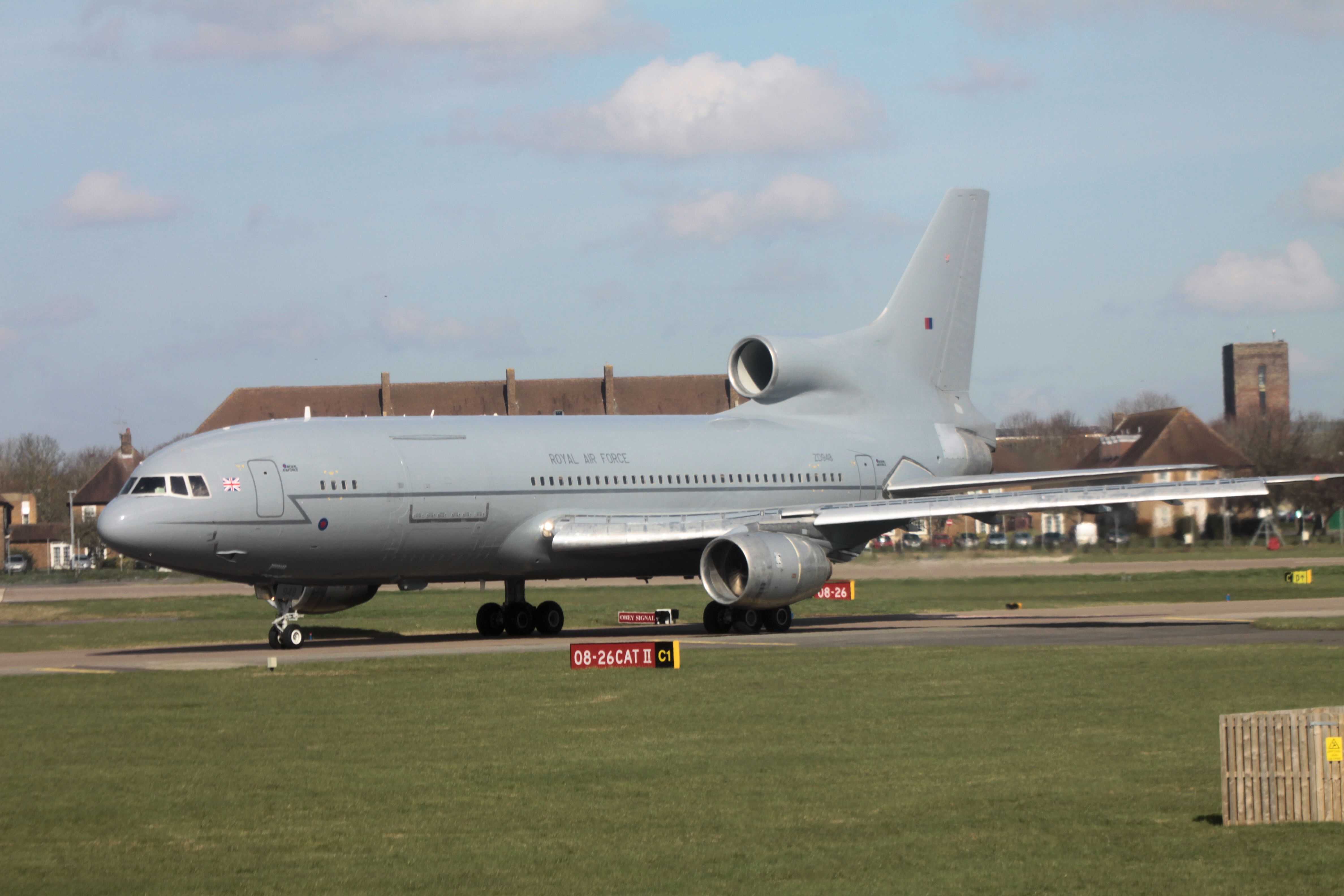
Lockheed L1011 Tristar, KC 1; ZD950; callsign ’œFAGIN 12’. Backtracking along the main runway, alongside ZD948 ’œFAGIN 11’ – Photo: Graham Dinsdale
This story was written by Graham Dinsdale, of Ian Allan Aviation Tours in England, for AirlineReporter…
04:00 GMT (Greenwich Mean Time); my bedside alarm clock shatters the silence and causes my wife to stir; at last, I thought, keen to get started on what promised to be an awesome – but very sad – day. I had dozed the night away, my brain too active to shut down and allow me to get any sleep. I had reasons for my lack of sleep – I was to fly on a Royal Air Force (RAF) Lockheed L1011 Tristar in formation!
After the usual morning routine I was out the door by 4:30 a.m., and starting my car for the two-and-a-half hour drive across the countryside of Cambridgeshire, Northamptonshire, and Oxfordshire to the RAF’s huge air transport base at RAF Brize Norton. I anticipated possible delays due to dense fog and mist covering most of the route, and the morning rush-hour road traffic around the university town of Oxford didn’t help, so I allowed plenty of time to get to the rendezvous point: an off-base car park a quarter of a mile from the station’s main gate.
For those not familiar with British nomenclature, the RAF have ’œstations’ not ’œair bases!’ The fog and road traffic was not as bad as the internet advised, so I arrive early, at 6:25. Time to open up the flask of coffee and munch a biscuit. Over the next 90 minutes more and more of the invited media, and some very lucky aviation enthusiasts, arrived.
In the Western world, when it comes to aircraft production, it is pretty much common that the aircraft designer is also the manufacturer of said aircraft. For example, in the United States, Boeing, Lockheed, and McDonnell Douglas were the three big manufacturers of civil aircraft through the 1990’s. All three of these companies employed many thousands of engineers designing every part of each aircraft family, and then would hand the design over to many thousand more factory workers who would build the aircraft at vast company-owned factories. In the former Soviet Union (USSR), things worked a little differently.
When one thinks of Soviet-era aircraft, one normally thinks of the very popular civil designs by Ilyushin and Tupolev. But what most do not realize is that these famous companies were not in the business of aircraft manufacturing. Within the Soviet Union, the aviation industry was governed by three main government organizations: the Ministry of Aviation Industry (МиниÑтерÑтво авиационной промышленноÑти, or MAP), the Ministry of Civil Aviation (МиниÑтерÑтво гражданÑкой авиации, or MGA), and the Ministry of Defense (МиниÑтерÑтво обороны, or MO).