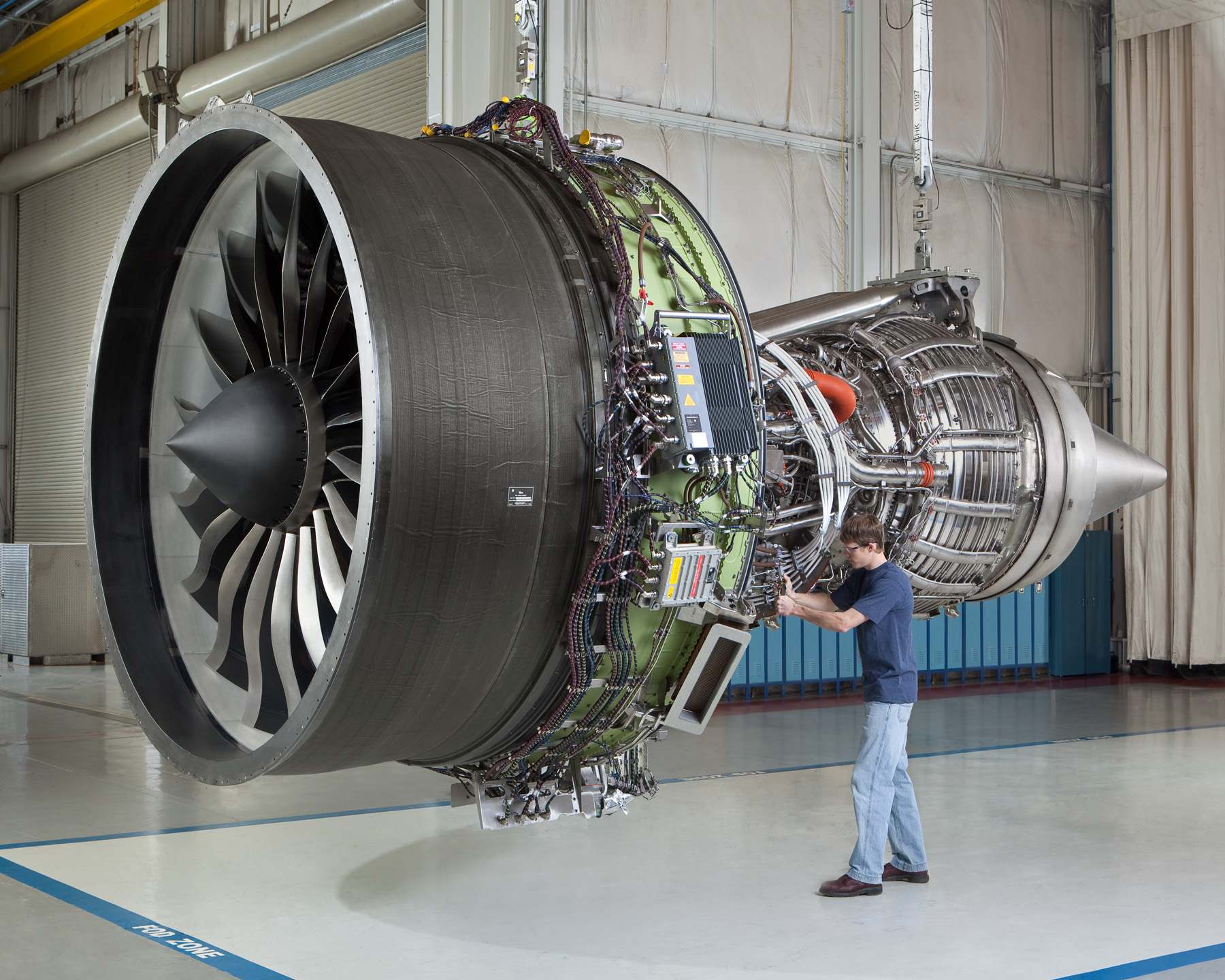
The GEnx-1B engine, that is used on the Boeing 787 Dreamliner. Image from GE.
This story was written by Steve Csonka, Director Environmental Strategy & ecomagination, GE Aviation for AirlineReporter.com.
As you may have inferred from Dale Carlson’s comments in an earlier blog post, many of us at GE Aviation are excited about our roles. I have been passionate about aviation since my teenage years when I took up general aviation flying ’“ learning my ’œstick and rudder’ skills in a Cessna 172 while living in the panhandle of West Virginia. I’˜ve spent 27 years in the commercial aviation industry with airlines and with GE Aviation, and in my current role, I am focused on improving the sustainability of aviation so future generations can experience the same passion.
The value of the aviation enterprise is interwoven into the fabric of our worldwide society ’“ providing fast, safe, and dependable transportation of people and goods. In fact, it is estimated that aviation is currently responsible for more than $2.2 trillion in global economic impact, or 3.5% of total worldwide gross domestic product.
However, we recognize that with our successes come additional challenges ’“noise around airports, local air quality emissions, greenhouse gases, and inflation of customer operating costs with rising fuel costs. The good news is that we continue to make progress in tackling these challenges using advanced technology. At GE, we call these efforts ecomagination ’“ striving to deliver operating and environmental performance with technology. At GE Aviation, our sustainability efforts align with industry goals and focus on three pillars of improvement: operations, infrastructure, and technology.
For operational improvement, GE Aviation offers services that help customers make flight routes more efficient, schedule engine maintenance and ’œClearCore’ engine washing, and decide how much fuel to load on planes for peak operating performance. Every one of these procedures is critical for saving fuel and, in turn, costs and emissions.
On the infrastructure side, GE Aviation is looking beyond making efficient engines and is working with customers and regulatory authorities to make efficient flight paths. Stay tuned for more on this from GE Aviation’s Steve Fulton!
For the technology pillar, my colleague Dale explained in his guest post how GE Aviation researches and develops new, efficient technology. Whether it is the GEnx on the 787 and 747-8 (which just entered service), or CFM’s LEAP engine for the next generation single aisle transcontinental aircraft, GE’s technology enables our customers to burn less fuel, shrink the noise footprint around airports, and dramatically lower NOx emissions.
One innovation I’m excited to talk about is drop-in, renewable Jet fuel that, once commercialized, will enable the industry to achieve up to 80% reductions in net carbon emissions versus petroleum based fuel. The industry is also looking for alternative fuel sources that use a range of raw or waste materials that do not need to compete with food production or land use. So far, the industry has identified two pathways for the production of renewable Jet fuels, and is in the process of evaluating and validating at least five more.
Can you imagine a world where fuel comes from the waste stream and other biomass? I can. GE Aviation was one of the first companies, along with CFM, to test a biofuel-powered engine in flight. At last year’s Paris Air Show, GE Aviation showed an engine that was powered by 15 percent biofuel, and we will continue to discuss our biofuel-powered engines at this year’s Farnborough Air Show. Watch a video about our most recent renewable Jet fueled demonstration flights below, which, along with several other commercial flights, flew into Rio de Janeiro during the recent Rio+20 activities in June:
Renewable fuel development is occurring around the world, and we expect commercial production to commence over the next 2 years.
With all these innovations in operations, infrastructure and aircraft technology (including biofuels), I believe we have ample opportunity and reason to be passionate about the future of aviation. Stop by GE Aviation’s exhibit at the Farnborough Air Show this week to explore more of our sustainable tech: Booth #7, Hall 4.
Last summer I had the pleasure of writing an aircraft highlight article on the Mad Dogs and their history which began with the DC-9 and has brought us to the Boeing 717. About a year ago, Delta Air Lines, one of the last US airlines still operating the DC-9’s, announced that they would be retiring the last remaining 35 DC-9-50’s over the next 12-18 months. As of September 2011 the number of DC9’s in use was down to about 27.
In Fall 2011, I realized that I had to plan a business trip to Nashville from Charlotte for a national conference related to my work. While air travel is not usually a part of my work, I really enjoy choosing flights based on aircraft within my travel window, not only for comfort but for the experience. What I realized for this trip is that the Charlotte to Atlanta flights and Atlanta to Nashville flights afforded a wide selection in aircraft type from the telephone booth sized CRJ’s to the A319 and MD-88’s. What’s this? There are DC-9’s on that route?
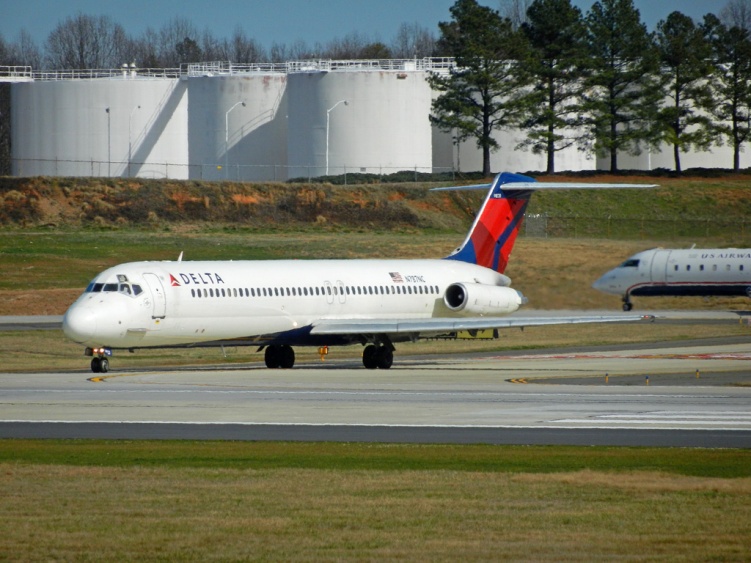
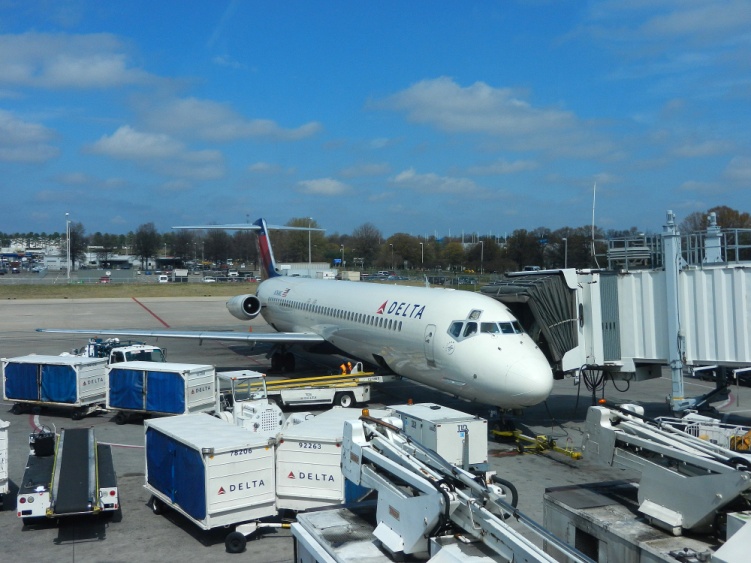
Delta DC-9 taxis onto Runway 18C at Charlotte, NC. Photo by Andrew Vane.
This means I have an opportunity to actually fly in what’s likely to be a museum piece in the near future. I suddenly realized I had to jump on this opportunity to ride this workhorse of the short range market before the opportunity is gone. As it turns out, I managed to book 3 of my 4 flight legs on the glorious DC-9-50. Only my Atlanta to Nashville flight would be on a different aircraft; the Airbus 319) The table below highlights the aircraft I was privileged to fly in for this trip:
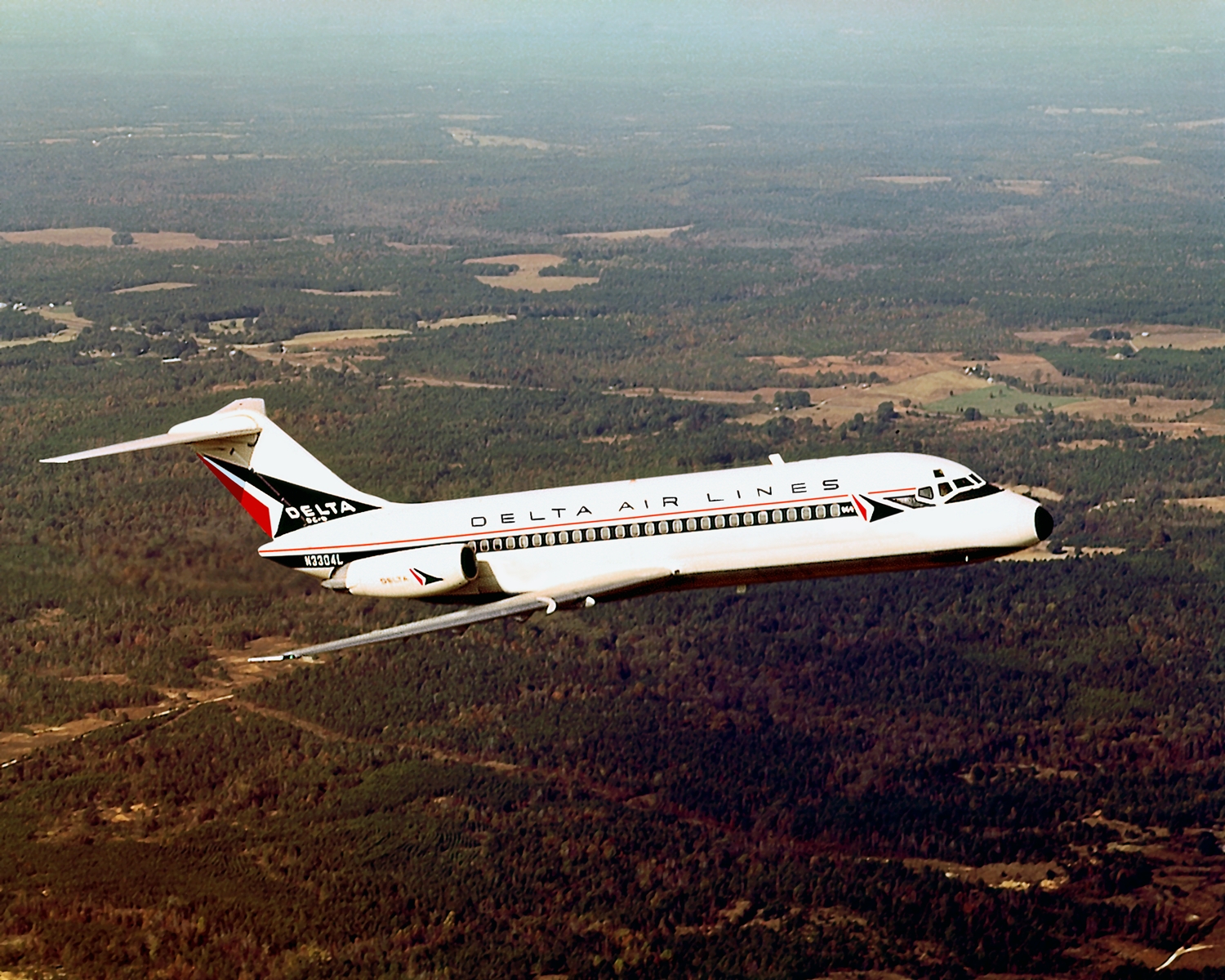
The DC-9 first entered service in 1965 with Delta as the launch customer. Delta eventually phased out the DC-9’s but reacquired them (along with Boeing 747’s and Airbus A319, A320 and A330’s) when it merged with Northwest Airlines in 2008.
I’ve been excited about this trip ever since I booked it last month with my company’s travel agent. If you’re looking for a luxurious flight experience, this aircraft is not the place to find it. Hopefully this article will contrast with the web site founder’s exotic meal laden VIP trips the rest of us common folk can only dream of taking. J My previous story on the Mad Dogs drew some comments regarding the smell of the lavatory wandering throughout the cabin. I sat right over the wing and couldn’t even smell a hint of the lavs. I could see every single rivet and bolt on the wing though.
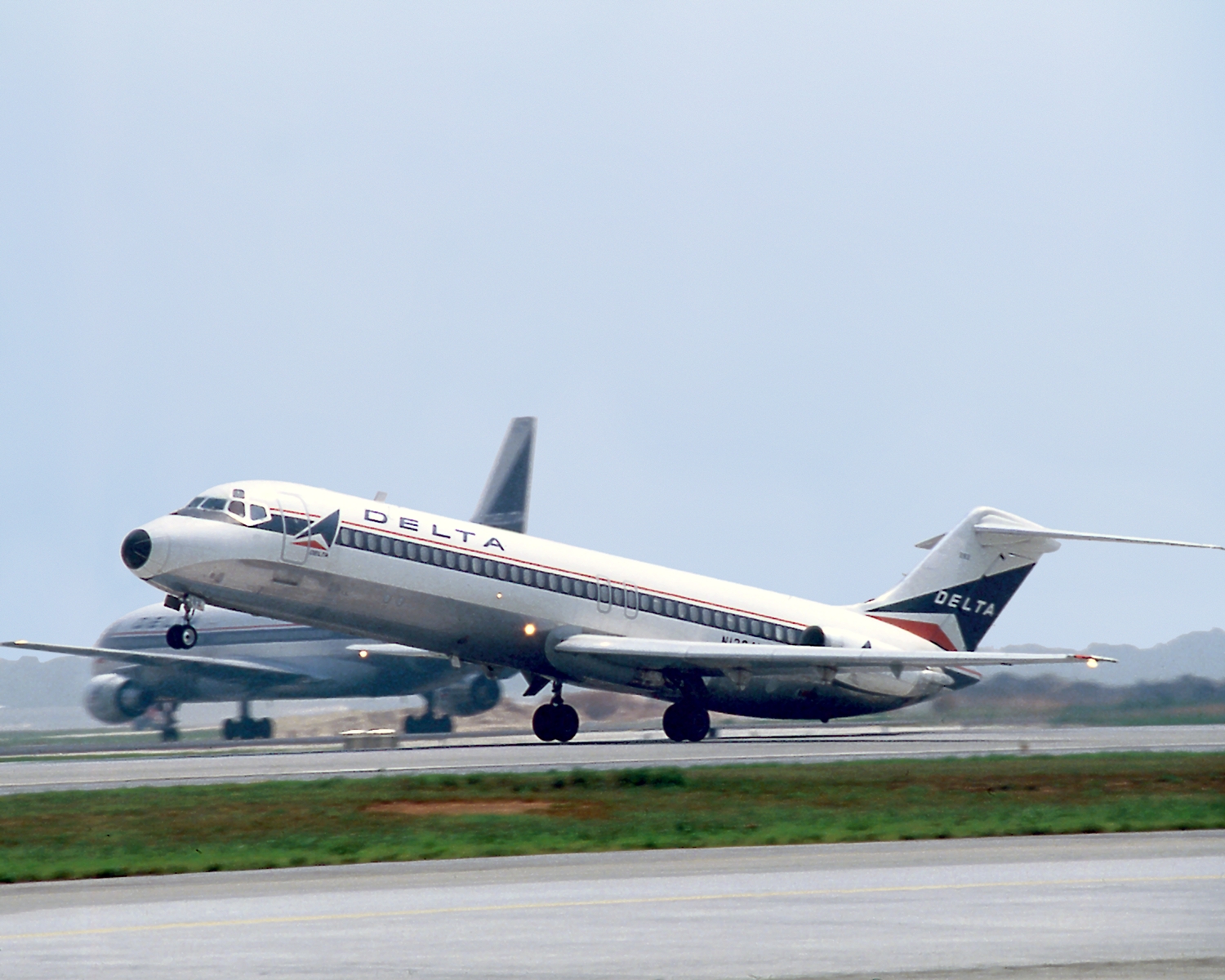
Delta DC-9 in updated livery. Check out the L1011 in the background. Image courtesy of Delta Air Lines.
As I strapped myself in, I couldn’t help but notice how modern the interior of Delta’s DC-9’s look. They’ve spared no expense in making you feel business as usual on all their aircraft, whether they’re 10 years old or 30. The captain came on and told us he was going to be starting the engines at the gate and that the lights would flicker a bit while he ran through some electrical checks. I almost expected to see some guy come out with a hand crank. I’m not sure if the gate startup is because they need ground power or for some other reason.
DC-9-50 at Delta’s gates in Charlotte, NC. Photo by Andrew Vane.
The DC-9 uses Pratt & Whiney JT8D turbojet engines with about 16,000 lbs of thrust each, the same type used by the 727, MD-88 and early versions of the 737. By contrast, the Airbus 319 uses European made CFM engines each are rated at 25,000 lbs of thrust each. I was thankful Charlotte has a 10,000 foot long runway because I figured we’d be needing all of it that day.
As expected, as we began our takeoff roll, I noticed it was taking quite a long time to get down the runway. It took a good 40 seconds to go from a rolling start to the hind wheels leaving the pavement. By comparison, the similarly sized A319 took 30 seconds to takeoff, but that was from a dead stop. The difference between engine thrust in the two aircraft was obvious. Still, the rumble in the DC-9 was definitely more fun an experience.
The flight went smoothly, the air conditioner worked, and we arrived right ’œon time,’ although I think the airline adds to the official travel time to allow for ground traffic and taxiing.
At the time of my travel in March, Hipmunk.com (an airline travel web site I frequent) showed Delta’s last DC-9 flights between Charlotte and Atlanta ending June 6th (being replaced with its longer MD88 cousin) and DC-9 flights from Atlanta to Memphis ending sometime in early October (being replaced with MD88’s and A319’s). However, one Delta pilot who took a lot of time after my first flight answering my questions told me Delta plans to fly DC-9’s at least for an additional year and plans a DC-9 ’œjet base’ for pilots in Atlanta. For now, I can postpone my farewell for at least another year or so.
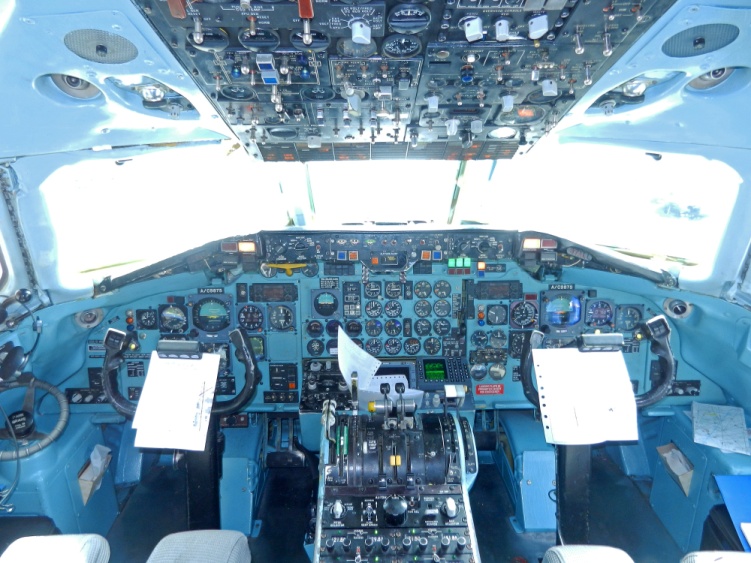
Teal Anyone? No FMC here. Its old school flying for sure.
Some of you fliers may enjoy the comfort and luxury of the newer aircraft. As I get older, I’m becoming more nostalgic and appreciating the older classics in life like a fine Merlot, Vivaldi and the DC-9.
I want to express my sincerest thanks to the Delta pilot Mark who took time to talk with me following each flight. My former landlord, a Delta 757 pilot, told me once after sitting in the jump seat of a DC-9 ’œBoy, those guys sure do work!’ Unlike the MD-80 series, the DC-9’s never received a cockpit upgrade. The pilots use nothing but the original steam gauges and fly VOR to VOR. While the newer aircraft with FMC’s let the aircraft fly the needle during cruise, the DC9 pilots often don’t know they’re off course until its too late. One pilot shared this with me and said he’d sometimes received ’œwhere are you going?’ questions from ATC after straying a bit off the route. ’œIf you’re within 4 miles you’re good,’ he told me.
My father, Harry Brown, helped to motivate me to fall in love with aviation. He is also a retired Naval Aviator who flew on the EA-6B. When Southwest Airlines reached out to see if I would be interested in covering a story about celebrating Armed Forces Day with a group of wounded warriors, I knew my dad would be a perfect fit. Here is his story in his own words:
I was flown to San Antonio (SAT) by Southwest Airlines to join the group of wounded warriors from the San Antonio Military Medical Facility, formally Brooke Army Medical Center, and their guests on a regularly scheduled Southwest Airlines flight to Las Vegas. The Captain of this flight worked his schedule for several days so that he was available to Captain and pilot this special occasion flight of warriors to Las Vegas.
Wednesday morning our Southwest flight departed San Antonio loaded with a very excited group of warriors anticipating their adventure that lay ahead. Prior to boarding the plane I had an opportunity to talk to several of the warriors and here are some of their comments:
– ’œIt is good to feel appreciated.’
– ’œExcited to be in Vegas for the first time. I have felt my service to my country has been appreciated.’
– ’œAwesome. Very excited to be able to go to Vegas.’
– ’œMy buddy that I got blown up with and I are going to get to visit his home town.’
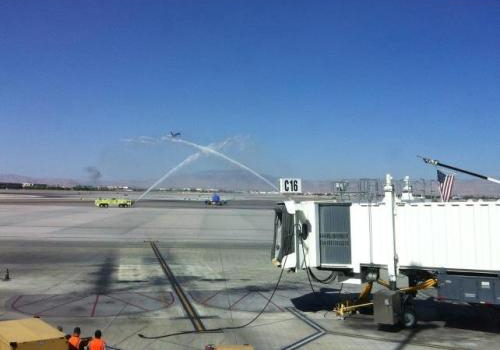
The group of Wounded Warriors received a water cannon salute when arriving at Las Vegas. Photo from Southwest Airlines.
Arriving at the McCarran International Airport (LAS) our plane was greeted with a water canon salute on the taxi into the terminal. This marked the official greeting of the wounded warriors to Las Vegas and certainly added to the festive atmosphere of the trip.
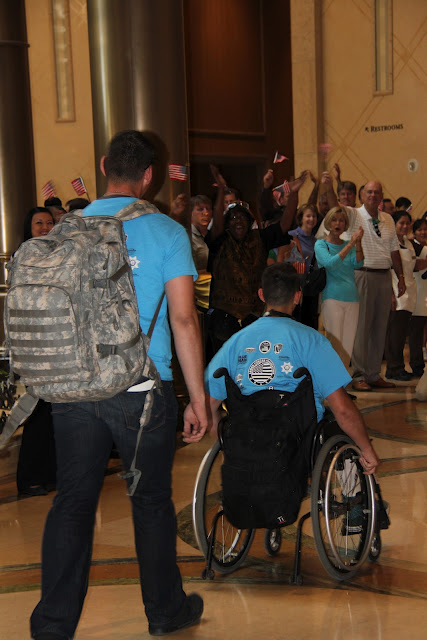
The troops departed the plane, and were greeted at the arrival gate area with hundreds of airport employees and waiting passengers from throughout the airport. The cheering support receiving line stretched from the gate area all the way to the bus loading area. No need to go to baggage claim as our bags were being retrieved and loaded on the buses for us. The bus caravan through Las Vegas to the Palazzo was quite impressive and fast as we had an eight motorcycle police escort.
Of note, the only time police escorts are provided to regulate traffic is for the Wounded Warriors or President of the United States visits.
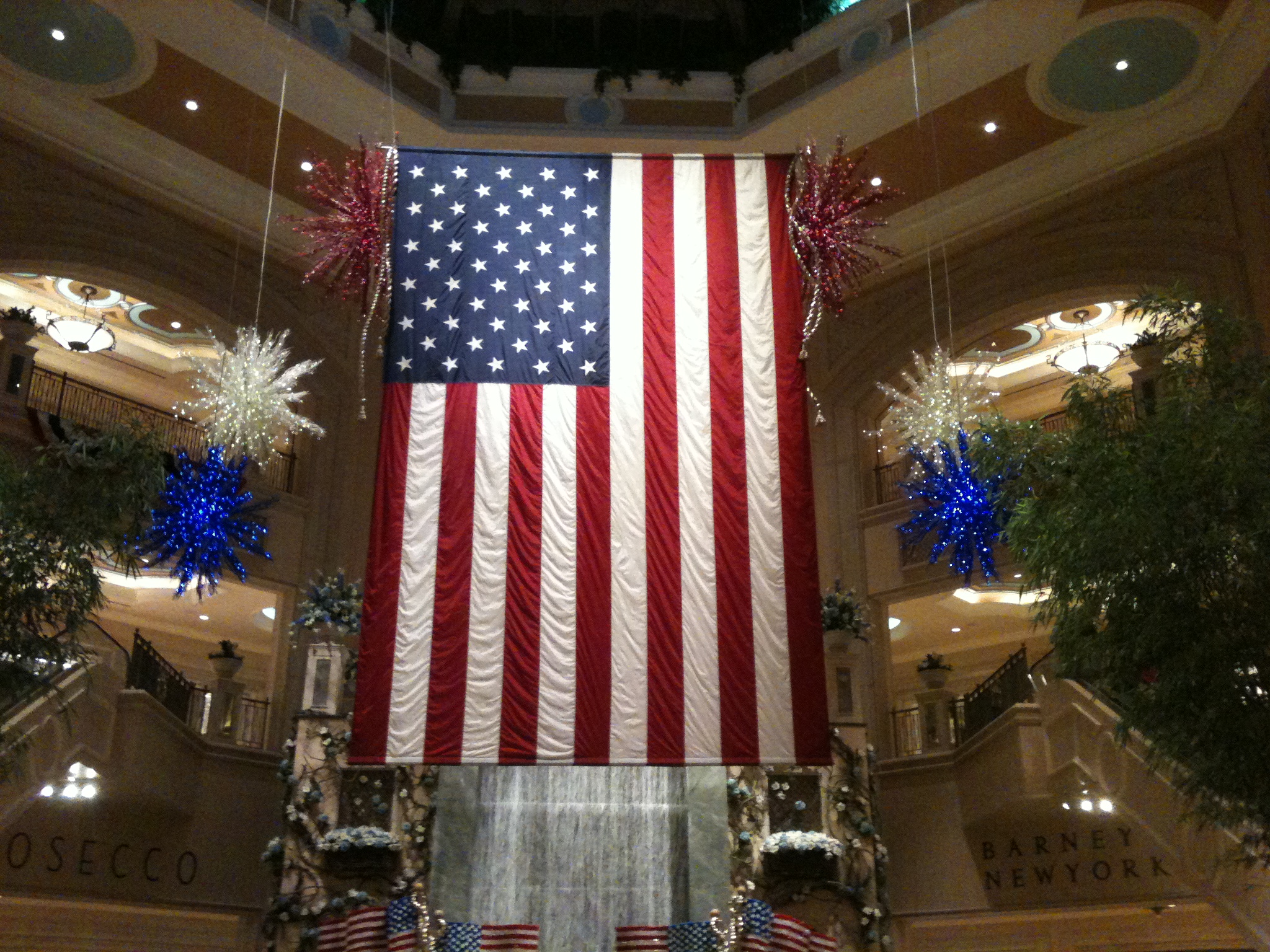
The Venetian went patriotic to welcome the group to the hotel. Harry Brown / AirlineReporter.com.
The Palazzo/The Venetian lined the red carpet with what seemed like thousands of people, in preparation for their arrival with flags and signs expressing utmost respect for these men and women. Even gamblers who probably never went to bed dropped everything to show their respect. I don’t think there are words that can adequately explain what an amazing sight this was. The event was very emotional and heart wrenching, it brought a lump to your throat.
The grand welcome reception was held in the resort’s Waterfall & Atrium Gardens. The reception area was beautifully decorated in patriotic decoration schemes in celebration of their arrival. The welcome ceremony commenced with the Nellis Air Force Base Honor Guard presenting the colors, followed by the Pledge of Allegiance, and the National Anthem.
The wounded warriors were greeted by a warm welcome when arriving to the hotel. Photo by Harry Brown / AirlineReporter.com.
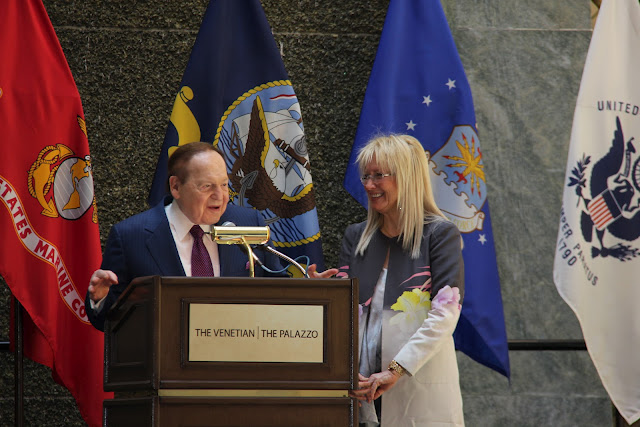
The MC then proceeded to introduce, in order of appearance: Linda Rutherford – Southwest Airlines representative, Bruce Simon – CEO of Omaha Steaks, Patricia Driscoll – Executive Director of the Armed Forces Foundation, and Dr. and Mrs. Sheldon Adelson CEO of Las Vegas Sands Corp (who own both hotels). Each in turn gave praise for the sacrifices all our military men and women have given for our country so that we can enjoy the liberties and freedoms we Americans enjoy today.
This is the seventh year The Sands Corp has done an event like this. Dr Adelson had visited a military medical facility seven years ago. He felt so touch/moved he sent his personal 727 to the east coast to load wounded warriors and fly them out for an all expense paid vacation to Vegas. Southwest and other companies heard about the trip and wanted to get involved and that is how we got to the event it is today.
Chairman and CEO of Las Vegas Sands, Sheldon Adelson, speaks to the wounded warriors. Photo by Harry Brown / AirlineReporter.com.
Linda Rutherford, Southwest Airlines (VP of communication and strategic outreach): “We are excited to be part of this weekend that gives back to those that have given so much for our freedom and our country. We’re proud of our relationship with the Armed Forces Foundation, which supports our commitment to military service members and their families.”
Bruce Simon (Omaha Steaks CEO): “As a family-owned company with a history spanning nearly 100 years, we are humbled and grateful for the efforts of our military troops and their families, who have generously sacrificed and bravely served to protect this great nation we proudly call ‘home,'” “We are honored to be involved in this year’s ‘Salute Our Troops’ event with The Palazzo Las Vegas and Southwest Airlines to recognize these brave soldiers and their families with thanks and gratitude and to support the outstanding efforts of the Armed Forces Foundation.”
There was no shortage of red, white and blue inside the hotel. Harry Brown / AirlineReporter.com.
Patricia Driscoll (President and Executive Director of the Armed Forces Foundation): “The sacrifices our service members and their families make for our country cannot be overstated.” They rise to the occasion each and every day, so when corporations like The Palazzo Las Vegas, Southwest Airlines and Omaha Steaks unite to recognize that sacrifice by rolling out the red carpet to treat these service members to a VIP weekend in Las Vegas, that is truly special.”
Andy Abboud (Senior VP of government relations for Las Vegas Sands Corp): ’œThis festive weekend is our small way of expressing gratitude to the men and women in the Armed Forces. We recognize that they’ve sacrificed immensely for the rest of us, and we want to thank them as best we can. Honoring our veterans is a fundamental value of our chairman Sheldon Adelson and our entire company.”
In the afternoon of their first day there were multiple activities for the troops and their families to enjoy. There was a poker tournament restricted to only wounded warriors. The prize for the two top winners was two round-trip tickets from Southwest Airlines and accommodations from the Palazzo/Venetian. Five cabanas were reserved for their exclusive use pool side with drinks and food provided.
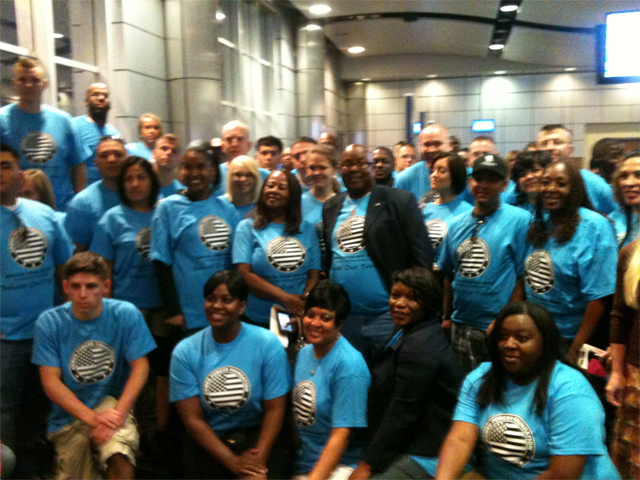
Some of the wounded warriors who were able to make the epic trip. Photo by Harry Brown / AirlineReporter.com.
In the evening a cocktail reception was followed by dinner at Lagasses’s Stadium. Talking to several of the wounded warriors during dinner that evening each told me in their own way that this is a day that they will always cherish. Each was extremely appreciative of the warm and support they had experienced throughout the day.
The following two days activities at the Palazzo were much like the first days with additional niceties added: a reserved Luxury Box at Lagasse’s Stadium, free Salon and Spa treatments at Canyon Ranch Spa, free tickets to Madame Tussauds and a Hiring Our Heroes Job Fair.
Thursday evening with warriors were treated to a cookout dinner on the Palazzo pool deck sponsored by Omaha Steaks and catered by the Venetian/Palazzo followed with free VIP tickets to TAO with a free sky box. TAO a high energy, DJ driven night club boasting a 40-foot-long outside terrace with stunning views of the Las Vegas Strip, gorgeous go-go dancers.
Friday the wounded warriors were treated to dinner at the Paiza Club. The Paiza Club is an ultra elite gambling area with its own bar and restaurant with stunning views of the city. A one million dollar credit line is required for guest to be invited to play at the Paiza Club. After dinner it was off to see a Blue Man Group performance.
Sadly, Saturday arrived and it was time to start thinking of the trip home. The send-off by the Venetian/Palazoo was just as impressive as it was for their welcome. Hundreds of Venetian/Palazzo employees and casino guests lined the way from the VIP lounge where the warriors assembled to leave to the waiting buses. Once more a police escort provided traffic control on the way to the airport. I noticed looking out the bus window that as the buses passed; the patrolmen were facing and rendering a hand salute to the passing bus caravan.
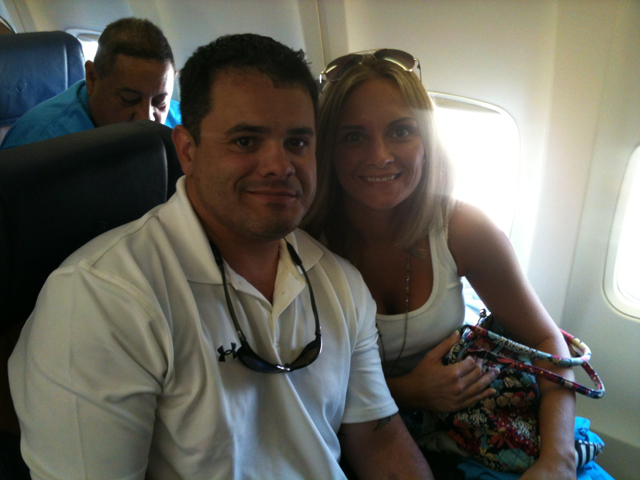
CPT Jeremy and Teresa Baggett sit on the special Southwest Flight. Harry Brown / AirlineReporter.com.
On the flight to San Antonio, this is what CPT Jeremy and Teresa Baggett USA had to say about their experience:
’œFrom start to finish, the Armed Forces Foundation, Southwest Airlines and the Adelson’s made this trip something that the Wounded Warriors and their families will never forget. The attention to detail was evident in every aspect of the trip, and no expense was spared in making the Wounded Warriors feel appreciated. From the time we arrived at the San Antonio airport to depart until we deplaned in San Antonio, the Red Carpet was rolled out.
As the warriors and their families walked through the thousands of Las Vegas Sands employees waving American Flags and screaming ’œthank you’, many of us were moved to tears. The Adelson’s have obviously fostered a sense of pride and patriotism with the employees that are often unmatched in such a large company.
No expense was spared and the level of hospitality shown to the Wounded Warriors and their families was an experience that we will never forget. Although each Wounded Warrior’s path to recovery is unique, they are all filled with struggle. This trip allowed them to relax, de-stress and rejuvenate in ways that may never be experienced again. We were treated like true ’œHigh Rollers’, and will forever be grateful for it.
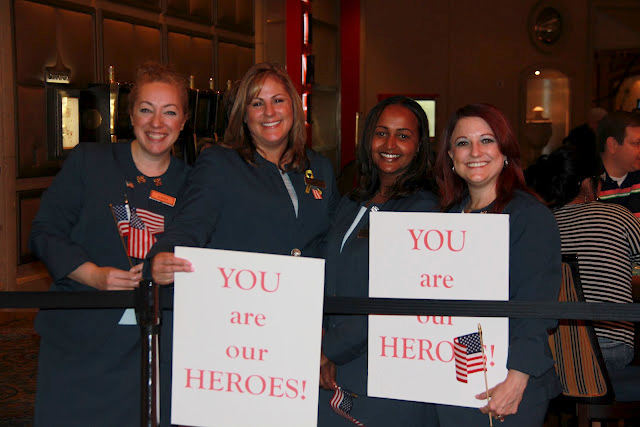
Staff of the Palazzo hotel welcome the wounded warriors. Harry Brown / AirlineReporter.com.
These men and women are phenomenal human beings, and as humble as they come. Spending time among these Wounded Warriors, and their guests has really encouraged me to take a step back and reflect on what truly matters, and using the hand you have been dealt to its fullest capabilities.
Southwest Airlines has a long history of supporting the men and women who fight for our Freedoms. They were named one of G.I. Jobs Top 100 Military Friendly Employers for 2010. Southwest Airlines also was recognized by the Employer Support of the Guard and Reserve (ESGR) for their commitment and support of our National Guard and Reserve Employees. Southwest is one of the most honored airlines in the world known for its commitment to the triple bottom line of Performance, People, and Planet. I’d like to add a fourth ’“ Patriotism.
The 737NG is a great all-rounder. In the context of a comparison with the Classic, there are distinct differences from a pilot’s perspective. From handling characteristics and performance to ’œtwo cup holders instead of one’, there are a myriad of differences in the newest steed from the 737 stable. Some are subtle, some are distinct, but the vast majority are improvements for the better while still meeting the ’˜common type’ constraints.
The majority of pilot’s speak of the NG with admiration. Much of this stems from the re-designed wing and winglets which provides enhanced speed, range and performance. The wing is also a major player from a handling viewpoint. The NG could be described as a ’œstraight line aeroplane’ when compared to the Classic. More like its bigger brothers, the increased weight and enhanced wing of the 737NG translates to higher energy that, in turn, calls for greater planning and anticipation when decelerating. On descent the NG can easily accelerate to its upper speed limit of the ’˜Barber’s Pole’ and whilst the Classic was quite at home being wheeled around the circling area and washing off speed, the NG is a more ’˜slippery’ candidate and needs to be handled on descent accordingly. In terms of turbulence penetration, the Classic possesses a seemingly more rigid wing that tends to ’œpunch through turbulence’, whilst the NGs wing is more ’œgiving’ and tends to ride the turbulence better. Again, this is a feature the NG seems to have in common with the larger aircraft from Boeing.
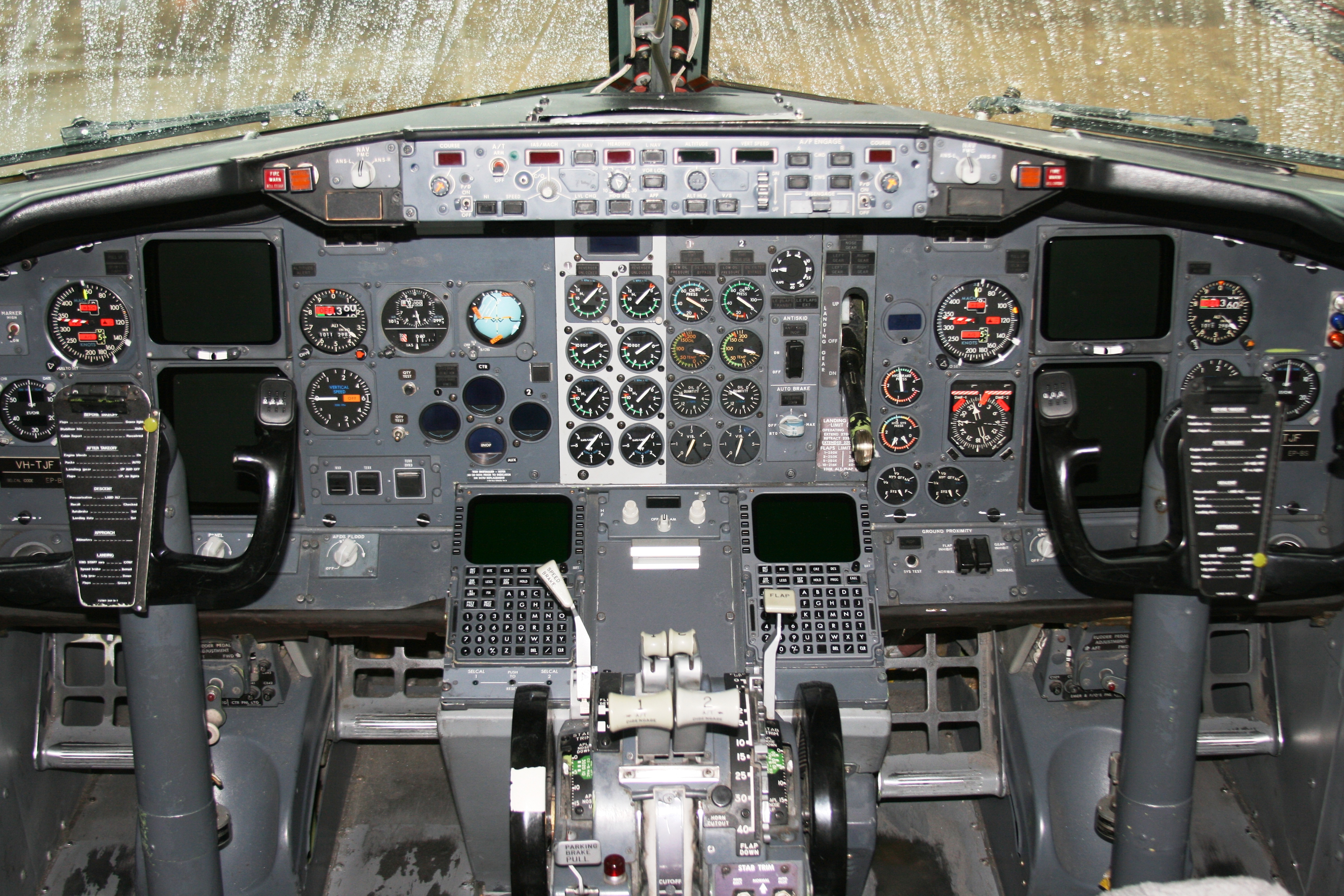
The analogue flight deck of a Boeing 737-400 'Classic' in a 'powered down' state. Photo by Owen Zupp.
The enhanced performance of the NG also received high praise. In the 737-300, the 1700 nm into wind sector between Australia’s coastal capitals of Sydney and Perth was not possible whereas such sectors are not a problem for the higher powered -800. Additionally, the capability to climb directly to 41,000 feet can prove an operational bonus when performance permits, allowing that extra 4,000 feet to get above more of the weather.
Whilst cockpit ergonomics seemed to have changed little, particularly with reference to the overhead panel, the accuracy of the GPS navigation system is a significant improvement for those up the sharp end. Constantly updated, there is no tendency for the map display to ’˜drift’. The outside world is reflected with precision on the cockpit presentation, which assists greatly in visual manoeuvres such as circling off the bottom of an approach. This was not the case with the older IRS driven maps.
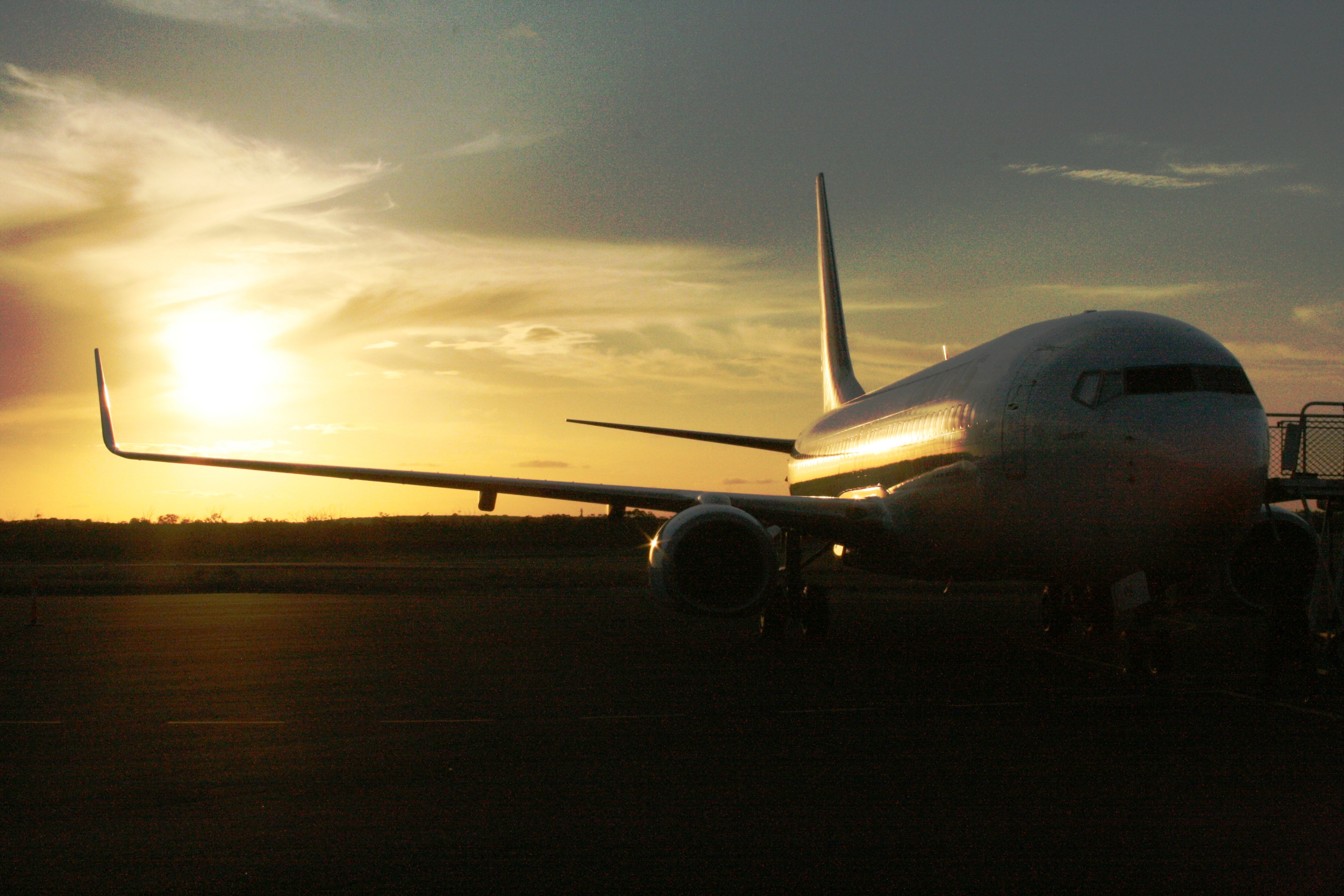
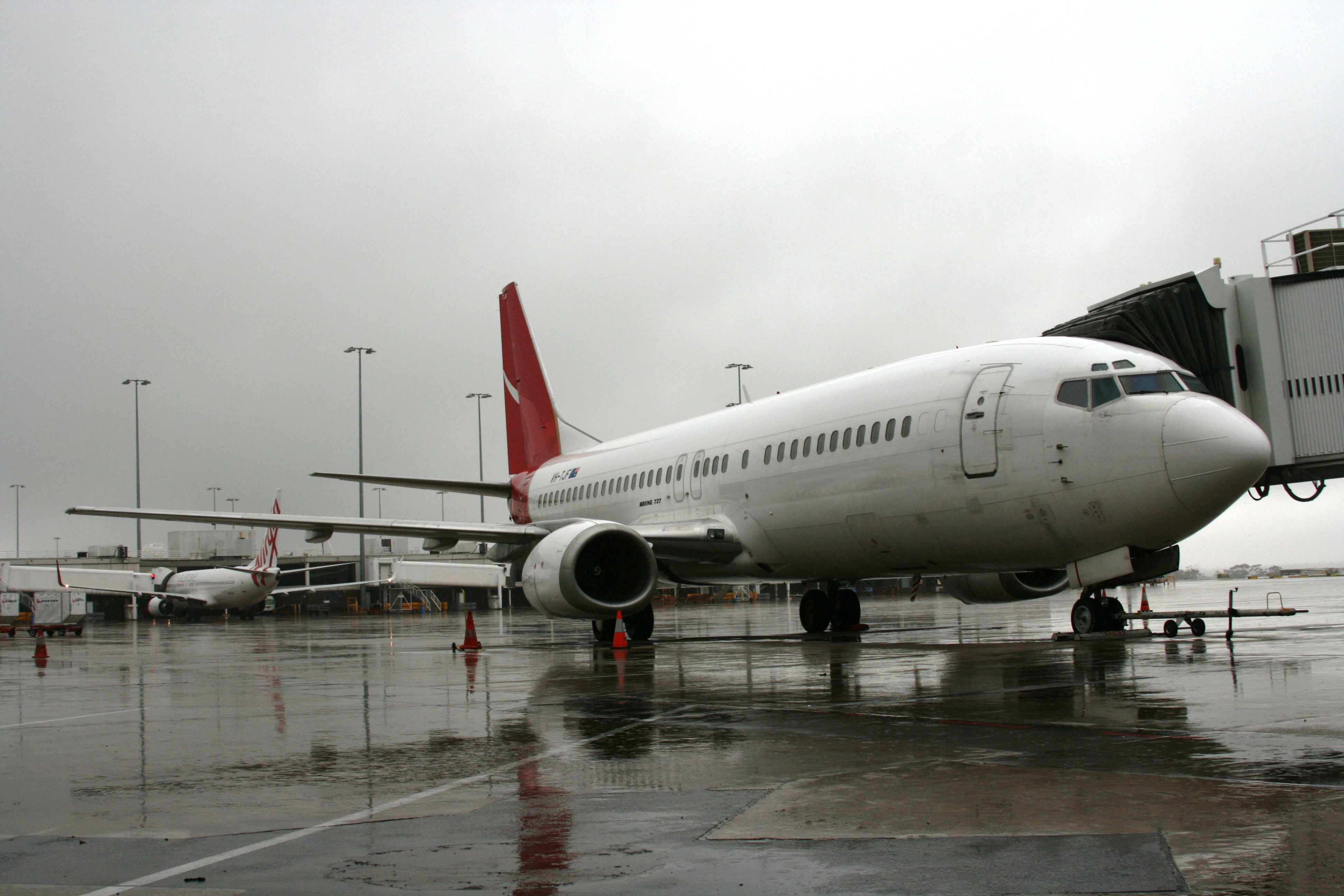
A retiring Boeing 737-400 waits at the gate prior to it's final departure. Photo by Owen Zupp.
The longer fuselage of the -800 offers a potentially limiting geometry on take-off, making a ’˜tail strike’ a real possibility if the rotation is too fast. Landing the newer variant is also notably different aside from the longer landing distance that is required. With the shorter winged ’˜Classic’, a few knots above reference speed in the flare did not seem to alter the touchdown point significantly. Once its mind is made up to land, the spot is fairly fixed. However, the carriage of excess speed, or flaring too early in the NG can result in the wastage of significant amounts of precious runway. The enhanced wing of the NG means that the aircraft wants to keep flying and will happily float as it slowly decelerates in ground effect. For pilots flying the dual variants it is always worth self briefing this point on approach when hopping from type to type.
Walking around the NG, there seems to be only subtle visible changes to the 737 beyond the prominent winglets. It is longer, wider and with a higher fin than the Classic, but unless it is side by side with its ’˜parent’ these differences are all matters of scale. However, the aircraft does sit higher than its Classic forerunner and consequently allows greater clearance for the CFM56-7 engines that are slung beneath the wings. The trademark flat-bottomed cowlings of the ’˜dash 3’ CFMs are not quite so flat and lean towards more conventional round cowlings. Additionally, since January 2005, Boeing has been rolling out the 737NG without the now familiar ’˜eyebrow’ windows above the crew’s main windows.
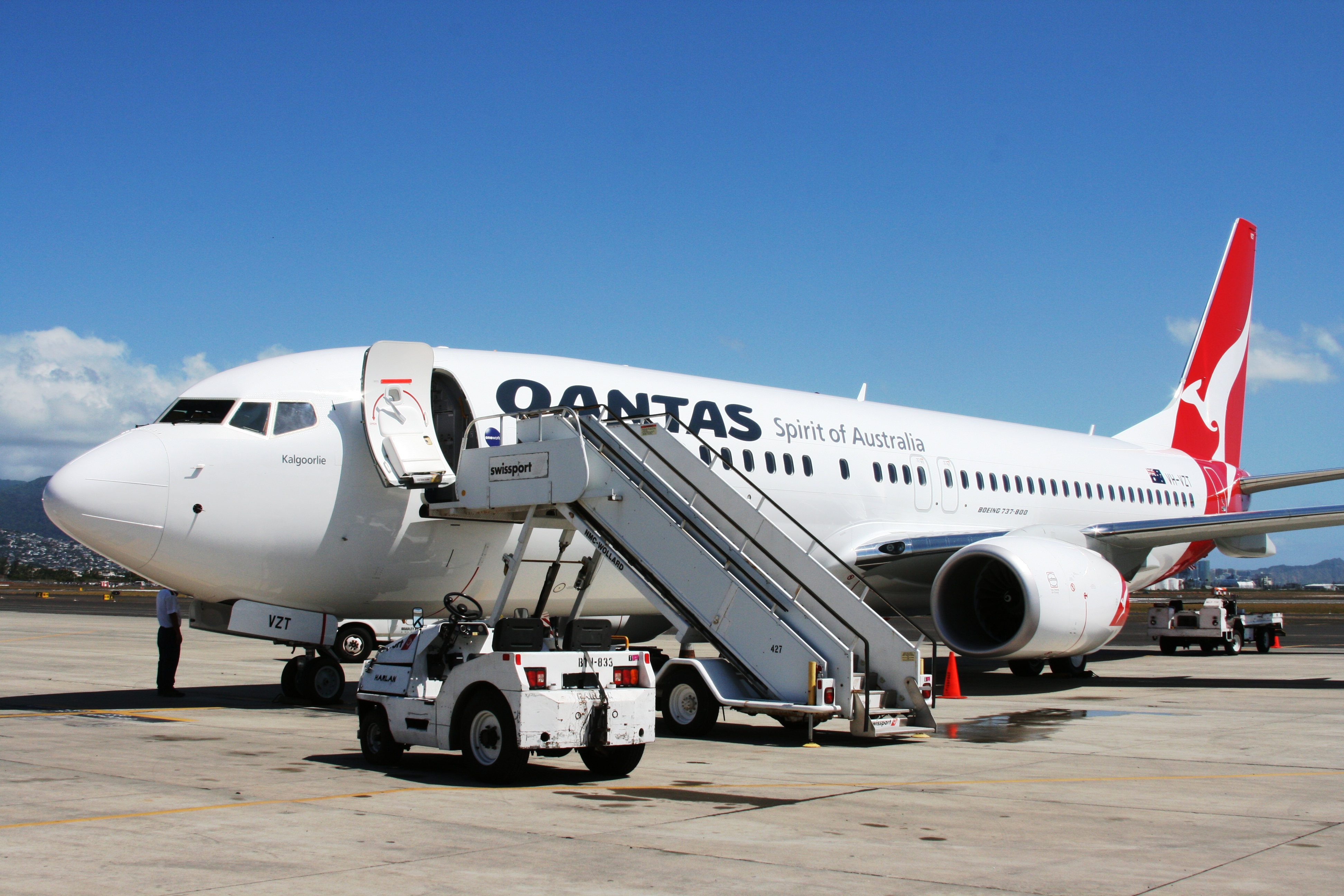
A new 737-800 at Honolulu enroute to Australia. Photo by Owen Zupp.
The Next Generation?
2012 sees the Boeing 737 turning 45. Even so, it is still a design seeking more efficient ways to achieve its designed tasks. This year Boeing announced improvements to engine and airframe that will equate to around 2% in fuel savings. For the passengers, Boeing have looked to the 787 and given the 737 a facelift with the ’˜Boeing Sky’ interior with newer sidewalls, LED lighting and bigger overhead lockers.
The 737 also has a proven track record that defies time as all marques of this Boeing are still gracing the sky. With such a bloodline it is not surprising that the 737 Next Generation has enjoyed success in the same vein as its predecessors. With ER (Extended Range) versions giving the type even longer legs; there are very few tasks that the 737NG can’t handle.
Forged from the legacy of another tremendous domestic stalwart, the Classic, it has built upon its strengths and alleviated most of the perceived shortcomings. And with the 737 Max now looming on the horizon, It finds that irrepressible the NG family has captured that quality of so many Boeing aircraft; a workhorse for the airline and a loved stallion by its crews.
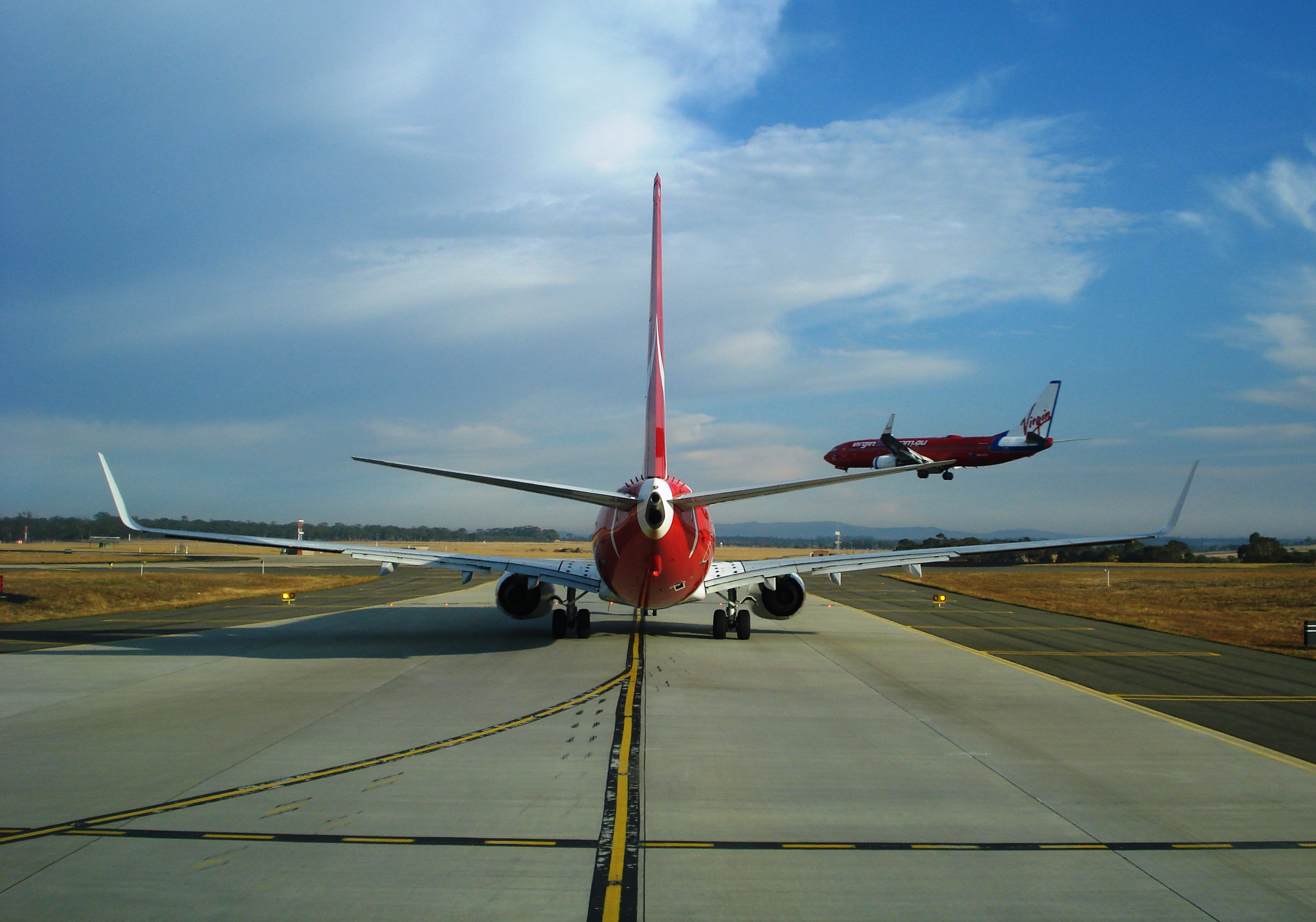
A QANTAS 737-800 awaits take-off clearance as Virgin 737NG lands. Photo by Owen Zupp.
Owen Zupp is a published author, journalist and experienced commercial pilot. With over 16,000 hours of varied flight experience he has flown many creatures, great and small, from outback Australia to all points across the globe. He holds a Masters Degree in Aviation Management and in 2007 his first book, Down to Earth, was published, tracing the combat experiences of a WWII RAF pilot from Dunkirk to D-Day and beyond. He also writes a blog on aviation on his website. This is a two-part story, written by Zupp, talking about his experience flying the Boeing 737 classic versus the 737 NextGeneration. Here is his story in his own words…
Introduction:
Somewhere across the globe a Boeing 737 takes off or lands every 5 seconds and over 1200 of their compatriots are aloft at any given time. With the 7000th aircraft rolled out in December 2011, the 737 has truly brought the term ’˜prolific’ to airliner production and considering the maiden flight of the 737-100 took place in 1967, it is quite appropriate that the latest metamorphism be dubbed the ’œNext Generation’.
With its title clipped to the more easily handled, ’œNG’, the ’˜next generation’ covers the -600 through to the -900 series of the 737. Of Boeing’s latest offering the 700 and larger 800s have gone on to dominate the skies, while the ’˜Max’ is still yet to come. The NGs predecessors, the -200, -300 and -400 had provided the backbone of short haul travel in a very similar way. Whilst the number of earlier models is ever dwindling, they have gone on to be referred to as ’˜The Classics’ as they reflect a last bridge between the analogue and digital flight deck. Whilst a highly visible transition, the clocks and dials are but one area of many in which the Classic has been superseded.
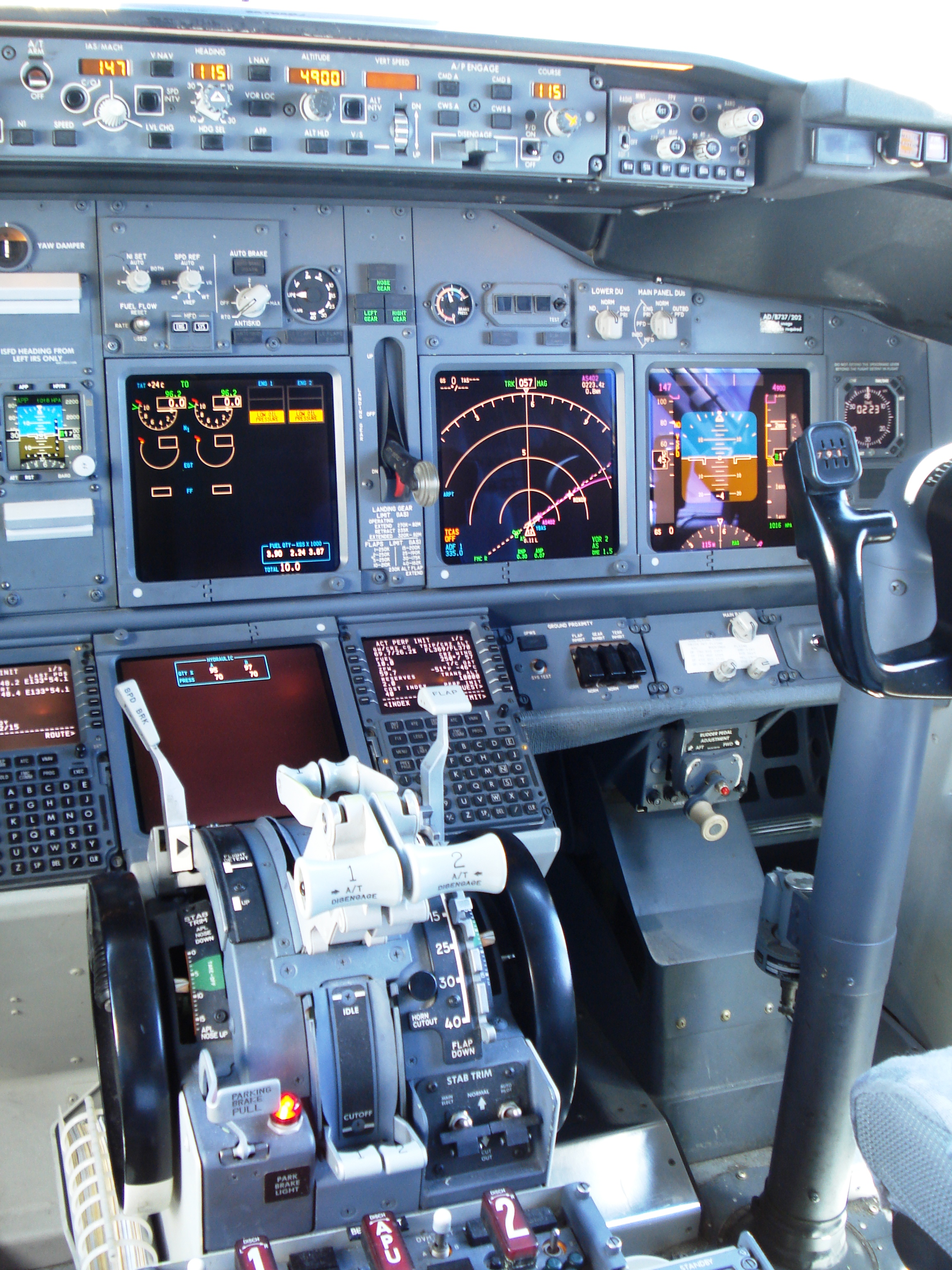
The flight deck of a Boeing 737-800. Photo by Owen Zupp.
737 Next Generation Development:
The 737NG program was launched in 1993 under the title of 737-X. Boeing recognized the time-tested qualities of the type, but needed to bring the efficiency of new technology and systems to its most enduring machine. Fundamentally, the 737-X was to fly higher, farther, faster and more fuel efficiently than its predecessor without evolving into a new machine requiring a new designator and certification. A challenging task to say the least.
Much of the efficiency revolved around the redesigned wing. With 25% more total surface area and potentially 30% more fuel capacity, the new wing has much to offer. Boasting a higher span than the Classic, the new wing is a more swept with a constant angle of sweep and double-slotted continuous span flaps. Gone is the double swept leading edge and characteristic ’˜kink’ of the earlier wing. Similarly, there have been changes to the leading and trailing edge flaps that have resulted in weight saving as well as aerodynamic efficiency. For all of the improvements to the aerofoil and lift augmentation devices, the most visible change to the wing and the aircraft generally, is the emergence of blended winglets on the 737.
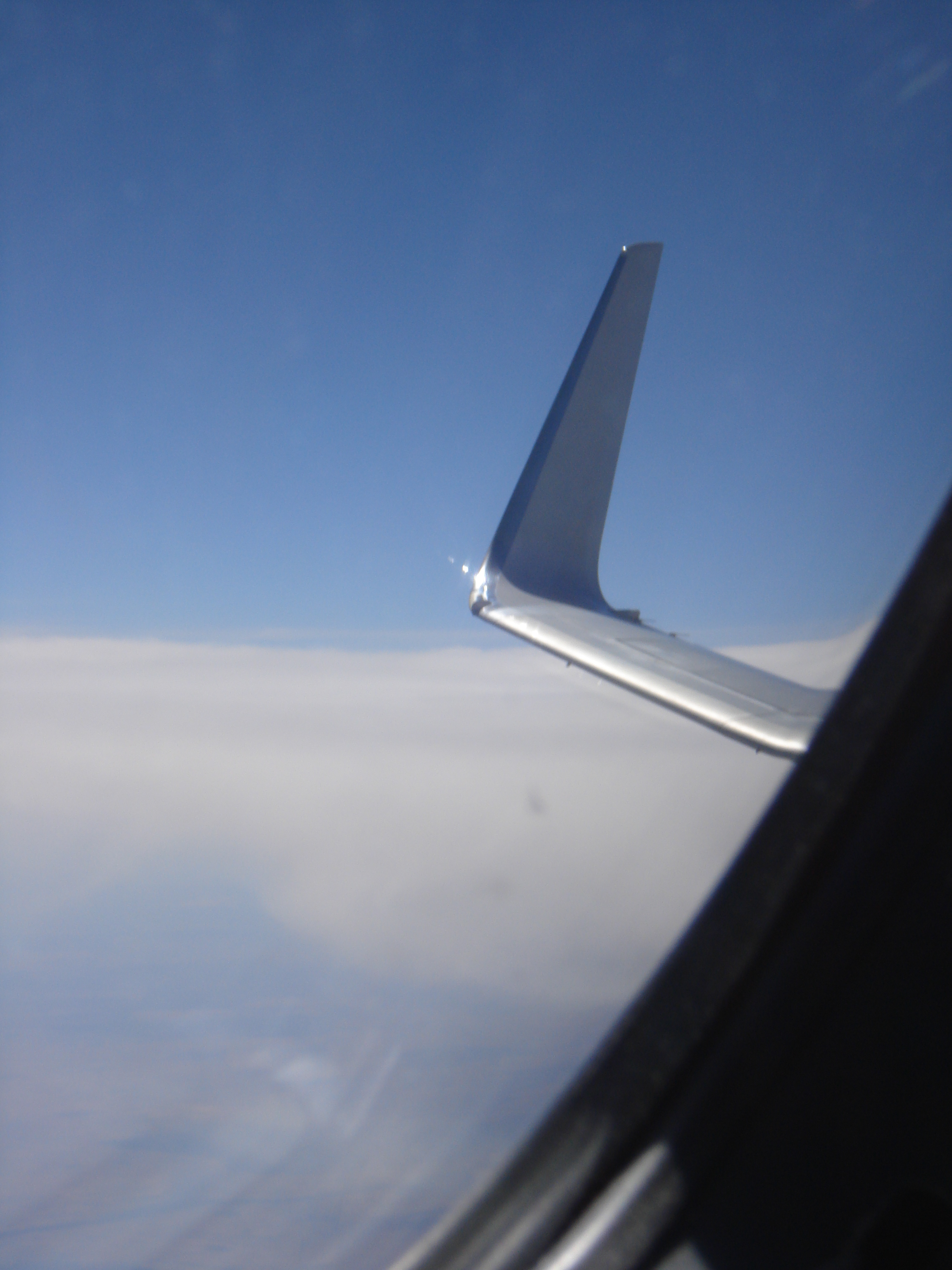
The smooth, upward sweeping fairings at the tips stand a prodigious 2.4 metres and increase the span by a metre and a half. Simply put, the winglets benefit the aircraft through the reduction of induced drag and consequently improved operational and economic performance. Whilst yielding an impressive 4% saving in mission block fuel, the winglets also increase the 800s range by over 100nm. (Source: Boeing) Improved performance out of ’˜hot, high and humid’ airfields is another advantage of the blended winglet. In fact, this aerodynamic device has proved so successful that it is now being retrofitted to 757s as well as 737s.
The NG also sees the introduction of GPS to the 737 navigation system. Previously only equipped with dual Inertial Reference Systems (IRSs), the system relied upon ’˜updates’ from ground based VORs and DMEs to continually refine the aircraft’s present position. Without such updates, the pictorial presentation on the map display could be inaccurate requiring the crew to heavily rely on ’˜raw data’ from conventional radio navigation aids. GPS provides a far more consistently accurate map display for the crew and allows for more integration of the aircraft’s Lateral Navigation (LNAV) and Vertical Navigation (VNAV) systems. Additionally, the NG is equipped with a Predictive Windshear Warning and Enhanced Ground Proximity Warning System (EGPWS). This ’˜forward-looking’ form of the original GPWS provides improved terrain clearance by such mechanisms as Terrain Clearance Floor, Look Ahead and Runway Clearance Floor algorythms.
Efficiency and costs savings can also be achieved on the ground. Production line improvements saw the final assembly of a 737NG in a record-breaking 11 days in 2005. On the maintenance side, the NG was developed with an eye to reducing airframe maintenance costs by 15%. Comprised of significantly less parts than the Classic, the NG was also designed with far more ’˜ease of access’ for maintenance crews. Redesigned leading edges, landing gear, electronics, APU and the 15% more efficient CFM56-7 engines all contributed to the bottom line. In conjunction with improved maintenance documents, corrosion prevention and extended scheduled maintenance intervals, the 737NG has won the battle of the dollar over its forerunner.
Looking back at the blended winglet of the 737NG. Photo by Owen Zupp.
On the flight deck, the 737NG strongly resembles its twin-engined big brother, the Boeing 777. The panel is dominated by the presence of 6 LCD panels arranged side by side, replacing the combination of EFIS and analogue that was found on the Classic. For the pilots, this means a degree of modification of their instrument scan from the vertical to the horizontal. The flight deck was designed in response to the demand by operators that a new type endorsement not be needed. As a consequence, the overhead panel closely resembles the Classic with its array of toggle switches and dials, though the operation of the system behind the switch may well be different.
As for achieving higher, faster, farther and more fuel efficient performance; Boeing delivered. The NG possesses greater range by more than 400nm over the earlier model, whilst topping out at FL410 (41,000 feet) as opposed to the Classic ceiling of FL370 (37,000 feet). With a typical cruise speed of 0.78M and a sprint capability to 0.82M, the NG draws away from the Classic’s average cruise of 0.745M, whilst all the while burning less fuel. Furthermore, depending on the cabin configuration, the -800 can achieve all of this while carrying around 40 more passengers than its predecessor. From humble beginnings as the 737-100 nearly 40 years ago, the 737 has kept pace with the times through ongoing development and improvement. The 737NG is no exception.
Technologically, some 737 NGs can be equipped with a ’˜Head-Up Guidance System’ or ’˜HGS’. The HGS 4000 system features a transparent drop-down screen in front of the Captain on which is projected an array of flight information, allowing the pilot to operate in lower visibility situations than would otherwise be possible. Head-Up Display (HUD) technology has been available for years on military aircraft and Alaska Airlines started flying HUD on their 727s back in the mid-80s and all of their 737-400s are equipped with the technology.
Some airlines have opted for the Vertical Situation Display (VSD) on their aircraft. The VSD displays the current and predicted flight path of the aircraft and indicates potential conflicts with terrain. The VSD is designed to enhance situational awareness on the flight deck and is yet another way in which the Next Generation is offering advances over its predecessor.