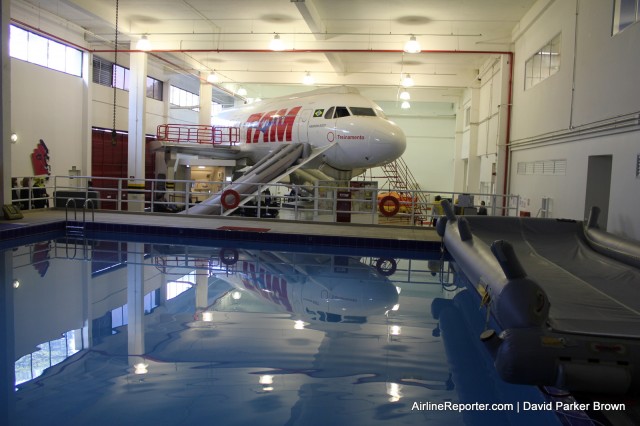
By now, I have been to a few airline flight attendant training facilities and I am always in awe with what is similar and what is different. What I liked most about TAM’s training facility was they let us get really hands-on with the experience. Not just learn about what their different training devices can do, but we got to experience them first-hand.
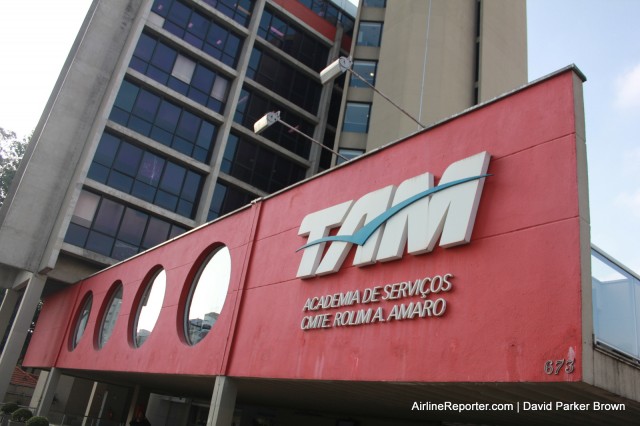
The outside of TAM’s training facility, located in Sao Paulo
Although visiting an airline’s training facility can be quite fun for a visitor, there is no question that the facility is designed to train flight attendants on how to save lives.
Everytime I go to one of these facilities, I am reminded how flight attendants have complex jobs. Many see them as glorified waiters and waitresses, but they are anything but.
My only regret for this trip — I didn’t bring my bathing suit for the pool!
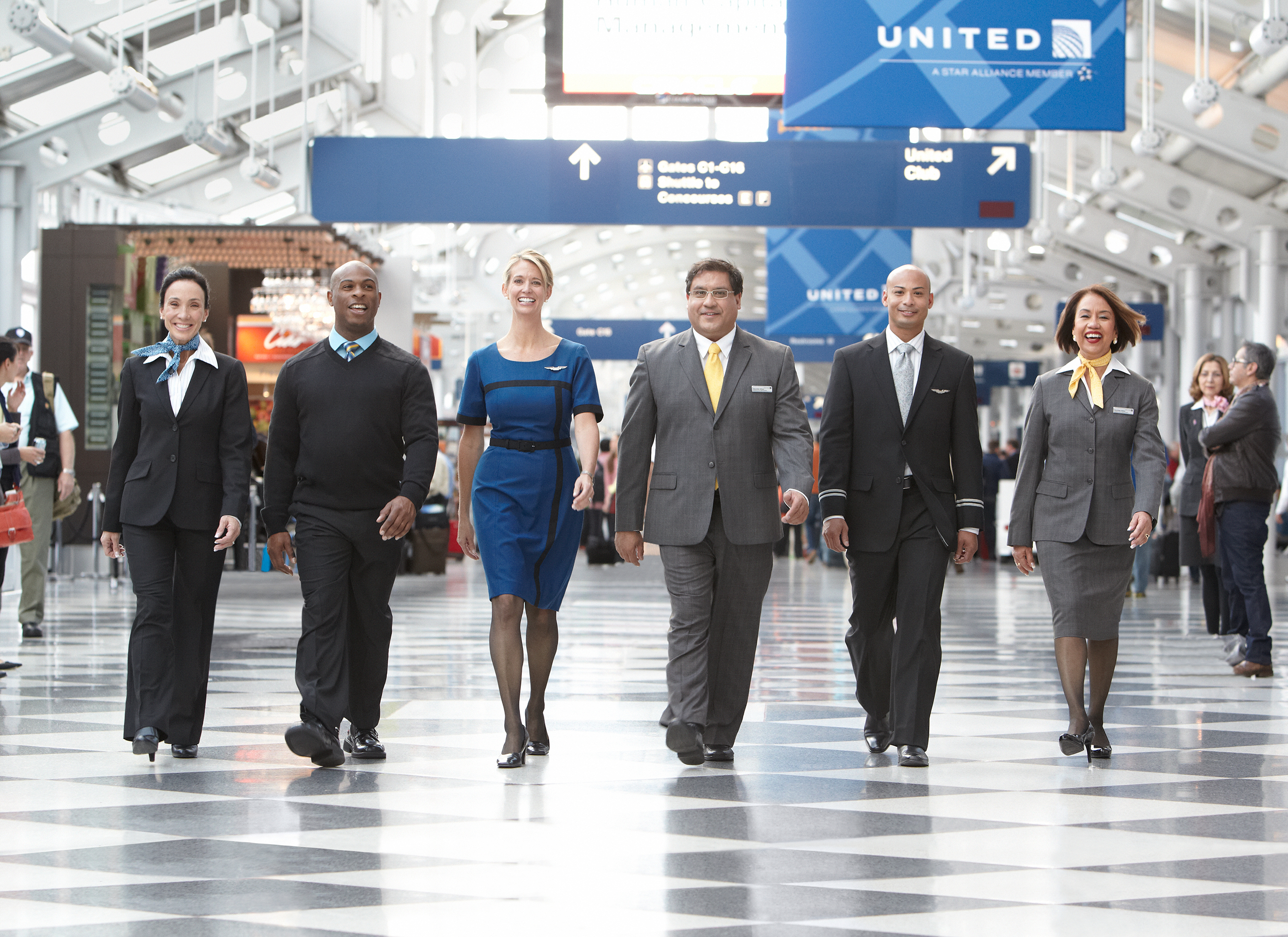
The world’s largest airline (based on scheduled passenger-kilometers flown) has recently changed up their employee couture. May 21, 2013 marked United Airline’s 25th anniversary at Newark’s Liberty International Airport (EWR) and felt it would make a great backdrop to show off their new uniforms.
United is the largest airline in the New York area and currently the sole tenant of Newark’s terminal C and the airport serves as their third-largest U.S. Hub. They have more than 13,000 local employees and offer more flights & seats from the region to more world-wide gateways than any other airline in history. Currently, United offers more than 400 flights daily from Newark.
All the knowledge that flight attendants have about safety and serving the customer doesn’t happen over night. Employees will spend weeks training, most of the time using an aircraft interior mock-up. Last week, Virgin America installed a new Airbus A320 mock up at their Burlingame, California Headquarters. It is unknown if the training A320 comes with techno music standard or if you need to bring your own.
You can also check out photos of the process that Virgin America posted on their Facebook.
Singapore Airlines gave a special tour to invited media guests to their training facility located in Singapore and I felt privileged to be among the group. We were able to experience the flight attendant safety training, cabin crew procedure training and the flight simulators.
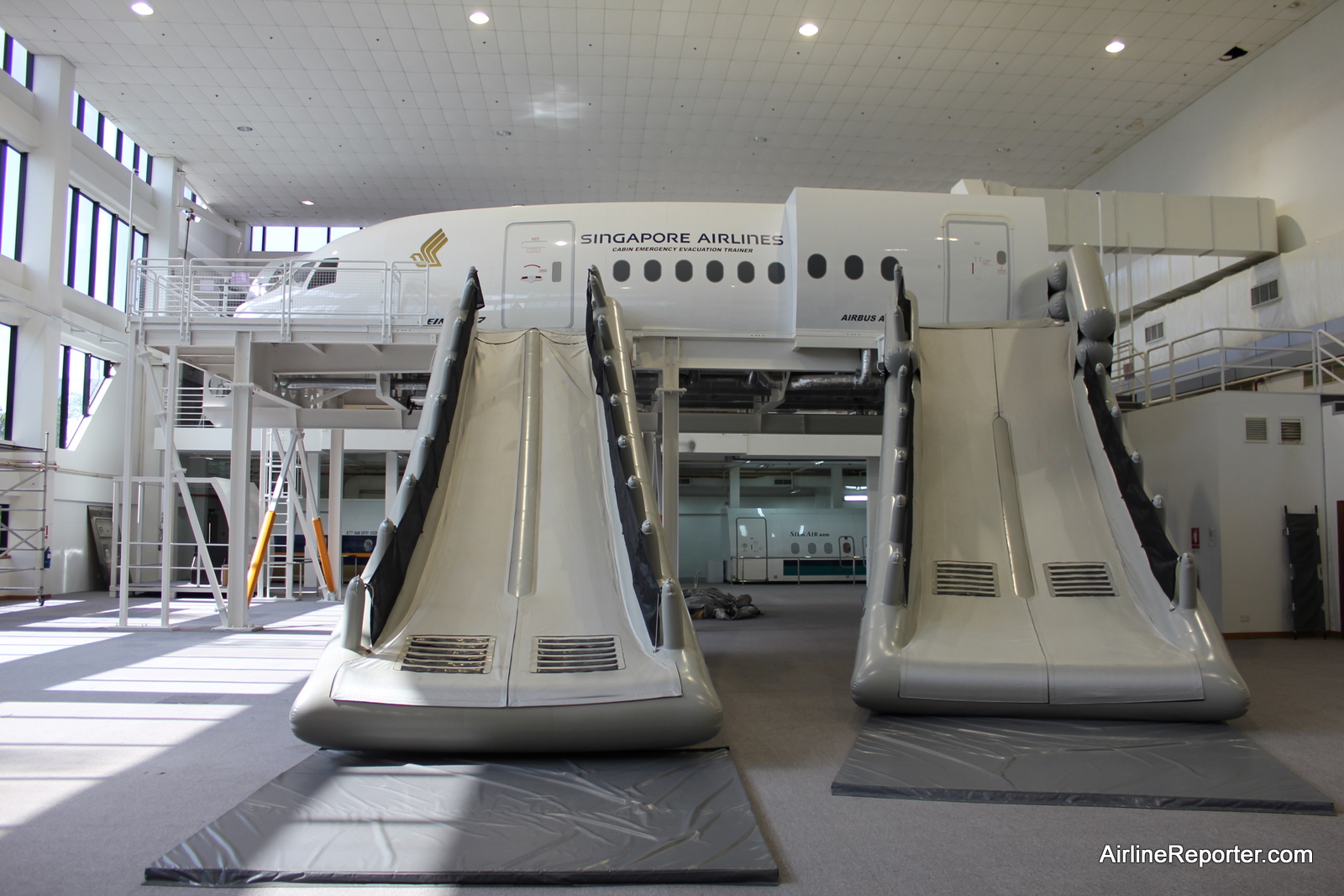
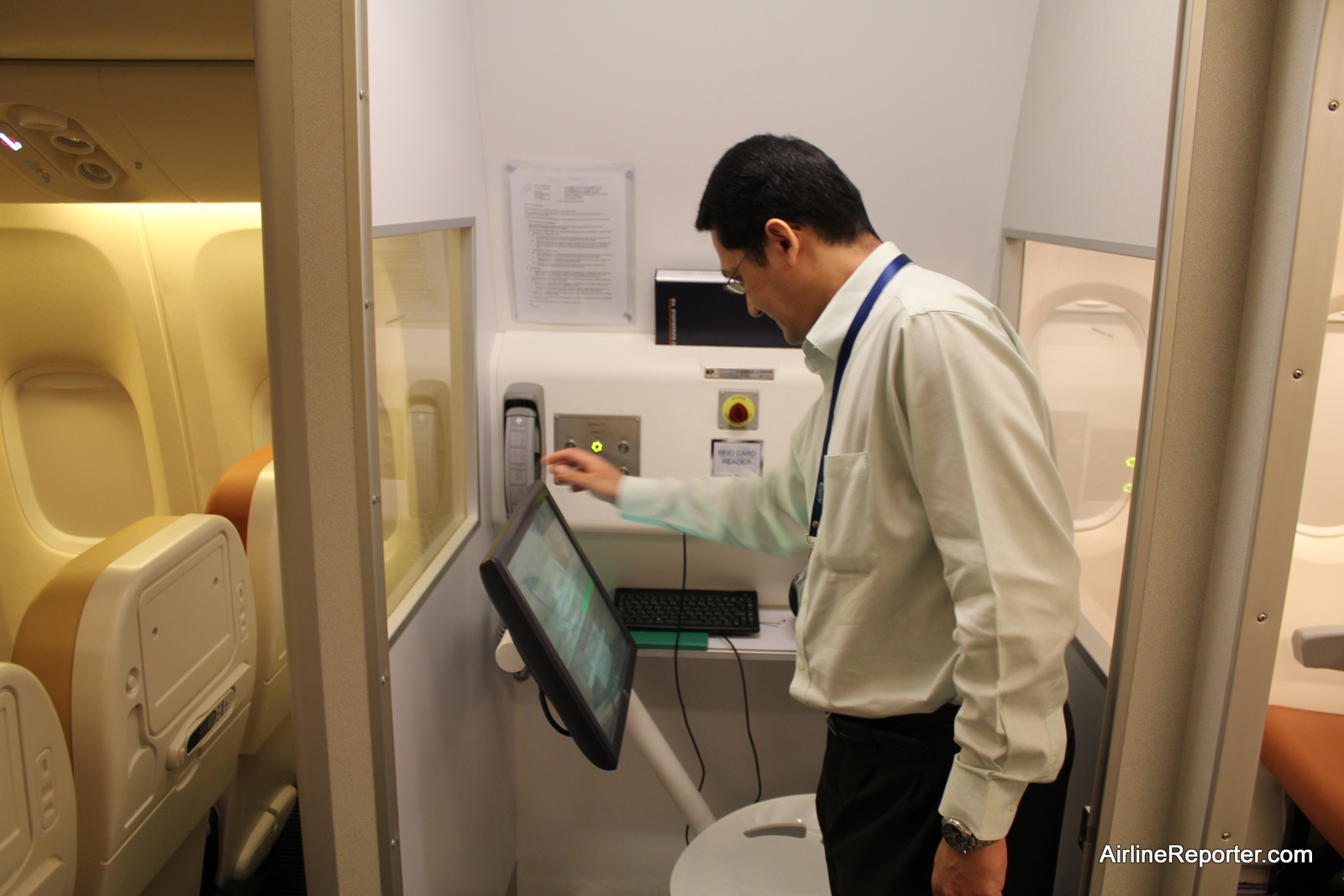
The slides are not for fun. This hybrid of Boeing 777 and Airbus A380 is to teach cabin crew how to evacuate an airplane.
We first entered a large room that looked almost like a play ground with slides, but it was all business. This is where cabin crew learn and get re-trained on safety protocols. There were a number of different interior mock ups and the most interesting was the hybrid slide trainer. This was a unique set up with a Boeing 777 in the front and an Airbus A380 in the rear. The aircraft is used to allow flight attendants to practice evacuating passengers and jumping down the slides themselves. Inside the mock up, the interior was made up of earth-toned seats, with half of it being wider than the other half. The emergency doors had LCD screens located in the windows to simulate what might be on the other side (ie fire, debris) and the flight crew must react accordingly. Other mock ups in the facility allow cabin crew to practice opening emergency doors, escape from crew quarters and learn the proper operations on different aircraft.
Instructors are able to set up a number of different scenarios for flight attendant training.
The larger hybrid airline cabin is able to be filled with smoke to simulate an emergency situation (see an example from when I visited AirTran). There is a control panel that lets the instructor set up a scenario and the flight attendants must react accordingly. I was hoping to have an opportunity to take a slide down, but decided on the stairs instead.
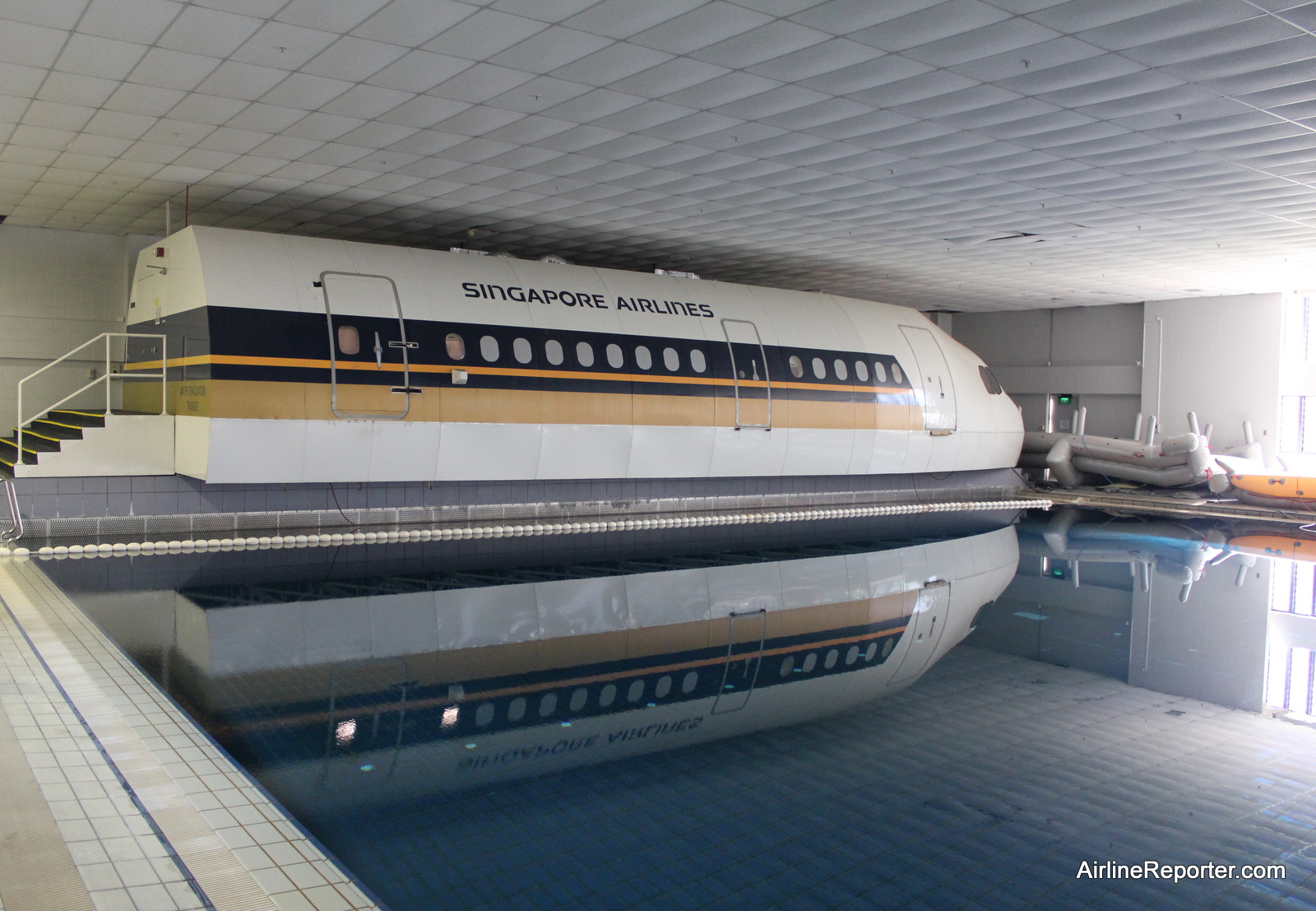
The water is calm in this photo, but during training, instructors can make waves in the Singapore Airlines training pool.
After coming down the stairs, we went into the pool training facility, where flight crew are required to practice jumping into the water with their uniforms. The pool is able to simulate waves and rough conditions, providing an additional challenge for the new trainees. Much like the slide trainer, the interior has a full cabin set up, giving as much realism as possible to an actual water landing event.
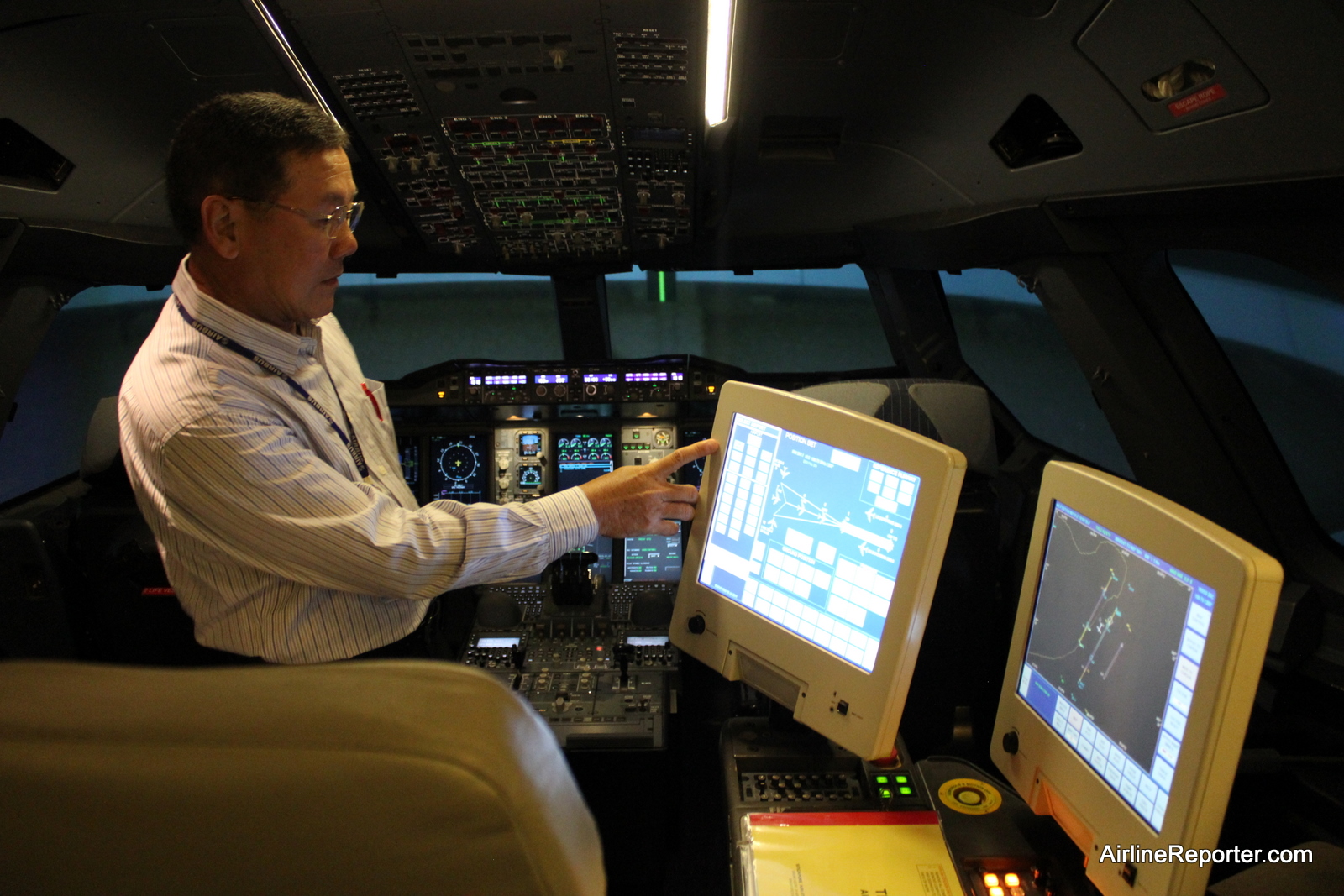
Singapore Airline's Airbus A380 flight simulator has a Star Trek like command chair for the instructor to create almost any scenario possible.
The training facility also operates seven aircraft simulators that cost between $12million and $30million. Singapore Airlines leases time on the simulators for other airlines as well, except the Airbus A380 since they need all the time on it as possible. The A380 simulator is unsurprisingly big and although it is a massive beast — she flies like a champ. The simulators have full motion giving pilots realistic g-forces during landing, take off and maneuvers. Instructors are able to sit in a command seat behind the pilot and co-pilot to create dangerous situations at airports around the globe. Before pilots take a spin on the larger simulator, they are able to practice the proper procedures on a much more simplistic (and cheaper) Flight Training Device.
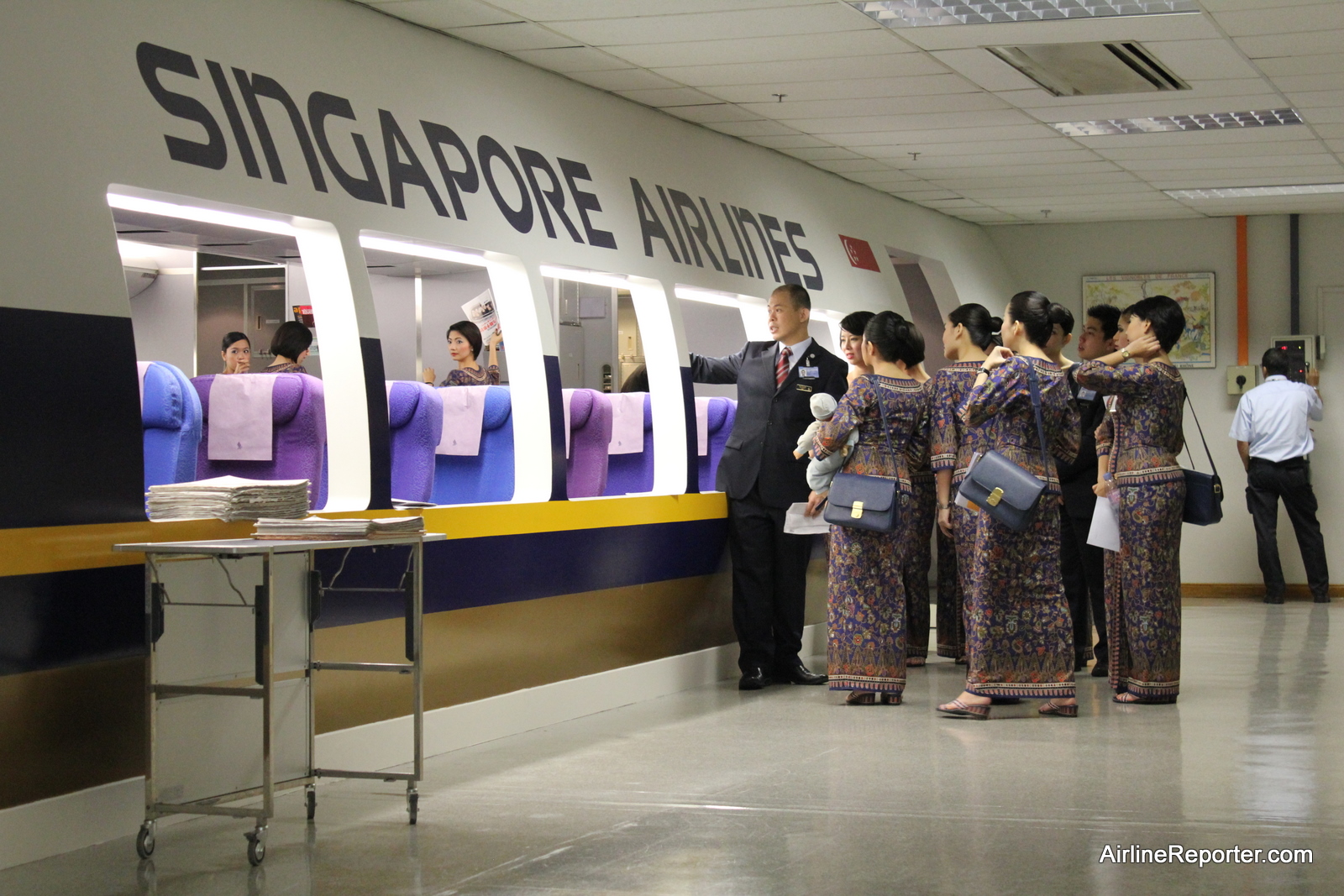
New Singapore Girls learn how to work the economy section at the training facility.
Even though safety is the most important aspect of a flight attendants job, a large portion of the facility is set up to teach flight attendants how to take care of their customers. Down a long hallway, there are multiple mock-ups to let new employees learn customer service for economy, business and first class passengers. Interestingly, part of their training includes greeting facility guests with a warm welcome. It is quite impressive to walk by a group of 25+ new flight attendants and have them all welcome you to the training center.
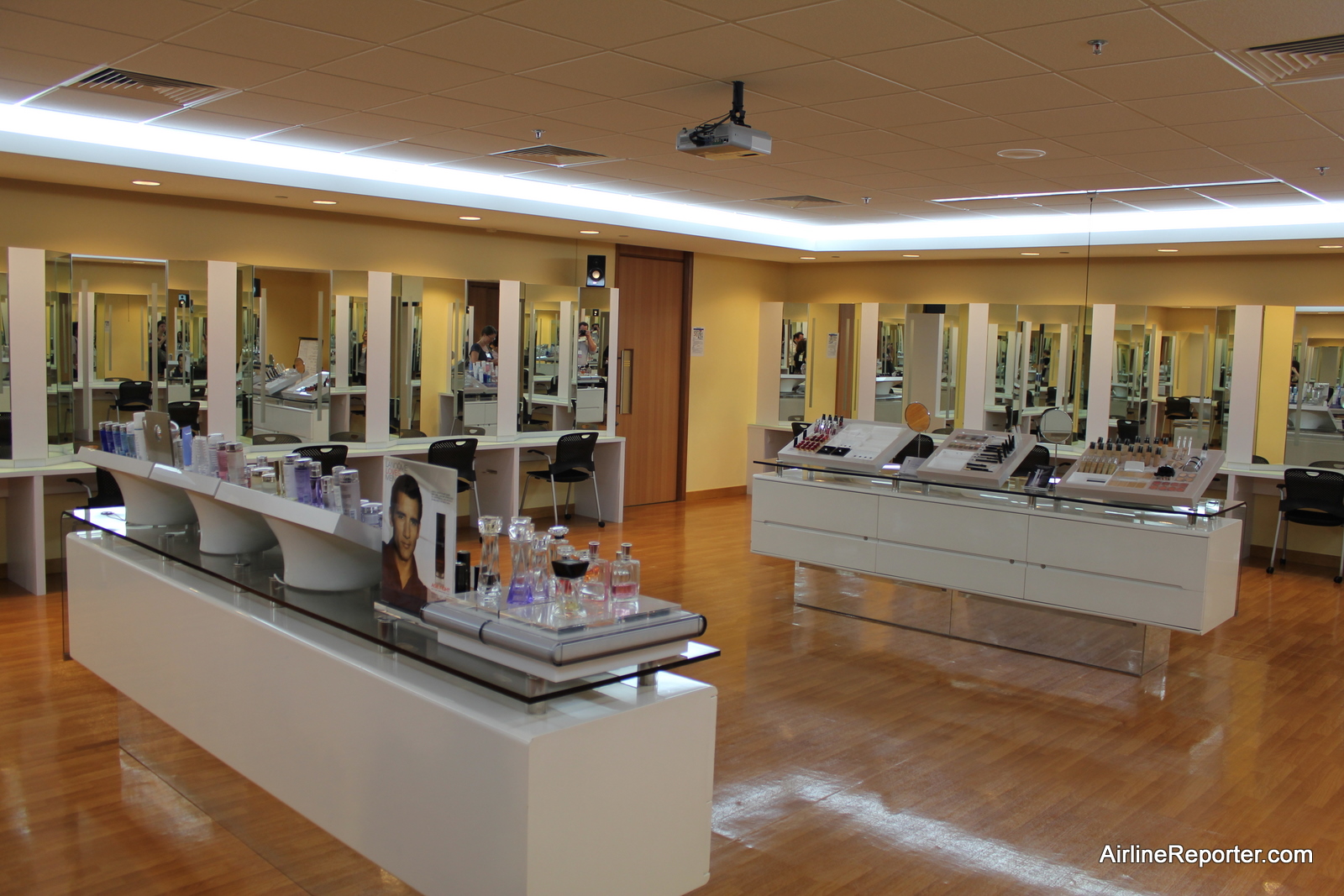
Looks and proper grooming is important to Singapore Airlines. This room, new hires learn how to look professional during long flights in a low-humidity environment.
First impressions are important and Singapore Airlines makes sure their entire flight crew look professional. Even though the male crew won’t be wearing any make-up, they still go through the full training to learn how to keep their skin from getting too dry and how to assist their female co-workers. There is a classroom dedicated to make-up and scents training and another for flight attendants to practice walking properly.
Singapore Airlines is known for their high-end service and it takes quite a bit of work to accomplish. Besides basic training, flight crew are required to return for additional and advanced training. Even though the facility might look like fun and games, everything done there is for either customer service or safety. Both are very important aspects to running a successful airline and it seems to be working quite well for Singapore Airlines.
Allegiant Air announced today that they will be adding 16 additional seats to most of their MD-80 aircraft. All of the 48 currently operating and nine of the additional ones will be operating with 150 seats will be changed to accommodate 166 seats. The three MD-87’s that hold 133 seats will not be changed.
Allegiant is investing $50million into this change, which includes removing the galleys. They will start the changes near the end of 2011 and will be completed by the end of 2012.
“These added seats will allow us to grow our capacity with the least amount of risk,” Andrew C. Levy, Allegiant President, said. “This project effectively increases our capacity by 11 percent while lowering our cost per seat. In addition, we expect to fund this through internally generated cash-flow.”
This investment shows that Allegiant will continue with their fleet of MD-80 aircraft as well as their newer Boeing 757s for the future.
Due to the increase in passengers, Allegiant will be adding a fourth flight attendant to the 166 passenger aircraft. This increases the ratio of flight attendant to passenger from 1:50 to 1:42.
I wondered if this would mean Allegiant would offer less seat pitch for customers. Just back in 2004, Allegiant made a big deal about taking out three rows of seats to provide more leg room (thanks to Dan Webb for that link). I asked Jordan McGee, Director if Allegiant Corporate Communications and she explained that all Allegiant’s aircraft are not configured the same, but even after the conversion to 166 seats, all the aircraft will have a seat pitch between 30-32 inches.
“Our current seat pitch varies by aircraft because of different configurations, but our average is 30-32 inches. We also have quite a few seats at 33 inches and then some upwards of that, depending on the aircraft. Once we make the conversion to 166 seats, each seat will be between 30-32 inches,” McGee explained.
If they aren’t using the galleys to serve food, why have them? Heck, if Allegiant can put in more seats and more flight attendants while not taking any leg room away from me and while trying to keep fares competitive, I am all for it.