This is a continuation of our COVID fleet retirement series, where we tap our archive to commemorate the planes that retired early because of COVID. In our first installment of the series we said goodbye to the Queen of the Skies, the Boeing 747-400. In this story, we stick with the “4 engines 4 long haul” theme but switch gears from Boeing to Airbus.
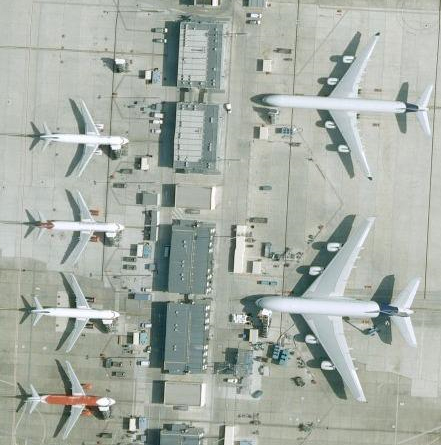
An Airbus A380, A340 and a few A320’s hanging out at Toulouse Blagnac Airport
With fewer people flying, plus the increasing use of fuel-efficient two-engine long-haul planes in airline fleets, older quad-engine planes are dropping like flies. No surprise, then that a number of airlines retired their Airbus A340 and A380s fleets. The A380 is a unique behemoth, the largest and arguably most-comfortable passenger plane around. And its older sister, the elegant A340, has captured AvGeeks eyes and hearts around the world.
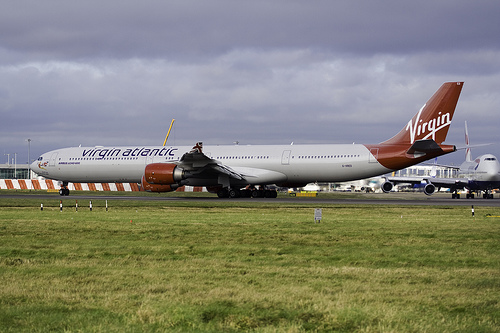
Virgin Atlantic Airways Airbus A340 (G-VRED)
Read on as we take a stroll down memory lane as we say goodbye to a few A340 and A380s.
When it comes to the passenger experience on long-haul flights, the gap between economy and business class just keeps getting bigger. Today’s business class is all about universal aisle access, suites with doors, and other features that used to just be for first class. Back in economy, seats and legroom are tighter, and amenities are disappearing.
But lucky for us, many airlines are offering a new island of refuge in the middle of the gulf between economy and business: so-called “premium economy.” Oxymoron? Maybe. But if it’s a way to take some of the harsh edge off of flying in economy, without having to shell out big bucks for business class, then consider us interested!
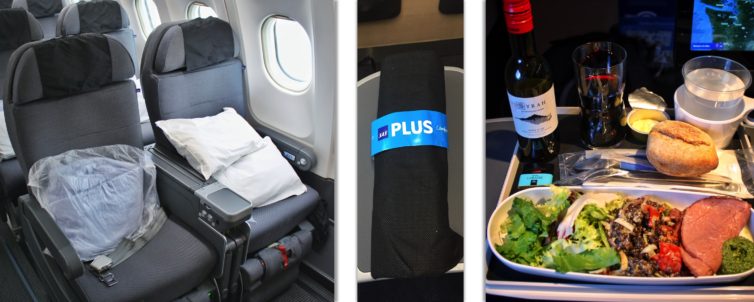
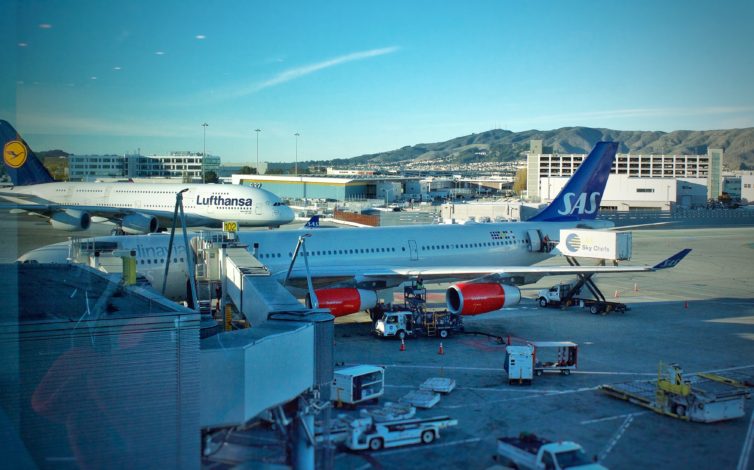
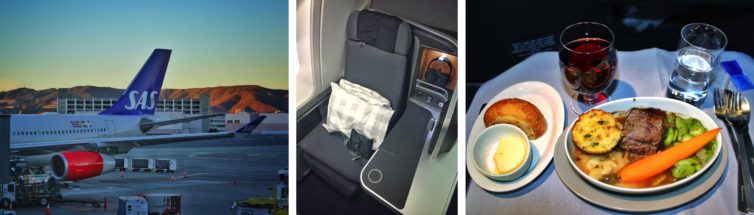
We recently did some flying with SAS Scandinavian Airlines, whose long-haul A330 and A340 fleet recently got a major interior makeover. On the outbound to Copenhagen we had a blast trying out their new business class, but on the way back we made sure to score a seat in SAS Plus, their premium economy cabin. The seat itself was more economy-plus than business-minus, but amenities like lounge access, free WiFi, and fast-track airport security were a great way to sweeten the deal. All in all, SAS Plus did a great job of making economy class much more comfortable and fun.
Photo: Manu Venkat | AirlineReporter
Read on for our full report and our thoughts on whether SAS Plus is worth it on your next trip.
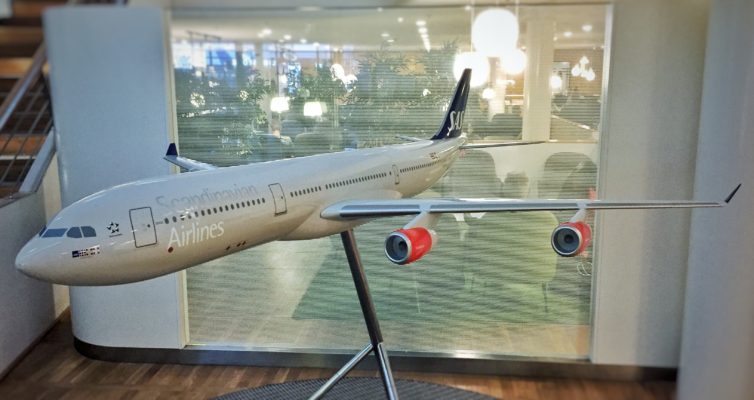
Our ride, looking sleek in red and blue – Photo: Manu Venkat | AirlineReporter
SAS Scandinavian Airlines has a lot of history under its belt — over 70 years’ worth, in fact. It was first to offer a regularly scheduled transpolar flight way back in 1954. More recently, it was a founding member of the Star Alliance. It continues to make big moves, expanding its US route network into Miami and Los Angeles to solidify its status as the airline with the most flights between the US and Scandinavia.
But as of a few years ago, SAS’ business class on its long-haul A340 and A330 fleet was stuck in the past, with a 2-2-2-across layout and only angle-flat seats. The airline ordered a few A350s but deliveries aren’t expected until late next year. In the meantime SAS needed to do something to keep its existing fleet from aging out of relevance. So starting last year it launched a massive effort to reinvent its flagship premium cabins.
We got a chance to experience SAS’ reimagined business class for ourselves and we found a lot to like — all documented in this trip report. And as suckers for aviation nostalgia, we’re glad that travelers will have the chance to fly the classic A340-300 for a while longer, and won’t have to sacrifice on style or comfort to do it.
Read on and join us on a Scandinavian adventure for the ages!
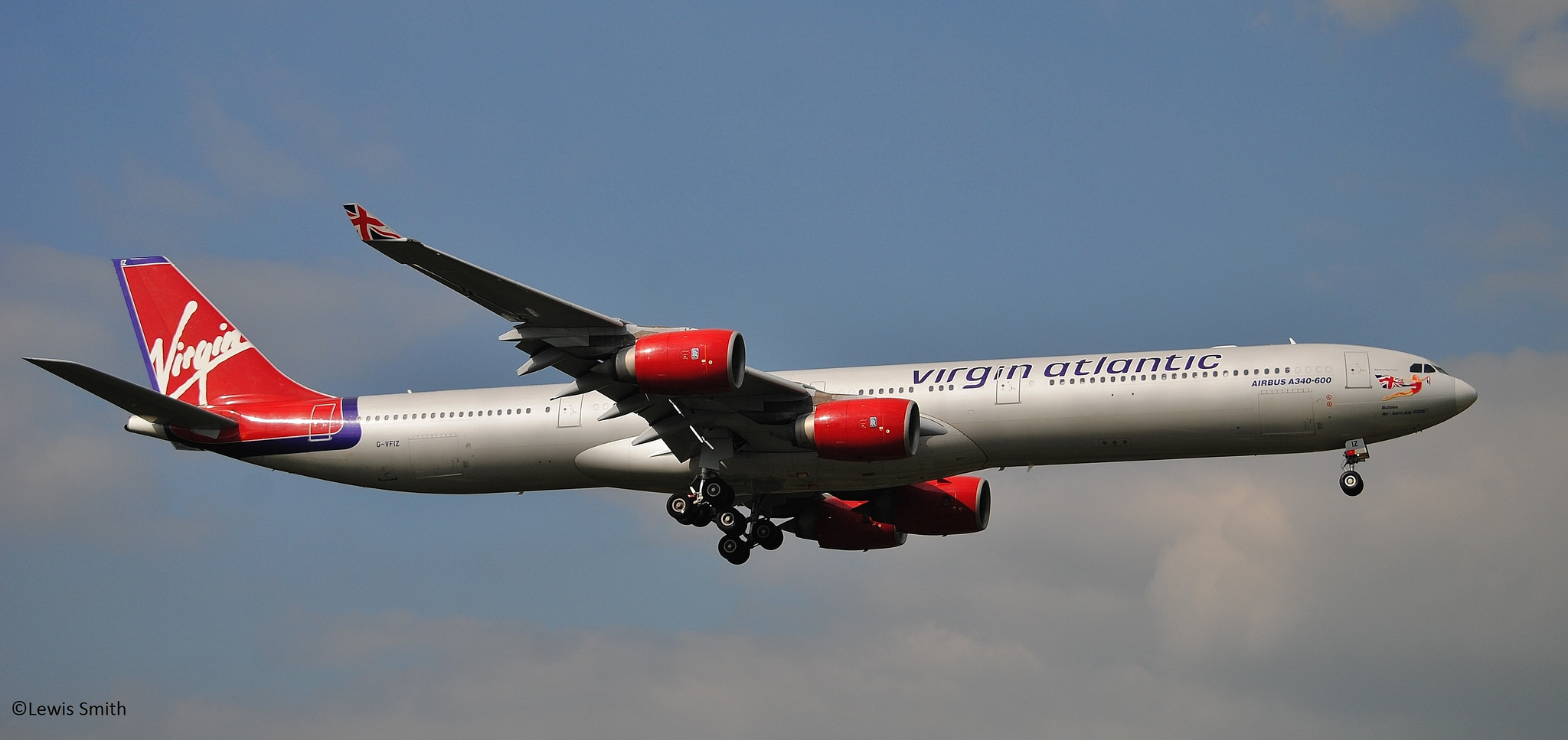
Virgin Atlantic’s Airbus A340 called Bubbles – Photo: Lewis Smith | FlickrCC
Recently, I used my Delta Skymiles for a trip to London. However, rather than flying the genteel Southern airline (aka Delta), I used my miles to book an Upper Class ticket with their joint venture partner, Virgin Atlantic (recently named the fifth-best international airline by Travel + Leisure). I was excited to put them to the test!
I had no trouble booking the trip through Delta’s website. I simply logged into my account, searched for DFW to London. 125,000 miles later, I was booked to go to London on an overnight flight across the pond. My husband, who booked separately, also had no problems making his reservation, even though he paid with actual dollars.
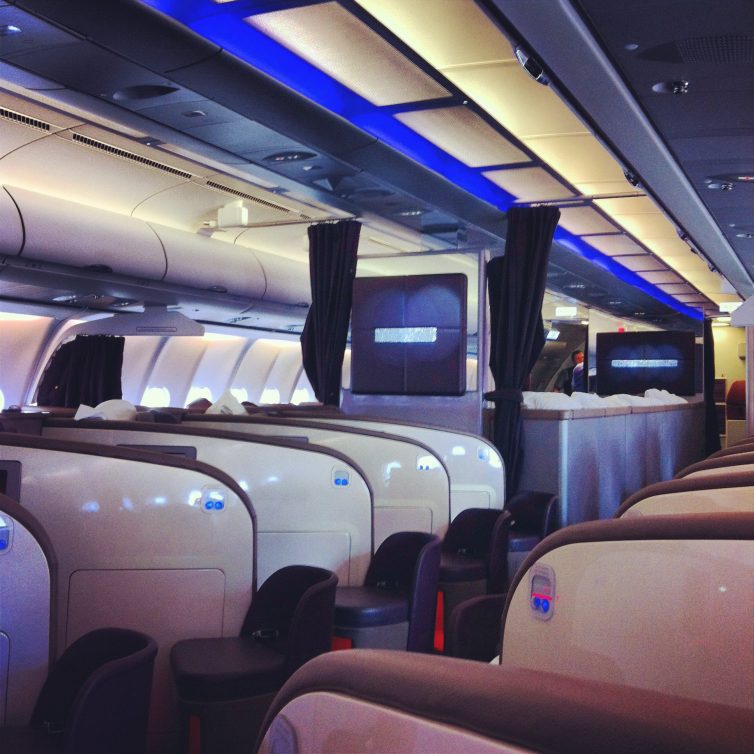
The Upper Class cabin – Photo: John Walton
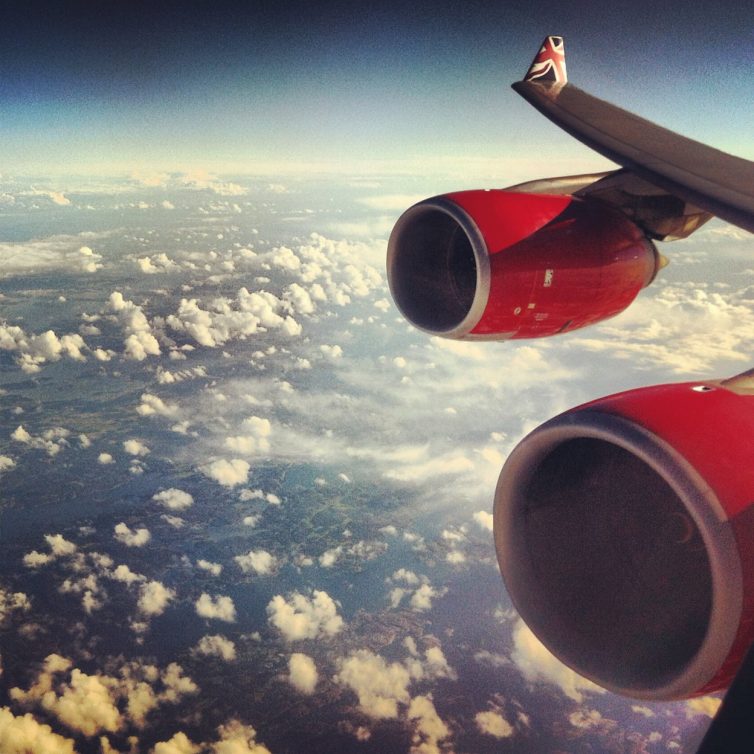
Four engines, for long-haul – Photo: John Walton
The morning of our flight arrived and we took a taxi from our apartment in downtown Dallas to DFW International Airport, arriving at terminal E where Delta has its outpost inside the American Airlines fortress hub. We arrived three hours early as recommended for international flights, but being that it was just before 6:00 A.M. on a Saturday morning, it took less than 10 minutes to check our bags, get through security, and get in to the Delta Sky Club, where I drank all the Starbucks coffee anyone could ever want and grazed on bagels, English muffins, and other breakfast foods.